
Table des matières
Questions fréquemment posées
1. What is an influencer license in Dubai for French residents?
An influencer license in Dubai is a UAE trade license that lets French creators invoice brands, sign contracts, open corporate banking, apply for residency and operate a licensed content business. Meydan Free Zone issues one online in under 60 minutes.
2. What is the difference between a trade license and advertiser permit?
A trade license creates the company behind your creator business. The advertiser permit approves sponsored content activity in the UAE. French creators usually need the trade license first before applying.
3. Why are French creators moving their content business to Dubai?
French creators choose Dubai for 0% UAE personal income tax, corporate banking, residency, advertiser permit pathways, global brand access and a licensed structure for content income across multiple platforms.
4. How does Meydan Free Zone help French creators?
Meydan Free Zone helps French creators set up a UAE Free Zone LLC, choose creator-related activities from 2,500+ options, prepare for permits and manage records through mPlus after setup.
5. Can French creators set up their Dubai influencer license online?
Yes. French creators can apply online through Meydan Free Zone, choose creator-related activities, get licensed quickly where eligible, and build their UAE company before relocating to Dubai.
The French Creator Economy: Why Influencers Are Basing Their Content Business in Dubai
Ever noticed how many French creators now have a Dubai pin in their bio?
Content creation is a real industry in France now, worth around €6.5 billion with an estimated 150,000 active creators, according to Stratégies.¹ For influenceurs, YouTubers and UGC specialists, that means brand deals, campaigns and digital products across markets. But a large share of it disappears before it reaches you: most creators operate as micro-entrepreneurs, handing roughly a quarter of earnings to social charges and tax, on cash and even on gifting, taxable from the first euro.
Dubai flips the maths. Creators keep what they earn, zero personal income tax, in a market where the audience is already there. Per DataReportal, the UAE had 11.3 million active social media identities in early 2025, close to 100% of the population.²
Better still, you run your content as a properly licensed business, not informal freelance income, and setting it up is quick. An influencer license in Dubai for French residents is not a separate permit but a full trade license, and Meydan Free Zone issues one online in under 60 minutes.
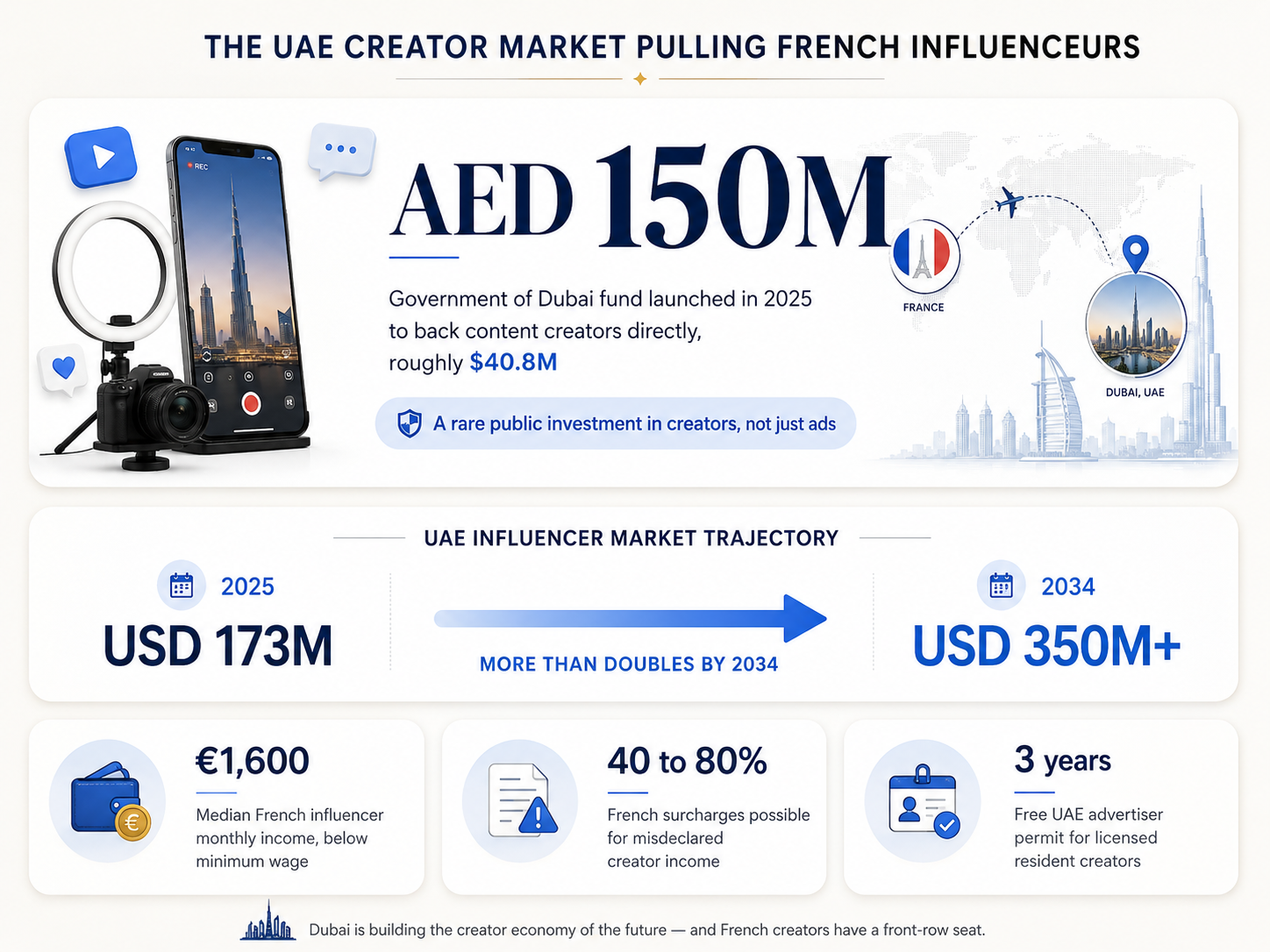
Source: P&S Intelligence UAE Influencer Market Report 2025, Reech State of Influence Marketing France 2024, and French Government Finance Rules 2026, via P&S Intelligence
Why French Creators Are Rethinking France
For French creators, the pressure comes from two sides: tax and regulation.
And most are not getting rich. A Reech study puts the median French influencer at around €1,600 a month, below minimum wage.³ Yet the tax treatment is the same whether you are thriving or barely breaking even:
- Charged on turnover, not profit, social contributions take around 25.6% of what you invoice, before costs
- No deductions, cameras, editing, software and agency fees do not come off first
- Gifting is taxable, even PR boxes and comped trips count from the first euro
- Income tax on top, layered over those charges
And the rules are tightening:
- Europe's first influencer law (2023) formally regulates commercial influence
- From January 2026, any deal where pay plus gifting from one brand tops €1,000 a year needs a written contract, or it is void
- Penalties are real, misdeclared income can face 40% to 80% surcharges
None of this makes France a bad place to create. But it regulates creators without building for them, and if your audience is already global, you are running an international business on a local freelance setup.
[blockCTABizSetupRemotely]
Why the UAE Is Built for Creators
Where France adds rules, the UAE puts money behind creators. In 2025, according to P&S Intelligence, the Government of Dubai launched a AED 150 million fund, around $40.8 million, to support content creators.⁴
The market backs it up:
- A $173 million influencer market in 2025, set to more than double by 2034
- 72% of UAE consumers trust creator recommendations over traditional ads
- ~100% social media penetration, one of the most engaged audiences on earth
- Dubai and Abu Dhabi drive nearly 70% of regional campaign activity
For a creator, that means:
- A licensed content business, you invoice, contract and bank as a company
- The advertiser permit built in, free for the first three years for residents
- Zero personal income tax and corporate tax on qualifying income, what you earn stays with you
- Residency through your company
Influencer License in Dubai for French Residents
In Dubai, creator compliance starts with the right business setup. An influencer license is a trade license that turns content income into a recognised business, letting you invoice brands, sign contracts, open banking and apply for residency.
The license is built around activities that match creator work. At Meydan Free Zone, most creators choose these from 2,500+ business activities:
- Marketing Services via Social Media (6202.99)
- Digital Content Management (7020.12)
- Social Media Services (7310.16)
And because a French creator's income rarely comes from one place, a single license can hold up to three activity groups, covering paid posts, UGC, affiliate revenue, platform payouts and digital products together.
But there are two separate things every French creator needs in Dubai, and confusing them is the most common mistake:
- The trade license is your company: it lets you invoice brands, open a corporate account, sign contracts and sponsor your residency.
- The advertiser permit is the UAE Media Council approval that lets you post sponsored content legally. You cannot apply for it without a valid trade license carrying the right activity.
The permit also depends on where you are based. Residents get the standard advertiser permit through their company; non-residents working with UAE brands can use a short-term visitor permit instead. Either way, the trade license comes first.
What Meydan Free Zone Builds for French Creators
In France, a creator can end up managing tax, contracts, gifting, invoices and platform income separately. Meydan Free Zone brings the UAE side together: the license, activities, permit readiness, banking, residency and records, all under one creator business structure.
French creators have two setup pathways. The Regular license starts from €2,971, or AED 12,500. Fawri starts from €3,566, or AED 15,000, and can issue the license online in under 60 minutes where eligible.
For a French influenceur, that means brand deals, UGC, paid collaborations, platform revenue and digital products all sit inside one structured business.
In Conclusion
A creator's real asset was never one post. It is the audience, the trust, and the business built around them.
In France, that business is taxed hard and regulated harder: a quarter of earnings gone before costs, gifting taxed from the first euro, and new contract rules tightening every year. Yet for French influenceurs, the work itself is increasingly international, global brand deals, cross-border audiences, platform income and digital products.
Dubai offers a base built for that reality: no personal income tax, a licensed company, an advertiser permit pathway, corporate banking and residency. With Meydan Free Zone, you set up online, choose the right activities from over 2,500, and build the company behind your content.
Build your content business where your earnings, and your audience, already are. If you are ready, book a free consultation with a setup advisor at Meydan Free Zone.
[blockCTAContact]
Footnotes
¹ Stratégies, Les Créateurs de Contenu Pèsent 6,5 Milliards, French creator economy valued at around €6.5 billion with an estimated 150,000 creators, 2024.
² DataReportal, Digital 2025: The United Arab Emirates, 11.3 million active social media identities, close to 100% of the population, 2025.