

Table of Contents
Frequently Asked Questions
1. How do you run a small business in Dubai successfully?
To run a small business in Dubai successfully, founders need the right business license, strong cash-flow management, reliable banking, proactive compliance, and a professional operating structure that supports growth.
2. Is Dubai a good place to run a small business?
Yes. Small and medium-sized businesses make up over 95% of companies in the UAE and contribute more than 60% of GDP, making Dubai one of the region’s strongest environments for small business growth.
3. What license does a small business need in Dubai?
A small business in Dubai needs a valid business license, issued by a free zone or mainland authority, depending on the business model and business activities.
4. Do small businesses in Dubai need a corporate bank account?
Yes. A corporate bank account is essential for invoicing, receiving payments, and operating compliantly as a registered business in Dubai.
5. Do small businesses in Dubai need to register for VAT?
Only businesses that meet the UAE VAT registration threshold or make taxable supplies are required to register, as outlined by the Federal Tax Authority.
6. Can foreigners run a small business in Dubai?
Yes. Free zones in Dubai allow 100% foreign ownership, making them popular with international founders.
7. Does the free zone you choose affect business success?
Yes. The right free zone can reduce administrative friction, support banking and visas, and make it easier for a small business to operate and scale over time.
Topic Summary
1. Understand and Comply with Legal Requirements
Ensure full compliance with Dubai’s regulatory framework by obtaining necessary licenses, adhering to local laws, and maintaining accurate records. Familiarize yourself with the Department of Economic Development (DED) regulations and free zone authority rules relevant to your business sector.
2. Develop a Comprehensive Business Plan
Create a detailed business plan outlining your objectives, target market, competitive analysis, financial projections, and marketing strategies. This serves as a roadmap for growth and is often required for securing financing or investors.
3. Leverage the UAE’s Strategic Location and Infrastructure
Utilize Dubai’s advanced logistics, state-of-the-art infrastructure, and proximity to major global markets to streamline supply chain and distribution networks, enhancing operational efficiency and expanding market reach.
4. Invest in Local Talent and Training
Recruit skilled employees familiar with the local business environment and invest in their professional development. This improves productivity and fosters a strong organizational culture aligned with Dubai’s diverse and dynamic market.
5. Implement Robust Financial Management
Maintain rigorous financial controls, monitor cash flow regularly, and ensure timely accounting and tax submissions in accordance with UAE VAT laws. This protects business sustainability and facilitates informed decision-making.
How to Run a Small Business in Dubai Successfully
Dubai is one of the most active small-business hubs in the world.
Per Mastercard's SME Confidence Index 2025 via Khaleej Times¹, 91 percent of UAE small and medium-sized enterprises are optimistic about their business outlook, with 90 percent expecting to maintain or increase revenue compared to the previous year, and 70 percent actively seeking credit in 2025 to scale operations. Per the UAE Government via The National², small and medium-sized businesses contribute more than 60 percent of the country's GDP, evidence that small businesses are not just present in Dubai's economy, they are central to it.
The UAE has nearly tripled its company count in four years, and the government is targeting 2 million by 2031, which means the operational habits you set now will matter more, not less, as the market gets busier.
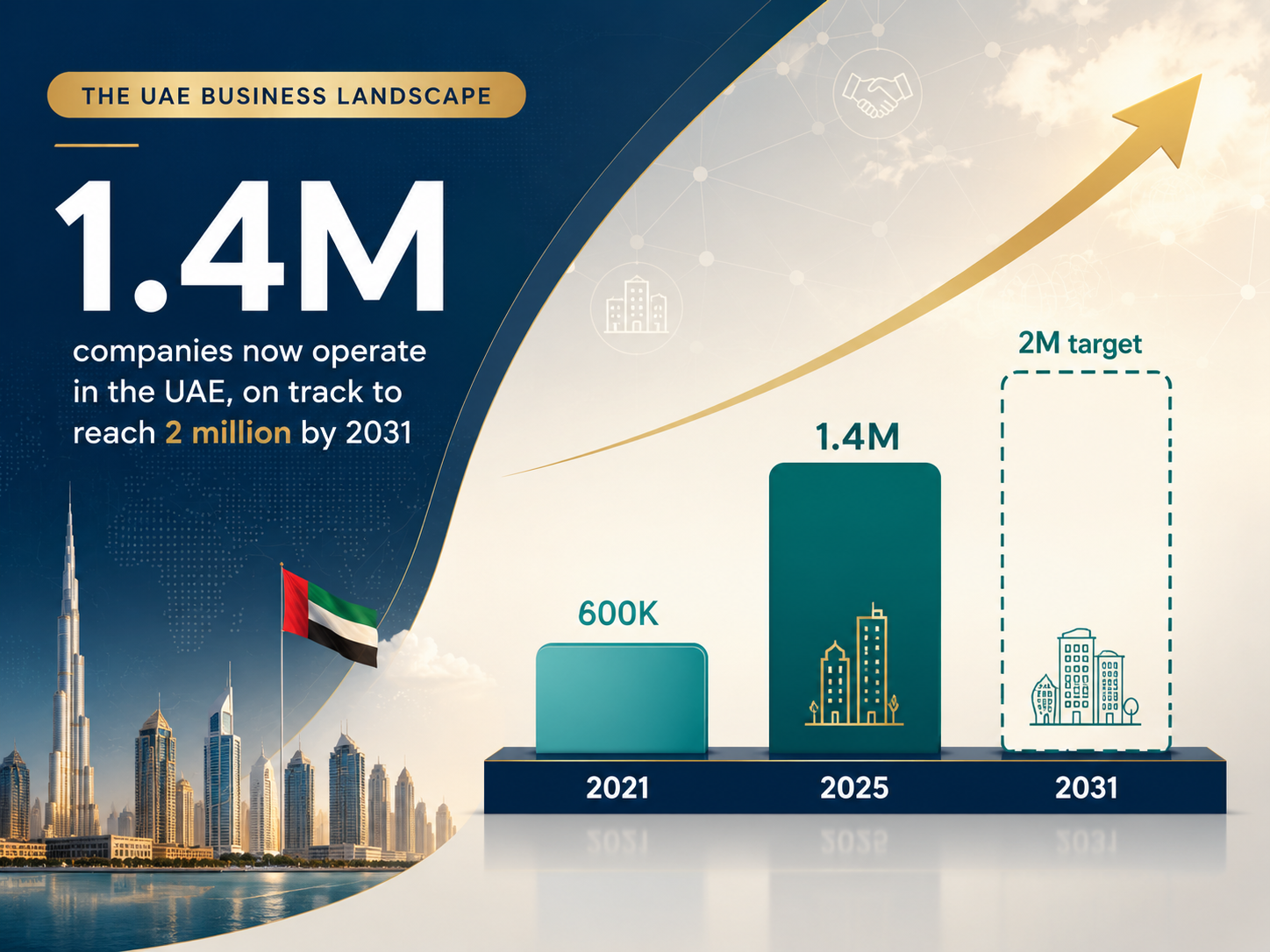
Source: UAE Ministry of Economy and Tourism (January 2026), via Gulf News
That scale is exactly why running a small business in Dubai can feel deceptively easy at the start, and unexpectedly complex once operations begin. Success depends on what happens after you're registered: how you manage cash flow, banking, compliance, and credibility in a market that moves quickly and expects professionalism early.
If you’re a founder considering setting up through Meydan Free Zone, or reassessing whether your current structure supports sustainable growth, understanding how to run a small business in Dubai successfully means thinking beyond incorporation. It’s about choosing an operating environment that reduces friction as the business grows, from banking and documentation to visas and ongoing administration.
Dubai rewards small businesses that are organised, intentional, and built for scale. This guide walks through what actually makes the difference — not just on day one, but in the months and years that follow.
Get the Business License Right (Before Anything Else)
In Dubai, your business license defines how smoothly you can operate. It determines what you can invoice for, how banks assess you, and whether clients see you as credible.
Entrepreneurs can choose between mainland and free zone licenses depending on their business model, ownership preferences, and operational needs. Free zones are particularly popular with small businesses because they allow 100% foreign ownership and offer clearly defined regulatory frameworks.
For founders who want to stay lean and avoid administrative drag, digitally administered free zones are often more practical. Meydan Free Zone allows company formation using just a passport, manages licensing fully online, and offers over 2,500 business activities, giving small businesses room to evolve without constant restructuring.
If you are still weighing up the idea, our guide to starting your own business in Dubai walks through the mindset, costs, and first practical steps before you commit to a license.
Cash Flow Comes Before Profit
One of the biggest mistakes small business owners make in Dubai is focusing on revenue while ignoring cash flow timing. Late payments - especially in B2B environments - are common, and without strong cash-flow discipline, even profitable businesses can struggle.
The UAE Central Bank consistently highlights the importance of financial controls and transparent banking relationships for SME stability.
To run a small business successfully in Dubai, founders need:
- A corporate bank account opened early: Set up your business banking from day one so you can invoice professionally and receive payments compliantly from the moment you launch.
- Clear, professional invoicing: Use consistent invoice templates with proper VAT formatting (where applicable), clear payment terms, and accurate company details to build credibility with clients and banks.
- Separation between personal and business finances: Keep your business and personal accounts distinct from the start, simplifying tax filing, audit readiness, and cash-flow visibility.
This is why many founders look for setups that support banking readiness from the start. Meydan Free Zone works with partner banks and provides a guaranteed IBAN, helping businesses become operational while full banking relationships are finalised.
Compliance Isn’t Optional - But It Can Be Simple
Dubai is business-friendly, not regulation-free. Small businesses must stay on top of:
- license renewals
- VAT obligations (if applicable)
- corporate records
The Federal Tax Authority (FTA) clearly outlines when businesses must register for VAT and how compliance works.
Founders who succeed don’t treat compliance as something to deal with “later.” They build it into their operating rhythm early - which reduces stress and avoids costly interruptions.
Using centralised accounting and reporting services can make a significant difference here, especially for founders managing everything themselves in the early stages.
Keep Operations Lean, but Structured
Running a small business successfully doesn’t require a big team, but it does require systems.
The most resilient small businesses in Dubai document basic processes, standardise pricing and contracts, and avoid overcomplicating structures.
Digital administration matters more than many founders expect. Being able to manage visas, and add-on services without physical paperwork saves time and reduces mental load - especially when the founder is also the salesperson, operator, and strategist.
This is one reason founders often choose free zones like Meydan Free Zone, where everything from licensing to visas is handled digitally and can scale without disrupting daily operations.
The 4 Pillars of Small Business Success in Dubai
In Conclusion
So, how do you run a small business in Dubai successfully?
You choose the right business license, protect cash flow, stay compliant, and operate in an environment designed to support growth rather than complicate it.
Dubai rewards founders who are organised, intentional, and prepared. If you’re considering setting up through Meydan Free Zone, you’re already thinking beyond launch day - toward a structure that helps your business stay credible, flexible, and scalable as it grows.
Citations
¹ Mastercard SME Confidence Index 2025, via Khaleej Times, "UAE SMEs Optimistic About 2025 Growth Amid Digital Transformation," February 2025.
² UAE Government, via The National, "UAE plans 67% surge to two million companies by 2031, minister says," September 2025.