Table of Contents
Frequently Asked Questions
1. What are the official public holidays in the UAE for the private sector in 2026?
The official UAE public holiday list is confirmed through a UAE government announcement, and the final 2026 dates are only certain once issued. Fixed-date holidays are predictable; Islamic holidays can move by a day because they follow the lunar calendar.
2. Do UAE public holidays change if they fall on a weekend?
Do not assume a ‘Monday in lieu’ rule. In the UAE, whether a holiday is moved, extended, or left as-is depends on the official decision for that year and sector. Founder-grade practice is to treat the announcement as the controlling document and align payroll and staffing calendars to it, not to habit or other jurisdictions.
3. Can an employer require employees to work on UAE public holidays?
Yes, if operations require it, but the treatment must follow the UAE Labour Law framework and the employment contract terms. The business should document the roster, approvals, and whether the employee receives compensatory rest and/or pay treatment as required. Keep records audit-ready, especially for shift teams and customer-facing coverage.
4. How is annual leave calculated in the UAE for employees with less than one year of service?
Under Federal Decree-Law No. 33 of 2021, annual leave entitlement is service-based: after six months and before one year, the statutory entitlement is 2 days per month. Before six months, annual leave is not a statutory entitlement unless the contract grants it. Payroll should pro-rate joiners/leavers and keep a clean leave ledger.
5. Is annual leave in the UAE counted in calendar days or working days?
Annual leave is calculated in calendar days. Weekends are included in the leave period, while official public holidays that fall during approved leave do not count against the employee’s annual leave balance.
6. What happens to unused annual leave in the UAE at resignation or termination?
Unused annual leave is generally settled in the employee’s final dues, calculated according to the statutory approach and the wage components used for leave salary.
Topic Summary
1. Federal-Level Public Holidays
All public holidays in the UAE are announced at the federal level, ensuring uniform observance across all emirates and businesses nationwide.
2. Key Public Holidays
The UAE recognizes several official public holidays, including New Year’s Day, Eid Al Fitr, Eid Al Adha, Hijri New Year, Commemoration Day, and National Day.
3. Annual Leave Entitlement
Under Federal Decree Law No. 33 of 2021, private-sector employees are entitled to 30 calendar days of annual leave after completing one year of continuous service.
4. Leave Calculation and Adjustment
Annual leave is calculated in calendar days, not working days, and employees accrue leave only after completing one full year of service with the same employer.
5. Leave Planning and Business Operations
The clear framework for public holidays and annual leave helps businesses in the UAE plan staffing and operations efficiently throughout the year.
UAE Public Holidays and Annual Leave Rules Explained
Every business in the UAE operates around the same calendar. Public holidays in the UAE are announced at the federal level, and annual leave is a statutory entitlement under Federal Decree Law No. 33 of 2021 on the Regulation of Labour Relations, giving businesses a clear structure for planning staffing and operations across the year.
According to the UAE Government¹, private-sector employees are entitled to 30 calendar days of annual leave after completing one year of service, along with around 13 to 14 paid public holidays announced annually by the UAE Cabinet¹.
According to MOHRE guidance issued in February 2026², unused annual leave can be carried forward to the following year only with employer agreement, and is capped at half the annual entitlement, meaning a maximum of 15 days for someone entitled to 30.
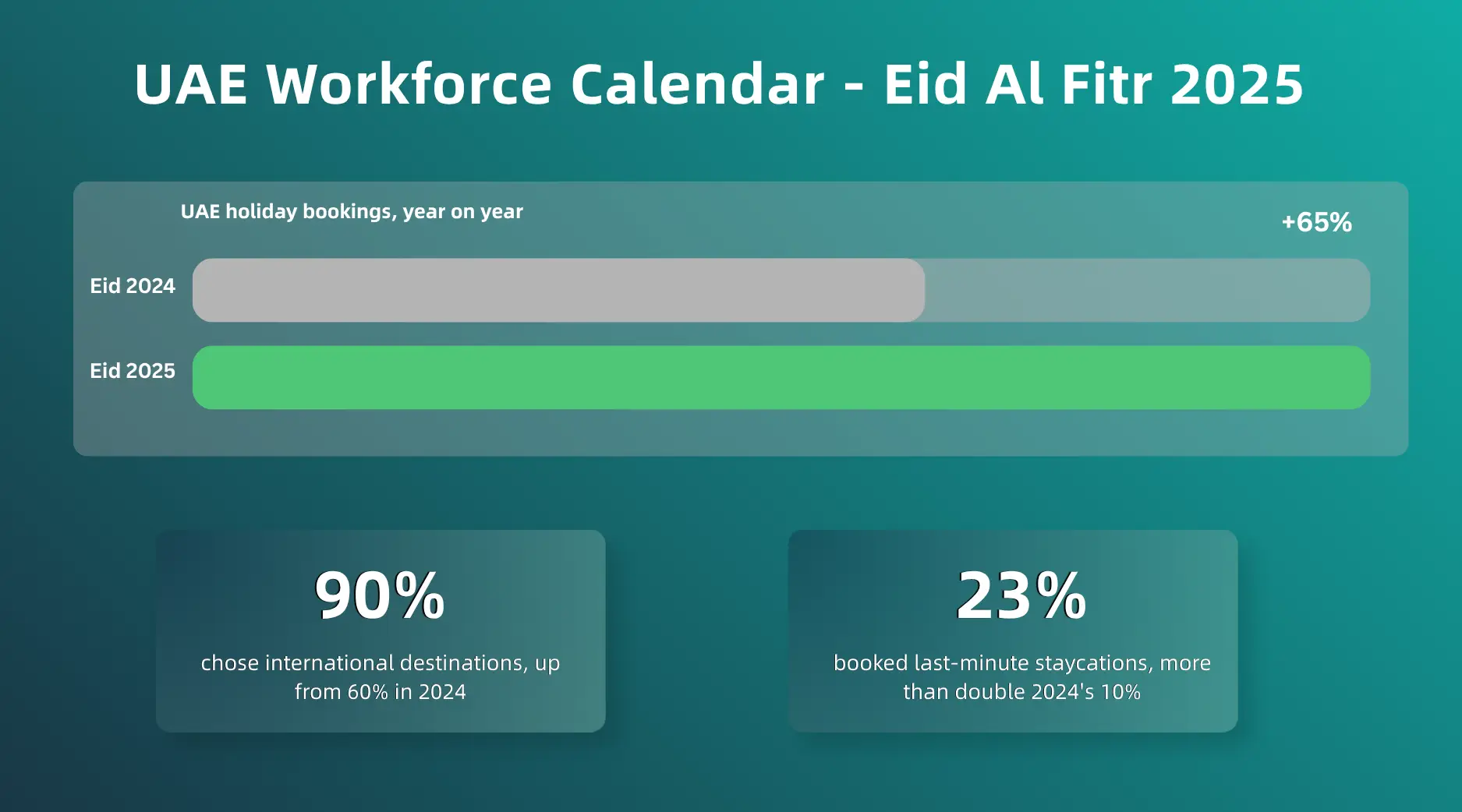
With some holiday dates confirmed closer to the time, understanding how these entitlements fit together helps founders and employers manage schedules, resources, and project timelines more effectively.
Sources: dnata Travel, cited by Gulf News, February 2025
This guide breaks down the UAE’s public holiday structure and annual leave rules, with a practical view for employers and founders in the UAE.
UAE Public Holidays: What Employers Need to Know
Public holidays in the UAE are federally declared and apply to private-sector employees. The UAE Cabinet announces the official holiday calendar each year, and private-sector employers are required to grant these days as paid leave.
In most years, employees receive around 13 to 14 public holidays. These apply across industries and company sizes, creating a nationally aligned working calendar for businesses.
While some holidays fall on fixed dates, others follow the Islamic lunar calendar and are confirmed closer to the time. For employers, this means building a degree of flexibility into staffing plans, particularly around major religious holidays.
[blockCTABizSetupRemotely]
Official Public Holidays in the UAE
Public holidays fall into two categories: fixed Gregorian dates and Islamic holidays that vary each year.
Because Islamic holidays depend on moon sightings, final dates are often confirmed shortly before the holiday period. Businesses typically plan operational buffers around Eid seasons rather than relying solely on fixed calendar assumptions.
Working on a Public Holiday
Employees can work on public holidays, but compensation is required under labour law.
If an employee is required to work on a public holiday, the employer must provide either:
- Another day off (compensatory rest), or
- Basic salary plus at least 50% additional pay for the hours worked on that day
This requirement is particularly relevant for businesses operating on shift schedules or in sectors such as retail, hospitality, logistics, healthcare, and customer support, where continuous operations are necessary.
[blockCTAFawri]
Annual Leave Entitlement Under UAE Labour Law
Annual leave is a statutory right based on an employee’s length of service.
Private-sector employees are entitled to:
Leave is calculated in calendar days, not working days, which is an important distinction for workforce planning.
Leave entitlement should be calculated on a pro-rata basis for employees who join or leave during the year, making accurate leave tracking and payroll coordination essential.
Annual Leave Pay and Accrual
Annual leave must be paid at the employee’s full wage.
In practical payroll terms, annual leave is paid at the employee’s full wage (basic plus allowances). Leave salary should be paid before the leave begins, not after the employee returns. Leave accrues during employment, which is why it becomes a balance-sheet liability if people don’t take it and you allow large carryovers.
On termination or resignation, unused leave must be paid out on a pro-rated basis. This is where clean records matter: the last working day, approved leave taken, and remaining balance must reconcile between HR and payroll. If it doesn’t, the dispute usually lands at the worst time; final settlement and employment visa cancellation timelines.
[blockExpertOpinion]
[blockCTATradeLicense]
Can Employers Decide When Leave Is Taken?
Employers have the right to schedule annual leave based on operational requirements.
While employee preferences should be considered, businesses may:
- Determine leave timing to maintain operational continuity
- Require reasonable advance notice
- Limit the number of employees on leave at the same time
However, annual leave cannot be denied indefinitely. Unused leave may be carried forward based on employer policy and agreement or compensated in accordance with labour law.
This flexibility allows businesses to stagger leave during peak operational periods.
[blockCTANameCheck]
Public Holidays and Annual Leave: How They Interact
Public holidays and annual leave are treated separately under UAE labour law.
If a public holiday falls during an employee’s annual leave period:
- The public holiday does not count against annual leave
- The leave period is effectively extended
This distinction is important when planning long leave periods around national or religious holidays. Weekend overlap depends on your company work schedule. The UAE has a federal Monday–Friday working week for the public sector, but private-sector weekend patterns can vary by business model and client market. That’s why your policy should define the company weekend clearly by team, not leave it as an assumption.
[blockCTABizActivityList]
What This Means for Workforce Planning
Public holidays and annual leave create a predictable rhythm across the working year. For employers, the real impact is not payroll, but availability: who is in the office, who is away, and whether the business can continue operating without disruption.
In practice, the pressure points tend to appear at predictable times:
- Summer, when extended travel leave is common
- Eid periods, when multiple employees may request time off around the same dates
- December, when annual leave is often used before year-end
Planning ahead usually comes down to a few practical habits:
- Staggering leave so too many team members aren’t away at the same time
- Setting clear notice periods and simple approval windows
- Arranging backup support for customer-facing or operational roles
- Scheduling key deliverables around known holiday periods
[blockCTACostCalculator]
In Conclusion
In the UAE, the calendar is part of your operating model. Public holidays and annual leave are fixed, paid, and predictable, shaping how teams work and when they are available.
For founders and employers, the advantage lies in planning around that structure. Building holiday cycles and peak leave periods into staffing plans and project timelines helps avoid last-minute adjustments and keeps delivery on track. Clear policies, early approvals, and staggered scheduling make it easier to balance employee time off with operational needs.
Businesses that plan around the UAE calendar early are better positioned to maintain continuity and operate smoothly throughout the year.
Citations
¹ The Official Platform of the UAE Government, "Annual Leave," Private Sector Employment Information.
² MOHRE annual leave guidance, via HRK News Bureau, "UAE clarifies annual leave rules; sets limits on carrying forward unused days," February 2026.