Table of Contents
Frequently Asked Questions
1. What is the Wage Protection System (WPS) in the UAE?
The Wage Protection System is a UAE government initiative that ensures employees are paid on time and in full. It works by routing salary payments through approved banks and exchange houses so the Ministry of Human Resources and Emiratisation (MOHRE) can track and verify payroll compliance.
2. Is WPS mandatory for companies in Meydan Free Zone?
No, companies in Meydan Free Zone are not automatically required to process salaries through WPS, because the free zone is not integrated with MOHRE. You can pay employees directly via bank transfer unless you choose to set up a WPS-compliant payroll system.
3. When would a Meydan Free Zone business need to use WPS?
You might choose to opt in if a specific client contract requires it, if you expand into mainland operations, or if you prefer a formalised payroll system for a growing team.
4. How does payroll in Meydan Free Zone differ from mainland Dubai?
Mainland companies must process all employee salaries through WPS, with fixed pay cycles and MOHRE oversight. In Meydan Free Zone, payroll can be flexible, without mandatory WPS filings or fixed payment schedules.
5. Can I hire freelancers or remote workers without using WPS in Meydan Free Zone?
Yes. WPS only applies to salaried employees under a system that requires WPS compliance. Freelancers, part-timers, and remote workers can be paid directly via bank transfer or other approved payment methods.
6. Does Meydan Free Zone offer visa allocations with its licenses?
Yes. Business licenses come with visa allocation slots, with the number depending on your chosen package and facility type. These allocations allow you to hire and sponsor employees without additional MOHRE approvals.
7. What are the benefits of payroll flexibility in Meydan Free Zone?
You can align salary payouts with your cash flow — monthly, quarterly, or per project. This is especially useful for startups, seasonal businesses, and companies with variable income streams.
Topic Summary
1. Mandatory Electronic Salary Transfers
The WPS requires employers in the UAE to pay employees’ salaries through authorised electronic channels. This ensures transparency and traceability, reducing the risk of delayed or unpaid wages and safeguarding workers' financial rights.
2. Real-Time Monitoring and Compliance
The Ministry of Human Resources and Emiratisation (MOHRE) monitors payroll submissions in real time via the WPS platform. Employers must submit salary details within stipulated deadlines, promoting timely wage disbursement and full regulatory compliance.
3. Protection Against Wage Disputes
By providing a systematised record of salary payments, the WPS minimises disputes between employers and employees regarding wage payments. This facilitates smoother labour relations and simplifies dispute resolution processes when necessary.
4. Integration with Labour Regulations
WPS aligns closely with UAE labour laws, ensuring that wage practices conform to legal standards. Employers found non-compliant with WPS regulations face penalties, which emphasises its importance as a compliance checkpoint.
5. Enhancement of Business Reputation and Stability
Adhering to WPS not only fulfils legal obligations but also enhances the employer’s reputation for ethical labour practices. This builds trust with employees and government entities, contributing to a stable and productive working environment.
How the UAE Wage Protection System (WPS) Works and Why It Matters for Employers
If you're running a business in Dubai, payroll isn't just another line on your balance sheet, it's a vital compliance checkpoint.
That's where the Wage Protection System (WPS) in the UAE comes in.
According to the UAE Ministry of Human Resources and Emiratisation¹, the WPS now covers more than 99 percent of private-sector workers in the country, with establishments transferring over AED 35 billion every month through the system, making it one of the largest payroll compliance systems in the MENA region.
According to MOHRE¹, the system underwent its most substantial upgrade ever in December 2025, introducing real-time data integration with financial institutions via the Central Bank and instant salary transfer through the national Aani payment platform, meaning compliance is now monitored continuously, not just at the monthly cycle close.
If you're weighing up whether mainland WPS compliance is a heavy lift or a quiet plumbing detail, the latest MoHRE figures show what mainland companies are actually plugging into.
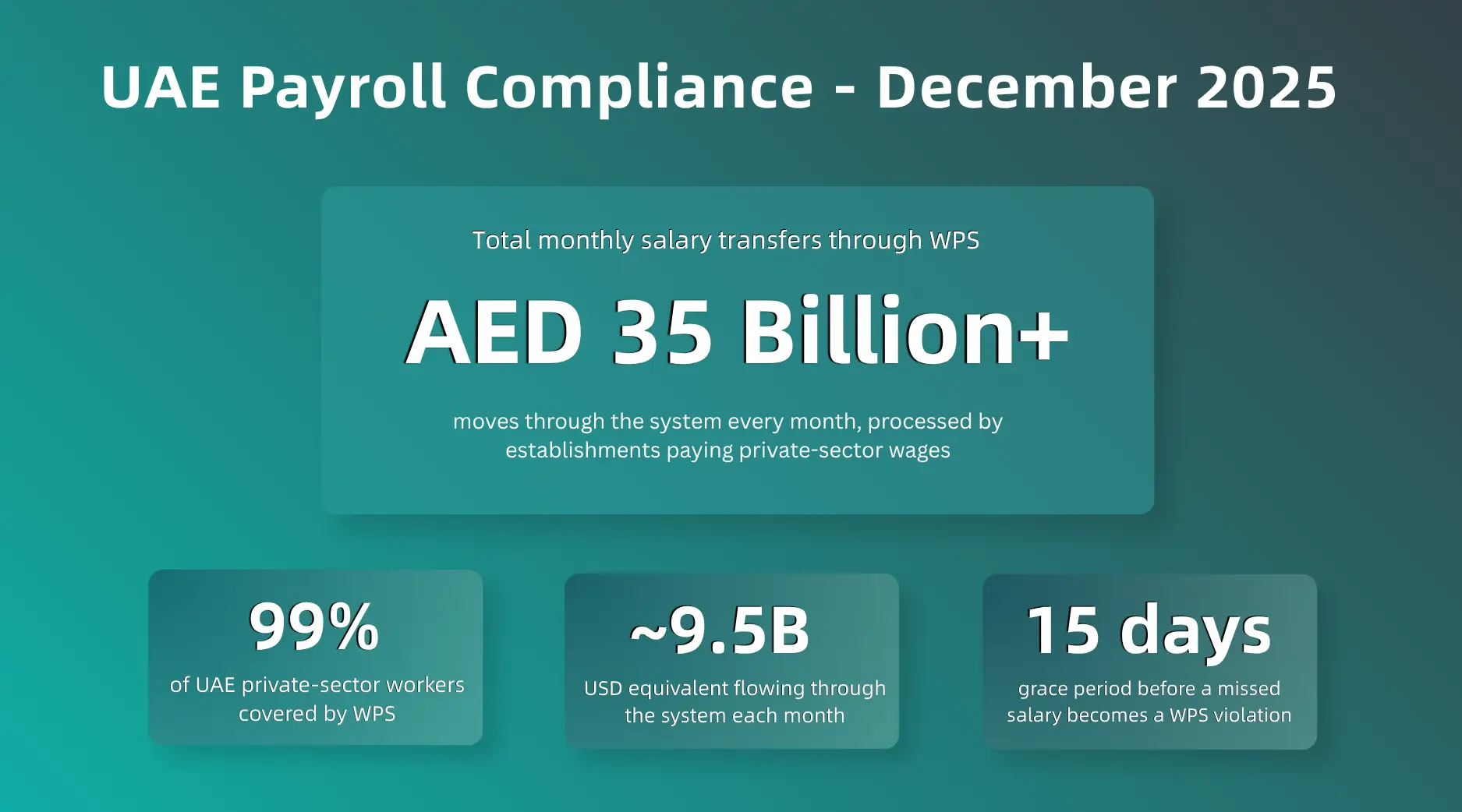
Sources: UAE Ministry of Human Resources and Emiratisation, cited by Gulf News, December 2025
But here’s where it gets interesting: if your business is set up in a free zone like Meydan Free Zone, your payroll compliance checklist looks very different, and alot simpler.
This guide explains how WPS works in the UAE, what it means for employers, and how Meydan Free Zone makes payroll effortless for entrepreneurs.
[blockCTABizSetup]
Understanding Why the Wage Protection System Exists in the UAE
The Wage Protection System (WPS) in the UAE was introduced by the UAE government in light of making sure that salaries paid to employees are always on time, fair, and secure.
Think of it as a built-in trust signal for the job market — a safety net for job seekers, a credibility badge for employers.
Here’s what WPS in the UAE does, in plain sight for employers:
- Provide salary payments on schedule to employees
- Everything is logged and tracked to reduce payment disputes between employers and employees
- Builds trust and employees know that the system has their back
- Maintains a compliant, regulated employment wages ecosystem
For employers, this means you’re expected to channel salaries through authorised banks and exchange houses, making sure each payment is tracked by the government.
And whether you’re an SME or a small business owner, you’re expected to comply if there are any employees under your sponsorship.
[blockCTAContact]
How UAE Wage Protection System Works in Mainland Dubai vs. Free Zones vs. Meydan Free Zone
Let’s get real. WPS compliance in the UAE works differently based on where you decide to set up — mainland Dubai, other Free Zones or Meydan Free Zone.
| Feature | Mainland Dubai | Other Free Zones | Meydan Free Zone |
|---|---|---|---|
| WPS Requirement | Mandatory for every company registered with MOHRE and salaries must be processed through WPS | May be required if hiring full-time employees under free zone visas | For companies registered with Meydan Free Zone, WPS is not a default requirement unless the business voluntarily opts in, or if future hiring or specific contracts require it. |
| MOHRE Approvals | Required for hiring, contracts, payroll changes | Some free zones require partial approvals or more clearances | No MOHRE involvement |
| Setup Process | Multiple steps to follow from registration to opening a bank account and payroll integration | Semi digital, manual setup with banks | 100% digital setup process, Eawd license in under 60 minutes, and payroll flexibility from day one |
| Payroll Flexibility | Fixed monthly cycles | Monthly cycles – flexibility depends on free zone | Flexible pay schedules |
| Penalties | Fines, visa blocks, company freezes with salary delays | Penalties if WPS deadlines are missed | No automatic WPS fines |
| Visa Process | Linked to MOHRE and quotas depend on office size | Quotas differ with free zone | Add up to 6 visa allocations with your business license |
| Who It’s Best For | Established companies with fixed teams | Mid-sized teams needing structured payroll | Entrepreneurs, solopreneurs, and SMEs who want flexibility and less bureaucracy |
[blockExpertOpinion]
[blockCTAmAccounting]
How Meydan Free Zone Makes Payroll Founder-Friendly for Businesses in Dubai
When it comes to payroll in the UAE, most companies need to follow the Wage Protection System (WPS) to stay compliant. But in Meydan Free Zone, WPS requirements don’t automatically apply, giving founders more control over how and when they pay their teams.
Let’s take a look at how we make it simple:
- No Complex WPS Processes
Forget mandatory WPS filings, accounts, and uploads every month. If you set up in Meydan Free Zone, you can pay yourself and your team members directly through secure bank transfers. - Hire Fast And Pay Fast
Think you need to wait for MOHRE work permit quotas? Not with Meydan Free Zone. Our business licenses allow up to 6 visa allocations, meaning you can sponsor yourself and the team without waiting. Hire, onboard, and pay salaries the same week. - Lower Admin Work
Payroll system for businesses in UAE, visas, labour cards, all managed within one digital dashboard. If you want formal payrolls as you grow, Meydan Plus services (mPlus) like mAccounting can support you. - Pay On Your Own Terms
Without being locked in to a one-month cycle, Meydan Free Zone lets you choose monthly salaries, quarterly payouts, and flexible dividends for co-founders. It’s payroll that fits your cash flow, without draining you. - Founder-Friendly From Day One
No NOC needed from your current employer. 100% foreign ownership with no local sponsor. Better yet? Hire freelancers, part-timers, even remote teams, all within Meydan Free Zone’s flexible HR framework.
[blockCTAmAssist]
In Conclusion
For mainland companies, WPS is a compliance necessity. For Meydan Free Zone entrepreneurs, it’s not a roadblock at all.
With no mandatory WPS filing, faster onboarding, and a fully digital platform, Meydan Free Zone lets you focus on building your business, not navigating payroll bureaucracy.
If you’re a founder looking for speed, flexibility, and compliance without the guesswork, Meydan Free Zone is the smart move.
.jpeg)