
Table of Contents
Frequently Asked Questions
FAQs
1. Is there demand for English breakfast flavours in Dubai?
Yes. Dubai’s breakfast market is one of the city’s strongest F&B segments, driven by tourists, British expats and cafés looking for nostalgic, recognisable dishes. Refined versions of the Full English, British-style baked goods and premium teas perform extremely well.
2. Can I supply British breakfast products to cafés in Dubai?
Yes. You can supply items such as baked goods, preserves, beans, teas and condiments by obtaining a UAE trade license, registering food products with Dubai Municipality and importing them through approved channels.
3. What license do I need to import British breakfast goods into Dubai?
You need a UAE trade license that covers food trading and wholesale supply. Many UK founders use Meydan Free Zone because setup is fully digital, incorporates with just a passport, and supports importing, e-commerce and restaurant supply under one license.
4. Do British breakfast products need Arabic labels in Dubai?
Yes. All packaged food items must include bilingual English/Arabic labels with ingredients, allergens, origin, net weight, production and expiry dates, and storage conditions.
5. How do I register breakfast products like jams, beans and baked goods in Dubai?
Each SKU must be submitted to Dubai Municipality’s food safety system for approval. Authorities review ingredients, allergens, packaging artwork, shelf life and storage requirements before importation is permitted.
6. What ingredients are most popular for English breakfast menus in Dubai?
Dubai diners favour refined versions of British staples: artisanal halal sausages, roasted tomatoes, British-style beans, sourdough toast, scones, shortbread, marmalade and English Breakfast tea.
Topic Summary
1. Familiar Flavours for a Diverse Population
Dubai’s international community includes a significant number of British expatriates and tourists. This diversity fuels demand for traditional British breakfast staples, such as eggs, beans, and toast, thereby embedding these comforting flavours into the city’s culinary offerings.
2. A Fusion of Tradition and Modernity
Much like the classic British breakfast, Dubai’s breakfast establishments combine traditional elements with contemporary influences. This blend creates a unique dining experience that honours longstanding morning rituals while catering to evolving tastes.
3. Emphasis on Warmth and Reassurance
The quintessential British breakfast is renowned for its warmth and heartiness, providing a sense of reassurance at the start of the day. Dubai’s breakfast venues prioritise this comforting atmosphere, recognising its importance to both expatriates and locals seeking a nourishing start.
4. A Thriving and Energetic Breakfast Culture
Dubai has developed one of the world’s most dynamic breakfast scenes, characterised by a broad spectrum of international and local cuisines. This vibrant culture reflects the city’s cosmopolitan identity, yet the enduring appeal of British breakfast components remains evident.
5. Culinary Nostalgia and Cultural Connection
For many living abroad, the craving for British breakfast foods is both a sensory and emotional experience. Dubai’s culinary landscape acknowledges this nostalgia, offering dishes that provide a tangible connection to home and tradition, reinforcing the fabric of morning routines for many residents.
Bringing British Breakfast Flavours to Dubai Cafés and Restaurants
There's a certain comfort in a British breakfast, that slow, reassuring combination of eggs, toast, beans and warmth that's stitched into the fabric of British mornings. Even if you haven't lived in the UK for years, the craving never quite fades.
And interestingly, Dubai feels much the same way. Mordor Intelligence values the UAE foodservice market at USD 27.28 billion in 2026, with projections to reach USD 61.21 billion by 2031.¹ The city's dining culture has evolved into one of the world's most energetic breakfast scenes, fuelled by tourists searching for familiar flavours, expats seeking home comforts, and locals who adore global cuisine with character.
Into this environment, British breakfast items carry nostalgia for some diners, novelty for others, and an undeniable sense of heritage that aligns beautifully with Dubai's love for curated food experiences.
The momentum is more than anecdotal: the Food and Drink Federation notes the UAE entered the UK's top ten food and drink export markets for the first time in 2025.² This guide explores how to introduce English breakfast flavours in Dubai with Meydan Free Zone, from menu strategy to licensing, imports, and tax considerations.
Why British Breakfast Works So Well in Dubai
Dubai's appetite for breakfast is bigger than most new F&B founders expect. Dubai DET data shows the city welcomed 18.72 million international overnight visitors in 2024, a 9% year-on-year increase,³ and breakfast is the meal hotels and cafés consistently treat as their flagship experience. Add to that approximately 240,000 British nationals settled in the UAE per CNBC,⁴ plus a European population with similar preferences, and you have a market where British flavours feel instantly recognisable.
Just as importantly, Dubai’s breakfast culture is performative. Guests expect dishes that look beautiful, feel international and tell a story. British breakfast does all three when refined for the modern palate.
A snapshot of the market:
| Demand Driver | Why It Matters |
|---|---|
| Tourism | Visitors rely on familiar Western breakfasts |
| British expats | Built-in demand for classic flavours |
| Local diners | Curious about nostalgic European dishes |
| Café culture | Breakfast is the most competitive mealtime |
| Social media | Photogenic plating drives customer traffic |
Dubai drew a record 19.59 million international visitors in 2025, its third record year running, and breakfast is the meal hotels and cafés most rely on to make an impression.

Sources: Dubai Department of Economy and Tourism, via Breaking Travel News (2026); Dubai Media Office (2025).
Start Your UAE Company Remotely
Get in Touch NowThe British Breakfast Elements Dubai Loves Most
A fully traditional fry-up isn’t what the Dubai market naturally gravitates towards. What works is a thoughtful reinterpretation of British flavours — recognisably British, but styled for a café-driven, lifestyle-led city.
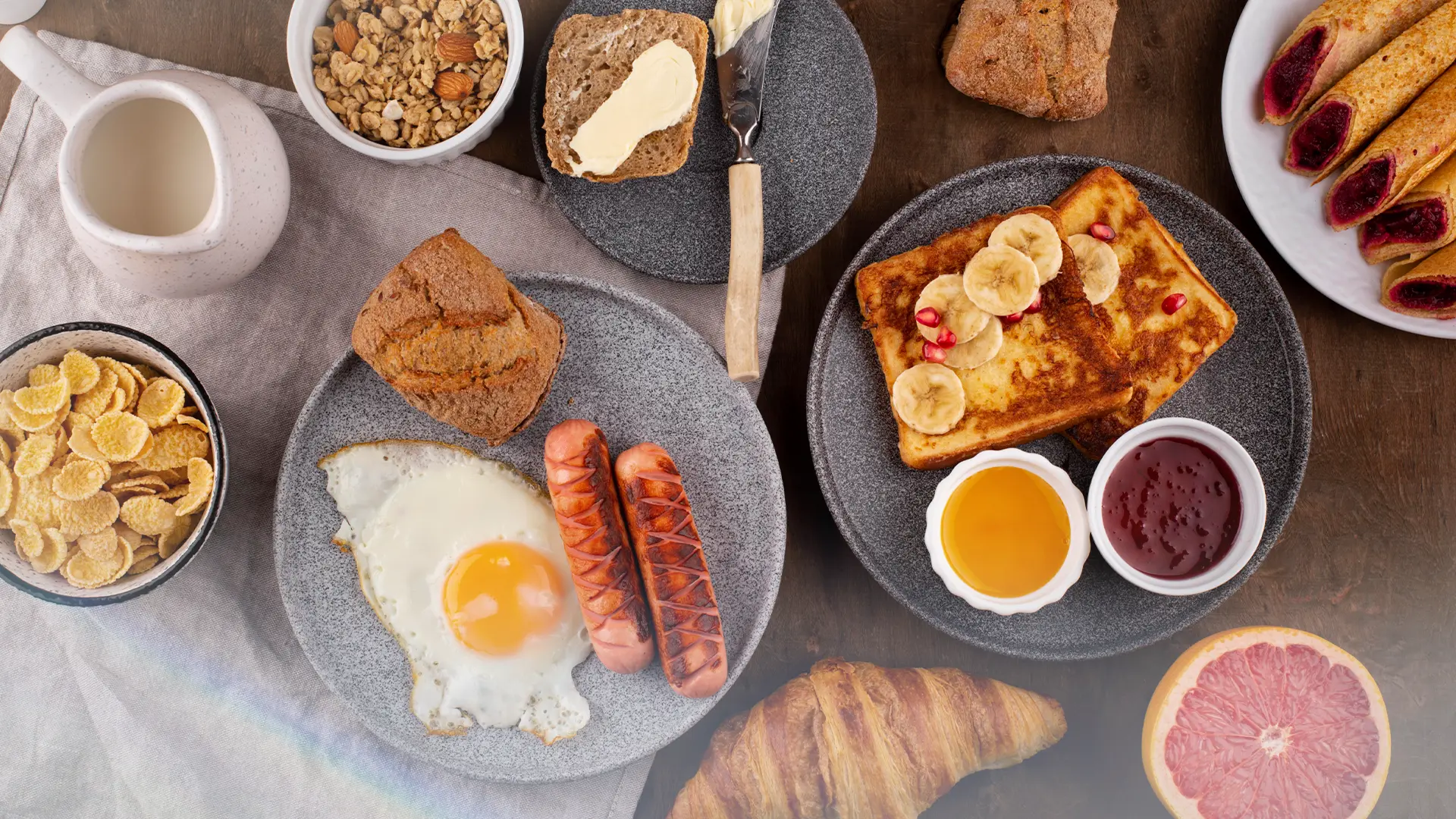
Many restaurants now plate enhanced versions of the Full English: organic eggs, artisanal halal sausages, refined mushrooms, slow-roasted tomatoes and British-inspired beans. Sourdough replaces supermarket toast; plating replaces simplicity. The DNA remains British, but the execution feels Dubai-ready.
British baked goods have also found their moment. Scones appear alongside tea menus, shortbread crumbles elevate brunch desserts, and oat biscuits pair beautifully with speciality coffee. Even condiments — marmalade, lemon curd, clotted cream and British jams — act as high-margin “premium touches” cafés love offering their guests.
A small visual helps contextualise where British breakfast fits:
| Category | Dubai Positioning |
|---|---|
| Full English (refined) | Premium café brunch staple |
| Scones & baked goods | Afternoon tea + breakfast crossover |
| Preserves & spreads | Upsell items with strong margins |
| Shortbread & biscuits | Luxury accompaniment to tea |
| English Breakfast tea | Evergreen café favourite |
Getting Licensed: The Legal Foundation for Supplying Dubai Cafés
If you want to supply cafés, restaurants or hotels in Dubai, you need the right legal structure. Food products are strictly regulated, so you cannot import anything without a UAE trade license and proper product registration.
This is where free zones — particularly digital-first ones — simplify the process. Meydan Free Zone is a preferred launchpad for UK founders because it mirrors the efficiency of UK digital government, but with a frictionless UAE twist.
Meydan Free Zone offers:
- Fully digital setup, handled entirely online
- Passport-only company formation
- The Fawri business license, enabling incorporation in under 60 minutes
- A guaranteed IBAN through partner banks
- Over 2,500 business activities — ideal for multi-channel F&B brands
- mResidency for modern visa management
- An award-winning reputation for founder-friendly operations
For British breakfast suppliers juggling importation, wholesale, consultancy, pop-ups, and e-commerce, that breadth of activities is a major advantage.
Registering Breakfast Products & Meeting Packaging Requirements
Every SKU you import must be registered with Dubai Municipality. They review formulations, ingredients, allergens, artwork, expiry dates and storage conditions. It’s a predictable process, but it needs precision — especially for spreads, baked goods and condiments.
Packaging must include English and Arabic. Most British brands integrate Arabic directly into their designs or apply neat bilingual stickers without compromising aesthetics.
Importing British Breakfast Ingredients: The Practicalities
British breakfast components fall across a mix of product types — some fragile, some heat-sensitive, all requiring appropriate logistics.
Most items attract 5% customs duty. Tea can qualify for 0% duty depending on classification. Shipping by air is the most reliable for delicate goods; sea freight suits higher-volume shipments once demand solidifies.
Climate-controlled warehousing is important for butter-heavy baked goods and spreads, with storage typically ranging from AED 300–900 per pallet per month.
A quick breakdown:
| Cost Area | Typical Range |
|---|---|
| Air freight | £3.50–£6/kg |
| Sea freight (LCL) | £300–£550 per pallet |
| Storage (climate-controlled) | AED 300–900/month |
Your All-in-One Solutions for Business Setup in Dubai
Explore Meydan PlusVAT, Corporate Tax & Understanding Free Zone Benefits Properly
VAT is simple:
- 5% VAT on sales inside the UAE
- 0% VAT on exports
Where things get strategically interesting is corporate tax. The UAE applies:
- 0% tax on your first AED 375,000 in profit
- 9% tax above that
But free zones introduce a game-changing dimension.
A Meydan Free Zone company can qualify as a Qualifying Free Zone Person (QFZP) — a federal status that enables 0% corporate tax on eligible income. To maintain QFZP status, a business must:
- operate from a Qualifying Free Zone such as Meydan
- earn income from permitted activities such as trading, e-commerce or consultancy
- avoid excluded activities
- maintain proper financial documentation
For British breakfast brands supplying cafés within Dubai, local sales may fall under the standard 9% band once above the profit threshold. But for brands exporting to the GCC, supplying international clients, or running cross-border e-commerce, qualifying income may fall under 0% corporate tax.
Meydan Free Zone is structured to allow its licensees to meet these requirements, which is why many UK founders use it as their regional distribution base.
Why Dubai Is Ready for a British Breakfast Renaissance
Dubai is a city that loves global flavours, strong stories and comforting food — a perfect match for British breakfast culture. Whether you’re supplying condiments, baked goods, tea, artisanal components or complete breakfast kits, the opportunity is both deep and diverse.
Pair that with Meydan Free Zone’s digital-first setup, passport-only formation, guaranteed IBAN, broad activity coverage and free zone structure that supports 0% corporate tax on qualifying income, and the path for British entrepreneurs becomes genuinely compelling.
In short: if you’ve ever imagined your British breakfast flavours appearing on Dubai’s best tables, there has never been a better time to enter the market.
Ready to Launch Your Business in Dubai?
Let's ConnectCitations
¹ Mordor Intelligence, "United Arab Emirates Foodservice Market," accessed 2026. (tier-2)
² Food and Drink Federation, "Trade Snapshot Q1 2025," June 2025.
³ Dubai Department of Economy and Tourism, "Dubai Welcomes 18.72 million International Visitors in 2024 (+9% YoY)," February 2025.
⁴ CNBC, "UK hopes to lure expats back from UAE as war challenges Dubai's appeal," April 21, 2026.