
Table of Contents
Frequently Asked Questions
FAQs
1. Which Indian products are in highest demand in the UAE?
Foods, spices, packaged FMCG, pharmaceuticals, textiles, auto parts, jewellery, electronics, organic foods, home décor and herbal beauty products all see strong, consistent demand in the UAE.
2. Do I need a UAE company to export from India to Dubai?
Legally, you can export directly from India. Practically, larger buyers and distributors often prefer working with a UAE-registered company because it simplifies payments, documentation and after-sales coordination.
3. Which free zone works well for Indian exporters?
Exporters tend to prefer Dubai-based free zones for credibility and connectivity. Many choose Meydan Free Zone because it is a fully digital, 24/7 free zone with MoFA-approved licenses and strong banking and logistics connectivity.
4. Can I use Dubai as a re-export hub for other markets?
Yes. This is one of Dubai’s biggest advantages. Goods imported into Dubai can be re-exported to GCC, Africa, CIS and European markets using regional distribution networks and existing trade routes.
5. Are there special trade benefits for India–UAE exports?
Yes. Under the India-UAE CEPA framework, many products enjoy reduced tariffs and smoother customs processes. Always confirm specifics with your logistics partner or trade consultant based on your HS codes.
Topic Summary
1. Petroleum Products and Petrochemicals
India’s refined petroleum products and petrochemicals are highly sought after in the UAE due to the region’s thriving industrial and manufacturing sectors, creating steady demand for these materials.
2. Pharmaceuticals and Medical Products
The UAE’s healthcare sector continues to expand rapidly, increasing the demand for Indian generic medicines, active pharmaceutical ingredients (APIs), and medical devices.
3. Organic Food and Spices
Indian organic food products and spices have gained popularity in the UAE, driven by a health-conscious consumer base and the strong cultural ties between the countries.
4. Textiles and Apparel
Indian textiles, garments, and home textiles enjoy high demand in the UAE thanks to their quality, craftsmanship, and competitive pricing, appealing to both retail consumers and business buyers.
5. Precious Stones and Jewelry
The UAE’s position as a global jewelry trading hub makes Indian-cut diamonds, precious stones, and traditional jewelry a significant export category with robust growth potential.
Top Export Opportunities: Indian Products In High Demand In The UAE
India and the UAE have always shared a trade relationship built on trust, community, and continuity. In recent years, it has deepened further. The India-UAE Comprehensive Economic Partnership Agreement (CEPA) is the reason. It has cut tariffs and simplified trade procedures for many product categories.
The scale is clear. Per the UAE-India Business Council's UICC publication "The UAE-India CEPA at Four"¹, bilateral trade reached USD 101.25 billion in FY 2025-26. That crossed the USD 100 billion mark for the second year running. Non-oil trade now makes up nearly two-thirds of the total. The leaders of both nations have set a new target of USD 200 billion by 2032. Per the UAE Ministry of Economy and Tourism², CEPA has removed duties on 97% of tariff lines. That covers 99% of India's exports by value. More than 6,090 products became duty-free from day one of the agreement.

Source: India Ministry of Commerce and Industry, with Dubai Chamber of Commerce membership data and non-oil trade figures from UAE Minister of Foreign Trade Dr Thani Al Zeyoudi.
For Indian exporters, the UAE is no longer just a destination market. Dubai especially has become a regional hub. It moves Indian products into Saudi Arabia, Oman, Qatar, Bahrain, Kuwait, Africa, and even Europe through a single gateway. So one well-managed export line into Dubai can open several markets at once. For Indian businesses that want to scale smartly rather than just chase volume, this is a serious advantage.
Are you exploring which Indian products are in highest demand in the UAE today? These are the export opportunities that actually work on the ground.
10 Best Indian Products in High Demand in the UAE 2026
1. Indian Foods, Spices and Packaged FMCG Goods
Walk into any UAE supermarket, from hypermarkets to neighbourhood groceries. You will notice how strongly Indian food products dominate entire aisles. The demand is not driven only by the Indian diaspora. Emiratis, Arabs, Africans, Europeans, and other South Asians all buy Indian snacks, staples, and packaged goods. They are familiar, competitively priced, and consistently high in quality.
Chips and namkeen, masalas, tea and coffee, pickles, ready-to-eat meals, and frozen staples like parathas and rotis all ship well from India to Dubai. Many exporters no longer just send direct consignments to local buyers. Instead, they set up a UAE-registered company. It manages invoicing, local distribution, and re-exports.
2. Pharmaceutical Products and Wellness Supplements
India is a global powerhouse in pharmaceuticals. That strength shows in the UAE market. Dubai and the wider UAE import large volumes of Indian generic medicines, OTC products, wellness capsules, and herbal formulations. Ayurveda-based and traditional products are especially strong.
Dubai is also a medical and healthcare hub for the region. So Indian products sold into the UAE often move onward into hospitals and pharmacies across the GCC and parts of Africa. Once product registration hurdles are cleared, pharma exports usually become predictable, repeat orders. They stop being one-off shipments.
For official regulatory requirements and updates, always cross-check with the UAE Ministry of Economy. Health-related products are tightly controlled.
3. Textiles, Apparel and Indian Ethnic Wear
Indian textiles have been part of the Gulf retail story for decades. Dubai's shoppers and wholesalers look to India for many things. That includes fashion fabrics, ready-made garments, uniforms, and niche ethnic wear.
Ethnic clothing sees especially constant demand. Think sarees, lehengas, anarkalis, kurtas, and Indo-western outfits. The city's multicultural population drives it, along with its high density of weddings, events, and festive celebrations. Bulk buyers often source from Dubai. They then move products into Africa and Central Asia through established trade networks.
Many Indian exporters upgrade from purely Indian entities to a Dubai trade license. It makes payments smoother, simplifies documentation, and builds trust with buyers. Many buyers prefer to deal with a UAE company.
4. Construction Materials and Engineering Goods
Dubai's skyline and infrastructure may look mature. But on the ground, building never really stops. New residential communities, commercial towers, warehouses, and industrial facilities keep going up across the emirate and beyond.
This sustains long-term demand for Indian goods. That includes tiles, sanitaryware, electrical equipment, steel and metal products, pipes, and fittings. Engineering goods also see steady uptake. Think valves, fasteners, and industrial machinery components.
Some Indian manufacturers use a Dubai entity as their regional hub. They then serve UAE projects and supply contractors in Saudi Arabia, Oman, and Africa. They get shorter delivery timelines and easier customs handling through ports like Jebel Ali.
5. Automotive Parts and Accessories
The UAE is a major automotive aftermarket centre. Vehicles from Japan, Europe, the US, Korea, and China all need parts. Indian manufacturers specialise in cost-effective, reliable components.
Filters, brake parts, suspension components, tyres, lubricants, and accessories all export from India to Dubai in large quantities. Many of these consignments are then re-exported into Africa and neighbouring GCC countries. That makes Dubai the transit and distribution brain of the operation.
Indian exporters often benefit from a UAE bank account attached to a local company. It simplifies trade credit, LC negotiations, and foreign currency management. That beats handling everything from India alone.
6. Gold, Jewellery and Precious Stone Trade
India brings craftsmanship and manufacturing depth. Dubai brings global demand and a favourable trading environment. Together, they form one of the most active jewellery and precious metals corridors in the world.
Indian gold jewellers, diamond cutters, and gemstone traders use Dubai to:
- source raw materials,
- sell finished pieces, and
- re-export inventory to other markets.
A Dubai trading company adds a layer of international credibility. It helps with shipping, insurance, and banking. For many families with a jewellery background in India, moving part of their operations to Dubai is now almost a default generational strategy.
7. Organic Foods, Millets and Specialty Agro Products
As health awareness grows, Dubai's consumers want organic and specialty foods in larger volumes. This is a natural sweet spot for Indian exporters. It suits those already familiar with certification processes.
Several categories are increasingly visible on UAE supermarket shelves and grocery apps. That includes organic pulses and grains, millets, cold-pressed oils, natural sweeteners, dry fruits, and Ayurvedic consumables. Indian brands that position around clean, traceable sourcing find it easier to stand out.
Some exporters want to build not just B2B, but also D2C or marketplace-driven brands. They often benefit from free zone structures that integrate with e-commerce. Meydan Free Zone's ecosystem includes marketplace options. These let businesses sell online across more than 30 local and international e-commerce platforms. Payment gateway partners also support smooth online collections across websites, POS, and even social platforms.
8. Home Décor, Handicrafts and Furniture
Dubai's hospitality and residential sectors keep evolving. New hotels, serviced apartments, co-living spaces, and short-term rentals all generate continuous demand for distinctive furniture and décor.
Indian exporters of handcrafted goods find strong interest here. That includes furniture, textiles, carpets, brass and copperware, wall décor, and artisanal accessories. Interior designers, procurement firms, and retailers in the UAE all buy them. The mix of aesthetic value and pricing flexibility makes Indian products attractive across different budget tiers.
With a Dubai-registered company, Indian businesses gain easier access to local hospitality procurement chains. They can also manage regional B2B relationships more professionally.
9. Electronics, Mobile Accessories and Consumer Tech Add-ons
Many consumer electronics are made in East Asia. But India has built real strength in lower-cost, high-volume accessories and add-ons. Exporters of mobile phone accessories, chargers, cables, headphones, computer peripherals, and refurbished devices find Dubai an excellent wholesale market.
Dubai's role as a re-export hub matters most here. Goods brought from India into the UAE can be routed onward to markets in Africa and Central Asia. Networks of wholesalers and traders handle this, all anchored by a single Dubai entity.
10. Ayurvedic, Herbal and Beauty Products
Indian brands have a global reputation in herbal beauty and wellness. Dubai is one market where that reputation turns into consistent sales. Consumers across age groups buy Ayurvedic skincare, hair oils, herbal bath products, and natural cosmetics from Indian brands.
Distribution models vary widely. They range from specialty retail and pharmacies to online channels and social-commerce. For Indian founders building beauty brands, a Dubai company and bank account helps. It makes it easier to manage influencer payouts, agency fees, regional marketing, and multi-currency transactions.
Indian Products and Their Dubai Demand Drivers
Why Indian Exporters Use Dubai as Their Base
You can export directly from India to individual buyers in the UAE. Many businesses still operate that way. But as volumes grow, the limits become clear. Payments get slower. Documentation gets more complex on every shipment. And your positioning with large buyers stays weak.
A Dubai-registered company changes that. It acts as your regional head office. It lets you:
- invoice in AED or other major currencies,
- use UAE banking to handle collections and payments,
- work with logistics partners for customs clearance and warehousing, and
- position yourself as a regional supplier rather than just an overseas vendor.
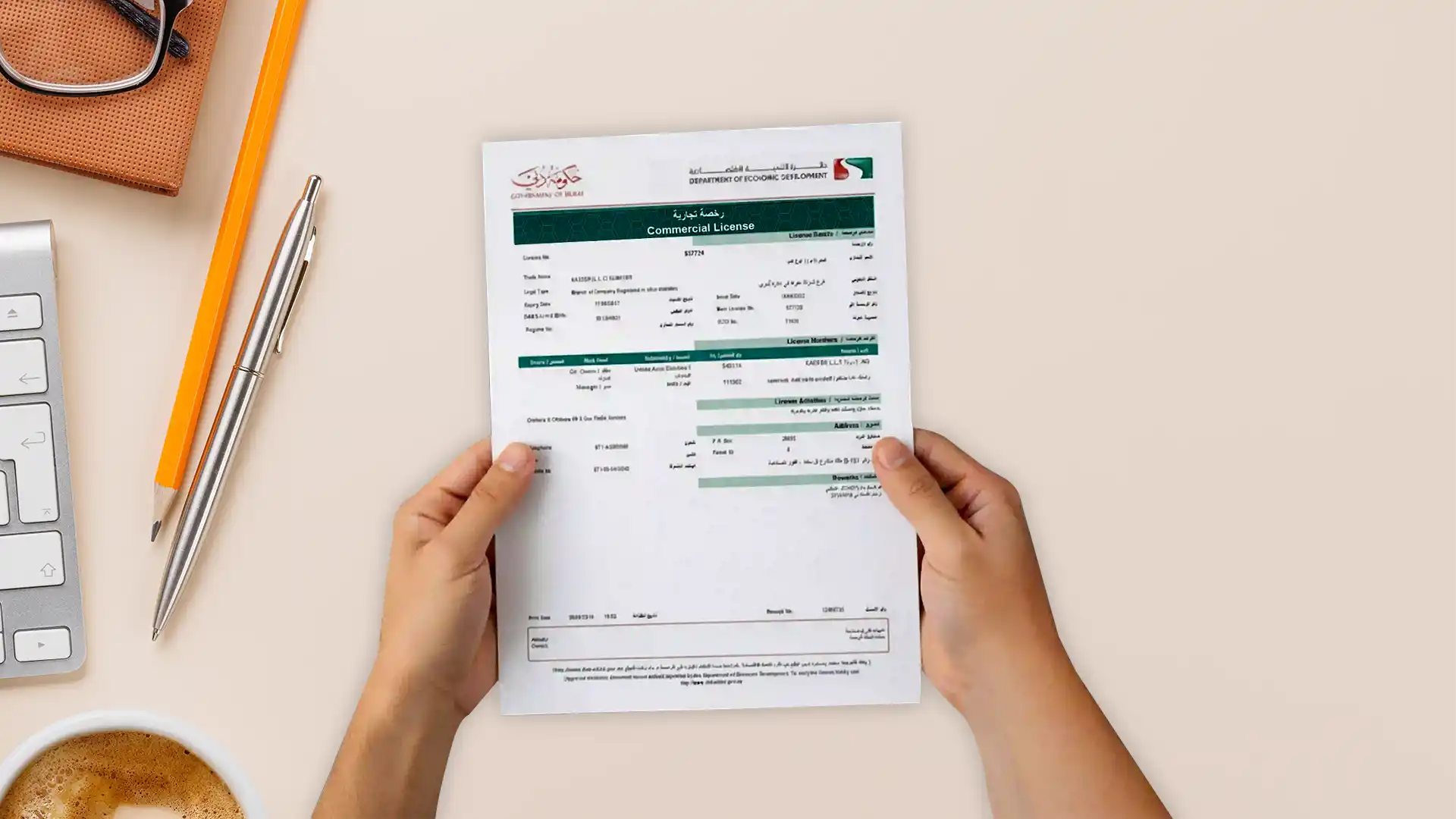
This is why many Indian exporters establish in Meydan Free Zone. It is one of the UAE's most advanced digital free zones. It offers over 2,500 business activities, MoFA-approved business licenses accredited by Dubai Chamber of Commerce, and the ability to open a bank account with a guaranteed IBAN.
For exporters, these are not abstract benefits. They are practical tools that affect margins, speed, and trust.
[blockCTABizSetup]
How Indian Exporters Typically Start
Most Indian exporters follow a simple progression:
They begin by testing demand through existing buyers in the UAE. Once they see steady volume, they set up a Dubai trading company, often in a free zone. With the license in place, they move to the next steps. They secure an investor visa, open a corporate bank account, and begin formalising distributor relationships, re-export routing, and marketplace strategies.
Dubai Customs and UAE government portals provide clear procedures for import-export requirements. It is always wise to cross-check documentation and HS code classification through official channels such as Dubai Customs.
[blockCTAContact]
Footnotes
¹ UAE-India Business Council (UICC), "The UAE-India CEPA at Four: Bilateral Trade Crosses USD 100 Billion for Second Year," via Times of Oman, May 2026.
² UAE Ministry of Economy and Tourism, "UAE-India Comprehensive Economic Partnership Agreement," 2026.