
Table of Contents
Frequently Asked Questions
What is the activity code for dry ice blast cleaning in Dubai
Dry ice blast cleaning is registered under activity code 8129.99, which covers specialised cleaning services not classified elsewhere under standard industrial categories. This code sits within the broader Industrial Cleaning Services industry.
When applying for your licence, you should confirm that this specific code is approved under your chosen licensing authority, as free zones vary in their permitted activity lists.
What type of licence do I need to operate a dry ice blast cleaning business in Dubai
You will need a Commercial or Industrial Service licence to legally operate a dry ice blast cleaning business in Dubai. This applies whether you register on the mainland or within a free zone.
The licence must be obtained before you begin operations. The Dubai Department of Economy and Tourism (DET) handles mainland licences, while free zones such as Meydan, IFZA, and JAFZA issue their own licences under their respective authorities.
How long does it take to set up a dry ice blast cleaning licence in Dubai
Setup timelines vary depending on your chosen jurisdiction. A free zone licence typically takes 4–8 working days, making it the faster option for operators who want to begin trading quickly.
A mainland licence issued by the Dubai Department of Economy and Tourism generally takes 2–4 weeks to process. Delays can occur if documentation is incomplete, so preparing all required paperwork in advance is advisable.
Should I register my dry ice blast cleaning business on the mainland or in a free zone
The right jurisdiction depends on your target client base and operational model. A mainland licence allows you to contract directly with government entities, semi-government bodies, and industrial clients across all seven emirates — making it the better choice if you are targeting large facilities operators or public-sector infrastructure owners.
Free zone licences offer 100% foreign ownership, faster registration, and lower overhead. They are well suited to B2B operators whose clients are private-sector companies. JAFZA is particularly relevant if your clients are in logistics or port-adjacent manufacturing, while Meydan Free Zone is cost-competitive and supports remote setup. For more on JAFZA's structure, refer to the Ports, Customs and Free Zone Corporation (PCFC).
What documents are required to apply for a dry ice blast cleaning licence in Dubai
The core documentation required across most jurisdictions includes passport copies, a UAE visa or Emirates ID if you are already resident, and a No Objection Certificate (NOC) if you are currently employed elsewhere in the UAE.
Some authorities also require a brief business plan summary. For mainland applications, trade name reservation is done through the DED e-services portal; free zone applicants use their chosen zone's online portal. Ensuring all documents are complete before submission helps avoid processing delays.
Is there a minimum share capital requirement for a dry ice blast cleaning licence in Dubai
For most free zone structures, minimum share capital is not mandated, which reduces the upfront financial barrier for new operators. This makes free zones an attractive starting point for entrepreneurs entering the market.
Mainland requirements can vary depending on the legal structure you choose, so it is worth confirming the specific requirements with the Dubai Department of Economy and Tourism or a registered business setup adviser before proceeding.
Can I obtain investor or employee visas through a dry ice blast cleaning licence in Dubai
Yes. A dry ice blast cleaning licence in Dubai makes you eligible for both investor and employee visas, as confirmed by the Invest in Dubai platform. The number of visas available to your company typically depends on your office space allocation and the size of your registered entity.
A flexi-desk arrangement in a free zone generally qualifies for a limited visa quota, while larger physical office spaces can support more visa applications. Planning your visa requirements early is important if you intend to relocate staff or bring in specialist technicians.
What industries in Dubai create demand for dry ice blast cleaning services
Dry ice blast cleaning is used across several high-value sectors with a strong presence in Dubai. Key industries include aviation MRO, food manufacturing, utilities infrastructure, and petrochemical plants. Areas such as Jebel Ali, Al Quoz, and Dubai Industrial Park generate consistent, repeat demand for this type of specialist cleaning.
The process is valued because it is non-abrasive, chemical-free, and produces no secondary waste — qualities that are particularly important in regulated environments like food processing facilities and aviation maintenance operations. According to IMARC Group, the global industrial cleaning services sector is on a sustained growth trajectory, supporting the long-term commercial case for operating in the UAE market.
Apply for a Dry Ice Blast Cleaning License in Dubai
Dry ice blast cleaning is growing fast in the UAE. Factories, aircraft hangars, food plants, and oil and gas sites all buy it. Dubai treats it as a licensed activity, so you need a trade license in hand before you take your first job.
This guide covers what the work involves, who pays for it, whether to go mainland or free zone, the setup steps in order, and what it really costs to start.
Key Stats at a Glance
| Activity name | Dry Ice Blast Cleaning |
|---|---|
| Activity code | 8129.99 |
| Industry | Industrial Cleaning Services |
| License type | Commercial / Industrial Service |
| Typical setup timeline | 4 – 8 working days (free zone); 2 – 4 weeks (mainland) |
| Minimum share capital | Not mandated for most free zone structures |
| Visa eligibility | Yes, investor and employee visas available – Invest in Dubai |

What This License Covers
Code 8129.99 covers specialist cleaning that does not fit any other category. Dry ice blasting sits squarely inside it.
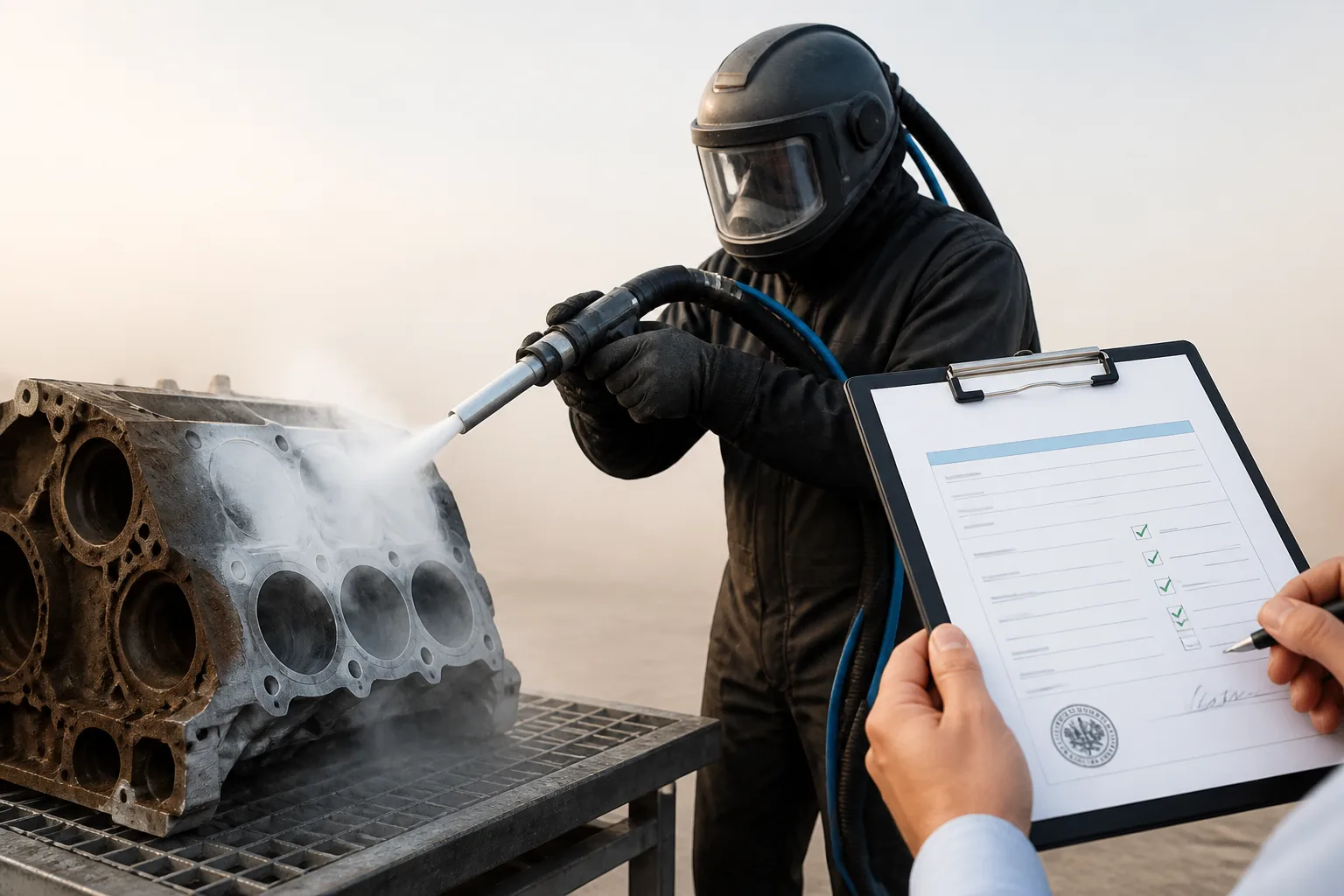
The method is simple to describe. You fire solid CO2 pellets at a surface at high speed. The pellets knock off grease, coatings, and burnt-on residue, then turn straight into gas. No water, no grit, no leftover mess to sweep up afterwards.
That last point is what you are actually selling. A food plant cannot have sand blown around its production line. An aircraft workshop cannot have chemicals sitting in a wing cavity. Dry ice solves a problem that older cleaning methods create.
Who Your Clients Will Be
Four groups buy most of this work in Dubai:
- Aviation maintenance, repair, and overhaul workshops
- Food manufacturing plants
- Utilities infrastructure operators
- Petrochemical plants
They sit in the same few places. Jebel Ali, Al Quoz, and Dubai Industrial Park are where the jobs are. All four groups buy on repeat. Once a plant manager trusts your crew around expensive machinery, they keep calling you back rather than starting a new search every quarter.
Mainland or Free Zone
This is the biggest choice you will make when setting up. Let your clients decide it, not the price.
| Factor | Mainland (DET) | Free Zone (Meydan Free Zone) |
|---|---|---|
| Client access | All seven emirates, including government bodies | Mainly private sector and international clients |
| Ownership | 100% foreign ownership for most commercial codes | 100% foreign ownership |
| Office | Tenancy contract registered with Ejari | Flexi-desk options available |
| Speed | 2 – 4 weeks | 4 – 8 working days |
A mainland license from the Department of Economy and Tourism lets you work directly with UAE government bodies, semi-government bodies, and industrial clients across all seven emirates. If you are going after large facilities operators or public infrastructure owners, that is your route.
Meydan Free Zone gives you full foreign ownership, quicker registration, and lower running costs. It suits work sold to private companies. You can also set the company up without being in the country, which helps if you are still abroad and planning the move.
[blockCTACostCalculator]
Step-by-Step Setup Guide
- Step 1, pick your jurisdiction: Check that code 8129.99 is approved by the authority you choose. Approved lists are not identical.
- Step 2, book your trade name: Use the DET e-Services portal for a mainland company, or the Meydan Free Zone portal for a free zone one.
- Step 3, send in your setup documents: Passport copies, UAE visa or Emirates ID if you already live here, a No Objection Certificate if you work for someone else, and a short business plan where it is asked for.
- Step 4, sort out your address: A flexi-desk covers most free zone service licenses. Mainland needs a real tenancy contract registered with Ejari.
- Step 5, pay the fees and get initial approval: Your trade license certificate is issued at this point.
- Step 6, apply for visas and open a bank account: Most UAE banks want the license, the tenancy contract, and shareholder papers as a minimum.
Mainland operators may need extra approvals from Dubai Municipality for industrial service work. Check what applies today on the Official UAE Government Portal before you start.
Compliance and What You Need in Place
No single federal permit covers dry ice blasting on its own. Several duties still apply the moment you start trading.
Health and safety
MOHRE rules cover your field crews. That matters more here than in most cleaning work, because your teams handle pressurised CO2 systems on live industrial sites.
VAT
You must register once your taxable turnover passes AED 375,000. Register and file through the Federal Tax Authority.
Imports
Bringing in dry ice and CO2 kit may need customs declarations under PCFC procedures, particularly for shipments coming through Jebel Ali Port.
What It Costs and How Long It Takes
Free zone fees
License fees usually run from AED 12,000 to AED 20,000 a year. The figure moves with your visa package and office type. Meydan Free Zone is at the lower end of that range for single-activity service licenses.
Mainland fees
A mainland DET commercial license for service work generally costs AED 15,000 to AED 25,000, and that includes all government fees. Since the 2021 ownership reforms, most industrial service activities no longer need an Emirati partner, so full foreign ownership is available for most commercial codes.
Your real costs
The license is not your big bill. Blasting units, CO2 supply contracts, and trained technicians are. Work those numbers out before you project a break-even date.
Timelines
Free zone registration usually completes in 4 to 8 working days from the day you submit. Mainland runs 2 to 4 weeks once municipality approvals are counted in.
Market Opportunity
IMARC Group tracks steady growth in industrial cleaning services worldwide. Closer to home, UAE infrastructure spending, both built and planned, keeps pushing demand for cleaning that does no damage and breaks no rules.
The four buying sectors are all growing here. Aviation maintenance follows passenger traffic. Food manufacturing follows population. Utilities and petrochemical plants follow everything else. None of them can skip cleaning, and none can use methods that leave grit or chemicals behind.
That is the useful part. Your clients are not deciding whether to buy. They are deciding who to buy from.
Conclusion
A dry ice blast cleaning license in Dubai is simple to get. The code is clear, the jurisdiction choice drives most of the cost, and the rules are workable for anyone who has run this kind of operation before.
The real work is winning clients in Dubai's industrial belt. Jebel Ali, Al Quoz, and Dubai Industrial Park are where the pipeline sits. Get the license right, then spend your time there.
Use the cost calculator to model your setup spend, or talk to a setup adviser to confirm the right jurisdiction for your client list.
[blockCTAContact]
References
- Invest in Dubai
- IMARC Group
- Ports, Customs and Free Zone Corporation
- DET e-Services portal
- Dubai Municipality, Waste Department
- Ministry of Human Resources and Emiratisation
- Federal Tax Authority