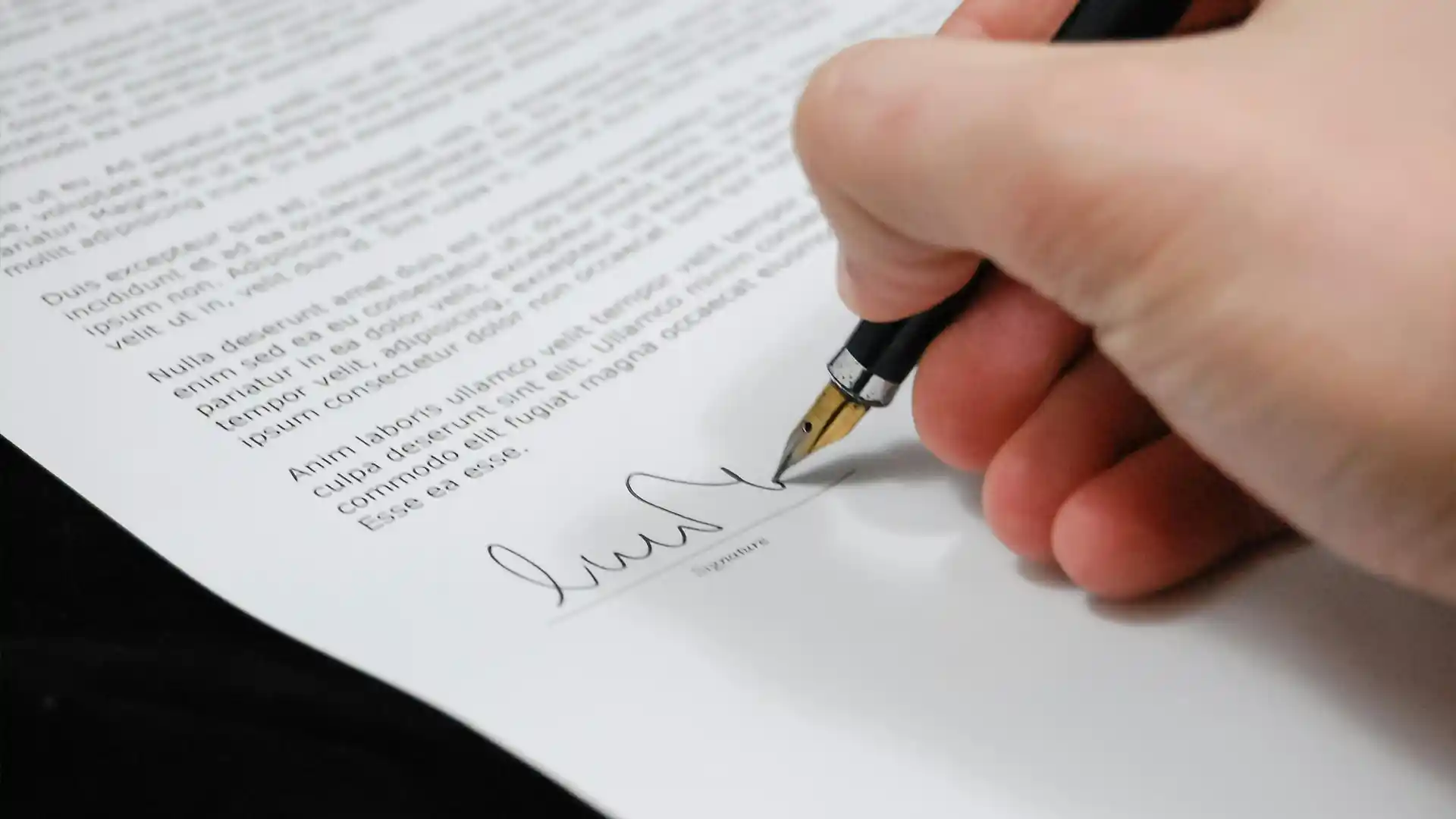





How to Expand an Indian E-Commerce Business into the GCC


September 10, 2026
Read More

Read In
Set up a Meydan Free Zone company, apply for investor residency, and plan your Emirates ID, banking and setup costs, all before you fly from India.



Use our free cost calculator to get a clear breakdown of your business setup costs in a Dubai free zone.
Select your activities, visas, and preferences to see your total instantly. Whether you're a freelancer, startup, or established business, get a tailored estimate that helps you plan and budget with confidence.
Your Indian CLIENTS

Bill an Indian client from your newly set up UAE company and the paperwork lands on their desk, not yours.
It counts as an import of service on their end, so under India's reverse charge rules, they self-assess and pay the GST directly to the government rather than you adding it to your invoice. You send the same clean invoice you always have. Their accountant just files it slightly differently.

Yes, and it's built around exactly the client base you're bringing. Income from clients outside the UAE, including your Indian ones, is qualifying income taxed at 0%. Income from Dubai mainland clients is taxed at 9%.
Keeping that 0% status as a QFZP means real substance in the UAE, audited accounts, and non-qualifying income under the lower of 5% of revenue or AED 5 million.

Most people assume the hard part of moving a business to Dubai is figuring out tax on income once the company is set up. It isn't. The part that founders actually spend time figuring out is funding the company in the first place. Setting up or investing in a foreign entity from India is classified as Overseas Direct Investment (ODI) under FEMA, and it runs on a separate track from the Liberalised Remittance Scheme even though both apply to the same transfer.
Most setups fall under the Automatic Route, meaning you don't need RBI approval before you send the money, but you do have to report it through your bank's Authorised Dealer desk, using Form FC, and get a Unique Identification Number for the investment. Skip that step and you're not in a legal grey area, you're in breach of FEMA, with penalties that can run to multiples of the amount involved.
CHOOSE YOUR PACKAGE
Moving To UAE
Quicker than the RBI paperwork alone would suggest.
Your business license can be issued in a day. Visa and Emirates ID follow within a week to ten days. Most founders have their business up and running within four to eight weeks of starting, and the FEMA reporting runs in parallel rather than holding anything up.
Choose your business activities, model your setting up costs, and speak to a set-up advisor before starting your application.
Your Fawri license will be delivered to you in under 60 minutes, while the standard business license can be delivered in a day.
Receive your entry permit, then complete your medical test, biometrics and Emirates ID issuance after arriving in Dubai.
Open your bank accounts, view homes, register your tenancy with Ejari and connect your DEWA utilities.
Sponsor your dependants, confirm school placements, ship your belongings and get your driving license after arrival.
Emirates ID in your wallet, bank account live, tenancy registered, health insurance active and corporate tax registration completed.
YOUR NEXT STEPS
Once you submit our form, we’ll get in touch with you to set up your company, sort out your visa and Emirates ID, and get your bank account up and running. It’s as easy as that.
Wealth & Tax
Moving your business to Dubai severs your tax residency from India, but only if you actually cross the line into Non-Resident Indian (NRI) status.

Section 6 of the Income Tax Act runs on day counts. Spend 182 days or more in India in a financial year and you're a resident. Stay under that, and a second test can still catch you: 60 days or more in the current year plus 365 days or more across the prior four years. Miss both, and you're a non-resident for that year.

Then the second test matters more than the first. Frequent short trips can add up to 60-plus days quickly, and combined with 365 days over the prior four years, that's enough to pull you back into resident status even without a single long stay.

No, not for tax residency. India's test is pure day count, not ties like a spouse, a home, or a bank account the way some countries run it. You can keep a house, a car and a family in India and still be a clean NRI, as long as you stay under the day thresholds.

Resident but Not Ordinarily Resident (RNOR) is a transitional category, not a Dubai mover's main concern day one, but relevant if you ever return.
You land in RNOR if you were non-resident in 9 of the last 10 years, or present in India for 729 days or fewer across the last 7 years. As RNOR, your foreign income stays untaxed in India even while you're technically resident again.

Under Section 6(1A), if you're an Indian citizen earning ₹15 lakh or more from Indian sources and you're not liable to tax in any other country, you can be deemed an Indian tax resident even with zero days spent in India that year.
The UAE's 0% personal tax is exactly the scenario this rule targets, so high Indian-source income needs planning, not just a day count.

Not directly. RNOR is most useful for NRIs who eventually return to India, giving them a tax-free window on foreign income for up to three years. If you're moving out, your focus should be the NRI tests, not RNOR.

Yes. Serving Indian clients from your UAE company doesn't affect your residency status on its own, since residency is based on physical presence in India, not where your income comes from.

Yes. India taxes India-sourced income regardless of your residency status, so rental income, dividends and capital gains on Indian assets stay taxable in India whether you live in Dubai or not.

Yes, through your NRE or NRO account, though some mutual fund categories restrict NRI investment from certain countries, and capital gains on Indian assets remain taxable in India regardless of where you live.

A final Indian income tax return covering income up to your date of departure, and updating your bank accounts to NRE or NRO status once you cross into NRI territory, since keeping a regular resident savings account after that is a FEMA violation.

Yes. Once you're an NRI, continuing to operate a regular resident savings account is not compliant under FEMA. Convert to an NRE account for foreign income you want fully repatriable and tax free in India, or an NRO account for India-sourced income like rent, which stays taxable.

While you're still resident, the RBI's Liberalised Remittance Scheme caps you at USD 250,000 per financial year, with Tax Collected at Source applying above ₹10 lakh in cumulative remittances. Once you're NRI, this cap stops applying to your foreign income.
Open a Bank Account
Banking is where most Indian founders find friction. But Meydan Free Zone works with 26+ banking partners specifically to lessen that friction, with a lease agreement and access to a guaranteed IBAN pathway included with every business license. So this is the one step worth not doing alone.

You will need your passport, residence visa and Emirates ID, plus your trade license for a business account.
Digital banks clear straightforward applications in days, while traditional banks take longer but suit higher volumes and credit facilities. What moves an application along is consistency: your licensed business activities, your invoices and your business description all telling the same story.

The dirham is pegged to the US dollar, which gives your AED earnings stability against currency swings that hit the rupee harder. While you're still an Indian resident, moving money out is capped under the RBI's Liberalised Remittance Scheme, USD 250,000 per financial year, with Tax Collected at Source kicking in once your cumulative remittances cross ₹10 lakh.
Once you're genuinely non-resident, that cap no longer applies to your foreign income, and NRE account balances are freely repatriable. Getting profit out of your UAE company is straightforward on the UAE side too, no exchange controls and no withholding tax.

The UAE introduced corporate tax in 2023 at 9% on profits above AED 375,000, with nothing charged below it. Free zone companies keep the 0% rate as a Qualifying Free Zone Person, and only on qualifying income.
The conditions: adequate substance in the UAE, audited accounts, transfer pricing compliance, and non-qualifying income below the lower of 5% of revenue or AED 5M. Your company registers with the Federal Tax Authority and files annually, whichever rate applies, so it is worth structuring properly from the start.
Set against Indian corporate tax rates of 25% to 30% depending on turnover and structure, that gap is most of the reason this move gets made.
Compared to the monthly payments you make in India, rent in Dubai runs in one to four cheques a year, not monthly, so budget a bigger cash buffer for year one. Your CIBIL score doesn't travel with you, the AECB starts a fresh file the day your first Dubai account opens.
There's no personal income tax return to file in the UAE at all. Your company registers with the Federal Tax Authority and files annually, and the 0% qualifying rate needs audited accounts behind it, so build that habit in from month one, not year three.
UAE Visa
Getting a visa for the UAE is usually straightforward. The important part is understanding that your visa validity and your Indian tax residency are governed by completely separate rules, even though both hinge on how many days you spend where.

No. Setting up your own company and sponsoring yourself is the standard route for founders, and it's why most Indian movers arrive on an investor visa rather than an employment one. Your business license becomes the sponsor.

Two years for a free zone investor visa, renewable. The ten-year Golden Visa is a separate category with its own thresholds, not an upgrade you grow into automatically.
Days, not months. The license can be issued in under an hour, then entry permit, medical test, biometrics and Emirates ID typically complete within a week to ten days of arrival.

Yes. Company registration and the visa process both begin online from India. You arrive to complete the medical and biometrics, which have to be done in person.

180 continuous days. Past that, a standard residence visa is nullified automatically under Federal Decree-Law No. 29 of 2021, regardless of the expiry date printed on it.

Yes, and this is the part worth knowing. The count measures continuous absence from your last exit stamp, so a single day in the UAE resets it to zero. Airside transit does not count. You have to clear immigration.

No, and confusing the two is an easy mistake since both run on day counts. Your visa cares about days spent outside the UAE. Your NRI status cares about days spent inside India. You can comfortably stay within your visa's 180-day allowance and still blow your NRI test if your India trips add up separately.

Apply for a re-entry permit through GDRFA or ICP before you hit the limit, with a fine for each month beyond the 180 days. Golden, Green and Blue Visa holders are exempt from the rule entirely.

Your investor visa is tied to the business license, so it goes when the license goes, and your dependants' visas go with yours. Theirs cannot outlast the sponsor's.

Between 30 days and 180, depending on your category, with investors at the longer end. Check yours on the ICP portal under File Validity rather than assuming.

Your bank account does not automatically close when your visa is cancelled. You must notify your bank and update your residency and KYC details. Depending on the bank and account type, it may remain open, convert to non-resident status or need to be closed.

Yes, but if the visa lapses you restart the process: new entry permit, new medical, new Emirates ID, as a first-time applicant. A rejection or an unresolved cancellation makes the next application harder.
YOUR ROUTE TO RESIDENCY
Your employer usually sponsors the visa and controls the process.


Set up your own UAE company and use it as the base for investor residency.

A remote work visa may fit employees who are not setting up a UAE business.

Family Visa
It’s a big move, but relocating as a family to Dubai is genuinely straightforward when the paperwork is prepared in the right order. Start attesting key documents before you leave, since this can determine how quickly their visas are issued after you arrive.

Yes. With Meydan Free Zone, you can add up to six visa allocations to your business license.
Once you obtain UAE residency through your company, you can sponsor eligible family members, subject to immigration requirements. This includes demonstrating a monthly income of at least AED 4,000, or AED 3,000 with accommodation, alongside the required company, housing and family documents.

Attestation is what delays families, and it has to start in India. The UAE is not part of the Hague Apostille Convention, so your marriage certificate and each birth certificate need full legalisation: notary, state Home Department or SDM attestation, the Ministry of External Affairs in New Delhi, the UAE Embassy in India, and finally MOFA in the UAE.
Unattested certificates are the most cited cause of spouse visa rejections, and starting the chain again from Dubai costs weeks. You'll also need a registered Ejari tenancy contract before you can sponsor anyone, so housing comes before family visas. Everyone over 18 sits a medical fitness test after arrival.

GEMS Modern Academy, in Nad Al Sheba, is the standout option for families in search of an Indian curriculum: it's the only Indian curriculum school in Dubai holding a KHDA Outstanding rating, a status it's held since 2011, and it teaches the CISCE board through to Grade 12.
Beyond it, Dubai runs 34 Indian curriculum schools in total, the second largest curriculum group in the city after British curriculum schools, spanning CBSE, ICSE and CISCE boards, so most families have a genuine choice of board, fees and location rather than one obvious option.
Every private school is inspected and rated by the KHDA, with ratings and fees published so you can compare before you arrive. It’s always best to apply early, as places at the most sought-after schools fill up quickly.

Health insurance is mandatory for every Dubai resident and is arranged by your sponsor, your employer, or your own company if you're self-sponsored. That covers each dependant, and their visa cannot complete without it, so it sits in your year-one budget rather than after the move. Check waiting periods before choosing a policy, particularly for maternity.
Dubai's private hospitals rank among the best in the region, with short waiting times.
Rent
Out of an estimated 4.3 to 4.4 million Indians across the UAE, the largest expatriate community in the country by a wide margin, roughly 2 million Indians live in Dubai alone. The adjustment most people talk about isn't the culture shock. Since Dubai has less of that than expected for the Indian expat, you’ll find that it's actually the pace of admin.
Diwali, Eid and Onam are all marked citywide, and temples, gurdwaras and cultural associations are as much a part of the city as anywhere in India.

Families head for Jumeirah Village Circle (JVC), Al Furjan and Bur Dubai for the strongest sense of community and proximity to Indian schools, groceries and restaurants, while Business Bay, Dubai Marina and Silicon Oasis have become popular with professionals and entrepreneurs for their newer stock and easier commutes.
Most people pick the school first and the postcode second, then commute from there.

Rent first. Renting lets you test commutes, schools and communities before committing, and Dubai tenancy law caps renewal increases through the official RERA rental index.
Buying makes sense once you know the city, and Indian nationals can purchase freehold property in designated areas the same as any other foreign national, an option a growing number of Indian investors are already using. Most people who buy in year one buy in the wrong place.

Dubai rent is usually paid in one to four cheques a year, so budget for a larger upfront outlay than a monthly Indian tenancy. Expect a 5 percent refundable security deposit, around 5 percent agency commission, Ejari registration of around AED 220, and a refundable DEWA deposit of AED 2,000 for an apartment.
A housing fee of 5 percent of annual rent is billed monthly through DEWA. Ask whether cooling is included before you sign, chiller charges can turn a good rent into an expensive one.

Domestic staff are common and straightforward to sponsor in Dubai, a real convenience compared to how this works in India. Sponsorship runs through your own residency status, with a minimum salary threshold and a security deposit, and agencies handle most of the paperwork if you'd rather hand it off entirely.
Worth building into your plan if a housekeeper or driver is already part of how your household runs.
Dubai asks less of you than you might think, and your Emirates ID does most of the work; it's your ID, your bank account key, your driving license application, all in one card.

Not directly. India isn't on the RTA's direct exchange list, so you can't simply swap your card over the counter. You'll need to complete the RTA's theory and road test process through an approved driving institute, though holders of a valid Indian driving license typically qualify for reduced training hours rather than starting as a complete beginner.

Now you might think this is one thing the Indian heat has definitely prepared you for, but Dubai summers regularly exceed 40°C between June and September, with high humidity near the coast. But most of daily life moves indoors with outdoor activities limited to early mornings and evenings. October to April flips completely, closer to a good Indian winter, and the city opens back up.

Yes. Only for non-Muslims 21 and over, in licensed venues and private residences. Dubai residents need a free alcohol license to purchase from authorised retailers, which can be obtained using an Emirates ID. Drinking in public is prohibited, and Dubai has zero tolerance for driving under the influence.
Stay under 182 days in a financial year and you're clear on the primary test. There's a second test too, 60 days plus 365 across the prior four years, so keeping an eye on your total India time across the year, not just one trip, is the easy way to stay comfortably on the right side of it.
No, and this is good news. India's test runs purely on physical presence, not ties like a spouse or property the way some countries assess it. Keep the house, the car, even a company running as a subsidiary of your new Dubai parent, none of that affects your day count.
Not once you're genuinely NRI and structured properly. India and the UAE have had a tax treaty in force since 1993, and the free zone's 0% rate is built for exactly the client base most Indian founders bring with them.
If you're earning ₹15 lakh or more from Indian sources, getting your residency status and income structure right from year one is what lets you enjoy Dubai's tax position with total clarity rather than wondering about it later. Founders who plan this early get the cleanest outcome.
Go straight to the purpose-built route. ODI reporting through your Authorised Dealer bank, using Form FC and a UIN, is designed for exactly this, and most setups fall under the Automatic Route, no prior RBI approval needed, just clean reporting from day one.
Yes. The UAE has no exchange controls and no withholding tax on what leaves your company, so profits move back to India as easily as capital moved out.
No. Most Indian founders sponsor themselves, setting up their own free zone company and letting it issue their investor visa, no employer required.
Yes, and it moves quickly. Register the company and start the visa process online from India, often getting the license the same day, then travel over for a short medical and biometrics. Most founders are trading within four to eight weeks.
Yes. Your company visa lets you sponsor up to six visa allocations, spouse and children included, and health insurance for each of them builds cleanly into your year-one plan.
Yes, and it's one of the smoothest parts of the move when your file is consistent. Meydan Free Zone works with 26+ banking partners and includes a guaranteed IBAN pathway to keep it moving.
Yes, genuinely good ones. GEMS Modern Academy holds a KHDA Outstanding rating it's kept since 2011, and Dubai runs 34 Indian curriculum schools in total across CBSE, ICSE and CISCE boards, so most families get a real choice rather than one obvious option.
The everyday paper trail of a life in Dubai works well: your Ejari tenancy, flight and passport stamps, UAE bank statements, and your NRE or NRO account conversion. Kept from day one, they make your position easy and straightforward to demonstrate.
In practice, yes. The ten-year Golden Visa, renewable, gives long-term founders real security to build a business, a home and a family life around, with family sponsorship built in.