
Table of Contents
Frequently Asked Questions
What is Activity Code 7729.92 and what does it cover
Activity Code 7729.92 covers the short- and long-term rental of household and commercial textiles, including blankets, towels, bed linens, and table linens. It is classified as a rental activity, not retail sale — a distinction that matters both at the licensing stage and for how revenue is treated under VAT rules.
Primary customers under this activity include hotels, serviced apartments, hospitals, event management firms, gyms, spas, and catering companies. Ancillary services such as laundry processing and delivery logistics are not automatically bundled under 7729.92 and require separate activity approvals when applying for your licence.
What type of licence is needed to operate a blankets, towels, and linens rental business in Dubai
A Commercial Trade Licence is required to operate a blankets, towels, and linens rental business in Dubai under Activity Code 7729.92. This licence can be obtained either through the Dubai mainland via the Dubai Department of Economy and Tourism (DED) or through a free zone such as Meydan Free Zone.
There is no mandatory minimum share capital for most structures, making the entry barrier relatively accessible. The appropriate jurisdiction — mainland or free zone — depends on your target client base and operational model.
What is the difference between a mainland and a free zone licence for this business
A mainland licence issued by the DED allows you to trade directly with UAE-based businesses — hotels, hospitals, and event firms — without agent restrictions. Following the 2021 amendments to the UAE Companies Law, 100% foreign ownership is permitted for most commercial activities on the mainland, removing the historic need for a local sponsor.
A free zone licence, such as one from Meydan Free Zone, offers a simpler and often faster setup process and suits operators targeting export markets or online B2B platforms. However, free zone entities supplying mainland clients must route transactions through a licensed local distributor or set up a mainland branch, adding cost and administrative complexity.
What are the Meydan Free Zone package options for a linen rental business
Meydan Free Zone offers two structured packages relevant to linen rental operators. The mCore package is an entry-level, single-activity licence suited to operators who want to test the business model before committing to a larger operational footprint.
The mPlus package is a multi-activity licence that allows operators to add complementary activities — such as laundry processing or logistics — alongside the core rental activity. This is particularly relevant as the business scales and ancillary services become part of the revenue model.
What are the key steps to set up a linens rental licence in Dubai
The setup process begins with trade name reservation via the DED eServices portal or the Meydan Free Zone portal, ensuring the chosen name does not conflict with restricted or regulated terms. Next, you select Activity Code 7729.92 as your primary activity, listing any additional activities such as laundry processing or transport separately — combining them under a single code is not permitted.
You then choose a legal structure — an LLC for mainland operations or an FZ-LLC for free zone setups. Single-shareholder structures are permitted under both. Subsequent steps involve document submission, payment of licence fees, and obtaining any sector-specific approvals required by your target client industries.
When does a linens rental business in Dubai need to register for VAT
VAT registration becomes mandatory once your business reaches an annual turnover of AED 375,000, as set by the Federal Tax Authority. Businesses below this threshold may register voluntarily if it benefits their input tax recovery position.
Because Activity 7729.92 is classified as a rental activity rather than a retail sale, revenue is categorised accordingly for VAT purposes. It is advisable to confirm the correct VAT treatment with a registered tax agent, particularly if you are also providing ancillary services such as laundry or delivery under separate activity approvals.
Who are the main target clients for a blankets, towels, and linens rental business in Dubai
The primary B2B client base for this activity includes hotels, serviced apartments, hospitals, clinics, event management companies, gyms, spas, and catering firms. Airlines are also noted as a target segment. These clients typically require recurring supply under volume-based contracts, which supports predictable cash flow for the rental operator.
Dubai's sustained hotel development pipeline and ongoing healthcare sector expansion continue to underpin demand, with the UAE hospitality sector projected to maintain strong linen requirements through 2030 according to data cited by IMARC Group and Invest in Dubai.
What is the revenue model for a linens rental business and why is it considered recurring
The revenue model for Activity 7729.92 is built on recurring rental contracts with B2B clients, structured around laundry-and-return cycles and volume-based pricing. Rather than a one-time sale, clients pay periodically for the use, cleaning, and replenishment of linen stock — creating a subscription-like income stream.
This model generates predictable cash flow, provided the operator manages stock rotation and replacement cycles tightly. Ancillary services such as laundry processing and delivery logistics are common additions that can increase revenue per client, though each requires a separate activity approval at the licensing stage and should not be assumed to fall under the core rental code.
Blankets, Towels and Linens Rental Business Setup in Dubai
Every hotel room, hospital bed and banquet table in Dubai needs clean linen, and a large share of it is rented rather than owned. Activity code 7729.92 is the license for supplying it.
The important word is rental. This is not retail, and that distinction shapes both your licensing and how your revenue is treated for VAT. This guide covers what the license allows, who your clients are, how mainland and free zone compare, the setup steps, and the operational rules that matter once you are supplying hospitals and hotels.
Key Stats at a Glance

What This License Covers
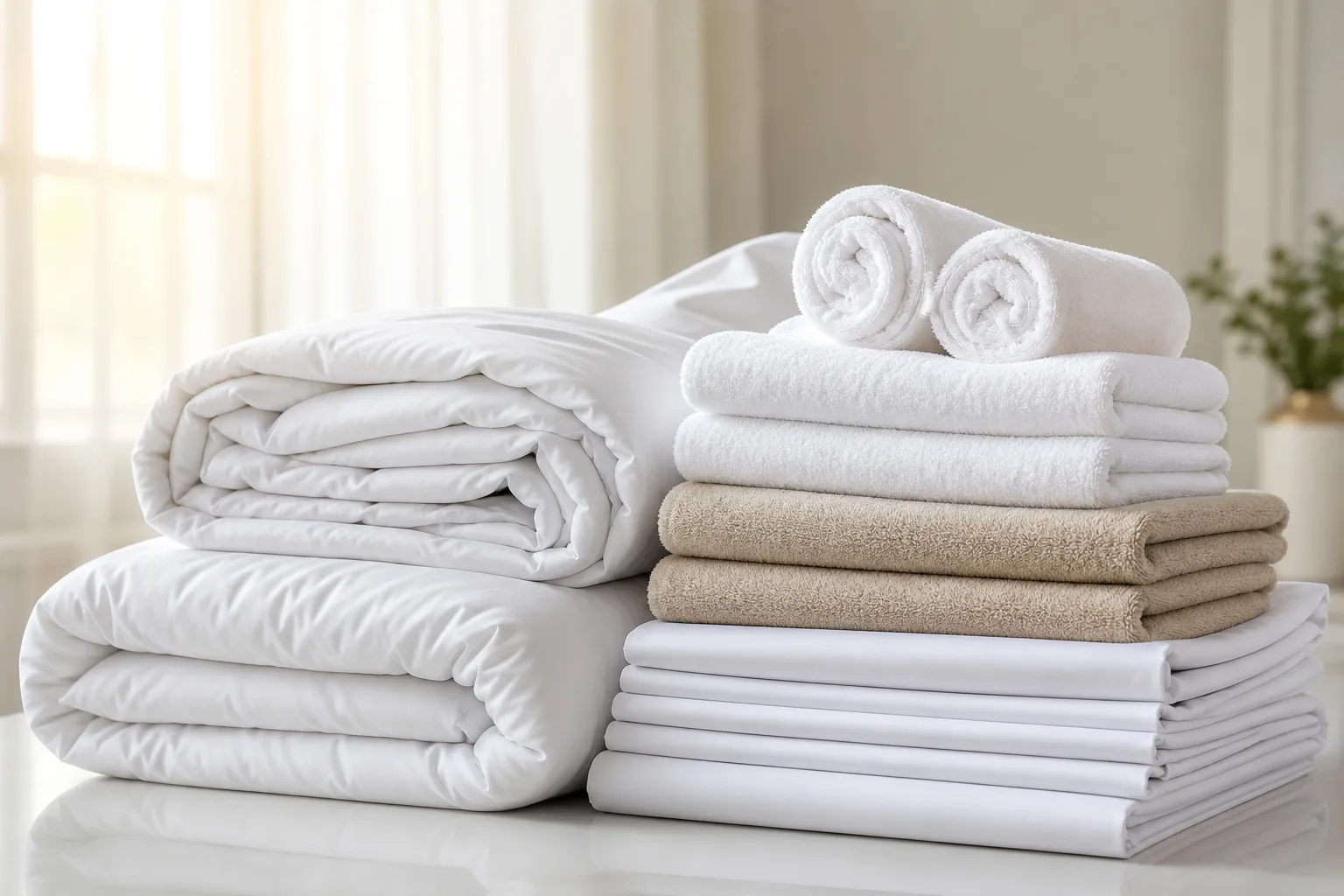
Code 7729.92 covers the short-term and long-term rental of household and commercial textiles: blankets, towels, bed linens and table linens.
The line that matters is rental against retail sale. You are hiring textiles out rather than selling them, and that affects how the activity is licensed and how the income is treated for VAT. Confirm the treatment with a registered tax agent, particularly if you are also running ancillary services under separate approvals.
The second thing to get right is what is not included. Laundry processing and delivery logistics are the obvious companions to a linen rental business, and neither is automatically bundled under 7729.92. Each needs its own activity approval at application stage. Assuming otherwise is the most common way operators end up amending a license they have only just paid for.
Who Your Clients Will Be
This is a business-to-business activity, and the buyer list is specific:
- Hotels and serviced apartments
- Hospitals and clinics
- Event management companies
- Gyms and spas
- Catering firms
- Airlines
What they have in common is volume and repetition. The revenue model runs on recurring rental contracts built around laundry-and-return cycles and volume-based pricing, so clients pay periodically for use, cleaning and replenishment rather than buying once. That produces something close to subscription income.
The catch is inventory. Predictable cash flow depends on managing stock rotation and replacement cycles tightly, because linen wears out on a schedule and the margin disappears if you replace it late or too often.
Mainland or Free Zone
This one is decided by where your clients sit, and in this trade most of them sit on the mainland.
A mainland license from the Department of Economy and Tourism lets you supply UAE businesses directly with nobody in between, which is the practical route if you are selling to Dubai hotels, hospitals and event firms. Since the 2021 amendments to the UAE Companies Law, 100% foreign ownership covers most commercial activities on the mainland, so check your specific activity is on the approved list and you no longer need a local sponsor.
A Meydan Free Zone license gives you a simpler, faster setup and suits an operator targeting export markets or online business-to-business platforms. If you supply mainland clients from there, you route through a licensed local distributor or set up a mainland branch, and both add cost and admin. The mCore package covers a single activity for testing the model, while mPlus supports adding laundry or logistics as you scale. Let your clients decide it, not the price.
[blockCTACostCalculator]
Step by Step Setup Guide
- Step 1, book your trade name: Check availability through the DET e-Services portal or the Meydan Free Zone portal, and confirm the name does not clash with regulated or restricted terms.
- Step 2, select your activities: Register 7729.92 as your primary activity. If you are adding laundry processing or transport, list each one separately, because combining them under a single code is not permitted.
- Step 3, choose your legal structure: An LLC on the mainland or an FZ-LLC in a free zone. Single-shareholder structures work under both.
- Step 4, submit your documents: Passport copies, Emirates ID if you are a UAE resident, a No Objection Certificate if you are employed elsewhere, and a Memorandum of Association reflecting your ownership structure.
- Step 5, sort your premises: Mainland licenses need a tenancy contract registered on Ejari. Free zone operators can use a flexi-desk or shared office for the administrative side.
- Step 6, collect the license and register for VAT: Register with the Federal Tax Authority once annual turnover passes, or is expected to pass, AED 375,000.
- Step 7, register with MOHRE: Compulsory for mainland entities hiring staff, and employees have to be registered before they start work.
Compliance and What You Need in Place
Healthcare clients raise the bar
Linen supplied to hospitals, clinics and day-surgery centres sits inside a hygiene-sensitive supply chain. The Dubai Health Authority sets standards for textile hygiene in clinical settings. Meet those before you approach healthcare clients, because falling short can void contracts and leave you liable.
In-house laundry is a separate license
If you run your own laundry facility, that needs its own industrial or service activity license and, depending on the premises, municipality approvals for water and chemical discharge. It cannot run under the rental license alone.
Delivery fleet
If you operate your own vehicles, register them as commercial vehicles with the Roads and Transport Authority.
Your client contracts
Contracts with hotels and hospitality groups should set out service level terms, replacement cycles, and who carries liability for lost or damaged stock. Verbal agreements do not carry the same weight as written ones under UAE commercial law, and in a business built on stock moving back and forth, that gap gets expensive.
VAT records
VAT applies at 5% on rental income. Keep clear, itemised invoicing records in line with Federal Tax Authority rules, particularly where a client contract bundles rental together with laundry or delivery.
Market Opportunity
Demand here tracks two sectors rather than the general economy. Dubai's sustained hotel development pipeline keeps adding rooms that need linen from the day they open, and the emirate's healthcare expansion adds beds with a higher specification and a faster replacement cycle.
IMARC Group ties UAE linen and textile services market growth directly to hospitality and healthcare expansion, and puts both sectors on strong growth paths through 2030. Invest in Dubai data points the same way on the hotel pipeline.
The structural appeal for an operator is that neither sector buys occasionally. A hotel needs the same linen volume every week it is open, and a hospital needs more. Once you are the incumbent supplier, switching costs work in your favour, which is why contracts in this trade tend to be long and client lists tend to be short.
Conclusion
This is a workable model with a simple licensing path, as long as you set it up accurately at the start.
Three things decide that. Your jurisdiction should follow your client base, and in this trade that usually points to mainland. Your activity list has to include laundry and logistics separately if you plan to offer them. And your contracts need to spell out replacement cycles and stock liability.
Adding activities or switching jurisdiction later costs time and money that an early-stage business rarely has budgeted.
[blockCTAContact]