
Table of Contents
Frequently Asked Questions
What does activity code 7729.93 cover in Dubai
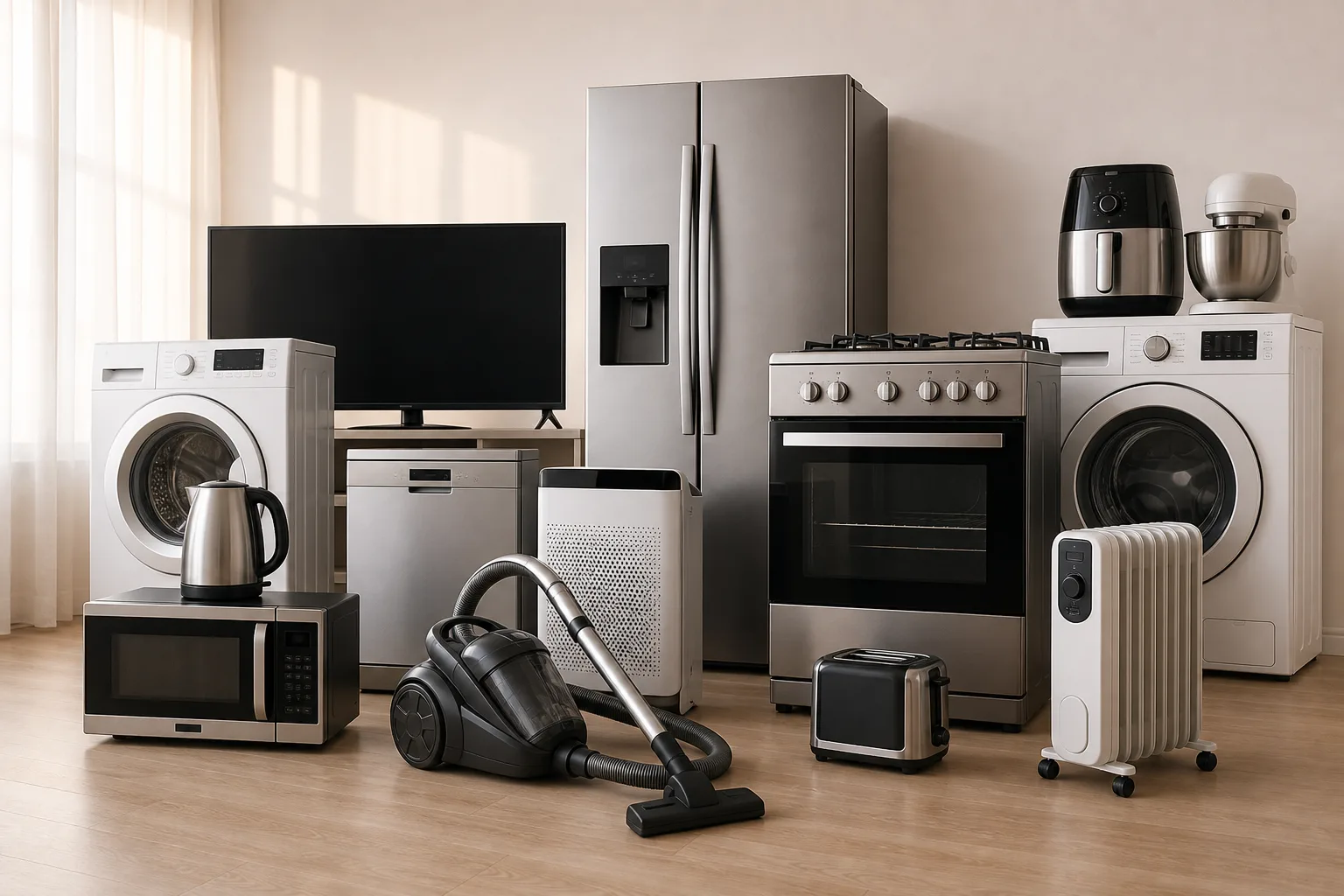
Activity code 7729.93 authorises the rental of electrical and electronic appliances in Dubai. This includes consumer and commercial-grade equipment such as TVs, refrigerators, washing machines, air conditioners, laptops, and kitchen appliances.
It is important to note that the licence does not cover selling or repairing these items. Those activities require separate, additional activity codes from the relevant licensing authority.
Who is an Electrical and Electronic Appliances Rental licence suitable for
The licence suits a wide range of operators whose customers prefer temporary access to appliances over outright ownership. Typical target markets include:
- Furnished apartment operators and short-term tenants
- Hospitality businesses needing seasonal or supplementary appliances
- Construction camps and labour accommodation facilities
- Event organisers requiring temporary equipment
- Corporate relocation firms outfitting executive accommodation
Because revenue comes from recurring rental contracts rather than one-off sales, the model offers predictable cash flow alongside the need for disciplined inventory management.
Should I set up on the mainland or in a free zone for appliance rental in Dubai
The right jurisdiction depends on your business model. A mainland licence issued by the Dubai Department of Economy and Tourism (DED) allows direct operations across the UAE, including government contracts, retail supply chains, and walk-in commercial clients. It is the practical choice if your model relies on physical delivery and servicing across Dubai.
A free zone licence — such as one from Meydan Free Zone — suits B2B or online rental models where UAE-wide physical access is less critical. Setup is typically faster and entry costs are lower.
Appliance rental businesses carrying physical inventory will generally find mainland setup more practical for logistics, warehousing, and direct client relationships. 100% foreign ownership is permitted in both jurisdictions under current UAE law.
What are the VAT obligations for an appliance rental business in Dubai
Rental income from electrical and electronic appliances is subject to the standard 5% VAT rate in the UAE, as confirmed by the Federal Tax Authority.
VAT registration becomes mandatory once your taxable turnover exceeds AED 375,000, regardless of whether you operate on the mainland or in a free zone. Businesses approaching this threshold should plan their accounting and invoicing systems accordingly from the outset.
What legal structures are available when setting up this licence
When applying for activity code 7729.93, you can choose from several legal structures depending on your ownership and operational needs. The main options are a sole establishment, a Limited Liability Company (LLC) for mainland operations, or a free zone company.
An LLC is the standard choice for mainland setups involving multiple shareholders, as it provides liability protection and is widely recognised by UAE banks and government entities. Free zone structures offer simplified incorporation and are well suited to lighter or primarily B2B operations.
What are the key steps to obtain an Electrical and Electronic Appliances Rental licence in Dubai
The process follows a clear sequence that is manageable when approached in order:
- Step 1: Reserve a trade name and confirm activity code 7729.93 with DED or your chosen free zone authority.
- Step 2: Select your legal structure — sole establishment, LLC, or free zone company.
- Step 3: Secure a registered address; mainland operators need an Ejari-registered tenancy contract.
- Step 4: Submit incorporation documents including passport copies, any required NOC, and a Memorandum of Association for LLC structures.
- Step 5: Obtain initial approval, then receive the trade licence from DED or the relevant free zone authority.
- Step 6: Open a corporate bank account using your valid trade licence and supporting documentation.
Is 100% foreign ownership allowed for an appliance rental business in Dubai
Yes. 100% foreign ownership is permitted for activity code 7729.93 under the UAE Commercial Companies Law, which was amended to open the majority of commercial activities to full foreign ownership.
This applies to both mainland licences issued by the DED and free zone licences. Investors no longer need a UAE national sponsor or partner for this type of commercial activity, making Dubai an accessible market for international entrepreneurs.
What address requirements apply when setting up an appliance rental business on the mainland
Mainland operators must secure a physical registered address — either an office or a warehouse — and register the tenancy contract through the Ejari system, which is the official tenancy registration platform in Dubai.
This requirement reflects the practical nature of an appliance rental business, which typically needs storage and logistics space to manage inventory and fulfil delivery contracts. Free zone operators running lighter or online-based models may use flexi-desk arrangements as a lower-cost alternative, though this limits direct UAE-wide operational access.
Start Electrical & Electronic Appliances Rental Business in Dubai
Dubai has an unusual number of people who need a fridge for eighteen months and have no interest in owning one. Short-term tenants, corporate secondments, seasonal hospitality demand and labour accommodation all point the same way: access rather than ownership.
Activity code 7729.93 licenses the business that serves them. This guide covers what you can rent out, who rents it, and how the jurisdiction choice works when your business involves physical stock.
Key Stats at a Glance
| Activity code | 7729.93 |
|---|---|
| Activity name | Electrical & Electronic Appliances Rental |
| License type | Commercial |
| What it covers | Renting out TVs, refrigerators, washing machines, air conditioners, laptops and kitchen appliances |
| What it does not cover | Selling or repairing those items, which need their own codes |
| Foreign ownership | 100% under the UAE Commercial Companies Law, mainland and free zone |
| Premises on the mainland | Office or warehouse with a tenancy contract registered through Ejari |
| VAT | Standard 5% on rental income, registration above AED 375,000 – Federal Tax Authority |
| Market outlook | UAE consumer electronics market projected to grow steadily through 2028 – IMARC Group |

What This License Covers
Code 7729.93 allows you to rent out electrical and electronic appliances, consumer or commercial grade. That means televisions, fridges, washing machines, air conditioners, laptops, kitchen appliances and similar equipment.
It does not cover selling those items, and it does not cover repairing them. Both need separate activity codes. That matters more here than in most activities, because a rental business naturally drifts towards both: customers ask to buy the unit at the end of a contract, and equipment breaks and needs fixing. Decide early whether you want those revenue lines, and add the codes at the start if you do.
Who Your Clients Will Be
The demand comes from people and businesses who need appliances temporarily:
- Furnished apartment operators and short-term tenants who need units ready to live in
- Hospitality businesses needing seasonal or extra appliances
- Construction camps and labour accommodation facilities
- Event organisers needing equipment for a few days
- Corporate relocation firms fitting out executive accommodation
The model is asset-based. Your revenue comes from recurring rental contracts rather than one-off sales, which gives you predictable cash flow. The trade-off is that you are carrying stock, so inventory discipline and clear contract terms matter from the first unit you buy.
Mainland or Free Zone
| Factor | Mainland (DET) | Free Zone (Meydan Free Zone) |
|---|---|---|
| Who you can serve | Direct operations across the UAE, including government contracts and walk-in clients | B2B and online rental models |
| Ownership | 100% | 100% |
| Premises | Office or warehouse, Ejari-registered | Flexi-desk for lighter operations |
| Setup | More steps, higher entry cost | Faster, lower entry cost |
| Best for | Physical delivery and servicing across Dubai | Models where UAE-wide physical access matters less |
This decision is less balanced than in most activities, because the business carries physical stock that has to reach customers.
Mainland
A mainland license from the Department of Economy and Tourism gives direct operations across the UAE, access to government contracts and retail supply chains, and walk-in commercial clients. If your model depends on delivering and servicing appliances around Dubai, that is the practical choice, and it comes with a registered office or warehouse.
Free zone
A free zone license suits a B2B or online rental model where UAE-wide physical access matters less. Setup is faster and entry costs are lower.
How to decide
Be honest about which you are. An operator running vans and holding inventory generally finds mainland more workable for logistics, warehousing and direct client relationships. Full foreign ownership applies either way, so ownership is not the deciding factor here.
[blockCTACostCalculator]
Step by Step Setup Guide
- Step 1, book your trade name and confirm the code: Check 7729.93 with DET or your free zone authority.
- Step 2, pick your legal structure: Sole establishment, mainland LLC or free zone company. An LLC is standard for a mainland operation with more than one shareholder.
- Step 3, secure your registered address: Mainland needs an office or warehouse with the tenancy registered through Ejari. Free zone operators running lighter models can use a flexi-desk.
- Step 4, submit your papers: Passport copies, a No Objection Certificate where one applies, and a Memorandum of Association for an LLC.
- Step 5, get initial approval and your license: From DET or the free zone authority.
- Step 6, open a corporate bank account: Banks want a valid license and documentation confirming what the business does.
- Step 7, register for VAT: With the Federal Tax Authority once you cross the threshold.
- If you are importing appliances: Register with Dubai Customs under the Ports, Customs and Free Zone Corporation.
Compliance and What You Need in Place
Your contracts do the heavy lifting
Rental agreements have to state clearly who is liable for what, who keeps the appliance working, what happens if it is damaged, and the condition it must come back in. This is standard commercial practice under UAE civil law, and it is what protects you when a unit comes back broken and the customer disagrees about why.
Product standards
Appliances sourced from international markets are subject to UAE conformity and safety standards administered by the Emirates Authority for Standardisation. Check this before you commit to a supplier, not after a container arrives.
Visas follow premises
Staff visas go through MOHRE, and the number you can sponsor is tied to your registered office or warehouse space. If you plan to hire delivery and service staff, size your premises with that in mind rather than taking the smallest space that satisfies the license.
VAT
Rental income is standard-rated at 5%. Registration becomes compulsory once taxable turnover passes AED 375,000, whichever jurisdiction you are in.
Renewals
Annual license renewal is not optional. Keep your license, tenancy contract and VAT filings current, because penalties here are avoidable and irritating.
Market Opportunity
The demand behind this code is created by how Dubai's population actually lives. A high proportion of residents are here on fixed contracts, moving between furnished units, and buying a washing machine you will abandon in two years makes little sense. That produces steady rental demand that does not depend on consumer confidence in the way appliance sales do.
The client mix also spreads your risk usefully. Furnished apartment operators and relocation firms give you long, predictable contracts. Hospitality and events give you shorter, higher-margin work at peak times. Construction camps and labour accommodation give you volume. An operator serving three of those is far steadier than one serving only tenants.
IMARC Group projects the UAE consumer electronics market to keep growing steadily through 2028, which matters on the supply side as much as the demand side. The real financial question in this business is not the license, which is modest. It is the inventory, because every appliance is capital sitting in a warehouse until it is on contract. Plan your purchasing around confirmed demand rather than optimism, and the model works well.
Conclusion
An electrical and electronic appliances rental license in Dubai is a workable, asset-driven business for anyone who understands inventory and contracts, in a city with unusually high turnover in residential and hospitality accommodation.
The setup itself is simple. The decisions that matter are jurisdiction, legal structure, and whether your customers need you physically present across the UAE or can be served through a B2B and online model.
Get those right, write contracts that survive a dispute, and buy stock against demand you can actually see.
[blockCTAContact]