
Table of Contents
Frequently Asked Questions
What activity code covers hairdressing and beauty salons in Dubai
Activity code 9602 — "Hairdressing and Other Beauty Treatment" is the relevant licence category for beauty salons in Dubai. It is a broad classification that covers a wide range of personal care services under a single licence.
Specifically, the code encompasses hair cutting and styling, skincare treatments, nail services, threading, waxing, massage, and bridal preparation. This flexibility means a multi-service salon does not need separate activity additions for each individual treatment type.
Do I need more than a trade licence to open a beauty salon in Dubai
Yes. Beauty salons in Dubai operate under a dual-regulatory framework. You need both a commercial trade licence — issued by a free zone authority such as Meydan Free Zone or by the DED — and a health establishment registration issued by the Dubai Health Authority (DHA).
Both approvals must be secured before you can legally begin operations. Obtaining only the trade licence is not sufficient to open your doors to clients.
What are the staff qualification requirements for beauty salon practitioners in Dubai
The Dubai Health Authority (DHA) sets mandatory qualification standards for all practitioners performing treatments in a licensed salon. This applies to hairdressers, beauticians, nail technicians, and any other service providers — qualifications are non-negotiable.
Salon owners must ensure that every practitioner holds recognised credentials before they begin working with clients. This requirement is part of the DHA's health establishment registration process and is enforced as an ongoing compliance obligation, not just at the point of initial setup.
Can a foreigner own 100% of a beauty salon in Dubai
Yes. 100% foreign ownership is permitted when setting up a beauty salon through Meydan Free Zone. This means international entrepreneurs do not need a local Emirati partner or sponsor to hold a share of the business.
This is one of the key commercial advantages of establishing through a free zone structure, making Dubai an accessible market for overseas investors and beauty professionals looking to launch independently.
What business models are available for a licensed beauty salon in Dubai
Activity code 9602 supports several distinct business formats. The most common is a standalone salon with physical premises. A home-service model, where technicians travel to clients, operates under the same licence but requires additional planning around staff mobility and insurance coverage.
Salon suite rental — where individual stylists lease a chair or private room within a shared space — is growing in popularity among experienced practitioners who want independence without the full cost of a standalone setup. Franchise models also exist at the premium end of the market, though these typically require a separate franchise agreement and regulatory approval from the DED or relevant free zone.
Can a beauty salon in Dubai sell retail products without an additional licence
Yes, in most cases. Retail product sales — such as professional haircare, skincare, and nail products — can be conducted alongside treatment services without an additional licence activity under code 9602, provided the retail element remains ancillary to the core service offering.
This is commercially significant because adding retail sales to a salon's revenue mix can improve overall margins meaningfully. Many Dubai salons stock professional-grade products as a standard part of their business model for this reason.
Who are the main customer segments for a beauty salon in Dubai
Resident expatriates form the core recurring revenue base, representing over 88% of Dubai's population. They tend to be habitual salon users with established spending patterns and high disposable income. Emirati clients, particularly women, represent a high-value segment known for strong brand loyalty.
Tourists — Dubai welcomed over 17 million international visitors in 2023 — skew toward express treatments and nail services. There is also a growing B2B opportunity through corporate wellness accounts: hotels, gyms, and residential developments can provide reliable revenue streams for salons with sufficient capacity.
How large is the beauty and personal care market in the UAE
The UAE beauty and personal care market is valued at over USD 5 billion and continues to grow. According to IMARC Group, the sector has been on a sustained expansion trajectory, supported by a wealthy resident population and strong cultural emphasis on personal grooming.
Dubai's per capita consumer spend on personal care is among the highest in the MENA region, and the city hosts thousands of licensed beauty establishments across all district tiers. The combination of a large expatriate population, high tourism volumes, and premium spending habits makes it one of the most commercially attractive markets for salon businesses in the region.
How to Open a Hairdressing and Beauty Salon in Dubai
Dubai spends heavily on grooming. Expatriates make up over 88% of residents and use salons habitually, per capita personal care spending is among the highest in the region, and 17 million visitors passed through in 2023. The demand is not in question.
What catches operators out is that a salon here answers to two authorities, not one. You need a trade license under activity code 9602 and a health establishment registration from the Dubai Health Authority. This guide covers both, along with the models, the customers and the costs.
Key Stats at a Glance

What This License Covers
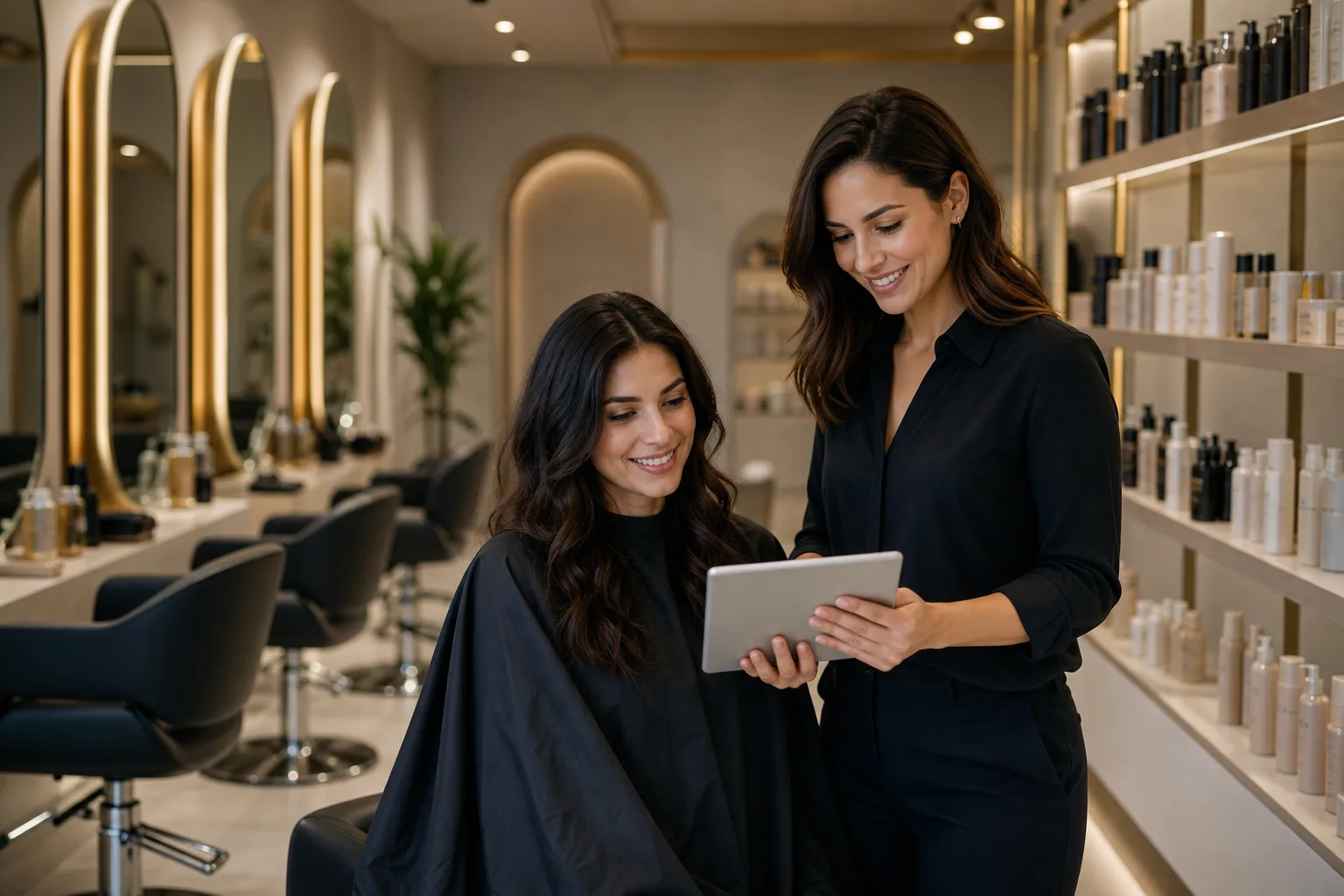
Activity code 9602 is one of the broadest licenses in personal services. Under it you can offer haircuts, colouring, blowouts, facials, manicures, pedicures, waxing, threading, body massage and bridal packages, all on a single license. A multi-service salon does not need a separate activity added for each treatment.
Retail sits inside it too. Professional haircare, skincare and nail products can be sold alongside treatments without adding an activity, as long as retail stays secondary to the service. That matters commercially, because product sales lift your margin without adding much cost.
Business models it supports
- A standalone salon with its own premises, still the dominant format
- A home-service model where technicians travel to clients, which needs extra thought on staff mobility and insurance
- Salon suite rental, where stylists lease a chair or private room, growing fast among experienced practitioners who want independence without the full setup cost
- Franchise operations at the premium end, which need a separate franchise agreement and approval from DET or your free zone
Who Your Clients Will Be
Resident expatriates
Over 88% of Dubai's population and the core of your recurring revenue. They are habitual salon users with settled spending patterns and high disposable income, which makes them the base everything else builds on.
Emirati clients
A high-value segment, particularly women, known for loyalty to a salon they trust. Slower to win and much slower to lose.
Tourists
Over 17 million international visitors came in 2023. They lean towards express treatments and nail services, filling gaps rather than booking courses.
Corporate accounts
Hotels, gyms and residential developments buy salon services in blocks. If you have the chair capacity, this is reliable revenue that does not depend on footfall.
Mainland or Free Zone
This is the biggest choice you will make when setting up, though health approval applies either way, so it changes less than it appears.
Mainland
A license from the Department of Economy and Tourism is the traditional route for a shopfront salon and gives unrestricted access to clients across Dubai.
Free zone
Meydan Free Zone gives full ownership without a local sponsor, competitive fees and a single-window process, which cuts the administrative load for first-time UAE operators. You can form the company on a flexi-desk while you scout premises, then add the physical location DHA registration needs.
[blockCTACostCalculator]
Step by Step Setup Guide
- Step 1, confirm your activity scope: Select 9602 and check your full service list against it, especially specialist treatments such as massage, which may need extra approvals.
- Step 2, choose your license package: A flexi-desk suits forming the company first and sourcing premises separately. A physical premises license is what DHA establishment registration hangs on.
- Step 3, submit your setup papers: Passport copies for all shareholders and directors, your proposed company name, and a business overview. A formal plan is sometimes asked for.
- Step 4, start DHA registration and health cards together: As soon as the trade license is issued, begin establishment registration and health card applications for treatment staff at the same time. These two tracks run in parallel and should never be sequenced.
- Step 5, fit out to municipality standards: Ventilation, sanitation, chemical storage and waste disposal all have set standards, and premises are inspected before the DHA license is issued.
- Step 6, open a corporate bank account: Free zone companies can bank across the full range of UAE institutions. Start early, because timelines vary.
Budget several weeks for document checks and qualification assessment, which run longer depending on staff nationality and where their qualifications were earned.
Compliance and What You Need in Place
Health establishment registration
The Dubai Health Authority registers salons as health establishments, and that registration is separate from your trade license and renewed every year. Both must be valid before you take a single client.
Staff credentials
Every practitioner needs DHA-recognised certificates, checked against the authority's approved list rather than taken on trust, plus an individual health card renewed yearly. Both run through the DHA portal.
Premises
Dubai Municipality sets fit-out standards for ventilation, sanitation, chemical storage and waste disposal. Inspection comes before your DHA license is issued, so cutting corners buys delays and rework rather than savings.
Employment
MOHRE governs contracts, Wages Protection System payroll registration and end-of-service entitlements, accrued from day one. Falling short brings fines and can affect your license renewal.
VAT
Register with the Federal Tax Authority once turnover passes AED 375,000. Any salon with more than two or three chairs in a mid-tier location usually crosses that line inside the first year.
Market Opportunity
The UAE beauty and personal care market is worth over USD 5 billion and still growing, according to IMARC Group. Dubai's per capita spending on personal care is among the highest in the region, and the city already supports thousands of licensed beauty establishments across every tier of district. That tells you two things: the demand is deep, and you will not be the only one chasing it.
The winning position usually comes from the revenue mix, not the treatment menu. Retail sales sit inside your existing license and lift margin. Corporate accounts with hotels, gyms and residential buildings smooth out quiet weeks. Suite rental turns idle chairs into income.
Two cost lines decide your budget. Fit-out dominates: roughly AED 80,000 to AED 120,000 for a basic salon in a secondary location, and several times that for a mall or hotel site. License and DHA fees are modest by comparison. The second is product sourcing, because professional colour, skincare and nail systems attract import duty. If you buy in volume, bonded warehouse options through Dubai's free zone network can reduce that. Build it into your cost of goods from the start.
Conclusion
A hairdressing and beauty salon in Dubai is a sound business with demonstrable demand behind it. The activity code is broad, the ownership rules are open, and the customer base is deep enough to support many formats.
Where operators struggle is the health authority layer. Staff credentials, establishment registration and municipality fit-out standards all take time and all sit between you and opening day. Handle them from the outset rather than retrofitting, and plan your visa allocation before you pick a license package.
[blockCTAContact]