
Table of Contents
Frequently Asked Questions
What is activity code 7710.86 and what does it permit in Dubai
Activity code 7710.86 — officially titled "Using Electronic Media Smart Applications, Or Any Other Means Of Renting Vehicles" — is a commercial classification that authorises the rental of vehicles through digital channels. This includes proprietary mobile apps, third-party platforms, and other electronic media.
The activity typically covers passenger cars, SUVs, and light commercial vehicles. It does not extend to chauffeur-driven services, heavy transport, or ride-hailing dispatch, which require separate classifications and, in some cases, additional RTA permits.
Operators may run both app-based and traditional walk-in rental operations simultaneously, provided they hold the appropriate licensing structures for each activity.
Do I need both a Meydan Free Zone licence and an RTA permit to operate
Yes — both instruments are required for full operational compliance and they serve distinct purposes. A Meydan Free Zone licence grants you the legal entity and commercial authority to operate the business. However, it does not by itself authorise you to deploy a physical fleet on Dubai roads.
If you intend to put vehicles into service on public roads, you must also obtain vehicle rental operator permits directly from the Roads and Transport Authority (RTA). These are separate applications with their own requirements.
Operators running a purely technology or aggregator model — connecting customers to third-party fleet owners rather than owning vehicles directly — may have a different compliance profile. It is strongly advisable to confirm the precise scope with Meydan Free Zone advisors before finalising your activity selection.
How large is the UAE vehicle rental market and what is driving its growth
The UAE car rental and leasing market is valued at over USD 1.5 billion as of 2024 and is forecast to grow at a compound annual rate above 6% through 2030, according to IMARC Group.
Key growth drivers include tourism recovery, sustained population growth, and rising corporate mobility demand. Dubai alone accounts for the majority of market activity, supported by over 17 million visitor arrivals annually and one of the highest expat-to-citizen ratios of any major city globally, as reported by the Department of Economy and Tourism.
UAE smartphone penetration above 90% further accelerates the shift toward app-based platforms, making digital-first operators well-positioned to capture an outsized share of this expanding market.
What customer segments should an app-based vehicle rental business in Dubai target
Dubai's market supports several distinct customer segments, each with different usage patterns and revenue profiles. Tourists and short-stay visitors represent high volume and short duration rentals — they are price-sensitive but strongly convenience-driven, making a seamless app experience critical to conversion.
Short-term residents and new arrivals often need a vehicle while awaiting a purchase or testing the local market, creating demand for flexible weekly and monthly options. Corporate accounts require project-based mobility, employee travel solutions, and executive vehicles, typically offering higher average order values and repeat business.
Gig-economy workers — including delivery drivers and ride-hailing operators — represent an underserved but growing segment seeking flexible, affordable vehicle access without long-term commitments.
What are the main revenue streams beyond the base rental rate
The base rental fee is only one component of the unit economics for an app-based vehicle rental business. Insurance add-ons are among the most significant supplementary revenue lines, as many customers opt for reduced-excess or comprehensive coverage upgrades at the point of booking.
Additional revenue levers include vehicle delivery and collection fees, GPS device rentals, child seat extras, and late return penalties. These ancillary charges can contribute meaningfully to overall margin per booking.
Loyalty programmes, subscription tiers (such as monthly unlimited access plans), and B2B fleet leasing arrangements to corporate clients provide more predictable recurring revenue streams that complement the volatility of on-demand daily rentals.
How have app-based platforms changed consumer expectations in vehicle rental
App-driven platforms have fundamentally restructured consumer behaviour across the vehicle rental sector. Instant booking, dynamic pricing, and contactless handover are now considered baseline expectations rather than competitive differentiators — customers expect to complete the entire transaction through a smartphone.
Operators who cannot offer end-to-end digital experiences — from booking and payment through to vehicle access and return — are actively losing ground to those who can. Traditional desk-based operators are being displaced as a result.
For new entrants, the opportunity does not lie in replicating what established platforms already offer, but in fleet specialisation, geographic coverage gaps, and underserved customer segments that larger operators have not prioritised.
What business models are available under the app-based vehicle rental activity
The core model under activity code 7710.86 is app-based self-service rental, where customers book, access, and return vehicles through a digital interface with minimal or no human interaction at the point of transaction. This model prioritises operational efficiency and scalability.
Variations include subscription tiers offering monthly unlimited access, B2B fleet leasing to corporate clients, and on-demand daily or weekly rentals for individual consumers. Operators may combine several of these models within a single platform.
A purely technology or aggregator model — where the platform connects customers to third-party fleet owners without owning vehicles directly — is also possible under this activity, though it carries a different regulatory and compliance profile that should be confirmed with advisors before launch.
How competitive is the Dubai vehicle rental market for new entrants
Dubai's vehicle rental market is active and growing, with over 200 RTA-licensed operators currently registered. Competition among established players is significant, particularly in the mainstream passenger car segment targeting tourists and short-term residents.
However, the market is not uniformly saturated. Opportunities exist in fleet specialisation — such as electric vehicles, premium SUVs, or commercial vans — as well as in geographic coverage gaps and segments that larger operators have underserved, including gig-economy workers and short-term corporate travellers.
New entrants with a strong app experience, competitive pricing, and a clearly defined niche are better positioned than those attempting to compete directly on volume with established operators. The shift toward digital-first platforms also lowers some traditional barriers to entry compared with building a desk-based rental operation.
How to Start an App-Based Vehicle Rental Business in Dubai
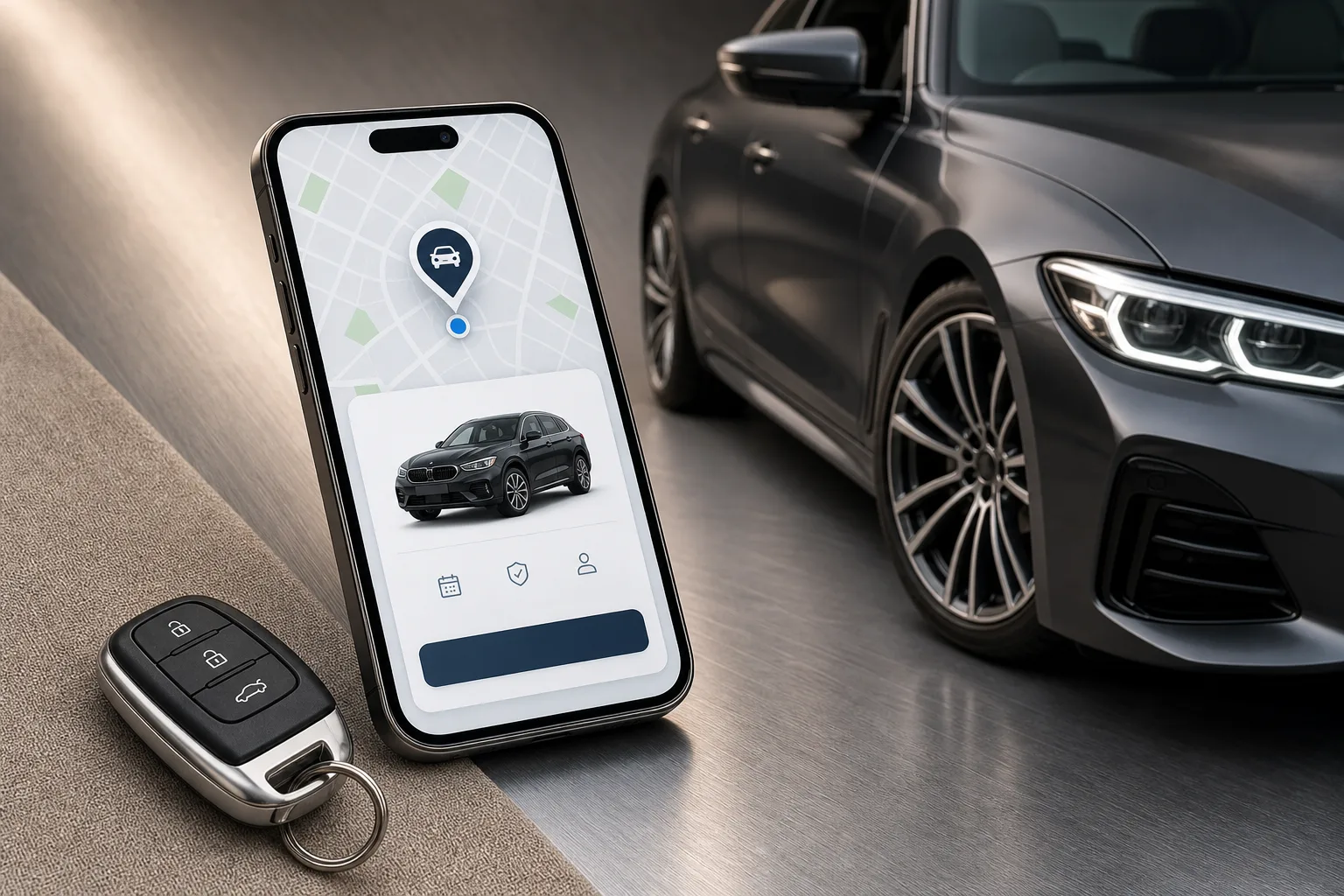
People do not want to queue at a rental desk any more. They want to book on a phone, unlock the car with it, and drop the keys without talking to anyone. Operators who cannot offer that are steadily losing customers to those who can.
Dubai's rules have moved with the market, and there is now a specific activity code for renting vehicles through an app. This guide covers what code 7710.86 allows, the RTA permits you also need, who rents from you, and how to get licensed through Meydan Free Zone.
Key Stats at a Glance
What This License Covers

Activity code 7710.86 lets you rent vehicles through digital channels: your own app, a third-party platform, or other electronic media. It covers passenger cars, SUVs and light commercial vehicles.
It does not cover chauffeur-driven services, heavy transport or ride-hailing dispatch. Those sit under different codes and, in some cases, need extra RTA permits. You can run app-based and traditional walk-in rental side by side, as long as you hold the right license structure for each.
One point matters more than any other here. Your free zone license gives you a legal company and the commercial right to trade. It does not let you put cars on Dubai's roads. For that you need vehicle rental operator permits from the RTA, which is a separate application with its own requirements. Two instruments, both needed.
If you are building a pure technology or aggregator model, connecting customers to fleets that other people own, your compliance picture is different. Confirm the scope with Meydan Free Zone advisers before you settle your activity selection.
Who Your Clients Will Be
Four segments, and they behave nothing alike:
- Tourists and short-stay visitors, who rent in high volume for short periods and are price-sensitive but will pay for convenience
- New arrivals and short-term residents, who need a car while they wait to buy one or work out whether they are staying
- Corporate accounts, booking project mobility, staff travel and executive cars, with higher order values and repeat business
- Gig-economy workers such as delivery drivers, who need affordable, flexible access without a long commitment
That last group is the least well served, and it is growing.
The base rate is only part of your income. Insurance upgrades at the point of booking are one of the biggest add-ons, and delivery and collection fees, GPS units, child seats and late return charges all add up per booking. Subscription tiers, loyalty schemes and B2B fleet leasing give you the recurring revenue that smooths out the peaks and troughs of daily rentals.
Partnerships bring the cost of finding customers down. Hotels, airport concierges, property developers and corporate HR teams all put bookings your way at a fraction of what advertising costs.
Mainland or Free Zone
Note the second row again. Neither license removes the RTA requirement, so run that application in parallel rather than waiting.
[blockCTACostCalculator]
Step by Step Setup Guide
- Step 1, confirm your activity and name: Select 7710.86 and check your preferred trade name is free. Names must follow UAE rules, so nothing offensive and no reference to government bodies without approval.
- Step 2, pick your package: mCore suits a lean digital operation. mPlus fits you better if you need extra visas or office facilities. Choose against your headcount plan, not your ambitions.
- Step 3, send your documents: Passport copies for shareholders and directors, a business plan summary, and the application forms. The process is fully digital and needs no physical presence.
- Step 4, get your license: Application to issued license usually runs five to seven working days.
- Step 5, handle the rest in parallel: Open your corporate bank account, register for VAT if it applies, and start your RTA fleet permit applications. These run on separate timelines, so starting them together saves weeks.
Compliance and What You Need in Place
RTA permits
Any fleet on Dubai roads must be registered with the RTA under a valid rental operator permit. Fleet vehicles need specific insurance classifications and periodic inspection. Treat this as the real gate on your launch date.
Insurance
Comprehensive fleet cover and third-party liability are both mandatory, and rental policies are not the same as standard commercial motor cover. Work with a UAE-licensed broker and structure it properly at the start, because getting this wrong surfaces at exactly the worst moment.
Your app
A consumer-facing app or platform brings you under the Telecommunications and Digital Government Regulatory Authority. Data handling, user privacy and app store distribution all carry duties under UAE digital rules. Build privacy into the product rather than retrofitting it.
VAT
Rental income is subject to 5% VAT once your taxable turnover passes AED 375,000 a year. Any viable rental operation crosses that quickly, so register early rather than scrambling later.
Market Opportunity
The UAE car rental and leasing market is worth over USD 1.5 billion and IMARC Group expects it to grow above 6% a year through 2030. Tourism, population growth and corporate mobility are all pushing in the same direction, and Dubai accounts for most of the activity.
The numbers behind that are strong. Over 17 million visitors arrive each year, the city has one of the highest ratios of expatriates to citizens anywhere, and smartphone penetration is above 90%. A digital-first operator is aiming at customers who are already comfortable doing everything on a phone.
It is a busy market, though, with more than 200 licensed operators. Trying to beat them on volume in the mainstream car segment is a hard road. The gaps are elsewhere: specialised fleets such as electric vehicles, premium SUVs or commercial vans, areas of the city others cover poorly, and segments the big operators ignore, like gig workers and short-stay corporate travellers. Pick a niche and own it.
Conclusion
This is a well-defined activity with structural demand and a clear licensing path. What decides whether it works is preparation on three fronts: your RTA permits, your insurance structure and your VAT timing.
Do not try to out-feature the established platforms. Instant booking and contactless handover are table stakes now, not selling points. Find the customers nobody is serving properly and build the fleet that suits them.
[blockCTAContact]