
Table of Contents
Frequently Asked Questions
What does activity code 7730.21 permit a business to do in Dubai
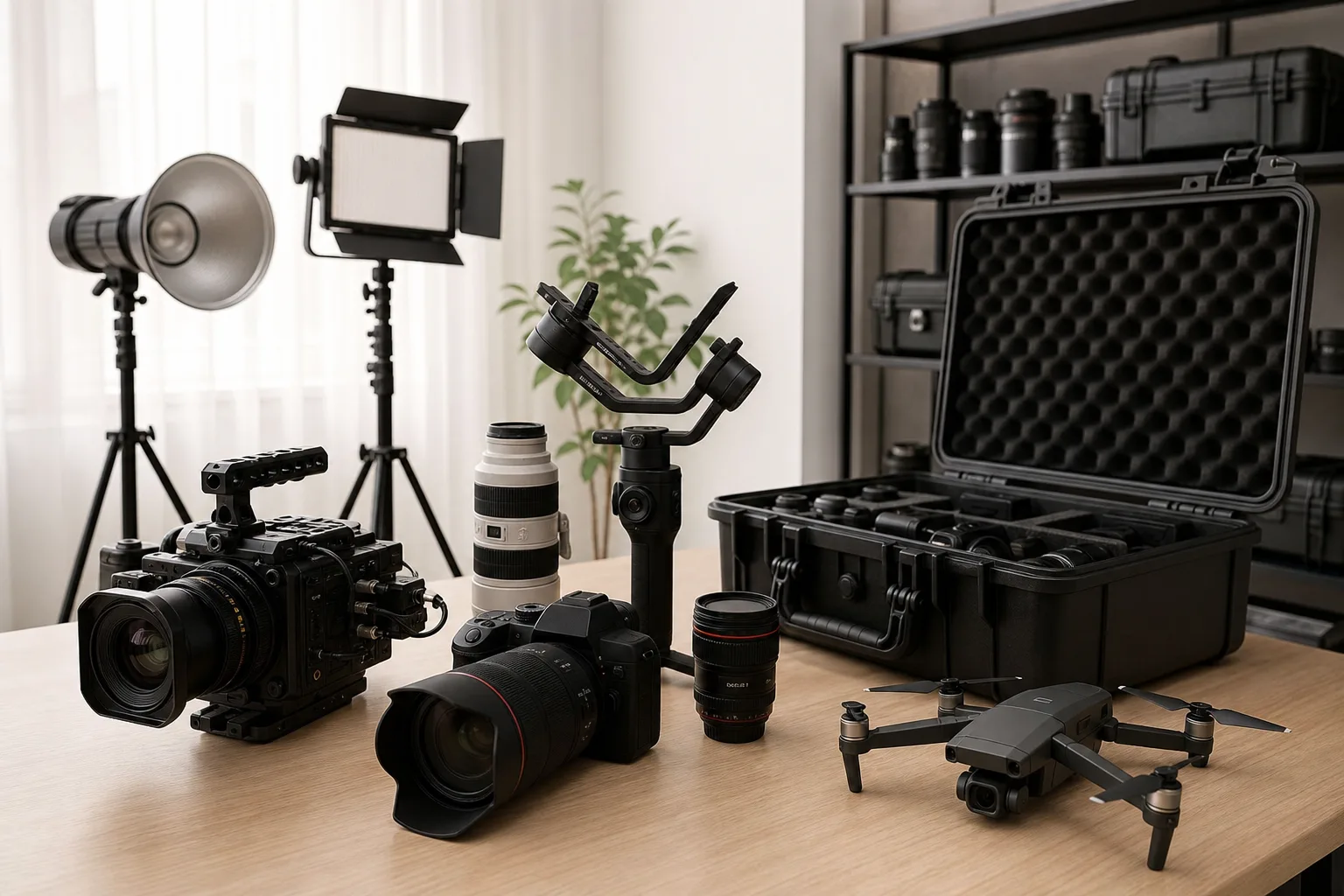
Activity code 7730.21 covers the rental of cameras, lighting rigs, audio equipment, broadcast gear, and production support hardware. It supports both B2B and B2C rental models, meaning your clients can range from major production houses and broadcasters to independent filmmakers and event organisers.
The licence is broad enough to serve single-day shoots as well as multi-week broadcast deployments, making it commercially relevant across Dubai's media and entertainment ecosystem. However, equipment sales and repair services are not included — those require separate activity codes added to your licence.
Which regulatory bodies oversee media equipment rental operations in Dubai
For mainland businesses, the primary licensing authority is the Dubai Department of Economy and Tourism (DED). Free zone businesses are regulated by their respective free zone authority, such as Meydan Free Zone.
Sector-specific conduct standards are set by the Dubai Film and TV Commission and the UAE Media Council. Operators involved in productions that include broadcast or public media distribution should familiarise themselves with both bodies' requirements before commencing operations.
What are the main differences between a mainland and a free zone licence for this activity
A mainland licence through the DED gives unrestricted access to the UAE market, including government tenders and direct contracts with any UAE-based client. This is particularly important if you plan to supply equipment to public broadcasters or government-linked events. Mainland setup does require a physical office with a registered Ejari tenancy contract.
Free zone options such as Meydan Free Zone offer 100% foreign ownership, faster setup timelines, and lower entry costs. Flexi-desk arrangements reduce fixed overhead, which is practical for new or lean operations. The trade-off is straightforward: mainland for full market access, free zone for cost efficiency and speed.
Many operators begin in a free zone and expand to a mainland licence once client demand justifies the additional structure and overhead.
Does a media equipment rental business in Dubai need to register for VAT
Yes — VAT at the standard UAE rate of 5% applies to media equipment rental activities. Registration with the Federal Tax Authority is required once annual turnover exceeds AED 375,000.
Businesses approaching or exceeding this threshold should factor VAT compliance into their operational planning from an early stage, including invoicing systems and record-keeping obligations.
What are the key steps to obtain a Media Equipment Rental licence in Dubai
The process follows a sequential path. It begins with trade name reservation through the DED or your chosen free zone authority, ensuring the name complies with UAE naming conventions and does not reference government entities or restricted terms.
Next comes initial approval, where you submit your activity selection (7730.21), shareholder documents, and passport copies to confirm regulatory acceptance of your intended activity. Following approval, you must secure an office or facility agreement — an Ejari-registered tenancy contract for mainland, or a flexi-desk arrangement for a free zone setup.
Can a foreign national own 100% of a media equipment rental business in Dubai
Yes, 100% foreign ownership is available through a free zone licence, such as one issued by Meydan Free Zone. This makes free zones an attractive entry point for international entrepreneurs looking to establish operations without a local partner.
Mainland licences through the DED also permit 100% foreign ownership for many commercial activities following UAE regulatory reforms, though it is advisable to confirm the current position for activity code 7730.21 with the DED or a licensed business setup adviser at the time of application.
Why is Dubai considered a strong market for media equipment rental businesses
Dubai serves as a regional hub for film production, broadcast media, and live events, generating consistent commercial demand for rental equipment across the full production spectrum. The city hosts a diverse ecosystem of production houses, broadcasters, event organisers, and independent filmmakers.
The broader UAE media and entertainment sector is projected to grow steadily through 2027, according to IMARC Group, underpinning the long-term commercial case for licensed operators in this space. Dubai's infrastructure and its concentration of media industry activity make it a commercially sensible base for this type of business.
What activities are not covered by the Media Equipment Rental licence and require separate codes
The 7730.21 licence specifically covers rental of media equipment and does not extend to the sale of equipment or the provision of repair and maintenance services. Each of these activities carries its own activity code under the UAE licensing framework.
If your intended business model includes any combination of rental, sales, and repair, each activity must be added as a distinct activity on your licence. Failing to list all relevant activities can result in compliance issues, so it is important to map your full service offering before submitting your application.
Media Equipment Rental License in Dubai
Dubai's position as a regional hub for film production, broadcast media, and live events has created consistent commercial demand for licensed media equipment rental operations. Whether you are serving production houses, broadcasters, or independent filmmakers, the regulatory framework is clear and the market opportunity is real.
This guide covers what the Media Equipment Rental licence (activity code 7730.21) covers, where to set it up, and the practical steps to get operational in Dubai.
Key Stats at a Glance
| Activity Code | 7730.21 |
| Activity Name | Media Equipment Rental |
| Licence Type | Commercial |
| Jurisdiction | Mainland (DED) or Free Zone (e.g. Meydan Free Zone) |
| Market Context | UAE media and entertainment sector projected to grow steadily through 2027, per IMARC Group |
| Regulatory Body | Dubai Department of Economy and Tourism (DED) for mainland; Dubai Film and TV Commission for sector-specific approvals |
| VAT Applicable | Yes — 5% VAT registration required if turnover exceeds AED 375,000 (Federal Tax Authority) |
What the Media Equipment Rental Licence Covers
Activity code 7730.21 permits the rental of cameras, lighting rigs, audio equipment, broadcast gear, and production support hardware. The scope is broad enough to serve the full spectrum of media production requirements — from single-day shoots to multi-week broadcast deployments.
The licence supports both B2B and B2C rental models. Your clients can include production houses, broadcasters, event organisers, and independent filmmakers. This flexibility makes it commercially relevant across Dubai's diverse media and entertainment ecosystem.
It is worth noting what the licence does not cover. Equipment sales and repair services each require separate activity codes. If your business model includes those services, they must be added as distinct activities on your licence.
Conduct standards for the sector are set by the Dubai Film and TV Commission and the UAE Media Council. Operators working on productions that involve broadcast or public media distribution should be familiar with both bodies' requirements before commencing operations.
Business Activities List
Explore Over 2,500+Mainland vs Free Zone: Choosing the Right Structure

The structural decision comes down to your client base and operational overhead.
A mainland licence through the Dubai Department of Economy and Tourism (DED) gives you unrestricted access to the UAE market, including government tenders and direct contracts with any UAE-based client. This matters if you intend to supply equipment to public broadcasters or government-linked events. Mainland setup requires a physical office with a registered tenancy contract (Ejari).
Free zone options, including Meydan Free Zone, offer 100% foreign ownership, faster setup timelines, and lower entry costs. Flexi-desk arrangements reduce fixed overhead, which is practical when you are starting out or operating with a lean team. Meydan Free Zone's location within Dubai's media and events corridor makes it a commercially sensible base for this activity.
The trade-off is straightforward: mainland for full market access, free zone for cost efficiency and speed. Many operators in this sector begin in a free zone and expand to mainland once client demand justifies the additional structure.
Free Business Setup Cost Calculator
Calculate NowStep-by-Step Licence Setup Guide
The process is sequential and largely predictable. Below is the standard path from decision to operational status.
- Step 1 — Trade name reservation: Check name availability and reserve it via DED or your chosen free zone authority. Names must comply with UAE naming conventions and cannot reference government entities or restricted terms.
- Step 2 — Initial approval: Submit your activity selection (7730.21), shareholder documents, and passport copies. This confirms regulatory acceptance of your intended business activity.
- Step 3 — Office or facility agreement: Secure a tenancy contract with Ejari registration for mainland, or a flexi-desk agreement if setting up in a free zone.
- Step 4 — Licence issuance: Pay the applicable government fees and receive your commercial licence. At this point, you are legally authorised to operate.
- Step 5 — VAT registration: If your projected or actual turnover exceeds AED 375,000, register with the Federal Tax Authority. Voluntary registration is available below that threshold.
- Step 6 — Corporate bank account: A UAE corporate account is required for business operations. Bank onboarding timelines vary — factor in four to eight weeks for standard applications.
- Step 7 — Visa allocation: Investor and employee visas are processed post-licence. Your visa quota depends on your office space and licence type.
Start Your UAE Company Remotely
Get in Touch NowKey Documents Required
- Passport copies of all shareholders and managers
- No-objection letter if the applicant is currently on an existing UAE visa
- Memorandum of Association for multi-shareholder structures
- Tenancy contract or flexi-desk agreement confirming your registered address
Regulatory and Commercial Considerations
Equipment used for broadcast or public media production may require alignment with UAE Media Council guidelines. This is particularly relevant if your rental clients are producing content for distribution on licensed UAE channels or platforms.
VAT applies to rental income at the standard rate of 5%. Maintain accurate invoicing, contracts, and records in line with Federal Tax Authority requirements. Inadequate record-keeping is one of the more common compliance issues for SMEs in this sector.
If you are importing professional media equipment into Dubai, customs procedures apply under the framework overseen by the Ports, Customs and Free Zone Corporation (PCFC). Duties, documentation, and temporary import provisions for production equipment are all relevant depending on how your inventory is structured.
Any hired technicians, drivers, or support staff must be registered and contracted through MOHRE. Labour compliance is non-negotiable, and penalties for unregistered workers are applied consistently.
Conclusion
A Media Equipment Rental licence in Dubai is a commercially viable operation with clear regulatory pathways — whether set up on the mainland for full market access or in a free zone for leaner entry costs. The activity sits at the intersection of Dubai's growing film, broadcast, and events economy, with structured demand from both private and government clients.
If you are ready to set up your Media Equipment Rental business in Dubai, speak to the Series M team for a straightforward assessment of costs, structure, and timeline.
References
- IMARC Group (imarcgroup.com)
- Dubai Film and TV Commission (filmdubai.gov.ae)
- Federal Tax Authority (tax.gov.ae)
- UAE Media Council (uaemc.gov.ae)
- Dubai Department of Economy and Tourism (DED) (eservices.dubaided.gov.ae)
- Ports, Customs and Free Zone Corporation (PCFC) (pcfc.ae)
- MOHRE (mohre.gov.ae)