
Table of Contents
Frequently Asked Questions
What is activity code 7729.98 and what does it permit in Dubai
Activity code 7729.98 falls under the Miscellaneous Rental of Personal and Household Goods category, specifically scoped to musical instruments. It is classified as a commercial activity rather than a regulated professional one, which simplifies the licensing process considerably.
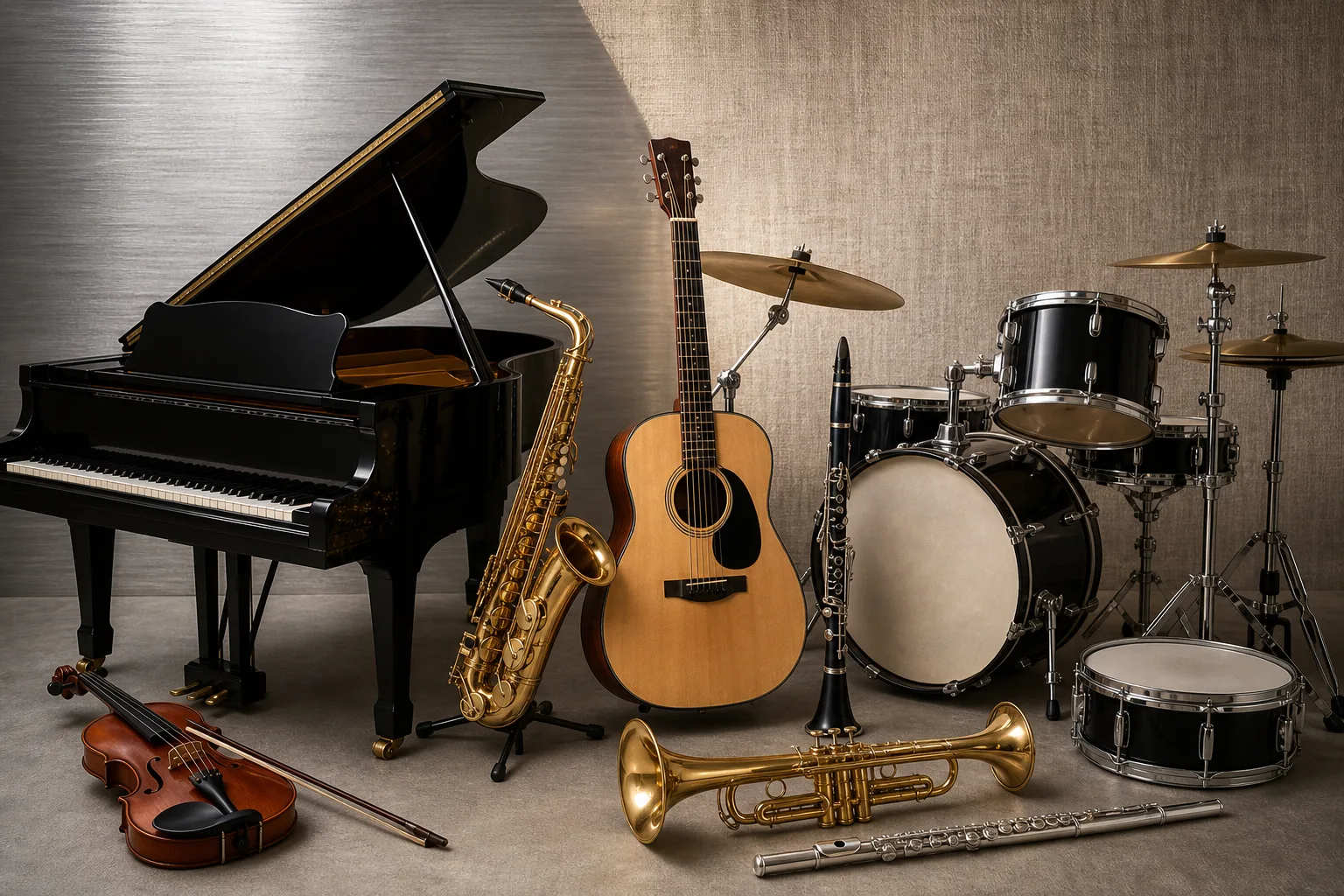
Under this code, you are permitted to offer short and long-term rentals of guitars, keyboards, drums, orchestral instruments, PA systems, and related equipment to individuals, schools, event organisers, and recording studios.
The licence does not cover retail sale or instrument repair. If you intend to offer those services alongside rentals, you must add separate activity codes to your licence application.
Which regulatory authority oversees the Musical Instruments Rental licence in Dubai
For mainland entities, regulatory oversight sits with the Dubai Department of Economy and Tourism (DET), commonly referred to as the DED. All mainland commercial licences, including activity code 7729.98, are issued and managed through this authority.
If you choose a free zone structure, oversight transfers to the relevant free zone authority where your business is registered. Each free zone has its own rules regarding permitted activities, office requirements, and renewal processes.
The Dubai Culture and Arts Authority also plays an indirect role by actively supporting the music education and live events ecosystem, which underpins commercial demand for instrument rentals across the emirate.
How much does it cost to obtain a Musical Instruments Rental licence in Dubai
Licence costs vary depending on your chosen jurisdiction. A mainland DET licence typically costs approximately AED 10,000–15,000 per year, while free zone packages range from AED 12,000–25,000 depending on the authority and office type selected.
Beyond the licence fee itself, you should budget for your initial inventory investment, which can range from AED 30,000 to AED 100,000 or more depending on the categories of instruments you plan to stock.
Additional setup costs include trade name reservation, address registration (Ejari for mainland), and any visa or establishment card fees. A flexi-desk arrangement in a free zone can help keep overhead low during the early stages of the business.
What is the difference between setting up on the mainland versus in a free zone for this licence
A mainland (DET) licence allows you to trade freely across the entire UAE and operate from any commercial address in Dubai. This is generally the better option if you plan to serve clients directly across the emirate, including schools, hotels, and event venues.
A free zone structure is better suited to import-led inventory models, remote or foreign ownership preferences, or businesses operating primarily through online rental platforms. Free zone entities can often use a flexi-desk arrangement, reducing physical office costs.
The key trade-off is flexibility versus cost. Mainland offers broader operational reach, while free zones can offer ownership advantages and lower initial overhead depending on the authority chosen.
What are the steps to set up a Musical Instruments Rental business in Dubai
The setup process involves five core steps. First, choose your jurisdiction — mainland or free zone — based on your ownership structure and trading needs. Second, reserve your trade name and confirm activity code 7729.98 via DED e-Services, which typically completes within one working day.
Third, determine your legal structure — options include a sole establishment, LLC, or free zone entity — based on ownership preferences, investor visa requirements, and whether you intend to bring in partners.
Fourth, secure a physical address. Mainland requires a tenancy contract registered with Ejari, while free zone entities can use a flexi-desk. Fifth, submit your licence application along with your Memorandum of Association and supporting documents. Standard DED processing time is 2–5 working days.
Who are the main target customers for a musical instrument rental business in Dubai
The customer base for instrument rentals in Dubai is deliberately diversified, which reduces reliance on any single segment. B2B clients include music schools, hotels, event production companies, and recording studios — all of which tend to become repeat clients over time, lowering customer acquisition costs.
Individual learners represent a significant B2C segment, particularly given Dubai's large expat population with active leisure spending and a well-established network of private music academies.
Dubai's calendar of 200+ annual MICE events also generates recurring demand from event organisers and production companies who require PA systems and instruments on a short-term basis rather than purchasing outright.
When does a Musical Instruments Rental business in Dubai need to register for VAT
VAT registration becomes mandatory once your business reaches the AED 375,000 annual revenue threshold. Below this level, registration is optional but may still be advantageous if you are dealing primarily with VAT-registered B2B clients who can reclaim input tax.
Once registered, you will be required to charge 5% VAT on rental transactions, file regular VAT returns with the Federal Tax Authority, and maintain compliant invoicing and record-keeping practices.
It is advisable to consult a UAE-registered accountant early in your setup process to plan your invoicing structure and ensure you are prepared for registration before crossing the threshold.
Why is the rental model considered commercially attractive compared to retail instrument sales in Dubai
The rental model offers predictable recurring revenue rather than reliance on one-off retail transactions. Clients such as schools, hotels, and production companies tend to return repeatedly, which lowers customer acquisition costs over time and creates a more stable cash flow profile.
The market also benefits from low saturation relative to general retail, meaning new entrants face less direct competition in the rental-specific niche. The activity code sits within a straightforward commercial licensing category with no specialist permits or professional body approvals required.
Broader market drivers — including consistent school enrolment growth, a dense live events calendar, and a large expat population with active leisure spending — provide a diversified demand base that supports long-term business viability.
Musical Instruments Rental License in Dubai
Dubai's expanding arts, events, and education sectors have created steady commercial demand for musical instrument rentals — a niche with low saturation and clear regulatory footing under activity code 7729.98. This guide covers what the Musical Instruments Rental licence involves, who it suits, how to set it up, and what it costs — so you can make a grounded decision before committing capital.
What the Musical Instruments Rental Licence Covers
Activity code 7729.98 sits within the miscellaneous rental of personal and household goods category, specifically scoped to musical instruments. It is a commercial activity, not a regulated professional one, which simplifies the licensing process considerably.
Permitted activities under this code include short and long-term rental of guitars, keyboards, drums, orchestral instruments, PA systems, and related equipment to individuals, schools, event organisers, and recording studios. The licence does not extend to retail sale or instrument repair — if you intend to bundle those services, separate activity codes must be added to your licence.
Regulatory oversight sits with the Dubai Department of Economy and Tourism (DET) for mainland entities. Free zone structures fall under the relevant free zone authority. The Dubai Culture and Arts Authority actively supports a growing ecosystem of music education and live events, which directly underpins commercial demand for this activity.
Business Activities List
Explore Over 2,500+Market Opportunity and Key Stats at a Glance

The UAE's musical instrument market is driven by three converging factors: consistent school enrolment growth, a dense calendar of tourism-linked live events, and a large expat population with active leisure spending. Dubai alone hosts more than 200 MICE events annually, alongside a well-established network of private music academies — both generating recurring B2B rental demand.
Key Stats at a Glance
- Activity code: 7729.98 — Miscellaneous Rental of Personal and Household Goods (Musical Instruments)
- Global musical instrument rental market projected to grow steadily through 2030 — IMARC Group
- Dubai hosts 200+ annual MICE events generating recurring B2B rental demand
- Mainland DED licence fee: approximately AED 10,000–15,000 per year
- Free zone packages: AED 12,000–25,000 depending on authority and office type
- Initial inventory investment: AED 30,000–100,000+ depending on instrument category
- VAT registration threshold: AED 375,000 annual revenue
- Standard DED processing time: 2–5 working days
The rental model offers predictable recurring revenue compared to one-off retail sales, with a lower customer acquisition cost over time as schools, hotels, and production companies tend to become repeat clients. Target customers span music schools, hotels, event production companies, individual learners, and recording studios — a diversified base that reduces reliance on any single segment.
Free Business Setup Cost Calculator
Calculate NowLicence Setup: Step-by-Step
The setup process is straightforward. There are no specialist permits or professional body approvals required — this is a standard commercial licence.
Step 1 — Choose your jurisdiction. Mainland (DET) allows you to trade freely across the UAE and operate from any commercial address in Dubai. A free zone structure suits import-led inventory models, remote ownership, or online rental platforms.
Step 2 — Reserve your trade name and confirm activity code 7729.98 via DED e-Services. Name reservation is typically completed within one working day.
Step 3 — Determine your legal structure. Options include a sole establishment, LLC, or free zone entity. Your choice will depend on ownership preferences, investor visa requirements, and whether you intend to bring in partners.
Step 4 — Secure a physical address. Mainland requires a tenancy contract registered with Ejari. Free zone entities can use a flexi-desk arrangement, which keeps overhead low in the early stages.
Step 5 — Submit the licence application along with your Memorandum of Association (for an LLC), passport copies, and visa documentation. Standard DED processing runs 2–5 working days.
Step 6 — Open a corporate bank account. Factor 4–8 weeks for bank onboarding in the UAE. Have your licence, tenancy contract, and shareholder documents ready before approaching banks.
VAT registration is required once annual revenue exceeds AED 375,000, as set out by the Federal Tax Authority. Register proactively if you expect to reach that threshold within the first 12 months.
Dubai Trade License from AED 12,500
Get Your LicenseMainland vs. Free Zone: Quick Comparison
| Factor | Mainland (DET) | Free Zone |
|---|---|---|
| Trade across UAE | Unrestricted | Requires local distributor or branch for mainland activity |
| Foreign ownership | 100% permitted for most commercial activities | 100% permitted |
| Office requirement | Physical office with Ejari | Flexi-desk available |
| Setup speed | 2–5 working days | 1–3 working days (varies by authority) |
| Best suited for | B2B rental to UAE-based schools, venues, studios | Import-led models, online platforms, remote founders |
For further guidance on jurisdiction options, Invest in Dubai provides current information on free zone and mainland structures available to foreign investors.
Costs, Timelines, and Ongoing Compliance
Mainland DED licence fees typically run AED 10,000–15,000 annually, depending on legal structure and office type. Free zone packages inclusive of visa allocation range from AED 12,000–25,000 depending on the authority and whether you opt for a flexi-desk or dedicated office space.
Inventory is your primary capital commitment. Budget AED 30,000–100,000 or more for initial instrument stock, depending on the category mix and quality tier you intend to serve. A school-focused inventory skews towards entry-level instruments; a studio or events-focused model will require higher-grade equipment.
Annual licence renewal is mandatory. Late renewal attracts fines, so build renewal dates into your finance calendar from day one. If you are hiring staff, MOHRE compliance applies — employment contracts, WPS payroll registration, and labour cards are all required before staff can legally commence work.
There is no sector-specific insurance mandate for instrument rental, but commercial asset insurance on your rental inventory is commercially prudent. Instruments are portable, depreciable assets — covering them against loss, damage, and theft protects your operating capital.
Conclusion
A Musical Instruments Rental licence under activity code 7729.98 is a straightforward commercial licence with no specialist regulatory hurdles. The primary decisions are jurisdiction, legal structure, and inventory investment. Dubai's arts, education, and events infrastructure makes the timing commercially sound, and the recurring revenue model suits operators who want predictable cash flow rather than transactional retail dynamics.
Use the cost calculator to estimate your setup spend, or speak directly with a setup adviser to confirm the right structure for your ownership and operational model.
Planning to set up your business in Dubai? Explore our comprehensive guide on Setup Musical Ensemble Business in Dubai UAE, covering licensing requirements, costs, approvals, and the step-by-step business setup process.
References
- Dubai Culture and Arts Authority (dubaiculture.gov.ae)
- IMARC Group (imarcgroup.com)
- DED e-Services (eservices.dubaided.gov.ae)
- Federal Tax Authority (tax.gov.ae)
- Invest in Dubai (investindubai.gov.ae)
- MOHRE (mohre.gov.ae)