
Table of Contents
Frequently Asked Questions
What activity code covers a laser hair removal training centre in Dubai
A laser hair removal training centre in Dubai operates under activity code 8549.99, which falls within the Other Education Not Elsewhere Classified category. This is a broad, flexible classification designed to accommodate specialised vocational and technical training that sits outside standard academic structures.
The code is permissible under both mainland (DED) and free zone licence structures, giving founders flexibility when choosing their jurisdiction. Despite its general label, the activity carries specific regulatory obligations due to the clinical nature of laser aesthetics training.
Is Dubai Health Authority approval mandatory for a laser training centre
Yes — DHA approval is mandatory and cannot be deferred or bypassed. The Dubai Health Authority must approve the facility, the curriculum, and the individual trainers before any clinical instruction takes place. Applications are submitted directly through the DHA portal.
The DHA will conduct an on-site inspection of the premises before issuing approval. This inspection cannot be waived, so ensuring the facility meets all physical requirements — dedicated treatment rooms, ventilation, laser safety equipment, and compliant electrical installations — before submission is essential.
How long does the DHA approval process take
The DHA approval process typically takes 4–8 weeks from the point of submission, though this is subject to inspection scheduling and the completeness of your documentation. Delays most commonly arise from incomplete curriculum submissions or trainer credential gaps.
The process involves registering the facility as a healthcare training entity, submitting full curriculum documentation and equipment specifications, and then undergoing a mandatory on-site inspection. Preparing all documentation thoroughly before submission is the most effective way to avoid extensions to this timeline.
What qualifications must trainers hold at a laser aesthetics training centre
All clinical modules must be delivered by DHA-licensed practitioners. This is a firm requirement — unlicensed individuals cannot lead hands-on or clinical instruction, regardless of their international credentials or experience.
Academic and theory content, however, can be delivered by qualified educators who do not hold clinical licences. The split between clinical and academic delivery must be clearly documented in the curriculum submission to the DHA. Failing to make this distinction explicit is a common cause of delays during the technical review stage.
Does a laser training centre also need KHDA or Ministry of Education oversight
It depends on the nature of the qualifications your centre issues. If your certificates carry national recognition or are linked to regulated professional pathways, KHDA accreditation becomes relevant. Oversight from the Ministry of Education (MOET) may also apply depending on how your programmes are structured.
The distinction between operating as a short-course provider and functioning as a regulated training institution has significant compliance implications. Taking specialist advice on this question early in the setup process is strongly recommended, as the wrong classification can require costly restructuring later.
What are the facility requirements for a DHA-approved laser training centre
Facility requirements are described as non-trivial and include dedicated treatment rooms, appropriate ventilation, laser safety equipment, and compliant electrical installations. These are not discretionary — the DHA will inspect the premises against these standards before issuing approval.
Founders should factor fit-out costs and lead times into their pre-launch planning, ensuring the space is fully compliant before the inspection is scheduled. Attempting to pass inspection with an incomplete or non-compliant fit-out will reset the approval timeline.
What are the main revenue streams for a laser hair removal training centre
The business model is described as multi-layered. Primary revenue comes from tuition fees on structured certification programmes for aspiring laser technicians. Secondary streams include short CPD courses for existing practitioners looking to update or expand their skills.
A third revenue channel comes from equipment partnerships with medical laser suppliers, who benefit commercially from having a pool of trained end-users familiar with their products. This makes the training centre strategically valuable to suppliers beyond its direct educational function.
Who are the target customers for a laser aesthetics training centre in Dubai
The customer base spans three distinct segments. The first is aspiring laser technicians entering the field with no prior experience. The second is beauty salon owners seeking to upskill existing staff and expand their service offering into laser treatments.
The third segment is clinical professionals — including nurses, paramedics, and therapists — who are transitioning into medical aesthetics. This breadth of demand, combined with a UAE beauty and personal care market projected to exceed USD 5 billion by 2027 (Mordor Intelligence), underpins the commercial rationale for entering this sector.
Open a Laser Hair Removal Training Center in Dubai
Dubai's aesthetics sector is growing fast. The Dubai Health Authority sets strict licensing rules, and qualified laser technicians are genuinely hard to find. That combination makes a well-run training center a workable, defensible business with real barriers protecting you once you are established.
This guide covers the license you need, how DHA approval works, where to set up, and what the market actually looks like. If you are a founder, clinic owner, or aesthetics professional thinking about this seriously, here is what you need to know before you spend money.
| Business activity | Laser Hair Removal Training Center |
|---|---|
| Regulatory body | Dubai Health Authority (DHA) |
| Trade license authority | DET (mainland) or Meydan Free Zone |
| Foreign ownership | 100% permitted – free zone or mainland |
| DHA facility permit | Required in addition to trade license |
| Minimum setup cost | From AED 12,500 with Meydan Free Zone – use the cost calculator to confirm your figure |
What This License Covers and Which Code to Use
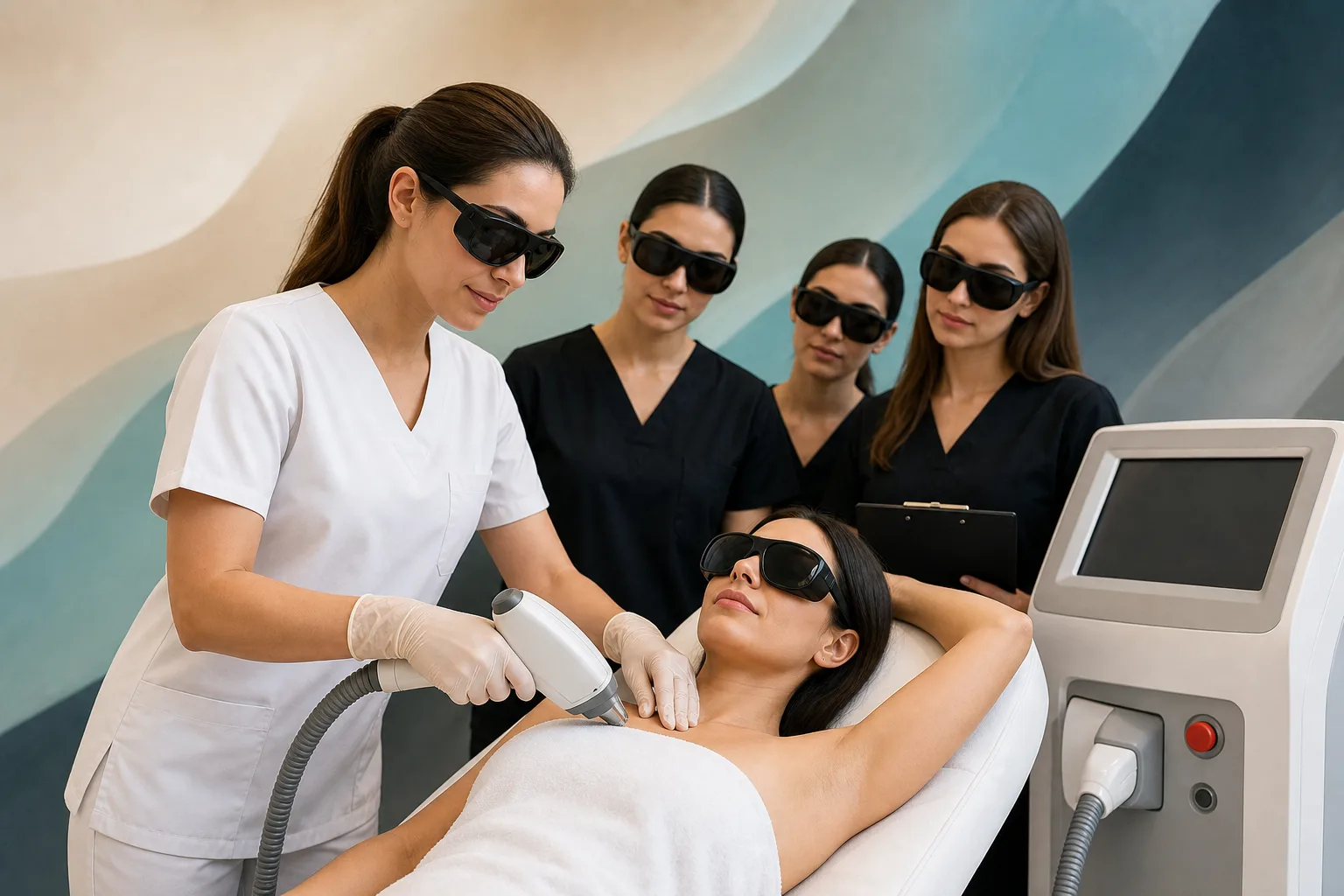
A laser hair removal training center license covers the delivery of education and practical training in laser and light-based hair removal procedures. The scope is training, not clinical treatment. You are teaching technicians how to use equipment safely and effectively. You are not operating a clinic or treating paying patients.
This distinction matters for two reasons. First, it determines which activity code you use when you apply for your trade license. Second, it defines the DHA framework that applies to you. Training centers delivering aesthetic procedures education fall under DHA's healthcare training framework, which is separate from the clinical treatment pathway. Check the Meydan Free Zone business activities list to confirm the correct code before you proceed, because applying with the wrong code delays everything.
The license does not cover operating a treatment clinic. If you want to run both a training center and a live treatment room, you need two separate licenses and two separate DHA approvals. Many founders start with training only and add the clinical side later. That is a cleaner way to manage compliance at the start.
One more point: the activity must be listed as approved in your chosen jurisdiction before you submit anything. Confirm this first.
Mainland vs Meydan Free Zone: Where to Set Up

This is the biggest structural choice you will make. Get it right early, because changing jurisdiction later is expensive and slow.
| Factor | Mainland (DET) | Meydan Free Zone |
|---|---|---|
| Foreign ownership | 100% permitted in most activities | 100% permitted |
| Client access | Direct contracts with UAE clinics, hospitals, government health bodies | Mainly private sector and international clients |
| Setup cost | Higher – physical office inspection required | Lower – flexi-desk options available |
| Office requirement | Physical premises, subject to DHA spatial inspection | Flexi-desk for admin; training space leased separately |
| DHA approval | Required | Required |
| Speed to license | Slower – more approvals in sequence | Faster initial license; DHA timeline unchanged |
A mainland license from DET lets you work directly with UAE government health bodies and public hospitals. If your target clients include government-linked clinic groups or large hospital networks, mainland is the right structure. The DET e-Services portal handles name booking and initial approval.
Meydan Free Zone suits founders targeting private clinics, independent beauty professionals, and international students coming to Dubai for certification. Setup is faster and cheaper. You get 100% foreign ownership and flexi-desk options that work well for a business where the real space requirement is the training room, not a corporate office.
One thing does not change based on jurisdiction: DHA approval is mandatory either way. Your training center needs a DHA facility permit regardless of whether your trade license sits on the mainland or in a free zone. Do not assume that a free zone license is somehow lighter on the regulatory side. It is not, for this activity.
On premises: a mainland setup will typically require a physical premises inspection by DHA before they sign off. A Meydan Free Zone company can hold its trade license on a flexi-desk, but the actual training facility still needs to meet DHA spatial and safety requirements. You will lease that space separately and submit it as part of your DHA application.
Free Business Setup Cost Calculator
Calculate NowDHA Approval and Compliance Requirements
The trade license gets you a legal entity. The DHA facility permit gets you permission to operate. You need both. Do not start marketing courses or booking students until both are in place.
Here is what DHA looks at when they review a laser hair removal training center application.
Facility permit
The DHA facility permit for a training center is separate from any clinical treatment permit. You apply for it through the Dubai Health Authority portal once you have your trade license and a confirmed training premises. The application includes your floor plan, equipment list, and operational procedures. DHA will inspect the premises before issuing the permit.
Trainer qualifications
DHA sets minimum credential requirements for instructors who deliver laser training. Trainers must hold recognised qualifications in aesthetic practice or a related clinical field. They also need to be registered with DHA as healthcare professionals. If your lead trainer is not already DHA-registered, factor that into your timeline. Registration takes time and runs parallel to the facility application.
Equipment standards
Laser devices used in training must meet DHA-approved safety classifications. This applies to training equipment used on models or mannequins during practical sessions. You cannot use uncertified equipment in a DHA-regulated facility, even for demonstration purposes. Get the equipment specifications confirmed before you purchase anything.
Curriculum and assessment
DHA reviews your course content, practical hours, and the way you assess competency. There is a minimum threshold of practical hours for laser training. Your assessment process needs to show that graduates can demonstrate safe technique before they receive a certificate. Submit a full curriculum document with your application, not a summary.
Ongoing compliance
Once you are operating, DHA renewal cycles apply. You also have incident reporting duties if anything goes wrong during a training session. Keep your records clean, your equipment serviced, and your trainers' registrations current. DHA inspections can happen with short notice. Inspection readiness is not a once-a-year exercise.
Step-by-Step Setup Guide
- Step 1, book your trade name: Use the DET e-Services portal for a mainland company, or the Meydan Free Zone portal for a free zone one. Check your company name availability before you go further.
- Step 2, confirm your activity code: Make sure the laser hair removal training activity is approved in your chosen jurisdiction before you submit anything. Wrong codes cause rejections and delays.
- Step 3, get initial approval and draft your MOA: Initial approval from DET or Meydan Free Zone confirms your structure. Your Memorandum of Association sets out ownership and activity scope.
- Step 4, secure your training premises: The space must meet DHA spatial and safety requirements. This means enough room for practical training, proper ventilation, and appropriate safety equipment. Do not sign a lease until you have checked the space against DHA guidelines.
- Step 5, submit your DHA facility application: This includes your floor plan, curriculum, trainer credentials, equipment list, and operational procedures. DHA will review the file and schedule an inspection.
- Step 6, pass the DHA inspection and collect your license: Once DHA is satisfied, they issue the facility permit. With that in hand, you collect your trade license and you are clear to start operating.
The full process typically takes several months. The DHA side is the longest part. Start the premises search early, and have your trainer credentials ready before you submit. Missing documents are the most common cause of delays.
If you want to handle the setup remotely before relocating, Meydan Free Zone supports remote business setup so you can get the company structure in place before you arrive in Dubai.
Market Opportunity and Who Your Clients Will Be
Dubai's medical aesthetics market is expanding. Demand for certified laser technicians is growing faster than the supply of qualified people. Clinics are opening across the city, and they need staff who hold recognised credentials. A training center that delivers DHA-aligned certification is filling a real gap.
Primary clients
Aesthetic clinic owners looking to upskill existing staff are your most reliable source of revenue. They need their technicians certified, they need it done without closing the clinic for weeks, and they will pay for a program that delivers a DHA-recognised outcome. Beauty professionals moving into aesthetics from other disciplines are another strong segment. They are motivated, they pay course fees directly, and they refer others if the training is good.
Secondary clients
Hospital groups, hotel spas, and wellness chains with in-house aesthetic services all need trained staff. These are corporate clients. They sign training contracts, they send staff in cohorts, and they renew annually. The sales cycle is longer, but the contract value is higher and the relationship is stickier.
Pricing model
Most training centers in this space charge per course. Introductory laser safety courses sit at the lower end. Full certification programs covering theory, practical hours, and competency assessment sit higher. Corporate training contracts are priced per cohort or per head, depending on the client's preference. Refresher and recertification programs are a recurring revenue stream that builds as your alumni base grows.
According to Mordor Intelligence, the global medical aesthetics market continues to expand, with the Gulf region showing strong growth driven by rising disposable income and increasing consumer demand for non-surgical procedures. That trend drives demand for trained practitioners, which in turn drives demand for training.
The Dubai Health Authority publishes updated guidelines on healthcare training requirements. Staying close to those updates keeps your curriculum current and your certifications credible.
Conclusion
A laser hair removal training center in Dubai is a real business with real barriers to entry. DHA approval, qualified trainers, and compliant premises all take time and cost money to get right. Those same barriers protect you once you are through them. A competitor cannot undercut you with a cheaper setup if they cannot get DHA approval.
The setup process is manageable if you go in order. Trade license first, premises second, DHA application third. Do not try to run these in parallel without professional support, because a mistake at step two can invalidate step three.
Talk to Meydan Free Zone about the right license structure and activity code before you approach DHA. Getting the company structure right from the start means your DHA application lands cleanly, without jurisdiction questions or activity mismatches slowing it down.
Ready to Launch Your Business in Dubai?
Let's Connect