
Table of Contents
Frequently Asked Questions
What does activity code 7730.02 actually cover in Dubai
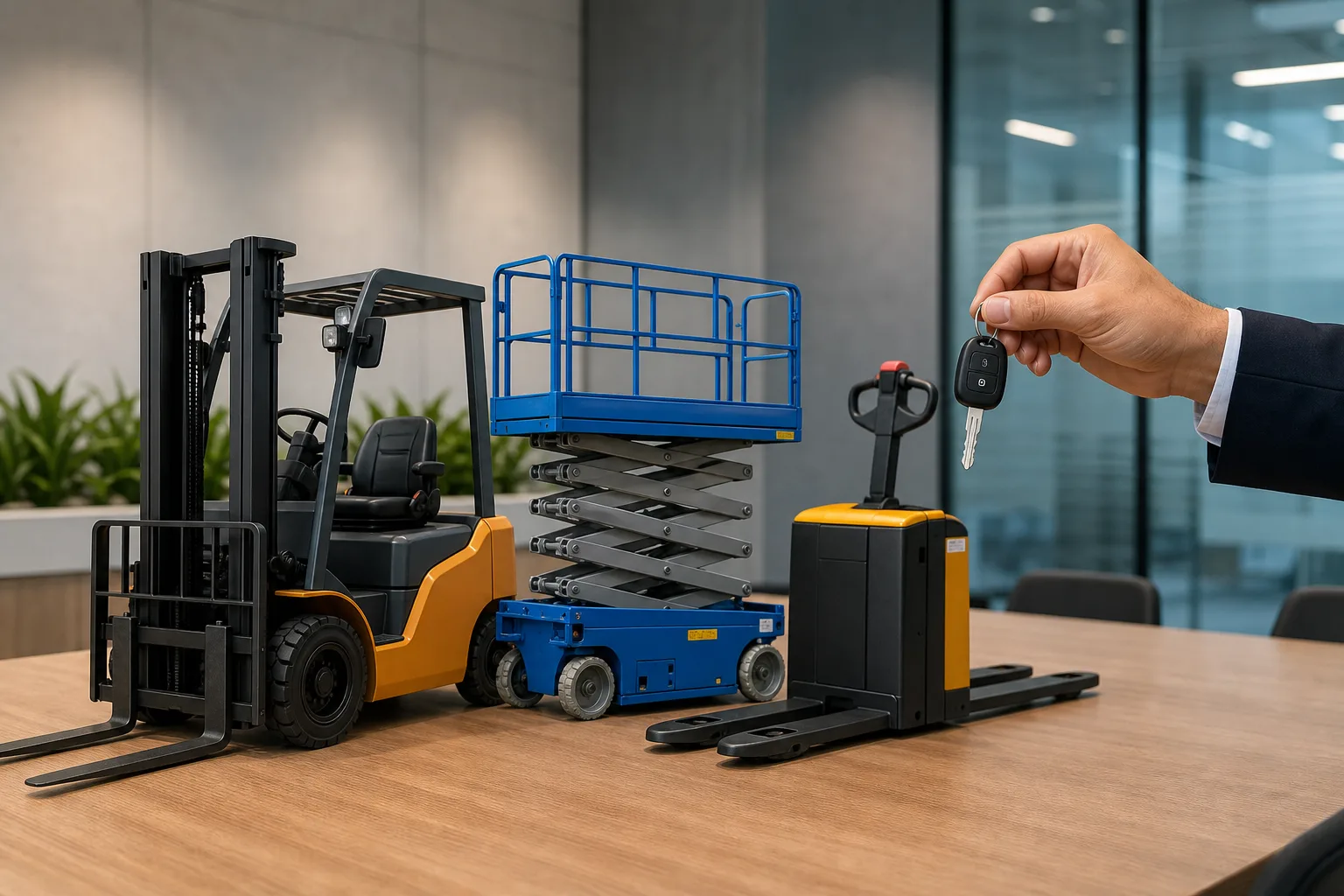
Activity code 7730.02 covers the renting and operational leasing of land transport equipment that is not a motor vehicle and is provided without a driver or operator. Assets within scope include forklifts, rail wagons, trams, trailers, construction carriers, pallet movers, and similar non-motorised or non-road-vehicle equipment.
Two boundaries define the activity: motor vehicles such as cars, trucks, and vans are explicitly excluded, and the licence covers pure asset leasing only — no drivers or operators are supplied alongside the equipment. Businesses that also supply operators would need to review whether an additional or different activity classification applies.
Who are the typical customers for businesses operating under this licence
The primary customer base includes logistics firms, port operators, construction contractors, industrial facilities, and event infrastructure companies. These organisations typically require specialised non-motorised equipment on a short- or long-term basis without wanting the capital burden of outright ownership.
Demand is particularly strong from operators linked to Jebel Ali Port and the Dubai Logistics Corridor, where recurring requirements for rail wagons, trailers, and pallet movers are generated at scale. Asset-light operators managing balance sheet efficiency increasingly prefer operational leases over purchasing, widening the addressable market further.
What revenue models are available to operators in this segment
Operators under activity 7730.02 can structure revenue across several models: short-term hire, long-term operational leases, and fleet management contracts. Fleet management contracts are increasingly preferred by corporate and infrastructure clients seeking predictable costs and outsourced maintenance responsibility.
Long-term operational leases are particularly attractive to asset-light businesses because they keep equipment off the lessee's balance sheet. This dynamic supports recurring, contracted revenue for leasing operators rather than reliance on one-off transactions, improving revenue visibility and capital planning.
Should this business be registered on the Dubai Mainland or in a free zone
The right jurisdiction depends on your target customer base. A mainland licence via the Dubai Department of Economy and Tourism (DET) gives unrestricted contracting rights with UAE government entities, port operators, and construction sites — no intermediary is required. If your pipeline includes public sector or large infrastructure clients, mainland registration is generally the more practical choice.
Free zone registration — such as through Meydan Free Zone — suits operators focused on B2B leasing, asset import-export, or holding structures. Benefits include 100% foreign ownership, potential 0% corporate tax on qualifying income, and a faster initial setup process. For port- or logistics-adjacent operations, PCFC-linked free zones offer proximity to Jebel Ali and relevant operator networks worth evaluating.
What legal structures are available when setting up this activity in Dubai
Three main legal structures are available depending on jurisdiction and ownership preferences. On the mainland, an LLC (Limited Liability Company) is the standard vehicle and permits 100% foreign ownership for most commercial activities. Within a free zone, an FZ-LLC is the equivalent structure, also offering 100% foreign ownership as standard.
If you are an existing overseas business expanding into Dubai rather than establishing a new entity, a branch of a foreign company is a third option. This allows you to extend your existing legal entity into the Dubai market without creating a fully separate local company, though branch structures carry their own compliance and liability considerations.
What are the key tax obligations for businesses operating under this licence
Businesses in Dubai are subject to UAE Corporate Tax at 9% on taxable income exceeding AED 375,000. Income below this threshold is taxed at 0%, providing a meaningful exemption for smaller or early-stage operators. Qualifying free zone entities may access a 0% rate on qualifying income, making free zone registration potentially advantageous for businesses that meet the relevant conditions.
For VAT, the registration threshold is AED 375,000 in annual taxable turnover. Businesses exceeding this threshold must register, charge VAT at the standard rate, and file periodic returns with the Federal Tax Authority. Equipment leasing revenues will generally be subject to VAT, so early financial modelling should account for this obligation.
What are the practical differences between a mainland and free zone licence for this activity
The most significant practical difference is market access. A mainland licence allows unrestricted direct contracting with both government and private sector clients onshore. A free zone licence limits direct onshore access — serving onshore clients typically requires appointing a local distributor or establishing a branch, adding a layer of cost and complexity.
On the operational side, mainland registration requires a physical, Ejari-registered office, which increases overhead. Free zones generally accept flexi-desk or virtual office arrangements, lowering the entry cost. Setup speed also favours free zones due to streamlined internal approval processes, whereas mainland registration involves DET approvals and potentially additional NOCs depending on the activity.
What macro factors are driving demand for this equipment leasing segment in Dubai
Several structural drivers underpin sustained demand. The UAE construction sector contributes over 13% of GDP, generating continuous requirements for heavy and specialised non-motorised equipment. The Expo legacy infrastructure programme and Dubai's D33 economic agenda have extended the construction and logistics investment pipeline well beyond short-term cycles.
At the port and logistics level, the Jebel Ali Port expansion managed by DP World and the Dubai Logistics Corridor create direct, recurring demand for rail wagons, trailers, and related assets at scale. Invest in Dubai identifies logistics and industrial services as priority inward investment sectors, reinforcing the long-term demand fundamentals for operators considering entry into this activity class.
Renting and Operational Leasing of Land Transport Equipment (Other Than Motor Vehicles) Without Drivers License in Dubai
Ports run on forklifts. Rail yards run on wagons. Building sites run on trailers and pallet movers. None of the firms using that kit wants to buy it outright, and that is where activity code 7730.02 comes in. You own the machines and hire them out without a driver.
This guide covers what the license allows, who your buyers are, how mainland and free zone compare, and the steps to get licensed. The setup is simple. The choices that matter come before you apply.
Key Stats at a Glance
| Activity code | 7730.02 |
|---|---|
| What it covers | Renting and operational leasing of land transport equipment that is not a motor vehicle, supplied without a driver |
| Typical assets | Forklifts, rail wagons, trams, trailers, construction carriers, pallet movers |
| Not included | Cars, trucks and vans, and any hire that comes with a driver |
| Sector size | UAE construction contributes over 13% of GDP |
| Port demand | Jebel Ali Port expansion and the Dubai Logistics Corridor – DP World |
| Market outlook | UAE equipment rental market on a steady growth path – Mordor Intelligence |
| VAT | Register above AED 375,000 annual turnover – Federal Tax Authority |
| Corporate tax | 9% above AED 375,000 taxable income; 0% on qualifying free zone income |
| Foreign ownership | 100% in Meydan Free Zone |

What This License Covers
Code 7730.02 covers land transport kit that is not a motor vehicle: forklifts, rail wagons, trams, trailers, construction carriers, pallet movers and similar assets.
Two lines mark the edge of the license. Cars, trucks and vans sit outside it. So does any hire where you send a driver along with the machine. This is pure asset leasing. If you want to supply operators as well, that is a separate manpower license, and mixing the two without the right paperwork puts your license at risk.
Who Your Clients Will Be
Logistics firms, port operators, construction contractors, industrial sites and event infrastructure companies make up the bulk of the market. They need specialist kit for weeks or months at a time and do not want it on the books.
Demand runs strongest around Jebel Ali Port and the Dubai Logistics Corridor, where rail wagons, trailers and pallet movers turn over constantly.
You can earn in three ways. Short-term hire covers a job. Long-term operational leases give you steady contracted income. Fleet management contracts go further again, bundling maintenance in, and corporate clients increasingly ask for them because the cost is predictable and the upkeep is your problem, not theirs.
Mainland or Free Zone
| Factor | Mainland (DET) | Free Zone (Meydan Free Zone) |
|---|---|---|
| Who you sell to | Government bodies, port operators and building sites, with no middleman | B2B leasing; onshore clients need a distributor or a branch |
| Office | Physical premises registered on Ejari | Flexi-desk or virtual office accepted |
| Speed | Slower, with DET approvals and NOCs | Faster, handled through one portal |
| Foreign ownership | 100% for most commercial activities | 100% as standard |
| Starting cost | Higher, driven by the office lease | Lower entry point |
| Base license fee | Around AED 10,000 to 15,000 before extra approvals | See the Meydan Free Zone cost calculator |
A mainland license from the Department of Economy and Tourism lets you sign with government bodies, port operators and building sites directly. If public sector work or big infrastructure contractors are in your pipeline, that is the practical route.
Meydan Free Zone suits operators doing B2B leasing, importing and re-exporting assets, or running a holding structure. You keep 100% of the company, setup is faster, and qualifying income can sit at 0% corporate tax. This is the biggest choice you will make when setting up. Let your clients decide it.
Your legal form follows the same split. An LLC on the mainland, an FZ-LLC in a free zone, or a branch if you are extending a company you already own abroad.
[blockCTACostCalculator]
Step by Step Setup Guide
- Step 1, book your trade name: Check what is available on the DET e-Services portal or the Meydan Free Zone portal. The name must not clash with a registered company and must follow UAE naming rules.
- Step 2, get initial approval: Send in your activity description naming code 7730.02, shareholder passport copies, Emirates ID if you are resident, and a short business plan.
- Step 3, sort out the constitutional documents: A mainland LLC needs a Memorandum of Association drafted, signed and notarised. In a free zone the authority handles the Articles of Association for you.
- Step 4, take an office or flexi-desk: Mainland means physical premises registered on Ejari. Meydan Free Zone accepts a flexi-desk, which keeps your starting costs down.
- Step 5, pay and collect the license: A mainland commercial license runs around AED 10,000 to 15,000 as a base, before any sector approvals or extra activity fees.
- Step 6, register for VAT: Once you expect turnover above AED 375,000 a year, register with the Federal Tax Authority. Do it before you start making taxable supplies, not after.
- Step 7, get an RTA no objection certificate if you need one: Any kit that runs on public roads or inside regulated transport corridors may need clearance from the Roads and Transport Authority before you deploy it.
Compliance and What You Need in Place
No driver, ever
This is not a detail you can bend. It is the edge of your license. Your contracts must say equipment only, in plain terms. Send an operator with the machine and you are working outside your license, which is a Ministry of Human Resources and Emiratisation matter and a real legal risk.
Import duty
The UAE charges 5% customs duty on most imported machinery. Hold the goods inside a free zone and the duty waits until they cross into the mainland. For a business built on buying fleet, that timing helps your cash flow.
Insurance
Third-party cover and asset cover are both standard. Expect most clients to make them a condition of the contract before they accept a machine on site.
Corporate tax
The 9% rate applies to taxable income above AED 375,000. Qualifying free zone companies can reach 0% on qualifying income. Check your own position with a tax adviser and against current Federal Tax Authority guidance, because the conditions are specific.
Contracts
Spell out who services the kit, what condition it comes back in, where liability stops, and what happens in a force majeure event. UAE Commercial Transactions Law governs all of it. Have a UAE-qualified lawyer write your standard terms before the first client signs anything.
Market Opportunity
Construction alone contributes over 13% of UAE GDP, and that keeps a floor under demand for heavy and specialist kit. The Expo legacy programme and the D33 economic agenda have stretched the building and logistics pipeline well past the usual short cycles.
The port side adds a second engine. The Jebel Ali Port expansion run by DP World, together with the Dubai Logistics Corridor, creates repeat demand for rail wagons, trailers and related assets at scale. Invest in Dubai names logistics and industrial services as priority sectors for inward investment, and the UAE equipment rental market is on a steady growth path.
Conclusion
Activity 7730.02 is a workable, infrastructure-linked business with real demand across construction, logistics and industry in Dubai. Setup is simple once you have made the decisions that come first.
Those decisions are jurisdiction, office type, and whether your buyers sit onshore or can be served from a free zone. Get the license scope right on day one. Adding activities after registration costs time and fees you did not need to spend.
Speak to the Meydan Free Zone team to confirm the right jurisdiction and structure for your leasing operation before you apply.
[blockCTAContact]
References
- Mordor Intelligence
- Invest in Dubai
- DP World
- Dubai Department of Economy and Tourism
- Federal Tax Authority
- Roads and Transport Authority
- Ministry of Human Resources and Emiratisation
- Ports, Customs and Free Zone Corporation