
Table of Contents
Frequently Asked Questions
What is the activity code for Scaffolds Rental in Dubai
The activity code for Scaffolds Rental in Dubai is 7730.78, classified under the Equipment Rental & Leasing — Construction industry category.
This code is issued by the Dubai Department of Economy and Tourism (DED) for mainland licences. It specifically permits the rental and leasing of scaffolding systems, formwork, and related temporary structures to construction and fit-out clients.
How much does it cost to set up a Scaffolds Rental licence in Dubai
The estimated setup cost for a Scaffolds Rental licence in Dubai ranges from AED 15,000 to AED 30,000 or more, depending on the jurisdiction chosen, the office or premises arrangement, and the licence package selected.
Additional costs to factor in include warehouse or yard space for equipment storage, which is a practical necessity for this type of business. VAT registration applies once annual taxable turnover exceeds AED 375,000, and corporate tax of 9% applies on net profits above that same threshold.
Can a foreign national own 100% of a Scaffolds Rental business in Dubai
Yes. 100% foreign ownership is permitted for Scaffolds Rental on the mainland under the amended UAE Commercial Companies Law. There is no mandatory local sponsor requirement for this activity.
This change removes a historic barrier that previously made free zones the default choice for foreign investors seeking full ownership. Foreign nationals can now establish a mainland company with complete ownership and unrestricted operational access across Dubai and the wider UAE.
Should a Scaffolds Rental business be set up on mainland Dubai or in a free zone
For most operators, a mainland licence via the DED is the more practical choice. Scaffolding rental is a physically mobile service that follows construction sites, which are often spread across multiple emirates — mainland status provides unrestricted commercial access across all of them.
A free zone setup, such as through Meydan Free Zone, offers lower entry costs and full foreign ownership, but may create complications when contracting with government entities or large developers who require a mainland presence. Given the nature of the activity, mainland is generally recommended.
What does the Scaffolds Rental licence actually permit a business to do
Activity code 7730.78 permits the rental and leasing of scaffolding systems, formwork, and related temporary structures to construction and fit-out clients. The business model is strictly B2B, with clients typically being contractors, developers, and subcontractors working on residential, commercial, and infrastructure projects.
Revenue flows primarily from time-based rental agreements, with additional income possible from delivery, erection, and dismantling services. It is important to note that this licence does not cover the manufacturing or outright sale of scaffolding equipment — those activities require separate codes and potentially different licence classifications.
Who are the typical clients for a Scaffolds Rental business in Dubai
The target client base for a Scaffolds Rental business is entirely business-to-business (B2B). Typical clients include contractors, property developers, fit-out firms, and infrastructure project operators working across Dubai and the UAE.
Contractors generally prefer renting scaffolding over purchasing it outright for both cost and logistics reasons — they avoid capital expenditure, storage requirements, and maintenance obligations. This preference underpins the long-term commercial case for the rental model, particularly given Dubai's sustained construction pipeline tied to urban expansion, tourism infrastructure, and residential development.
How long does it take to process a Scaffolds Rental licence in Dubai
The typical licence processing time for a Scaffolds Rental activity in Dubai is 5 to 10 working days, subject to the completeness of documentation and the jurisdiction selected.
Processing times can vary depending on whether the application is submitted through the DED for a mainland licence or through a free zone authority. Applicants can verify registered activities and track applications via the Dubai DED e-Services portal.
Are there any tax obligations specific to a Scaffolds Rental business in Dubai
Two key tax obligations apply. First, VAT registration is required once annual taxable turnover reaches AED 375,000. Second, corporate tax of 9% applies on net profits exceeding AED 375,000, effective from June 2023 under the UAE's federal corporate tax regime.
Businesses operating below the AED 375,000 threshold may qualify for small business relief provisions under the corporate tax framework. It is advisable to consult a UAE-registered tax advisor to ensure compliance as the business scales, particularly if operating across multiple emirates or handling cross-border rental contracts.
Scaffolds Rental License in Dubai
Dubai's construction sector is one of the busiest in the world, and scaffolding rental sits right at the operational core of every major build. That makes it a workable, infrastructure-backed business to set up, provided you pick the right jurisdiction for a service that has to follow the work site rather than the other way round.
This guide covers what the Scaffolds Rental license, code 7730.78, involves, who it suits, how you set it up in Dubai, and what it actually costs.
Key Stats at a Glance
| Activity code | 7730.78 |
|---|---|
| Activity name | Scaffolds Rental |
| Industry code | Equipment Rental & Leasing, Construction |
| License type | Commercial |
| Jurisdiction | Mainland Dubai (DET), free zone also available |
| Setup cost | AED 15,000 to AED 30,000+ |
| Processing time | 5 to 10 working days |

What This License Covers
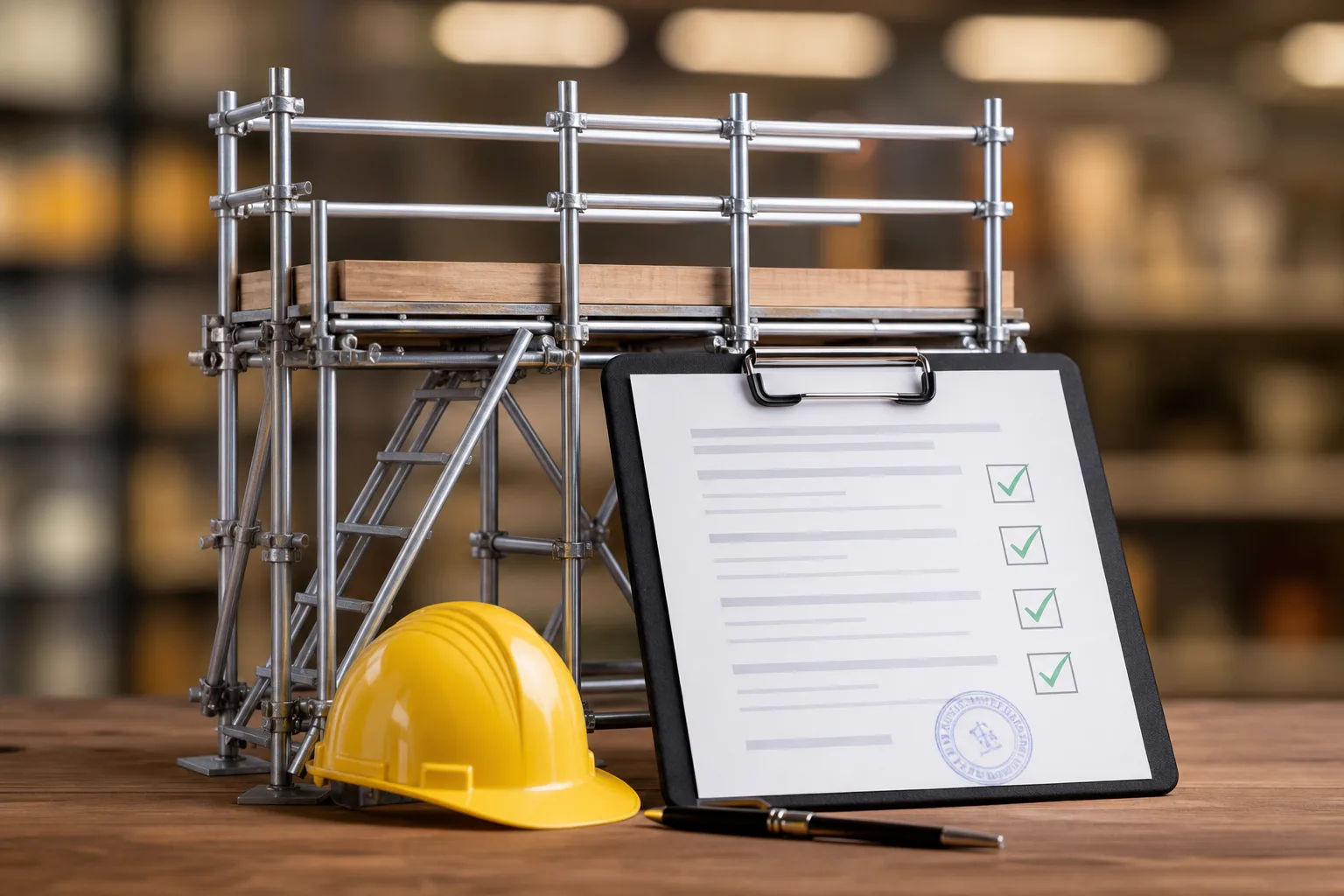
Activity code 7730.78 covers the rental and leasing of scaffolding systems, formwork, and related temporary structures to construction and fit-out clients. The business model is strictly B2B: your clients are contractors, developers, and subcontractors working on residential, commercial, and infrastructure projects across Dubai and the wider UAE.
Revenue mostly comes from time-based rental agreements, with extra income possible from delivery, erection, and dismantling services. This code does not cover manufacturing or the outright sale of scaffolding equipment. Those need separate codes, and in some cases a different license altogether.
Dubai's construction pipeline stays busy year after year, with urban expansion, tourism infrastructure, and residential development all needing scaffolding equipment on a rolling basis.
Contractors mostly rent rather than buy for cost and logistics reasons: renting avoids capital spend, storage needs, and maintenance duties, which is exactly why the rental model keeps working here.
Who Your Clients Will Be
Your client base is entirely business-to-business. Typical clients include contractors, property developers, fit-out firms, and infrastructure project operators working across Dubai and the UAE. None of them want to own scaffolding outright when a rental firm can deliver, erect, and dismantle it on their schedule instead.
You can check registered activities and codes through the DET e-Services portal before you settle on your final scope, which is worth doing early since scaffolding sits close to a few adjacent equipment-rental codes.
Mainland or Free Zone
| Factor | Mainland (DET) | Free Zone (Meydan Free Zone) |
|---|---|---|
| Site mobility | Unrestricted across all emirates | May need a mainland presence for some contracts |
| Foreign ownership | 100% under the amended Companies Law | 100% |
| Setup cost | Higher | Lower entry point |
| Best fit for | Multi-site, multi-emirate contracting work | Smaller or single-emirate operations |
For most operators, a mainland license through DET is the more workable choice. Scaffolding rental is a physically mobile service that follows work sites, which are often spread across more than one emirate, and mainland status gives you unrestricted commercial access across all of them.
Meydan Free Zone offers a lower entry cost and full foreign ownership, but it can create extra structuring when you work directly with government entities or large developers who expect a mainland presence. Given how this activity actually operates, mainland is generally the better fit.
Whatever jurisdiction you choose, physical warehouse or yard space for storing equipment is a practical need. Build this into your cost planning from day one rather than treating it as an afterthought.
[blockCTACostCalculator]
Step-by-Step Setup Guide
- Step 1, book your trade name: Book your company name through the DET portal or a registered setup provider, checking it does not clash with an existing registration.
- Step 2, confirm your activity code: Set 7730.78 as your primary activity. You can add equipment maintenance or general trading as extra activities at this stage if you plan to offer them.
- Step 3, choose your legal structure: A sole establishment, an LLC, or a branch of a foreign company. An LLC is the most common choice for a B2B rental business with more than one shareholder.
- Step 4, secure your premises: A warehouse or yard in an industrial zone is standard for this activity, and the tenancy contract needs Ejari registration.
- Step 5, send in your documents: A Memorandum of Association for an LLC, passport copies of shareholders and managers, and your registered tenancy contract.
- Step 6, get DET approval and pay your fees: Dubai Municipality may need to inspect your storage facility separately before your license is issued.
- Step 7, finish your post-license setup: Collect your trade license, open a corporate bank account, and register with MOHRE if you plan to hire staff.
Compliance and What You Need in Place
Costs
Initial setup, covering government fees, your registered address, and basic documentation, typically runs from AED 15,000 to AED 30,000. The final figure depends on your legal structure, office type, and whether you use a setup provider.
VAT and corporate tax
VAT registration becomes mandatory once your taxable turnover passes AED 375,000 a year, since rental income counts as a taxable supply under FTA rules. Corporate tax of 9% applies on net profits above that same AED 375,000 threshold, effective from June 2023. Clean bookkeeping from day one makes both of these a lot easier to manage.
Safety and site compliance
Scaffolding systems need to meet UAE safety standards, and Dubai Municipality or site authorities may inspect your equipment on active projects. Breaking the rules here carries liability risk that goes well beyond a regulatory fine.
Ongoing renewals
Renew your license and Ejari tenancy every year, keep employee visas current, register every staff member with MOHRE, and watch Emiratisation quotas once your headcount reaches the relevant level.
Market Opportunity
The UAE construction market is on track to sustain multi-billion dollar output through 2030, per IMARC Group, and scaffolding sits inside almost every one of those projects by necessity rather than choice.
That gives a rental operator demand that tracks the wider construction cycle directly, rather than depending on a single developer or project type.
The 2021 amendments to the UAE Companies Law removed the local sponsor need for most mainland activities, which has pulled more international operators toward mainland rental businesses that can move equipment freely between emirates.
That shift plays directly to the strength of a mobile, B2B rental model like this one, since your client base already spans multiple emirates and project types rather than sitting still in one location.
Contractors renting rather than buying is not a temporary trend either. It reflects a lasting preference for keeping capital off the balance sheet, which means the underlying demand for scaffolding rental firms is likely to hold steady even as individual projects come and go.
Conclusion
A Scaffolds Rental license under code 7730.78 is a workable, infrastructure-linked business in Dubai, simple to set up on the mainland, with clear rules and a client base driven by the UAE's sustained construction activity. The decisions that matter most are jurisdiction, premises, and legal structure. Get those right and the rest of the setup follows a predictable path.
[blockCTAContact]