
Table of Contents
Frequently Asked Questions
What does UAE activity code 7729.01 actually permit you to rent out
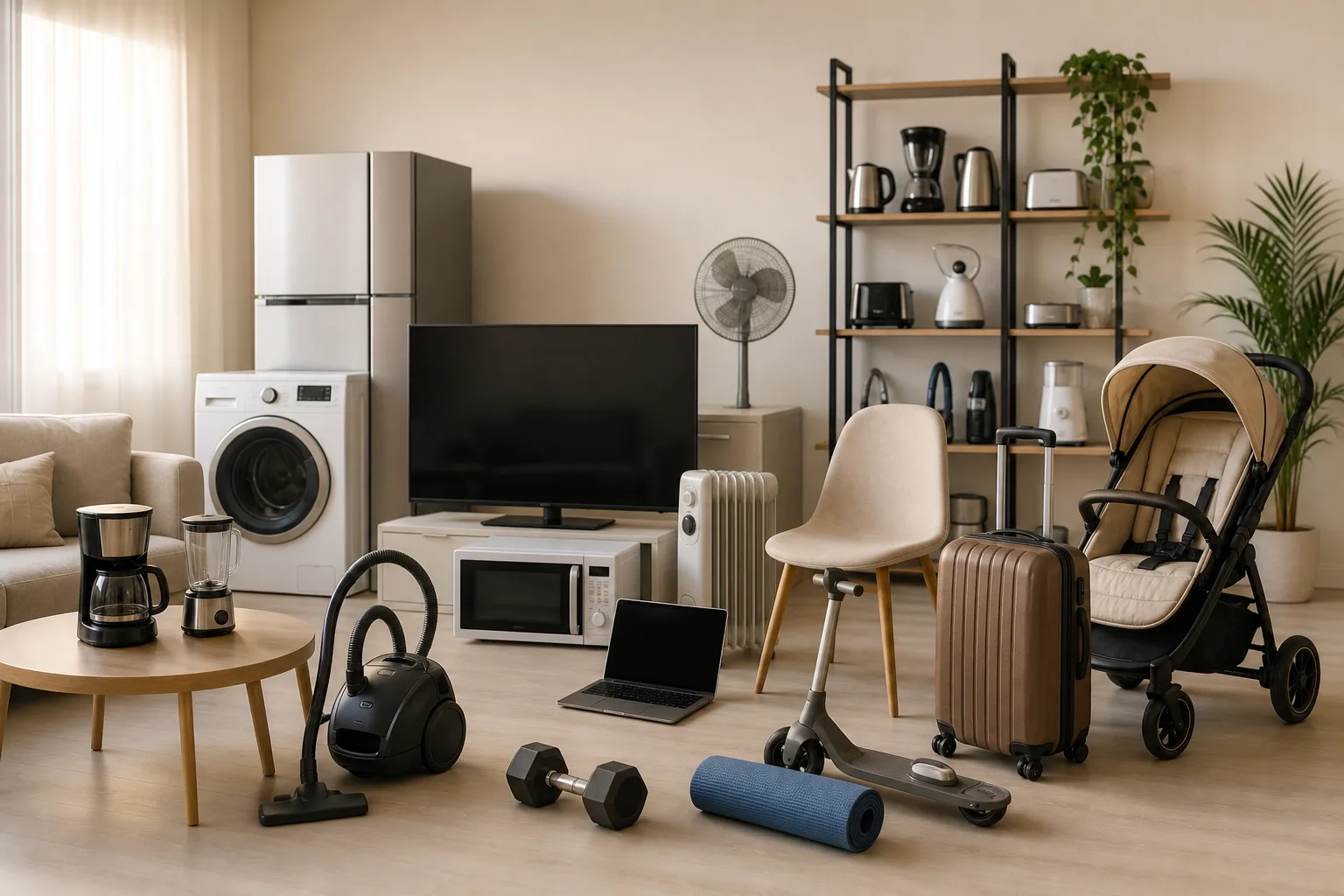
Activity code 7729.01 covers the renting of furniture, home appliances, tools, kitchenware, office furniture for home use, and general household equipment to both individuals and businesses. The scope is intentionally broad, making it suitable for a wide range of residential and commercial rental models.
There is one important boundary: recreational and sports equipment is explicitly excluded and falls under a separate activity code. Attempting to rent such items under 7729.01 would place you outside your licence permissions, so operators planning a mixed inventory should verify whether a second activity code is required.
What business models can operate under activity code 7729.01 in the UAE
Several distinct models are viable under this activity code. These include rent-to-use (short-term rentals returned at contract end), rent-to-own (where payments contribute toward eventual ownership), short-term furnished accommodation supply, and B2B asset rental to hospitality operators, construction firms, or corporate housing providers.
The right model depends on your target customer and inventory strategy. B2C models serving expat households tend to favour mainland licences, while B2B or online-first operations may find a free zone structure more efficient. No single model is inherently superior — demand exists across all of them given the UAE's large transient population.
Should you choose a mainland or free zone licence for a household goods rental business in the UAE
A mainland licence issued by the Dubai Department of Economy and Tourism (DED) is generally the more practical choice for B2C operations — for example, delivering furniture directly to apartments or supplying appliances to households. It allows direct trade with UAE residents across the emirate but requires a physical premises or NOC-approved warehouse with an Ejari-registered tenancy contract.
A free zone licence, such as through Meydan Free Zone, offers faster setup, lower initial costs, and simplified structures suited to B2B or online-first operations where goods are warehoused and dispatched rather than displayed. Flexi-desk arrangements are permitted in many free zones.
Importantly, 100% foreign ownership is now available on the mainland for this commercial activity under the UAE's updated Companies Law, so ownership structure alone is no longer a reason to default to a free zone. The decision should be driven by your customer base and operational model.
What are the steps involved in setting up a household goods rental licence in the UAE
The setup process follows a predictable sequence. It begins with trade name reservation — checking availability and reserving a compliant name via DED or your chosen free zone authority, ensuring it meets UAE naming conventions (no offensive terms or references to religions or ruling authorities without approval).
This is followed by initial approval, where you submit your activity selection (7729.01), shareholder documents, and passport copies to receive formal confirmation that your proposed activity is approved in principle. The next step involves securing a tenancy contract — Ejari-registered for mainland operations — before proceeding to final licence issuance and any additional regulatory steps specific to your jurisdiction.
What is driving demand for household and personal goods rentals in the UAE
Demand is primarily structural rather than cyclical, underpinned by the UAE's large and growing transient expat population. Many residents arrive without household goods and prefer renting over purchasing, particularly on short-term contracts where buying furniture outright makes little financial sense.
According to the Dubai Statistics Center, non-nationals comprise the significant majority of Dubai's population — a persistent demographic driver for this rental category. Additional demand comes from hospitality operators, SMEs furnishing temporary accommodation, and construction firms needing temporary equipment, making the market multi-layered and resilient.
Does VAT apply to household goods rental businesses in the UAE and when must you register
Standard 5% VAT applies to rental income generated under activity code 7729.01. This is consistent with the UAE's broader VAT framework administered by the Federal Tax Authority (FTA).
Mandatory VAT registration is required once your annual turnover exceeds AED 375,000. If your turnover is between AED 187,500 and AED 375,000, voluntary registration is available — which can be advantageous if you wish to reclaim input VAT on business expenses such as inventory purchases, warehousing, and logistics costs from the outset.
Is 100% foreign ownership available for a household goods rental business in the UAE
Yes. 100% foreign ownership is available on the mainland for this commercial activity following updates to the UAE Companies Law. This is a significant change from the previous framework, which required a local Emirati partner holding 51% of shares for most mainland commercial activities.
Free zones have always offered 100% foreign ownership as standard, but the mainland change means ownership structure is no longer a default reason to choose a free zone. Entrepreneurs should now base their jurisdiction decision on operational factors — customer base, premises requirements, and business model — rather than on ownership considerations alone.
What premises requirements apply to a mainland household goods rental licence in Dubai
A mainland licence under the Dubai DED requires either a physical premises or an NOC-approved warehouse to be secured before the licence can be finalised. The tenancy contract for that premises must be registered through Ejari, Dubai's official tenancy registration system, as proof of a legitimate business address.
This requirement reflects the nature of a B2C rental operation, where goods need to be stored, managed, and dispatched from a defined location. Free zone licences, by contrast, often permit flexi-desk arrangements with logistics managed separately, making them more flexible for asset-light or online-first models where a showroom or retail presence is not part of the business model.
Setting Up a Renting of All Kinds of Household or Personal Goods Business in Dubai
The UAE has one of the highest population turnovers in the world. Expats arrive on fixed-term contracts, move into furnished apartments, and leave when the posting ends. Short-term tenants, holiday home operators, and corporate relocation firms all need household and personal goods fast, without the cost or hassle of buying outright. That gap is real, it is recurring, and formal operators are still thin on the ground.
This guide covers what the license covers, who your customers are, how to choose between mainland and free zone setup, and the steps to get trading. If you are considering this activity, read it before you speak to anyone.
What This License Covers and Key Stats at a Glance
This activity covers renting movable household and personal goods to individuals or businesses. That includes furniture, home appliances, tools, personal items, and similar goods. It does not cover leasing real estate or vehicles. Those are separate license categories with their own codes and rules. Keep that distinction clear from the start, because mixing activities on one license causes problems at renewal.
The goods you rent can go to private individuals, serviced apartment operators, event companies, or corporate clients. The model is flexible. What matters is that the activity code on your license matches what you are actually doing.
| Activity code | 7729 (Renting and leasing of other personal and household goods) |
|---|---|
| Scope | Furniture, appliances, tools, personal goods – movable items only |
| Foreign ownership | 100% permitted in free zones and on the mainland – Invest in Dubai |
| Jurisdiction options | Mainland (DET) or free zone (e.g. Meydan Free Zone) |
| VAT registration threshold | AED 375,000 annual turnover – Federal Tax Authority (FTA) |
| Minimum setup cost (free zone) | From AED 12,500 at Meydan Free Zone |
You can check the full Business Activities List at Meydan Free Zone to confirm the exact code and any conditions attached before you apply.
Who Your Customers Will Be

Getting this right before you set up saves a lot of rework later. Your license choice, your storage location, and your contract model all follow from who you are actually selling to.
Expats on short postings
These are your most reliable customers. Someone arriving in Dubai on an 18-month contract does not want to buy a sofa, a washing machine, and a bed, then sell them all again when they leave. They want a furnished setup delivered on day one and collected when they go. This segment is large, it repeats, and it is willing to pay a fair monthly rate for convenience.
Short-term tenants and holiday home operators
Dubai's short-term rental market is active. Operators running holiday homes or serviced apartments need flexible furnishing that can be swapped out, upgraded, or replaced without capital outlay. They are B2B clients who value reliability over price. If you can deliver and collect on schedule, you keep the contract.
Event organisers and temporary businesses
Pop-up offices, exhibition stands, and corporate events all need temporary furniture and personal goods. This is a smaller segment but it pays quickly and does not hold your inventory for long.
Corporate relocation firms
These firms handle incoming staff for large companies. They need a trusted supplier who can furnish a two-bedroom apartment to a consistent standard within 48 hours. Get on their approved vendor list and the orders come in without much selling effort on your part.
Roughly 85% of UAE residents are expatriates. That is the structural fact behind this business. Demand does not depend on economic cycles in the same way retail does. People keep arriving and leaving whatever the market is doing.
Mainland vs Free Zone: Which Setup Works for You
This is the most important decision you will make before you start. Get it wrong and you either pay to restructure later or find yourself locked out of the customers you actually want.
| Factor | Mainland (DET) | Free Zone (Meydan Free Zone) |
|---|---|---|
| Customer access | Open UAE market, including walk-in retail and government | Mainly B2B and corporate clients; UAE retail needs a local distributor |
| Foreign ownership | 100% in most activities | 100% always |
| Office or premises | Physical address required | Flexi-desk options available |
| Setup cost | Higher – includes office lease and DET fees | Lower – from AED 12,500 at Meydan Free Zone |
| Setup speed | Typically longer due to approvals | Faster; some licenses issued quickly |
| VAT duties | Register once you pass the FTA threshold | Same threshold applies |
If your model is B2C, serving private individuals directly, you need a mainland license from DET. Free zone companies cannot sell directly to UAE retail customers without a local distributor arrangement. Do not let anyone tell you otherwise.
If your model is B2B, working with corporate relocation firms, serviced apartment operators, or event companies, a free zone setup through Meydan Free Zone works well. You get 100% ownership, lower setup costs, and a faster path to trading.
Storage space matters whatever you choose. You will hold physical inventory. A flexi-desk address works for your registered office, but you still need a warehouse or storage unit for the goods themselves. Factor that lease into your cost model before you commit to a jurisdiction. Some founders underestimate this and end up with a license but nowhere to put the furniture.
On VAT, the rules are the same for both. Once your taxable turnover hits AED 375,000 in a 12-month period, you must register with the Federal Tax Authority. Plan your rental pricing with that threshold in mind from the start. Voluntary registration is available from AED 187,500 if it suits your input tax position.
You can also start a business remotely if you are not yet in the UAE. Meydan Free Zone supports remote setup, which means you can get your license sorted before you land.
Free Business Setup Cost Calculator
Calculate NowStep-by-Step Setup Guide
- Step 1, book your trade name: Use the DET e-Services portal for a mainland company, or the Meydan Free Zone portal for a free zone one. The name must not duplicate an existing registered name. Use the Company Name Check tool to confirm availability before you go further.
- Step 2, confirm your activity code: Make sure the renting of household or personal goods code is approved in your chosen jurisdiction. Do this before submitting any paperwork. Some codes have conditions or need extra approvals.
- Step 3, get initial approval: Submit your application with shareholder documents, passport copies, and your chosen trade name. Initial approval is usually fast, particularly in free zones.
- Step 4, sort your premises: For a free zone, a flexi-desk at Meydan Free Zone covers your registered address. For mainland, you need a physical office with an Ejari-registered tenancy contract. Either way, arrange your storage space separately at this stage.
- Step 5, pay your fees and collect your license: Once premises are confirmed and documents are in order, pay the license fee and collect your trade license. Keep a digital copy accessible at all times.
- Step 6, register for VAT if applicable: If you expect to cross the AED 375,000 threshold within 30 days, or you have already crossed it, register with the Federal Tax Authority straight away. Do not wait until you are already over.
- Step 7, open a business bank account: Have your trade license, tenancy contract, shareholder documents, and company stamp ready. UAE banks ask for all of these. Meydan Free Zone's business banking support service can help you navigate this step and avoid the common delays.
Compliance, Operations, and Market Opportunity
Rental agreements
Document everything. Disputes over damage, missing items, or late returns are the most common operational problem in this business. Your rental agreement needs to spell out the condition of goods at handover, who is responsible for damage, what the return process is, and what fees apply for late or damaged returns. A verbal agreement is not enough. Get it signed before you hand anything over.
Consumer protection rules
The UAE's consumer protection framework applies to rental terms just as it does to sales. Your contracts must be transparent on pricing, fees, and return conditions. Hidden charges or unclear penalty clauses create complaints and, in serious cases, regulatory action. Keep your terms simple and visible.
Inventory management
Track every item. Use a simple inventory system from day one, even if you are starting small. You need to know what is out, where it is, when it is due back, and what condition it was in when it left. This is not optional. Without it, your margins disappear into untracked losses.
Staff and logistics
Delivery, installation, and collection are core to the service. If you are doing this in-house, you need drivers and a vehicle. If you are outsourcing, factor that cost into your pricing model. Customers in this segment expect fast turnaround. A 48-hour delivery promise is standard for corporate clients.
Market opportunity
The structural case for this business is strong. The UAE's expatriate population sits at around 85% of total residents. Most are on fixed-term contracts. Many arrive with nothing and leave with nothing. That creates a permanent, rotating base of potential customers who need exactly what this license covers. The corporate relocation segment alone is worth targeting early, because those clients have budgets, they repeat, and they refer.
Meydan Free Zone's suite of support products can reduce the admin load during setup and early operations. mAccounting covers bookkeeping, VAT registration support, and corporate tax compliance. mResidency handles your visa and Emirates ID process. mAssist covers PO Box, mail management, and document translation. These are practical tools, not upsells, and they matter most in the first six months when your attention needs to be on the business, not the paperwork.
Conclusion
Renting household and personal goods in the UAE is a workable business with real, recurring demand. The customer base is built into the country's demographics. The barriers to entry are low compared to most sectors. But the right jurisdiction choice, a clean rental contract framework, and proper VAT planning matter from day one. Get those three things right and the operational side is manageable.
A Dubai Trade License from AED 12,500 at Meydan Free Zone gives you a fast, cost-effective route into this market, with 100% foreign ownership and a support structure that covers the setup steps most founders find time-consuming.
Speak to Meydan Free Zone to confirm your activity code, compare setup costs, and get your license moving.
Ready to Launch Your Business in Dubai?
Let's Connect