
Table of Contents
Topic Summary
Understand What a Bivouac Business Actually Is
A bivouac facility under code 5520.03 covers the most basic tier of outdoor accommodation — protective shelters, windbreaks, and flat surfaces for tents or sleeping bags. It is distinct from glamping, hotels, or campgrounds with amenities, focusing purely on essential weather protection for travellers.
Tap Into a Booming Adventure Tourism Market
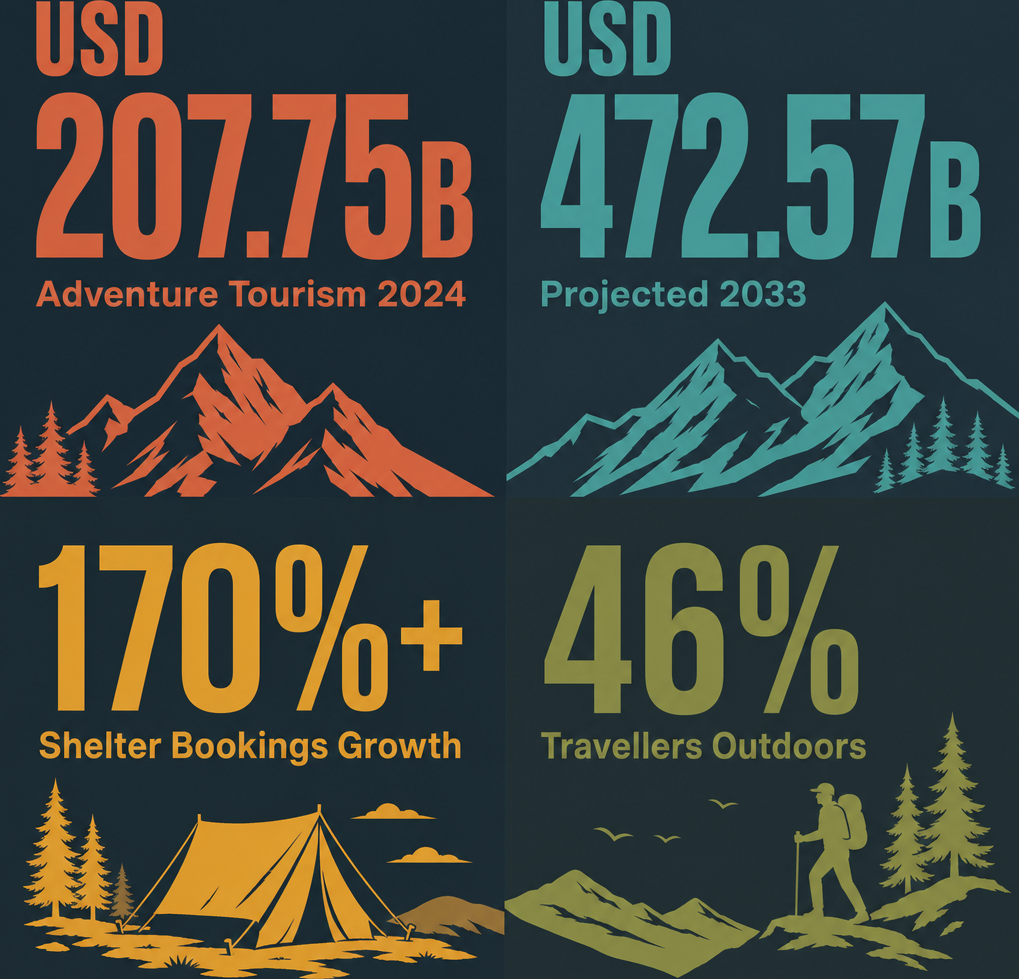
The global adventure tourism market was valued at USD 207.75 billion in 2024 and is projected to reach USD 472.57 billion by 2033 at a CAGR of 9.8%. Mountain hut and trail shelter bookings alone grew more than 170% since 2024, signalling strong and accelerating demand.
Leverage the UAE's Unique Mountain and Desert Terrain
Jebel Jais in Ras Al Khaimah rises to 1,934 metres and hosts a 95-kilometre hiking network with shelters already installed along its trails. The UAE's combination of mountain, wadi, and desert landscapes makes bivouac operations commercially viable in a way few urban jurisdictions can match.
Identify Your Core Customer Audience Segment
Three primary operator profiles exist: mountain trail shelter operators, desert and wadi overnight shelter operators, and adventure route bivouac station network operators. Choosing your segment shapes your site selection, infrastructure investment, and the type of guided programmes you can partner with.
Register Through Meydan Free Zone for Streamlined Setup
Meydan Free Zone provides a structured licensing pathway for niche outdoor accommodation businesses like bivouac facility operators. Registering under the correct activity code (5520.03) ensures your business is legally recognised and positioned to operate within the UAE's growing adventure tourism ecosystem.
Partner With Existing Adventure Operators for Early Revenue
Established operators like Adventurati Outdoor already run multi-day trekking expeditions with staged overnight points across Jebel Jais, using tent-pitching sites and shaded rest areas. Partnering with such operators can provide immediate demand for your shelter facilities while your own brand develops.
Build a Network, Not Just a Single Shelter
The most scalable model involves operating a linked sequence of bivouac stations at regular intervals along a defined adventure route, rather than a single standalone shelter. This network approach supports multi-day guided programmes and creates recurring overnight revenue across an entire trail corridor.
How to Start a Protective Shelters or Plain Bivouac Facilities for Placing Tents and/or Sleeping Bags Business in Dubai with Meydan Free Zone
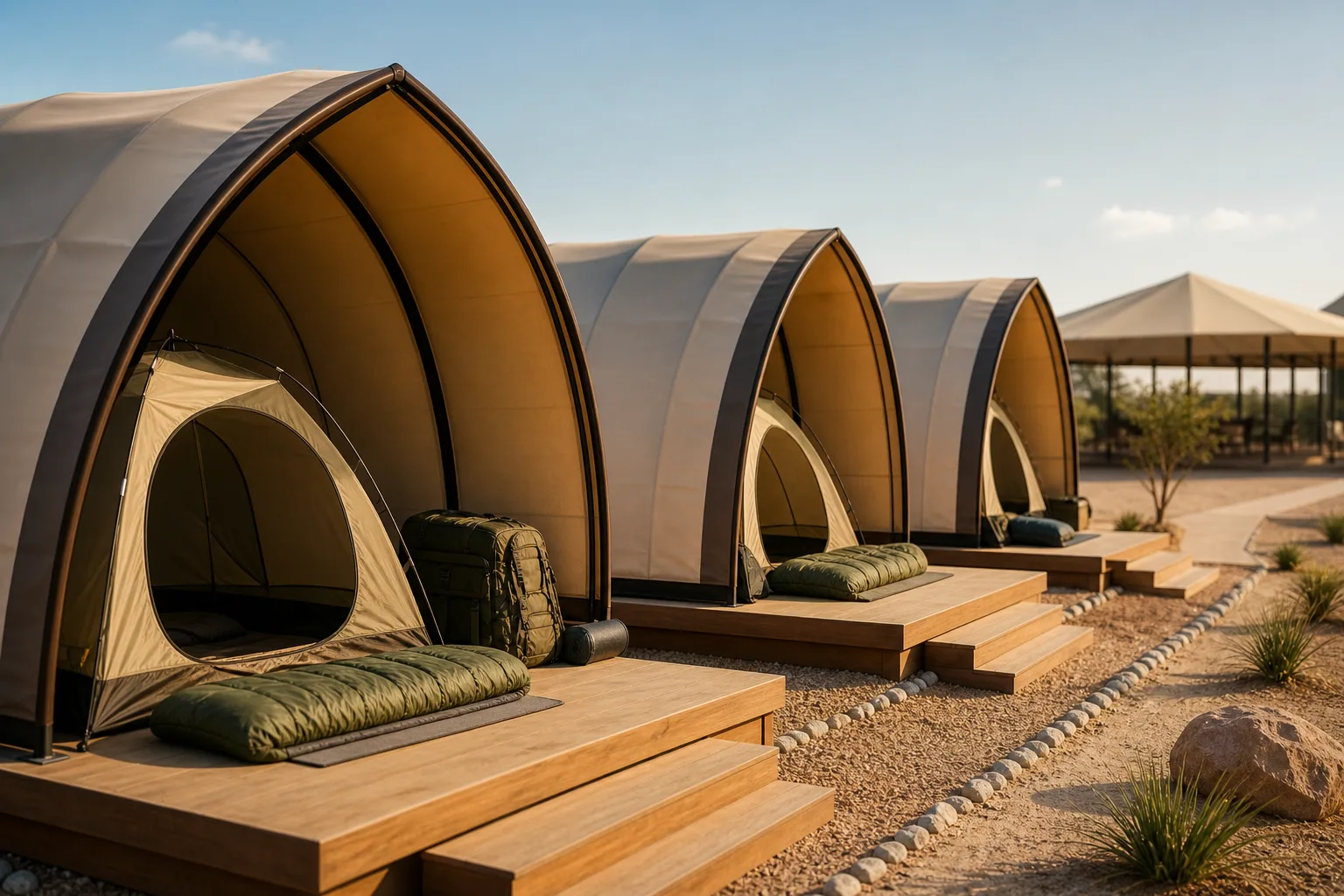
A bivouac is a place to sleep, stripped to its essentials. It is not a hotel, not a glamping dome, not even a campground with facilities. It is a roof against the weather, a flat and protected surface, a windbreak at altitude, the minimum structure between a traveller and the elements. Code 5520.03 covers exactly this: the provision and operation of protective shelters and plain bivouac facilities for placing tents or sleeping bags, forming the most fundamental tier of organised short-stay outdoor accommodation. It is the foundation on which adventure tourism, multi-day trekking routes, mountain trail networks, and desert expedition programmes are built.
The market context for this format sits within adventure tourism broadly. The global adventure tourism market was valued at USD 207.75 billion in 2024 and is projected to reach USD 472.57 billion by 2033 at a CAGR of 9.8%, according to Verified Market Reports¹. The specific shelter and mountain hut sub-segment is growing sharply: bookings for mountain lodges, huts, and trail shelter stays surpassed expectations and grew more than 170% since 2024, with travellers increasingly seeking accommodation that blends physical challenge with rest at altitude, according to Backroads’ December 2025 trend report². In 2024, over 46% of global travellers engaged in at least one outdoor activity, with adventure tour operators expanding tented accommodation services by 23%, according to Global Growth Insights.
The UAE’s terrain makes this code commercially meaningful in a way that a purely urban jurisdiction would not. Jebel Jais, rising to 1,934 metres in the Hajar Mountains of Ras Al Khaimah, hosts a 95-kilometre hiking network with shelters installed at intervals along the trails, described by visitors as ‘great spots to stop and take in the view.’ Adventurati Outdoor’s three-day Jebel Jais trekking expedition uses staged overnight points including a shaded rest area and a mountain farm where tents are pitched and meals prepared by local Shihuh tribal families. Bear Grylls Explorers Camp on the mountain offers survival shelter-building as a core programme skill, alongside guided hikes on the 16-kilometre designated trail network.
Who is this for?
| Audience Segment | Profile |
|---|---|
| Mountain trail shelter and bivouac facility operators | Operators of protective shelter stations, windbreaks, and basic overnight facilities along mountain trails and hiking routes, providing short-stay weather protection and tent-pitching spaces for hikers, trekkers, and climbers traversing technical mountain terrain. |
| Desert and wadi overnight shelter operators | Operators of basic protective shelter facilities, shaded rest points, and overnight bivouac stations in desert, wadi, and open terrain settings, providing minimal covered accommodation for short-stay visitors on multi-day desert treks, guided expeditions, and off-road adventure routes. |
| Adventure route bivouac station network operators | Operators of linked bivouac station networks along organised adventure trekking and expedition routes, providing a sequence of basic overnight shelter facilities for tent and sleeping bag accommodation at regular intervals along multi-day guided outdoor programmes. |
5520.03 - Protective Shelters or Plain Bivouac Facilities for Placing Tents and/or Sleeping Bags
| Category | Scope |
|---|---|
| Mountain trail shelters and bivouac stations | Mountain trail shelter and bivouac station operations Operation of protective shelter stations, windbreaks, and basic overnight bivouac facilities sited along mountain trails and trekking routes, providing short-stay weather shelter, tent-pitching space, and basic overnight facilities for hikers and trekkers traversing technical mountain terrain. |
| Desert and wadi overnight shelters | Desert and wadi rest-stop and overnight shelter operations Operation of basic protective shelter facilities, shaded overnight bivouac stations, and plain short-stay structures in desert, wadi, and open terrain providing tent-pitching and sleeping bag accommodation space for visitors on multi-day desert treks, guided overnight expeditions, and outdoor adventure programmes. |
| Adventure programme bivouac station networks | Adventure route bivouac station network operations Operation of a network of linked bivouac stations providing basic overnight shelter facilities at staged intervals along an organised multi-day adventure trekking or expedition route, supporting tent and sleeping bag accommodation for participants in guided outdoor programmes. |
Code 5520.03 covers the provision of basic protective shelters and bivouac facilities for placing tents and sleeping bags. It does not cover organised campground pitches with full amenities such as fire pits, BBQ stations, and shared sanitation (5520.01); recreational vehicle parks with hookups and vehicle facilities (5520.02); glamping or furnished outdoor accommodation structures (5520.00 parent); or hotel and guesthouse indoor accommodation within the 5510.xx group. It also does not cover adventure activity guiding services without an overnight shelter component (ISIC division 93), emergency rescue or safety shelter provision, or military and defence bivouac operations. Operators of hiking and trekking bivouac facilities on Jebel Jais and in the Hajar Mountains must comply with Ras Al Khaimah Tourism Development Authority licensing requirements for any organised outdoor visitor activities at the site.
In short: if you provide basic protective shelter or bivouac facilities where short-stay visitors can place tents or sleeping bags, no third-party pre-approval is required and you are in. If you provide furnished outdoor accommodation, organised campground amenities, RV hookups, or indoor hotel rooms, you are not under this code.
Third-Party Approval
Protective Shelters or Plain Bivouac Facilities for Placing Tents and/or Sleeping Bags does not require pre-approval from any third-party regulatory authority as a condition of the Meydan Free Zone licence, and the licence may be issued directly without external sign-off before commencing shelter or bivouac facility operations.
Anti-Money Laundering Compliance
Protective Shelters or Plain Bivouac Facilities for Placing Tents and/or Sleeping Bags is not classified as a Designated Non-Financial Business or Profession (DNFBP) under UAE anti-money laundering legislation, and businesses operating under this activity code are not subject to AML registration or reporting obligations specific to this licence category.
References
- ¹ Verified Market Reports / OpenPR, Outdoor Adventure Tourism Market Trends: An In-Depth Analysis for 2025
- ² Backroads, The Future of Adventure Travel: Backroads Announces 2026 Trend Outlook
- ³ Visit Jebel Jais, Best Jebel Jais Hiking Trails
- ⁴ Adventurati Outdoor, 3 Day Trekking Expedition, Jebel Jais, Ras Al Khaimah
- ⁵ Gulf News, Ras Al Khaimah: Where Adventure Comes in Naturally