
Table of Contents
Topic Summary
Choose the Right Jurisdiction From the Start
Mainland licenses allow access to government clients and the full UAE market, while Meydan Free Zone offers lower costs, faster setup, and no corporate tax on qualifying income. Let your target client base drive this decision, not the setup price alone.
Register Products With MOHAP Before Selling
Any biocide or medical disinfectant sold in the UAE must be registered with the Ministry of Health and Prevention before buyers will place orders. Start this process early, as it runs independently from company formation and can take several weeks.
Know Which Products Require Stricter Compliance
Hospital-grade disinfectants, sterilization equipment, and biocides face tighter regulatory requirements than general commercial cleaning products. Understanding your product classification upfront saves costly delays later.
Target High-Volume, Repeat-Purchase Buyer Segments
Hospitals, hotels, food processing facilities, schools, and facility management companies all purchase sterilizers and disinfectants on a recurring basis. Once you are on an approved vendor list, contracts tend to be long-term and consistent.
Treat Compliance as a Commercial Advantage
Government hospitals, licensed clinics, and hotel chains have procurement rules that automatically exclude unregistered suppliers and products. Getting your registrations in order opens doors that competitors without proper documentation simply cannot access.
Start Fast With Meydan Free Zone's Digital Process
Meydan Free Zone offers a commercial trading license starting from AED 12,500, with setup possible in as little as a few days after document submission. Flexi-desk options also reduce overhead compared to mainland office requirements.
Understand the Full Scope of Your Trading License
A sterilizers and disinfectants trading license covers import, storage, and resale of a wide product range, but not manufacturing. Knowing the boundaries of your licensed activity keeps you compliant and helps you plan your supply chain correctly.
How to Start a Sterilizers and Disinfectants Trading Business in Dubai with Meydan Free Zone
Demand for sterilizers and disinfectants across the UAE has grown steadily since 2020, and the supply chain still has real gaps that a well-structured trading business can fill. Hospitals, hotels, food facilities, and schools all buy these products regularly. Most of them prefer suppliers who are registered, compliant, and able to deliver consistently.
This guide covers what the activity involves, who buys these products, how to choose the right jurisdiction, and how to set up through Meydan Free Zone.
Key Stats at a Glance
| Activity | Trading in sterilizers and disinfectants |
|---|---|
| License type | Commercial trading license |
| Foreign ownership | 100% in Meydan Free Zone – Foreign Ownership rules apply |
| Regional market | The Middle East disinfectants market is growing, driven by healthcare expansion and hospitality sector demand – Mordor Intelligence |
| Product registration | MOHAP registration is mandatory for biocides and medical disinfectants sold in the UAE – Ministry of Health and Prevention |
| Setup timeline | As fast as a few days with Meydan Free Zone, subject to document submission |
| Starting cost | Dubai Trade License from AED 12,500 |
What This License Covers and Who Buys These Products

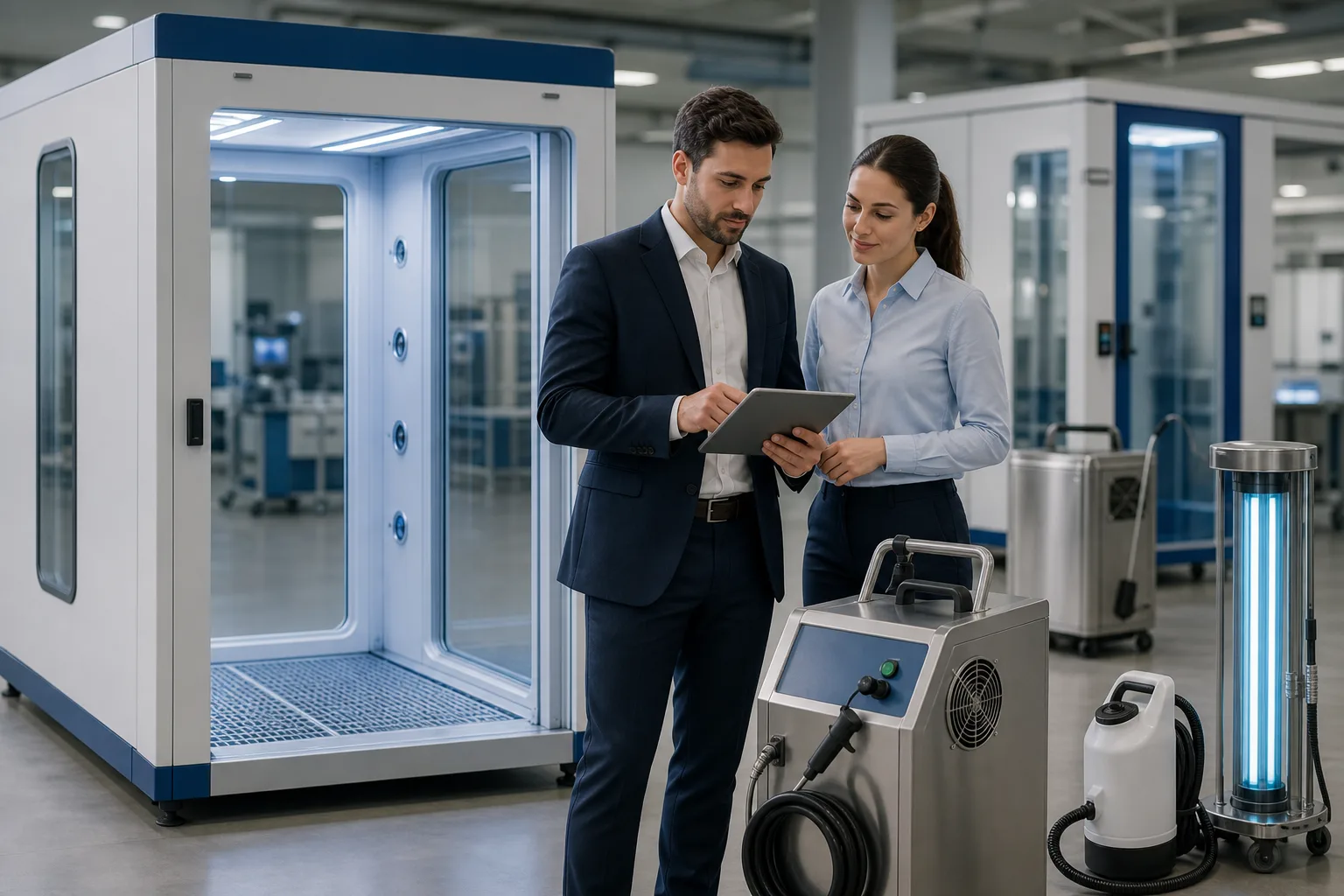
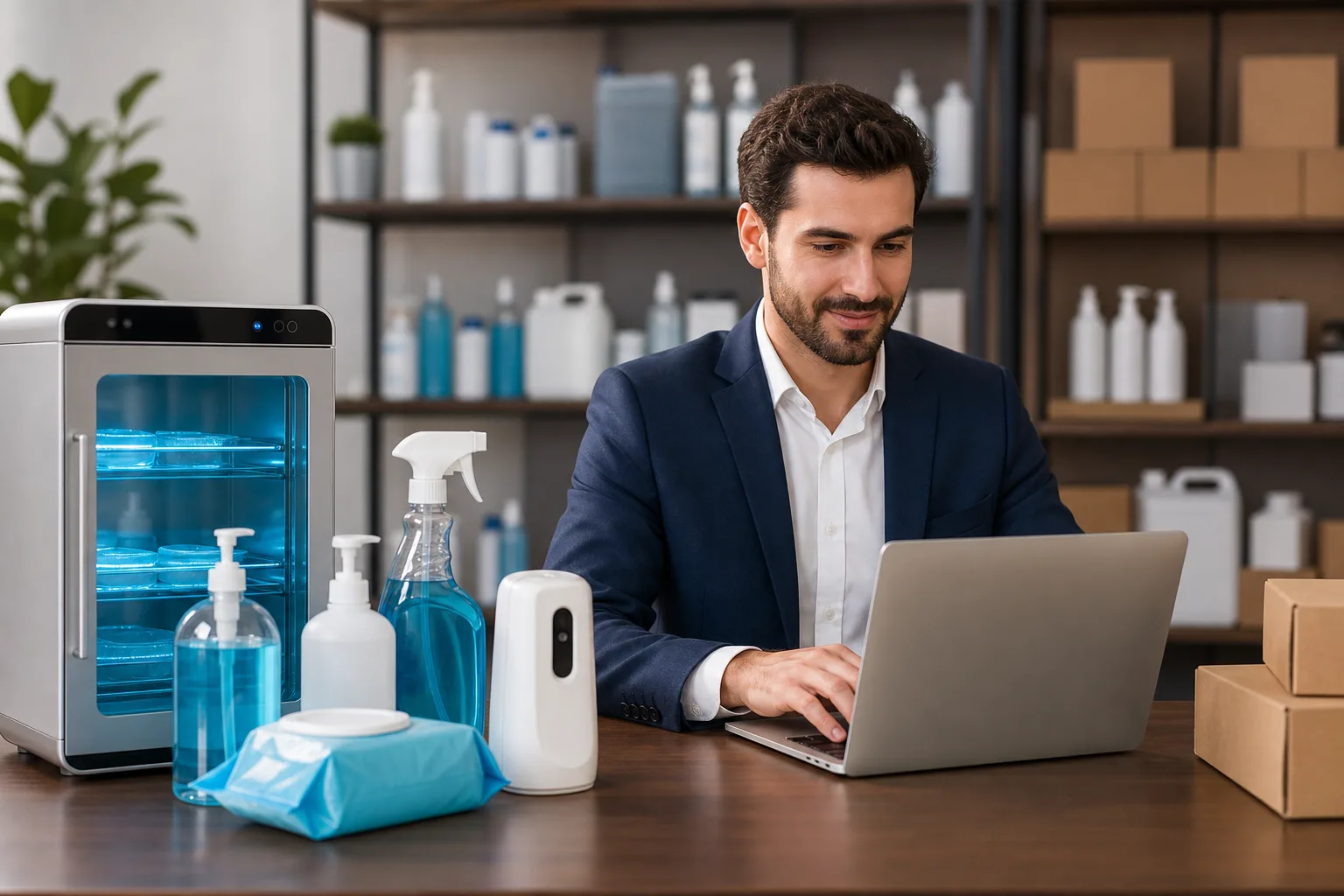
A sterilizers and disinfectants trading license covers the import, storage, and sale of chemical disinfectants, sterilization equipment, surface sanitizers, and related consumables. You are not manufacturing these products. You are sourcing them, bringing them into the UAE, and selling them to end buyers or distributors.
The product range is wide. It includes hospital-grade surface disinfectants, alcohol-based sanitizers, sterilization pouches and equipment for clinical use, industrial cleaning chemicals, and fogging solutions. Some of these fall under general commercial goods. Others are classified as biocides or medical disinfectants and sit under stricter regulatory rules.
The buyer base is broad and consistent. Key segments include:
- Hospitals, clinics, and day surgery centres
- Hotels, serviced apartments, and resorts
- Food processing and packaging facilities
- Schools, nurseries, and universities
- Facility management companies servicing commercial buildings
- Pharmacies and medical supply distributors
Healthcare and hospitality buyers do not buy on a phone call. They run procurement processes, they want you on an approved vendor list, and they need to see your product registrations before they will place an order. That process takes time to set up, but once you are in, the contracts tend to be long and repeat.
MOHAP registration
Any disinfectant or sterilizer product sold in the UAE that falls under the biocide or medical disinfectant category needs registration with the Ministry of Health and Prevention (MOHAP). This is not optional. Buyers in the healthcare sector will ask for it before they place a first order. Start this process early because it runs separately from your company setup and can take several weeks.
Why compliance matters commercially
Registered, compliant suppliers win contracts that unregistered ones cannot touch. Government hospitals, licensed clinics, and hotel chains all have procurement rules that exclude non-registered products. Getting your paperwork right is not just a legal duty. It is a commercial advantage.
Mainland vs Free Zone: Choosing the Right Setup
This is the biggest choice you will make when setting up. Let your clients decide it, not the price.
| Factor | Mainland (DET) | Free Zone (Meydan Free Zone) |
|---|---|---|
| Client access | Open UAE market including government entities | Private sector, export, and regional distribution |
| Foreign ownership | 100% permitted in most activities | 100% permitted |
| Office requirement | Physical office required | Flexi-desk options available |
| Corporate tax | Standard UAE corporate tax applies | No corporate tax on qualifying free zone income |
| Setup cost | Generally higher | Lower starting cost |
| Speed | Typically slower | Faster, with digital application |
A mainland license from the Dubai Department of Economy and Tourism lets you work directly with UAE government bodies. If your target clients are public hospitals, government schools, or federal facilities, a mainland setup is the practical choice. You cannot serve those clients from a free zone without a local distributor arrangement.
A free zone setup works well if you are focused on private sector clients, if you are importing and re-exporting to regional markets, or if you want to keep overhead low while you build your client base. Meydan Free Zone gives you 100% foreign ownership, no corporate tax on qualifying income, flexi-desk options that keep costs down, and a fast digital setup process.
Many traders start with a free zone license to serve private hospitals, hotel groups, and facility management companies. They add a mainland presence later once they want to bid for government tenders. That is a workable path. Just plan for it from the start so you are not restructuring in year two.
You can also start a business remotely through Meydan Free Zone if you are not yet based in the UAE. The application process is fully digital and does not need you to be present to get started.
Free Business Setup Cost Calculator
Calculate NowHow to Set Up Your Trading Business with Meydan Free Zone
The setup process is straightforward. Here is how it works from start to license issuance.
- Step 1, check your trade name: Use the Company Name Check tool to confirm your preferred name is available before you go further.
- Step 2, confirm your activity code: Check the Business Activities List to confirm that sterilizers and disinfectants trading is listed and approved for your chosen structure. Do this before you submit anything.
- Step 3, prepare your documents: You will need passport copies for all shareholders and directors, a summary of your business plan, and a product list that confirms the scope of what you intend to trade. This helps the free zone confirm your activity code accurately.
- Step 4, submit your application: Use the Meydan Free Zone online portal. The mCore service supports you through the application process if you want guided help rather than doing it alone.
- Step 5, pay your license fee: Fees start from AED 12,500. Use the Cost Calculator to get a breakdown based on your specific setup.
- Step 6, get your license issued: Once payment is confirmed and documents are approved, your license is issued. This can happen within a few working days.
- Step 7, start your MOHAP product registration: Do not wait for your license before starting this. MOHAP registration runs in parallel and takes longer. Start it as soon as you have your product list confirmed.
- Step 8, apply for your visa: Once your license is issued, you can apply for a UAE residence visa through mResidency. This covers your investor visa, Emirates ID, and medical fitness screening.
- Step 9, open your business bank account: You will need a corporate bank account to receive payments and manage imports. Meydan Free Zone offers business banking support to help you through this process, which can otherwise take time.
If you want extra support across the setup journey, the mAssist service covers document handling, government liaison, and administrative tasks that would otherwise take up your time.
Compliance and What You Need in Place Before You Start Trading
Trading sterilizers and disinfectants in the UAE is a regulated activity. There are several compliance steps you need to complete before you can legally sell.
MOHAP product registration
This is the most important compliance step for this activity. Any product classified as a biocide or medical disinfectant needs MOHAP registration before it can be sold in the UAE. The process involves submitting product data, safety information, and efficacy documentation. Start early. It is not fast, and buyers will ask for it.
Import permits and customs
Chemical goods imported into the UAE go through customs classification. Some disinfectant products are subject to import controls or restricted substance checks. Work with a licensed customs agent and check the relevant classifications with the Ports, Customs and Free Zone Corporation before your first shipment arrives. Getting this wrong causes delays and can result in goods being held at port.
Labelling rules
Products sold in the UAE must carry Arabic-language labelling. Labels also need to show hazard classifications, usage instructions, and shelf-life markings where applicable. This applies to both imported and locally distributed products. Check the specific requirements for each product category before you go to market.
Corporate tax registration
Once your revenue crosses the relevant threshold, you need to register with the Federal Tax Authority (FTA). Free zone businesses with qualifying income are exempt from corporate tax, but you still need to register and maintain proper records. If you also handle VAT-liable transactions, VAT registration is a separate requirement. Meydan Free Zone offers VAT registration support and corporate tax services in Dubai through the mAccounting service.
Storage and handling
Some disinfectant and sterilizer products need temperature-controlled or ventilated storage. Flammable or hazardous chemical goods have their own warehousing rules. Make sure your storage arrangement meets the requirements for the specific products you are handling. This is a practical and legal issue. If a product degrades in storage or causes an incident, liability falls on the license holder.
Ongoing record-keeping
Keep full records of product batches, import documentation, and sales transactions. Healthcare buyers and regulatory audits may request this at any point. Good bookkeeping services in Dubai make this manageable from day one rather than a scramble at year end.
Market Opportunity
The UAE healthcare sector is expanding. New hospitals, clinics, and day surgery centres are opening across Dubai, Abu Dhabi, and the Northern Emirates. Each one needs a reliable supply of registered disinfectants and sterilization products from day one.
The hospitality sector is equally active. Dubai's hotel capacity continues to grow, and hotel operators need cleaning and disinfection products that meet brand and regulatory standards. Food processing and logistics facilities also buy in volume, particularly as food safety regulations tighten.
Regional export is another real opportunity. Traders based in a UAE free zone can supply markets across the GCC, East Africa, and South Asia. The UAE's port infrastructure and trade agreements make it a practical base for regional distribution. Products registered with MOHAP also carry credibility in neighbouring markets where UAE regulatory standards are well regarded.
According to Mordor Intelligence, the Middle East disinfectants market is on a sustained growth path, driven by healthcare investment, population growth, and rising hygiene standards across both public and private sectors. There is real commercial depth here for a well-run, compliant trading operation.
Conclusion
Trading sterilizers and disinfectants in the UAE is a regulated activity with real commercial depth. Getting the license right, registering your products with MOHAP early, and choosing a jurisdiction that matches your client base are the three decisions that determine how fast you can start selling.
A free zone setup through Meydan Free Zone gives you 100% ownership, a low-cost starting point, and a fast digital application process. If your clients are mainly in the private sector or you are building a regional distribution operation, it is the right structure to start with.
Speak to the Meydan Free Zone team to confirm your activity code, get a cost breakdown, and start your application.
Ready to Launch Your Business in Dubai?
Let's ConnectReferences
- Ministry of Health and Prevention (MOHAP)
- Ports, Customs and Free Zone Corporation (PCFC)
- Federal Tax Authority (FTA)
- Mordor Intelligence
- Invest in Dubai