

Table of Contents
Topic Summary
Choose the Right License for Your Operation
A wholesale of paper in bulk license covers buying and selling paper products in commercial quantities, including copy paper, cardboard, and packaging stock. It does not cover retail sales, manufacturing, or paper conversion activities, which each require separate license codes.
Understand What You Can Actually Trade
Eligible stock ranges from copy paper reams and industrial paper rolls to corrugated board, tissue stock, and specialty printing papers. Your license permits importing, warehousing, and reselling to businesses, government departments, or overseas buyers.
Free Zone vs Mainland: Pick Your Setup
Meydan Free Zone suits traders focused on import, storage, and re-export, offering 100% foreign ownership and a simpler setup process from AED 12,500. A mainland DET license is the better choice if your primary customers are UAE government bodies, schools, or local businesses requiring direct contracts.
Plan Your Warehouse and Storage Carefully
Paper is bulky and moisture-sensitive, requiring proper racking and humidity control in your storage facility. A flexi-desk license works if you hold no physical stock in the free zone, but warehousing goods means you need a unit sized to match your trading volume.
Leverage Dubai's Re-Export Infrastructure
Dubai's position as a trade hub, anchored by Jebel Ali Port and the DP World logistics network, makes it ideal for sourcing paper from Europe, South Asia, or East Asia and shipping on to Africa, the Middle East, or beyond. Free zone companies are particularly well structured for this transit trade model.
Know the Key Financial and Regulatory Thresholds
There is no mandatory minimum share capital for a Meydan Free Zone trading company, keeping entry costs manageable. VAT registration becomes required once annual turnover reaches AED 375,000, in line with Federal Tax Authority rules.
Verify Your Activity Code Before Applying
The Meydan Free Zone business activities list should be checked to confirm the exact code covering your intended trading scope before you submit your application. Getting this right upfront avoids delays and ensures your license accurately reflects what you plan to sell.
How to Start a Wholesale of Paper In Bulk Business in Dubai with Meydan Free Zone
Paper remains one of the most traded commodities in the UAE, with demand from packaging, printing, publishing, and logistics sectors showing no sign of slowing. Bulk paper wholesale is a real, working business category here, with established import routes, strong re-export potential, and a broad base of buyers across government, education, and private industry.
This guide covers what a wholesale paper business involves, how to set one up through Meydan Free Zone, and what you need in place before you start trading.
Key Stats at a Glance
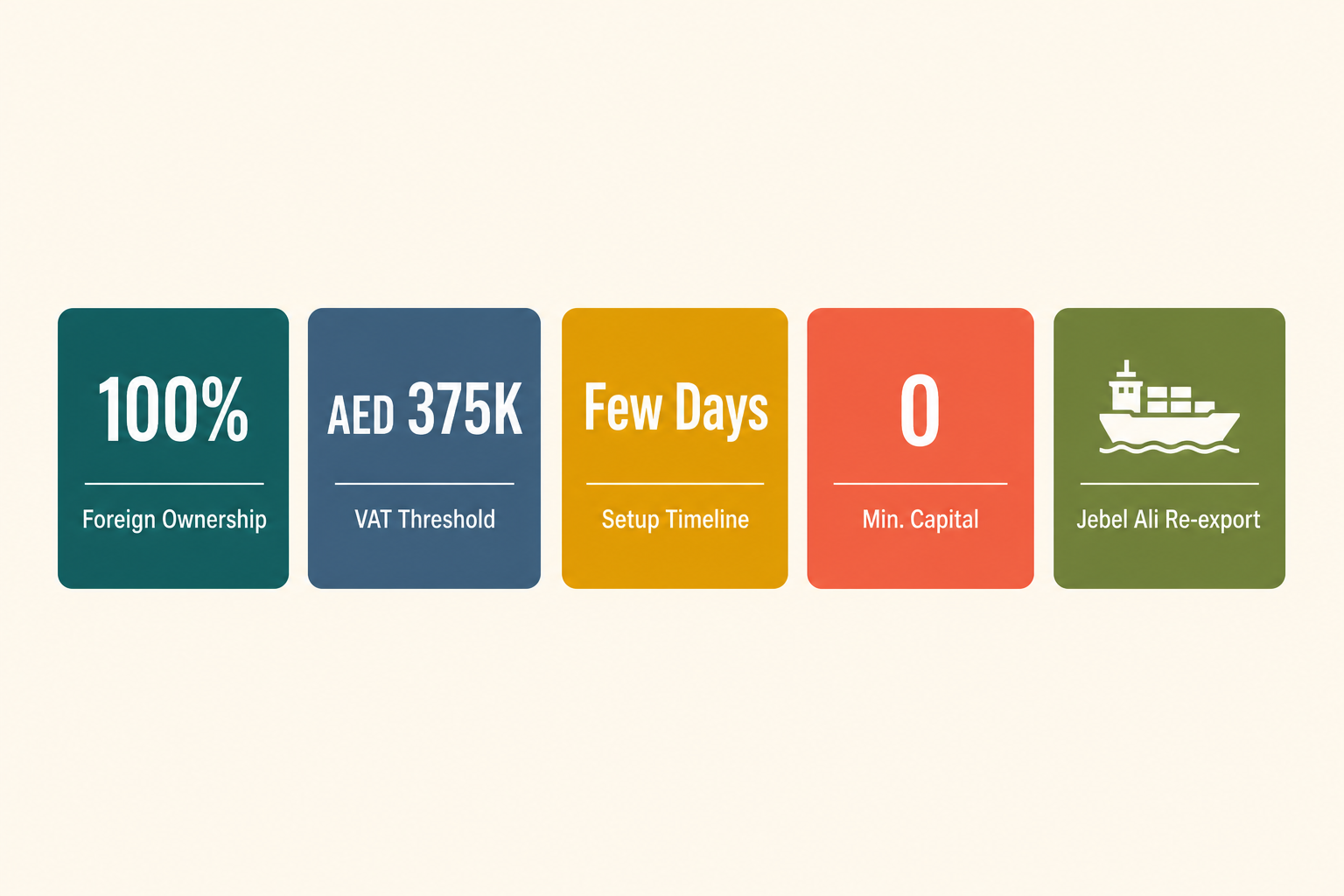
| Activity | Wholesale of Paper in Bulk |
|---|---|
| License type | Trading |
| Foreign ownership | 100% in Meydan Free Zone – Invest in Dubai |
| Setup timeline | As little as a few days for a free zone license once documents are in order |
| Minimum share capital | No mandatory minimum for a free zone trading company |
| VAT registration threshold | AED 375,000 annual turnover – Federal Tax Authority |
| Market context | The UAE paper and packaging sector is a significant and growing segment within the wider regional trade economy – Mordor Intelligence |
| Key re-export infrastructure | Jebel Ali Port and DP World logistics network |
What This License Covers
A wholesale of paper in bulk license lets you buy and sell paper products in commercial quantities. That covers a wide range of stock: copy paper in reams, paper rolls for industrial use, cardboard sheets, corrugated board, packaging paper, tissue stock, and specialty papers used in printing and publishing.
The license covers trading. It does not cover manufacturing paper from raw materials, nor does it cover retail sale direct to consumers. If you want to sell small quantities to walk-in customers, that is a retail activity and needs a separate code. If you want to process or convert paper, for example cutting rolls to size or laminating sheets, that moves into light manufacturing and also needs its own code.
What the license does allow is this: you import bulk paper stock, hold it in a warehouse, and sell it on to buyers. Those buyers can be local businesses, government departments, or overseas customers. In a free zone, re-export is a natural part of the model. You bring stock in from a supplier in Europe, South Asia, or East Asia, store it in Dubai, and ship it on to buyers in Africa, the wider Middle East, or South Asia. The free zone structure is well suited to that kind of transit trade.
Storage is part of the operation. Paper is bulky, moisture-sensitive, and needs proper racking and humidity control. Your warehouse setup needs to reflect that. A flexi-desk license works for a trading company that does not hold physical stock in the free zone itself, but if you are warehousing goods, you need a unit that matches your volume.
Check the Meydan Free Zone business activities list to confirm the exact code for your intended trading scope before you apply.
Mainland vs Meydan Free Zone
There are two main routes to set up a wholesale paper business in Dubai. Each suits a different type of operation.
| Factor | Mainland (DET) | Free Zone (Meydan Free Zone) |
|---|---|---|
| Client access | Open UAE market, including government buyers | Free zone and international buyers; local sales need a distributor or agent |
| Foreign ownership | 100% in most trading activities – confirm with DET | 100% guaranteed |
| Office requirement | Physical office address required | Flexi-desk available; warehouse units for stock holders |
| Setup complexity | More steps, approvals from DET and sometimes Ministry of Economy | Simpler process, handled through Meydan Free Zone portal |
| VAT | Standard VAT rules apply | Standard VAT rules apply |
| Re-export suitability | Workable but more complex customs handling | Well suited to import, store, and re-export model |
| Starting cost | Generally higher; physical office adds cost | Dubai Trade License from AED 12,500 |
If your main buyers are UAE government departments, schools, or local printing companies, a mainland license from the Dubai Department of Economy and Tourism (DET) gives you direct access to those contracts. Government procurement often needs a mainland-registered supplier.
If your model is import and re-export, or you are supplying international buyers from a UAE base, Meydan Free Zone is the more practical choice. The setup is faster, the costs are lower to start, and 100% foreign ownership is built in. There are no currency restrictions, and you can repatriate profits freely.
Some operators run both structures: a free zone entity for import and international trade, and a mainland entity for local supply. That is a workable model once you have volume to justify the added running costs.
Free Business Setup Cost Calculator
Calculate NowStep-by-Step Setup Guide
- Step 1, check your company name: Use the company name check tool to confirm your preferred trading name is available before you go further. Names must meet UAE naming rules: no offensive terms, no references to religion or ruling families, and no names already registered.
- Step 2, choose your activity code: Confirm the wholesale of paper in bulk code covers everything you plan to trade. If you want to add related activities, such as wholesale of packaging materials or stationery, list them at this stage. Adding activities later is possible but costs extra.
- Step 3, pick your license package: If you are running a trading operation without holding stock in the free zone, a flexi-desk package works. If you need physical storage, choose a warehouse unit sized to your expected stock volume. Paper takes up space. Be realistic about your requirements from day one.
- Step 4, prepare your documents: You will need passport copies for all shareholders and directors, a business plan summary, and proof of address. Meydan Free Zone will guide you through the exact document list for your chosen structure.
- Step 5, submit your application and get initial approval: Once documents are submitted and approved, you get your initial approval letter. This is the stage at which you can start opening a corporate bank account.
- Step 6, open a corporate bank account: This is often the step that takes the most time. Banks in the UAE do full due diligence on new trading companies. Have your business plan, supplier details, and expected transaction volumes ready. Business banking support through mCore can help you navigate this process.
- Step 7, get your license issued: Once the bank account is open and any remaining fees are settled, your license is issued. You can now trade.
- Step 8, register for VAT if required: If your annual turnover is expected to exceed AED 375,000, you must register for VAT with the Federal Tax Authority before you start. Paper is a standard-rated supply at 5%. Registration is done through the Federal Tax Authority portal.
Compliance and What You Need in Place
Running a wholesale paper business in the UAE is not complicated, but there are several compliance areas you need to get right from the start.
VATWholesale paper supply is standard-rated at 5% VAT. Once you cross the AED 375,000 threshold, registration is not optional. You charge VAT on sales, reclaim it on qualifying purchases, and file returns quarterly. Keep clean records from day one. If you need support, VAT registration support is available through mAccounting.
Import documentationBulk paper imports need the right customs codes, a commercial invoice, a packing list, and a certificate of origin. If you are bringing stock through Jebel Ali or another UAE port, you will deal with the Ports, Customs and Free Zone Corporation. Get your HS codes right before your first shipment. Wrong codes cause delays and can trigger inspections. The Ports, Customs and Free Zone Corporation publishes guidance on import procedures.
Storage requirementsPaper is sensitive to moisture and fire risk. Your warehouse needs proper racking, humidity control, and fire suppression systems that meet UAE civil defence standards. If you are leasing a unit inside a free zone, the zone authority will have baseline requirements. Check them before you sign a lease. Storing paper in an unsuitable space damages stock and creates insurance and liability problems.
Annual license renewalFree zone licenses need annual renewal. Budget for this from the start. Missing a renewal date means your license lapses, which stops you from trading legally and can cause problems with your bank account. Set a calendar reminder well before the renewal date.
Ministry of Economy approvalsMost wholesale paper trading does not need a separate Ministry of Economy approval, but if you plan to trade in certain specialty papers or import from restricted origins, check whether any additional approvals apply. The Ministry of Economy is a useful first reference for checking regulatory requirements by product category.
BookkeepingKeep proper accounts from the moment you start trading. VAT filing needs accurate records, and banks will ask for financials when you want to increase credit facilities or add services. Bookkeeping services through mAccounting can handle this if you do not want to manage it in-house.
Market Opportunity
The UAE's position as a logistics and trade hub makes it one of the better places in the world to run a commodity wholesale business. Paper is no exception.
The re-export angle is real and workable. Dubai sits between major paper-producing regions in Europe, South America, and East Asia, and large consuming markets in Africa, South Asia, and the wider Middle East. Bulk paper comes in through Jebel Ali, gets held in bonded or free zone warehouses, and goes out to buyers who cannot easily source direct from manufacturers. DP World's infrastructure at Jebel Ali makes this model commercially practical in a way that few other ports in the region can match.
Domestically, demand is steady. The UAE's printing and publishing sector buys large volumes of copy paper and specialty stock. Government departments, schools, and universities are consistent buyers. The growth of e-commerce has pushed up demand for corrugated board and packaging paper, as every parcel shipped needs a box. That trend is not reversing.
There is also a structural opportunity in the market. Many smaller buyers in the region cannot meet minimum order quantities from manufacturers directly. A well-run wholesale operation that can break bulk, hold stock, and offer reliable delivery terms to mid-size buyers fills a real gap. It is not glamorous, but it is a workable, repeatable business with low product obsolescence risk.
Conclusion
Wholesale paper trading is a solid commodity business when the license, storage, and customs setup are done correctly from the start. The activity is well defined, the demand is consistent, and the UAE's trade infrastructure gives you real options for both local supply and international re-export.
Get the activity code right, choose the right license structure for your client base, sort your warehouse setup before your first shipment arrives, and register for VAT before you need to. Those four things done properly put you in a strong position from day one.
You can calculate your business license cost using the Meydan Free Zone cost calculator, or speak directly to the team to confirm the right activity code for your trading model and get a cost estimate before you commit.
Ready to Launch Your Business in Dubai?
Let's ConnectReferences
- Invest in Dubai
- Federal Tax Authority (FTA)
- Ports, Customs and Free Zone Corporation (PCFC)
- DP World
- Mordor Intelligence
- Ministry of Economy