
Table of Contents
Topic Summary
Why Dubai Is Ideal for Fibre Trading
The UAE sits geographically between major wool origin markets like Australia and Mongolia and the world's largest processing hubs in China, India, Italy, and Turkey. This transit position gives traders faster logistics, lower friction, and access to both ends of the global supply chain simultaneously.
The Global Wool Market Is Growing Fast
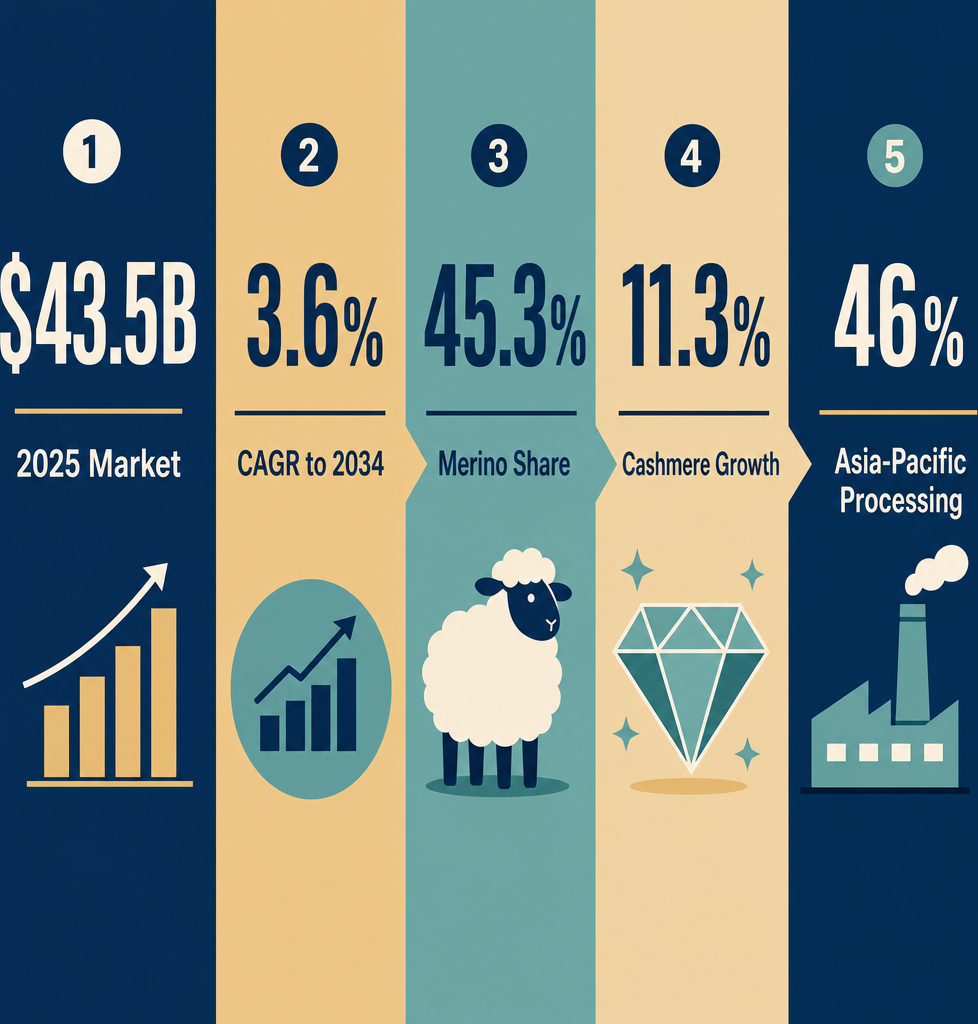
The wool and animal hair market was valued at USD 43.51 billion in 2025 and is projected to reach USD 59.82 billion by 2034. The cashmere segment alone is expanding at 11.3 percent CAGR, making it the fastest-growing fibre category in the industry.
Meydan Free Zone Offers Key Business Advantages
Traders registering through Meydan Free Zone benefit from 100 percent foreign ownership, zero corporate tax on qualifying income, and full profit repatriation. The fully digital licensing process also reduces setup time compared to mainland or other free zone options.
Multiple Fibre Types Fall Under One License
Activity code 4620.97 covers the wholesale trade of greasy sheep wool, cashmere, mohair, alpaca, camel hair, yak hair, angora, and other raw animal fibres in bulk. This broad scope lets traders diversify across commodity and luxury fibre segments under a single business license.
Apparel Dominates Demand, But Industrial Use Is Rising
Apparel accounts for approximately 55 percent of end-use demand for wool and animal hair globally. However, industrial applications such as building insulation, automotive interiors, filtration media, and flame-resistant textiles represent the fastest-growing application segment.
China Processes the Majority of the World's Clip
Asia-Pacific processes over 46 percent of global raw wool, with China alone handling more than 40 percent of the world's clip and producing over 70 percent of raw cashmere. Establishing a UAE-based trading entity gives businesses a neutral, well-connected hub to supply these dominant processing markets.
Three Distinct Trader Profiles Can Enter This Market
The business suits raw wool importers sourcing from Australia and South America, specialty fibre wholesalers dealing in luxury materials like cashmere and mohair, and industrial fibre traders supplying coarse grades for technical applications. Each profile has a clear buyer base and established global supply routes.
How to Start a Wool & Animal Hair Trading Business in Dubai with Meydan Free Zone
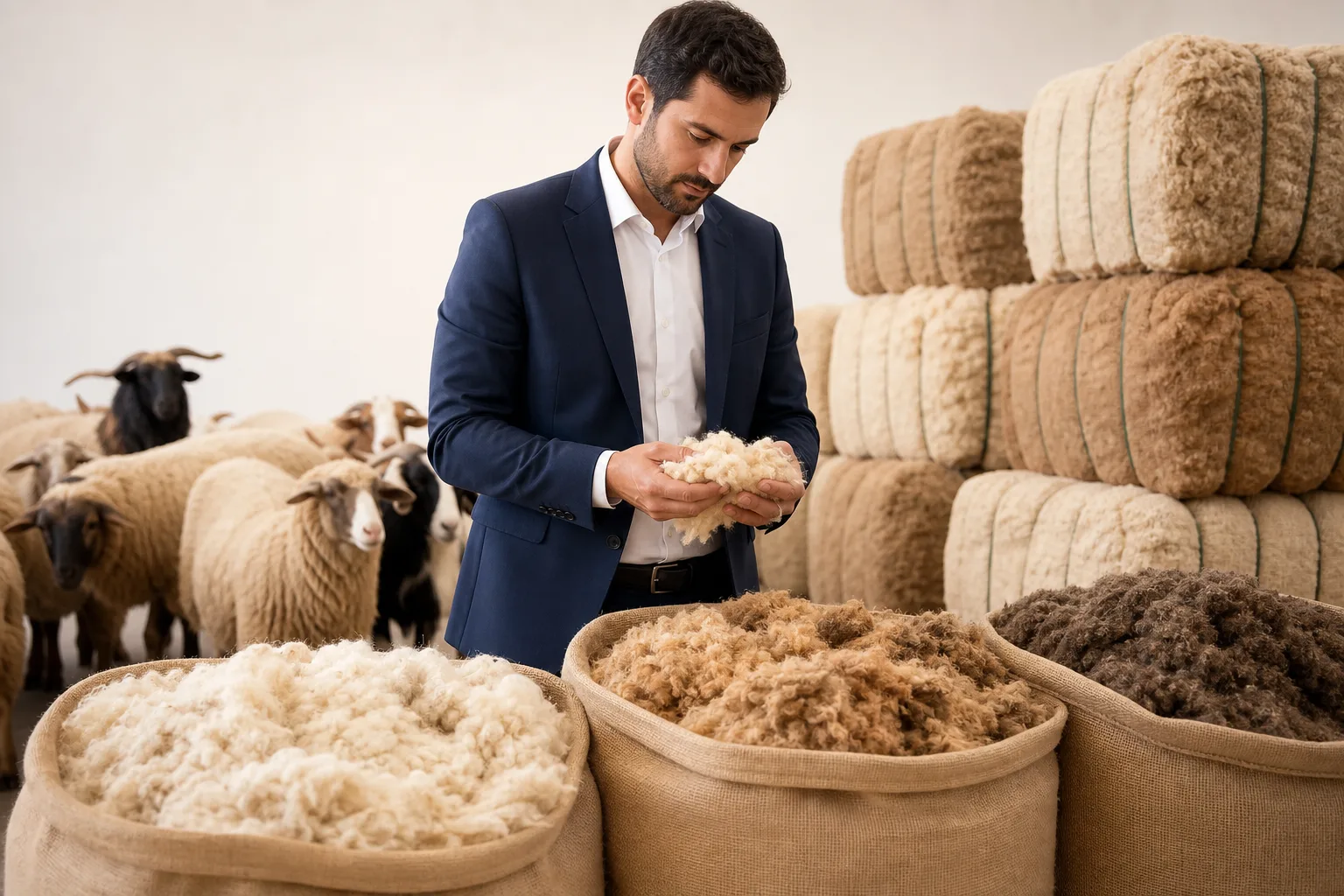
A single Merino fleece weighs four kilograms and trades by the shipping container. A single cashmere goat yields barely 200 grams a year and commands luxury-goods pricing by the kilogram.
Between those two extremes sits one of the most margin-rich commodity trades in agriculture commodities, and every bale that moves from a shearing shed in Australia or a goat herd in Mongolia to a mill in China or Italy passes through a wholesale trader. Setting up that trading operation from the UAE puts you at the crossroads of the world's largest origin markets and its largest processing hubs.
The global wool market was valued at USD 43.51 billion in 2025, projected to reach USD 59.82 billion by 2034 at a 3.6 percent CAGR, according to Market Data Forecast¹. Merino wool holds a 45.3 percent share of the market, while the cashmere segment is growing at 11.3 percent CAGR, the fastest of any fibre category¹.
Mordor Intelligence² values the market at USD 42.02 billion in 2025, projecting USD 56.95 billion by 2031 at a 5.2 percent CAGR, and identifies the Middle East as expanding at 5.2 percent through 2031. Asia-Pacific processes over 46 percent of global raw wool, led by China, which handles more than 40 percent of the world's clip and produces over 70 percent of raw cashmere².
Persistence Market Research³ notes that apparel accounts for approximately 55 percent of end-use demand, while industrial textiles, including insulation, filtration, and flame-resistant fabrics, represent the fastest-growing application segment.
For wholesale traders importing raw wool, greasy fleece, camel hair, cashmere, mohair, and other unprocessed animal fibres, the UAE offers a transit position between the major origin markets of Australasia, Central Asia, and East Africa and the processing hubs of China, India, Italy, and Turkey.
With 100% foreign ownership, zero corporate tax on qualifying income, full profit repatriation, and a fully digital licensing process, Meydan Free Zone provides a streamlined entry point into a fibre trade including wool and animal hair.
Who is this for?
| Audience Segment | Profile |
|---|---|
| Raw wool importers | Traders sourcing greasy and scoured sheep wool from Australia, New Zealand, South Africa, and South America for wholesale distribution to textile mills, spinning operations, and carpet manufacturers across Asia, the GCC, and Europe. |
| Specialty fibre wholesalers | Businesses trading in cashmere, mohair, alpaca, angora, and camel hair sourced from Central Asia, Mongolia, Peru, and East Africa for supply to luxury textile manufacturers, fashion houses, and high-end knitting yarn producers. |
| Industrial and technical fibre traders | Operators wholesaling coarse wool and animal hair grades for non-apparel applications including building insulation, automotive interiors, filtration media, and flame-resistant textile manufacturing. |
4620.97 - Wool & Animal Hair Trading
This activity covers the wholesale trade of raw and unprocessed wool and animal hair as agricultural commodities. This sub-activity sits at the first stage of the fibre supply chain: the point where wool and hair leave the farm, shearing shed, or pastoral producer and enter the wholesale commodity trade before any textile processing takes place.
The scope covers greasy (unwashed) sheep wool, scoured wool, camel hair, cashmere (from goats), mohair (from Angora goats), alpaca fibre, angora (from rabbits), yak hair, and other raw animal fibres traded in bulk bales or lots. These materials are sold to textile mills, scouring plants, spinning operations, and other downstream buyers who process them into yarn, fabric, or industrial products.
| Category | Scope |
|---|---|
| Sheep wool | Raw and greasy sheep wool Wholesale of unprocessed sheep wool in greasy, scoured, or carbonised form. Merino accounts for 45.3 percent of global market share and is the dominant fine-wool grade traded internationally. Australia alone produces over 300,000 tonnes of greasy wool annually. GLOBAL SUPPLY CHAIN Australia, New Zealand, China, and South Africa are the largest wool exporters; China processes over 40 percent of the world's raw wool clip. |
| Cashmere and mohair | Cashmere, mohair and luxury fibres Trading in raw cashmere from goat herds in Mongolia, China, and Central Asia, and mohair from Angora goats in South Africa and Turkey. Cashmere is the fastest-growing luxury fibre segment at 11.3 percent CAGR, driven by demand from fashion houses in Europe and North America. LUXURY MARKET CONTEXT China produces over 70 percent of global raw cashmere from Inner Mongolia herds; cashmere now features in 60 percent of winter collections from top-tier European designers. |
| Camel and specialty hair | Camel hair, alpaca and specialty fibres Wholesale of unprocessed camel hair, alpaca fibre, yak down, and angora. Camel hair is sourced primarily from Central Asia and the Middle East. Alpaca fibre, led by Peruvian production, is growing at 10.7 percent CAGR due to demand for hypoallergenic luxury textiles. REGIONAL RELEVANCE The UAE is home to significant camel populations, creating local supply potential alongside established import channels from Central and East Asia. |
| Industrial grade fibre | Coarse and industrial grade wool Trading in coarser wool grades (above 35 microns) and animal hair used for non-apparel purposes including carpet manufacturing, building insulation batts, automotive padding, geotextiles, and filtration media. EMERGING TREND Wool insulation is gaining ground in European construction, driven by German subsidies and UK building codes that favour biodegradable materials with negative embodied carbon. |
There are important boundaries around this activity, and one classification note worth understanding. This activity covers the wholesale of raw, unprocessed wool and animal hair at the agricultural commodity stage, before the material enters textile processing.
The distinction rests on the degree of processing. Raw fleece and unprocessed hair are agricultural raw materials whereas processed fibre is a textile intermediate.
This excludes the wholesale of textile fibres.
Within that framework, manufacturing activities such as scouring, carding, spinning, or weaving are production activities and fall outside the trading scope. Retail sale of finished wool products to individual consumers is retail trade.
The wholesale of hides and skins, while related to the same animal, sits under a separate component of the class.
If you are buying raw wool or unprocessed animal hair in bulk and selling it onward to mills, processors, or other traders, you are in. If you are processing, spinning, or retailing it, you are not.
Third-Party Approval
No third-party approval is required for this business activity.
Anti-Money Laundering Compliance
This business activity is exempt from AML compliance requirements.
References
- ¹ Market Data Forecast — Global Wool Market Size, Share & Growth (2025–2034) — https://www.marketdataforecast.com/market-reports/wool-market
- ² Mordor Intelligence — Wool Market Share, Opportunities & Forecast Analysis (2025–2031) — https://www.mordorintelligence.com/industry-reports/wool-market
- ³ Persistence Market Research — Wool Market Share, Opportunities & Forecast Analysis (2025–2032) — https://www.persistencemarketresearch.com/market-research/wool-market.asp