
Table of Contents
Frequently Asked Questions
What activity code and ISIC classification covers a physical and mechanical testing laboratory in Dubai
The activity is registered under activity code 7120.91, which sits within ISIC 7120 — Technical Testing and Analysis. This classification covers the physical and mechanical testing of materials, components, and finished products in a controlled laboratory environment.
Tests conducted under this classification include tensile strength, hardness, fatigue, compression, and impact resistance assessments. Because the activity is classified as a technical and scientific service rather than a trading business, it requires qualified personnel, calibrated equipment, and documented procedures from the outset.
What types of tests does a physical and mechanical testing laboratory in Dubai typically perform
A laboratory operating under activity code 7120.91 carries out structural and material assessments such as tensile strength testing, hardness testing, fatigue analysis, compression testing, and impact resistance evaluation. These are conducted in a controlled environment using calibrated equipment.
Clients requiring these tests span a wide range of industries including construction, oil and gas, manufacturing, aerospace, automotive, and consumer goods. Common examples include weld integrity reports for steel fabricators, compliance certificates for structural materials on property developments, and internationally recognised test data for manufacturers exporting to Europe.
Who are the main clients for a mechanical testing laboratory in Dubai
The client base is broad and includes construction companies, property developers, steel fabricators, oil and gas operators, manufacturers, and aerospace and automotive suppliers. What distinguishes this market is that testing is rarely discretionary — it is typically a contractual or regulatory requirement.
For example, major construction projects require accredited material compliance certificates before materials can be approved for use on site. Manufacturers subject to ESMA's mandatory conformity requirements cannot self-certify against UAE national standards and must use accredited third-party laboratories. Exporters face similar pressure from international buyers and standards bodies.
What are the main revenue models for a physical testing laboratory in Dubai
The business supports several complementary revenue streams. The most common is a fee-per-test model for smaller or one-off clients who need individual certificates or reports. This provides accessible entry points for a wide range of customers.
For larger clients with ongoing production, retainer contracts provide predictable recurring income. Additionally, laboratories can secure third-party inspection mandates from project owners or certifying bodies, which can represent significant contract values tied to major infrastructure or industrial projects.
Which regulatory bodies oversee physical and mechanical testing laboratories in Dubai
Three key authorities govern this activity in Dubai. The Dubai Accreditation Centre (DAC) is the primary body responsible for accrediting testing laboratories, and accreditation from DAC is typically essential for a laboratory's test results to be accepted by clients and regulators.
The Emirates Authority for Standardisation and Metrology (ESMA) sets and enforces UAE national standards, including mandatory conformity requirements that manufacturers must meet using accredited third-party labs. The Dubai Department of Economy and Tourism (DET, also referred to as DED) is responsible for issuing mainland trade licences for the activity.
What jurisdiction options are available when licensing a testing laboratory in Dubai
Entrepreneurs can choose between a mainland licence issued by the Dubai Department of Economy and Tourism (DED) or a free zone licence, with Meydan Free Zone cited as one example of a suitable free zone option.
A mainland licence provides the broadest client access, including the ability to work directly with government projects and clients across the UAE without restriction. Free zone licences may offer other commercial or cost advantages but can carry limitations on operating directly within the mainland market. The right choice depends on the intended client base and operational model.
What market opportunity exists for a new mechanical testing laboratory entering Dubai
Dubai's sustained infrastructure pipeline — including road expansions, metro extensions, and large-scale real estate development — generates continuous demand for material compliance testing. Every major project requires a stream of accredited test certificates before materials are approved for use, creating non-discretionary, recurring demand.
Beyond construction, the UAE's industrial strategy is driving manufacturers toward ESMA mandatory conformity requirements, further expanding the addressable market. Importantly, the competitor landscape is dominated by generalist testing firms, leaving specialist mechanical testing — particularly for niche materials, advanced composites, or sector-specific standards — relatively underserved. This gap represents a defensible market position for a well-equipped, properly accredited entrant.
What are the core operational requirements for launching a physical and mechanical testing laboratory in Dubai
Because this activity is classified as a technical and scientific service, it has more demanding setup requirements than a typical trading business. From day one, the laboratory must have qualified personnel, calibrated equipment, and documented procedures in place.
Accreditation — most critically from the Dubai Accreditation Centre (DAC) — is a practical necessity rather than an optional credential, as most clients and project owners will only accept results from accredited laboratories. The setup process involves a sequence of approvals from multiple authorities, some of which run in parallel, covering the trade licence, facility approvals, and the accreditation process itself.
Start a Physical & Mechanical Testing Laboratory in Dubai
Dubai's construction boom, manufacturing growth, and import compliance rules create steady, well-paid demand for physical and mechanical testing laboratories. If you can get accredited and operational, the work is there.
This guide covers what the license covers, who your clients are, how to choose the right jurisdiction, and what you need in place before you open.
Key Stats at a Glance
| Activity | Physical & Mechanical Testing Laboratory |
|---|---|
| Ownership | 100% foreign ownership available – Invest in Dubai |
| License options | Mainland (DET) or free zone (Meydan Free Zone) |
| Key regulator | Emirates Authority for Standardisation and Metrology (ESMA) for product conformity testing |
| Accreditation standard | ISO/IEC 17025 – required by most clients and procurement bodies |
| Accreditation body | Dubai Accreditation Authority (DASA) or ILAC-recognised equivalent |
| VAT threshold | AED 375,000 annual turnover – Federal Tax Authority |
| Trade license from | AED 12,500 at Meydan Free Zone |
What This License Covers and Who Your Clients Will Be

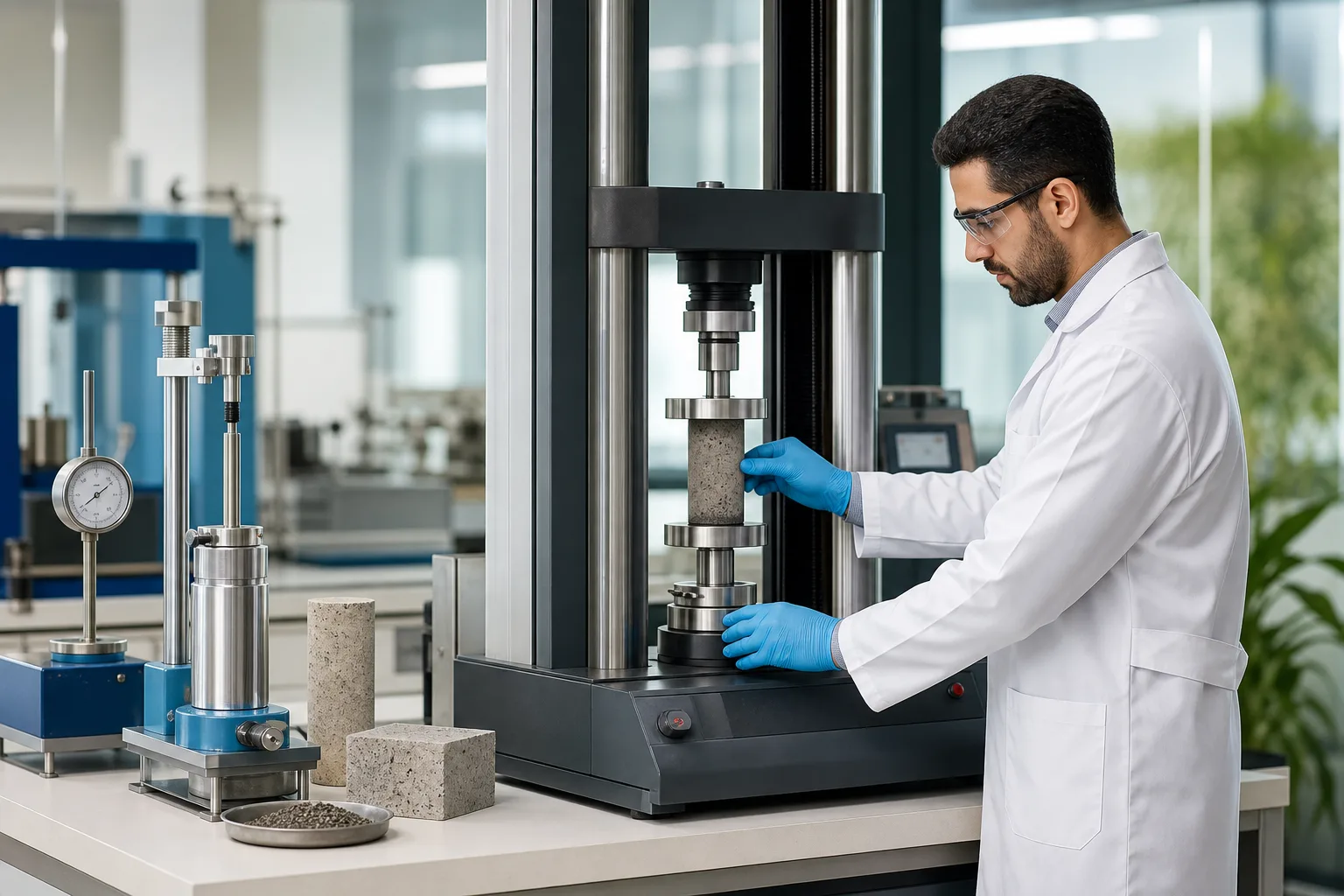
A physical and mechanical testing laboratory license covers the testing of materials, components, and finished goods for their physical and mechanical properties. That includes tensile strength, compression resistance, hardness, fatigue behaviour, and impact performance. The lab produces test reports and certificates that clients use to meet regulatory, contractual, or insurance requirements.
The outputs are formal documents. Test certificates issued by an accredited lab are accepted by ESMA, Dubai Municipality, and international buyers. Without accreditation, your reports carry no weight in a procurement or compliance process.
Who needs this work done
Your clients will mostly come from four groups. Construction contractors need materials tested before they go into a structure. Manufacturers need component testing to meet product standards. Importers need local test certification before goods can be sold in the UAE. Government procurement bodies need independent verification before they accept supplies.
None of these clients are buying on goodwill. They need a certificate with your accreditation number on it. That is what makes the business defensible once you have it, and what makes entry slow and expensive before you do.
Why third-party testing matters
Clients use third-party labs for three reasons. First, product compliance: UAE conformity marks and ESMA-regulated categories need independent testing. Second, contract requirements: many construction and supply contracts specify third-party verification. Third, insurance: insurers and project owners want independent records, not self-certified ones. You sit at the intersection of all three.
You can explore the full Meydan Free Zone business activities list to confirm how physical and mechanical testing fits within the broader range of technical and industrial activities available.
Mainland vs Free Zone: Which Setup Works for This Business
This is the biggest choice you will make when setting up. The right answer depends on who your clients are, not on cost alone.
| Factor | Mainland (DET) | Free Zone (Meydan Free Zone) |
|---|---|---|
| Client access | Open UAE market, including government tenders | Mainly free zone manufacturers, exporters, and international clients |
| Government contracts | Direct access | Needs a local commercial agent or branch for government work |
| Office and lab space | Physical premises required with correct zoning | Physical lab space still required – flexi-desk is not enough |
| Foreign ownership | 100% in most activity categories | 100% as standard |
| Setup cost | Typically higher initial outlay | Lower entry cost; trade license from AED 12,500 |
| VAT and corporate tax | Standard UAE rules apply | Standard UAE rules apply |
Mainland via DET
A mainland license from the Dubai Department of Economy and Tourism lets you work directly with UAE government bodies, local contractors, and any business in the open market. If your target clients are construction firms working on government projects, or manufacturers supplying to local retailers, mainland is the right route. Government tenders in the UAE often need suppliers to hold a mainland license.
Meydan Free Zone
A Meydan Free Zone setup works well if your clients are free zone manufacturers, exporters, or international companies that need UAE-based testing certificates. Setup is faster and cheaper to start. You can also run the business remotely in the early stages, though your lab itself still needs a physical address and zoning approval for testing activities.
The accreditation question
Whatever jurisdiction you choose, your accreditation body will have a view. DASA, the Dubai Accreditation Authority, is the most common route for labs in Dubai. ILAC-recognised bodies are accepted for internationally-oriented work. Check with your chosen accreditation body early. Some have preferences or requirements around the legal structure of the applicant entity. Do not finalise your jurisdiction before you have that conversation.
Lab space is non-negotiable
A flexi-desk or virtual office will not work here. You need real premises with the right zoning for a testing laboratory. That means industrial or mixed-use zoning, adequate floor space for your equipment, proper ventilation and utilities, and access for deliveries. Factor this into your cost model from day one.
Free Business Setup Cost Calculator
Calculate NowStep-by-Step Setup and Compliance Requirements
Setting up a testing lab in Dubai takes longer than most business types. Accreditation adds several months to the timeline. Plan for this before you commit capital.
- Step 1, book your trade name: Use the DET e-Services portal for a mainland company, or the Meydan Free Zone portal for a free zone one. Check your company name availability before you start the application.
- Step 2, confirm your activity code: Make sure the code covers physical and mechanical testing in your chosen jurisdiction. Check this before you go further. The activity code determines what work you can legally invoice for.
- Step 3, secure lab premises: Find premises with correct zoning approval for testing activities. Get written confirmation from the relevant authority before you sign a lease. Zoning issues discovered after signing are expensive to resolve.
- Step 4, apply for your trade license: Submit the application with your premises documents, activity code, and shareholder details. For Meydan Free Zone, this can be done online. For mainland, use the DET e-Services portal.
- Step 5, fit out and equip the lab: Install your testing equipment and set up your quality management system in line with ISO/IEC 17025. Keep calibration records from day one. Accreditation assessors will ask for them.
- Step 6, apply for DASA accreditation: Submit your application to the Dubai Accreditation Authority with your quality manual, scope of testing, and staff qualifications. The assessment process includes a document review and an on-site visit. Do not accept paid work before accreditation is confirmed.
- Step 7, register with ESMA if needed: If your scope covers product conformity testing tied to UAE conformity marks, you need to register with the Emirates Authority for Standardisation and Metrology. Check which product categories this applies to before you open.
- Step 8, hire qualified staff and register with MOHRE: Lab technicians must hold qualifications that match the test methods listed on your scope of accreditation. Register all employees with the Ministry of Human Resources and Emiratisation and meet Emiratisation duties if they apply to your headcount.
- Step 9, register for VAT: Once your annual turnover reaches AED 375,000, you must register with the Federal Tax Authority. You can register voluntarily above AED 187,500. Keep clean records from the start.
- Step 10, maintain ongoing compliance: Equipment calibration, internal audits, and scope reviews are not one-off tasks. They are ongoing duties that keep your accreditation valid.
Compliance You Cannot Skip
There are three areas where shortcuts will cost you clients, contracts, or your accreditation.
ISO/IEC 17025 accreditation
This is the baseline standard for testing and calibration laboratories. Clients, regulators, and procurement bodies expect it. Without it, your test reports are not worth the paper they are on in a formal compliance process. The standard covers your quality management system, technical competence, and the validity of your results.
ESMA registration
If you plan to issue test certificates for products covered by UAE conformity marks, you need ESMA registration. This applies to a wide range of imported and locally manufactured goods. Check the current list of regulated product categories on the ESMA website before you define your scope.
Staff qualifications
Your accreditation scope lists specific test methods. Every person who runs those tests must hold qualifications that match. If you add a new test method, you need to show the accreditation body that a qualified person is responsible for it. Hiring unqualified staff to run accredited tests puts your whole scope at risk.
If you need support managing the administrative side of compliance, mAccounting can help with bookkeeping, VAT registration, and corporate tax duties so your team can focus on the lab work.
Market Opportunity and Why Dubai Makes Sense
The demand for physical and mechanical testing in Dubai is not speculative. It is built into the structure of the economy.
The UAE construction pipeline is one of the largest in the world by value. Every major project needs materials testing at multiple stages. Concrete, steel, cladding, and structural components all need third-party verification before they go into a building. That work does not slow down when the market softens. Compliance requirements stay in place whatever the cycle.
Manufacturing in the UAE is growing. The government's industrial strategy is pushing local production of goods that previously came from abroad. More local manufacturers means more demand for in-country testing. Exporters also need UAE-based certificates to satisfy buyers in other markets.
Import compliance is another consistent driver. Foreign goods sold in the UAE often need local test certification before they can be placed on the market. Importers cannot self-certify. They need an accredited lab. That creates a recurring revenue stream that is largely independent of any single sector.
The barriers to entry are real. Capital costs for testing equipment are high. Accreditation takes time and requires genuine technical competence. Qualified lab staff are not easy to find or retain. These barriers protect your margins once you are through them. A well-run, accredited lab with a clean track record is hard to displace.
Dubai's position as a regional hub adds another layer. Labs here serve clients across the GCC. A certificate from a DASA-accredited Dubai lab carries weight in Saudi Arabia, Qatar, and the other Gulf markets. That reach is difficult to replicate from a less-connected location.
According to Mordor Intelligence, the testing, inspection, and certification market in the Middle East and Africa is on a steady growth trajectory, driven by regulatory tightening and infrastructure investment. Dubai sits at the centre of that trend.
Conclusion
A physical and mechanical testing laboratory in Dubai is a capital-intensive business with real barriers to entry. That is exactly what makes it defensible once you are accredited and operational. The clients are there, the regulatory framework creates consistent demand, and a well-run lab with the right scope builds long-term contracts rather than chasing one-off jobs.
The setup process is longer than most business types. Accreditation, premises, staffing, and ESMA registration all take time. Plan the timeline carefully and do not accept paid work before your accreditation is confirmed.
If you want to understand your options before committing, Meydan Free Zone offers a straightforward path to getting your trade license in place while you work through the accreditation process in parallel. Speak to the Meydan Free Zone team to confirm your activity code, get a cost breakdown, and understand which license structure fits your testing scope.
Ready to Launch Your Business in Dubai?
Let's ConnectCompliance
THIRD-PARTY APPROVAL
This activity requires pre-approval from the EIAC (Emirates International Accreditation Centre) before a business license can be issued by Meydan Free Zone.
ANTI-MONEY LAUNDERING COMPLIANCE
This business activity is exempt from AML compliance requirements.