
Table of Contents
Frequently Asked Questions
What does a Typing & Photocopying Services licence in Dubai permit you to do
A licence under activity code 8219.95 permits document typing, photocopying, scanning, printing, and related clerical support services. It falls within the administrative and office support services classification and requires a standard commercial licence — no specialist sector permit is needed.
Operators commonly bundle additional services such as lamination, notarisation support, Emirates ID assistance, and translation referrals to increase revenue per customer visit. The licence does not restrict you to a single service type within this clerical support category.
How much does it cost to set up a Typing & Photocopying Services business in Dubai
Setup costs typically range from AED 12,000 to AED 25,000, depending on whether you choose a mainland or free zone jurisdiction and whether dedicated retail space is required. This range covers trade name reservation, initial approvals, tenancy, and licence issuance fees.
Free zone options such as Meydan Free Zone can offer a more cost-efficient entry point, particularly if your model is B2B or you are starting lean before scaling to a mainland retail unit. Mainland setups carry additional costs related to Ejari-registered commercial premises.
Do I need a local sponsor to open a typing and photocopying business on the Dubai mainland
No. Under the UAE Commercial Companies Law amendments in force since 2021, 100% foreign ownership is available on the mainland for this activity. You are not required to have a local Emirati sponsor or partner.
This makes a mainland setup more accessible to foreign entrepreneurs who want a walk-in retail location without the cost or complexity of a local sponsorship arrangement.
Should I choose a mainland or free zone licence for this activity
The right jurisdiction depends on your business model. A mainland licence issued by the DED is the appropriate choice if you plan to operate a walk-in retail counter serving the general public — which is the core commercial model for typing and photocopying services reliant on foot traffic near government service centres.
Free zones are better suited to B2B or remote document services. Free zones do not permit direct retail to the general public without additional arrangements, so if public walk-in trade is your primary revenue source, a mainland presence is essential.
Who are the typical customers for a typing and photocopying services business in Dubai
The customer base is broad and consistent. Core clients include residents processing visa applications, PRO firms managing document workflows, small businesses, legal offices, and individuals submitting government documentation.
Demand is structurally tied to the UAE's document-intensive public services infrastructure, which generates repeat footfall regardless of economic cycles. With a population of over 3.5 million residents navigating government processes year-round, the addressable market is stable and ongoing.
What are the steps to obtain a Typing & Photocopying Services licence in Dubai
The process follows four main steps. First, reserve a trade name by submitting three options via the DED eServices portal or your chosen free zone portal, ensuring names comply with UAE naming conventions. Second, submit for initial approval with activity code 8219.95, passport copies, and a proposed business address.
Third, secure a tenancy contract — mainland operations require an Ejari-registered commercial space, while free zones typically offer flexi-desk or business centre options. Fourth, pay licence fees to receive your issued licence. Visa eligibility for investor and employee visas applies once the licence is active.
Is there a minimum share capital requirement for this licence
For most setups under activity code 8219.95, there is no mandated minimum share capital. This reduces the upfront financial barrier compared to some other commercial activities in the UAE.
It is advisable to confirm the current requirements with the Dubai Department of Economy and Tourism (DED) or your chosen free zone authority at the time of application, as requirements can be updated.
Which regulatory body oversees Typing & Photocopying Services licences in Dubai
For mainland operations, the regulatory body is the Dubai Department of Economy and Tourism (DED). The DED handles trade name reservation, initial approvals, licence issuance, and annual renewals for mainland commercial licences.
For free zone setups, the relevant free zone authority governs the licence — for example, Meydan Free Zone for businesses choosing that jurisdiction. Licences are renewed on an annual cycle regardless of jurisdiction.
Typing & Photocopying Services License in Dubai
Government processes in the UAE still run on documents, and somebody has to type, copy, scan and print them. That is why typing centres sit in clusters near service centres and courts, and why they stay busy while flashier businesses come and go.
Activity code 8219.95 covers the work. This guide covers what the code allows, who walks through the door, why the mainland and free zone choice matters more here than in most activities, the steps to get licensed, and what it costs.
Key Stats at a Glance
| Activity code | 8219.95 |
|---|---|
| Activity name | Typing & Photocopying Services |
| Category | Administrative and office support services |
| License type | Commercial, with no specialist sector permit needed |
| Where you can set up | Dubai mainland through DET, or a free zone |
| Paid-up capital | None for most setups |
| Setup cost | AED 12,000 to AED 25,000, depending on where you set up and your premises |
| License issuance | Usually 3 to 7 working days on a clean application |
| Foreign ownership | 100% on the mainland since the 2021 Commercial Companies Law changes, with no local sponsor |
| VAT threshold | AED 375,000 taxable turnover a year – Federal Tax Authority |
What This License Covers

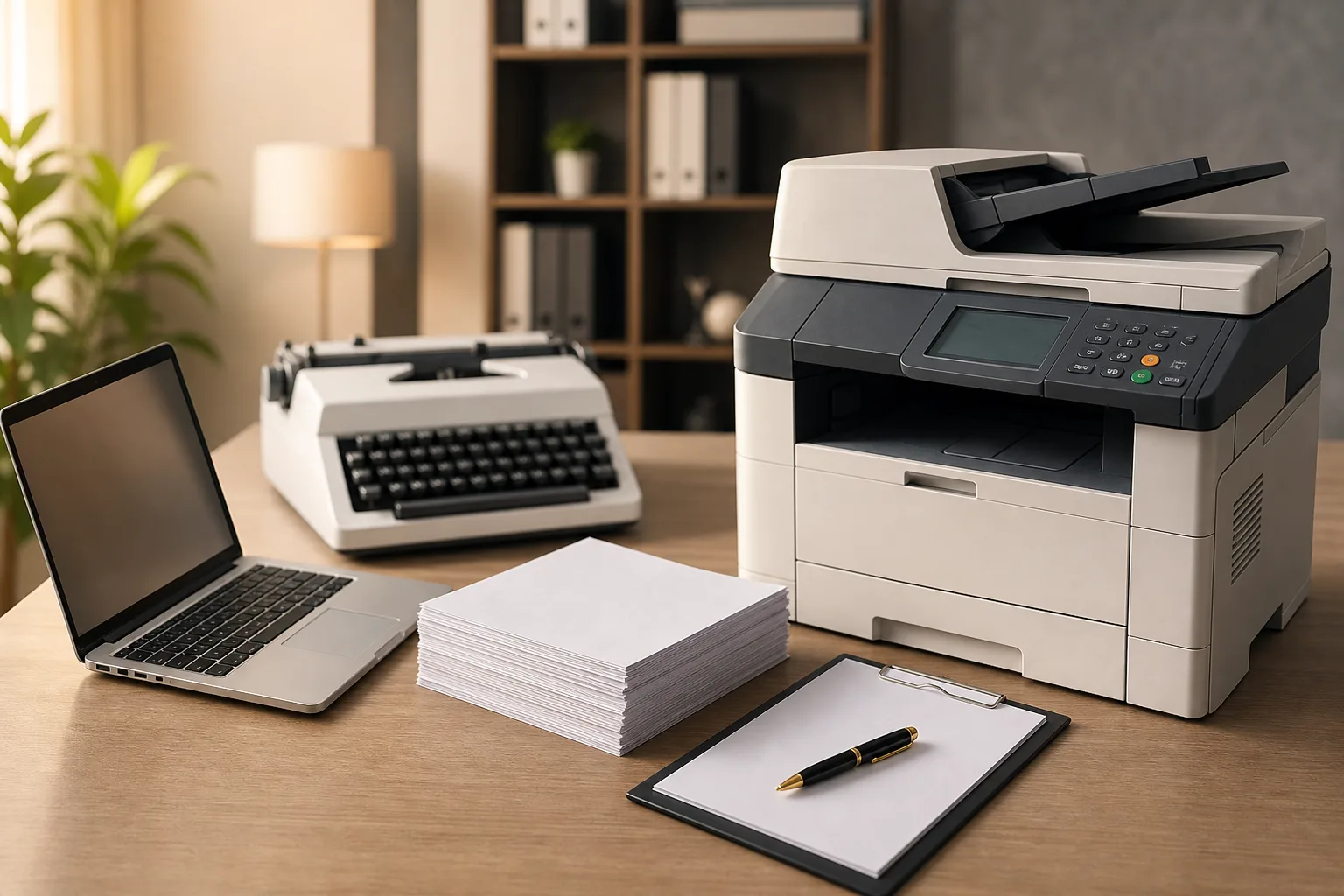
Code 8219.95 allows document typing, photocopying, scanning, printing and related clerical support. It sits in administrative and office support services and takes a standard commercial license. No specialist permit applies.
The code does not tie you to one service inside that clerical category, which is where the money is. Operators routinely bundle:
- Lamination
- Notarisation support
- Emirates ID assistance
- Translation referrals
Each of those lifts the value of a single visit. Someone who came in to copy a passport leaves having paid for four things. That is the whole commercial model, and it is why throughput per customer matters as much as footfall.
Who Your Customers Will Be
The customer base is broad and it repeats.
Residents processing paperwork
Visa applications, Emirates ID renewals, attestations and government submissions. Dubai has more than 3.5 million residents working through these processes year round, and the volume does not move much with the economy.
PRO firms
Companies that manage document workflows for other businesses. Fewer customers, much higher volume, and worth building a relationship with early.
Small businesses and legal offices
Regular copying, printing and typing work, often on account rather than cash.
Individuals submitting government documents
Walk-in trade, small tickets, high frequency.
Demand here is tied to a document-heavy public service system rather than to consumer spending. That makes it one of the steadier small businesses you can run in the city.
Mainland or Free Zone
| Factor | Mainland (DET) | Free Zone |
|---|---|---|
| Walk-in retail trade | Yes, this is the point of it | Not permitted without extra arrangements |
| Best fit | A public counter near footfall | B2B and remote document services |
| Premises | Commercial space on a registered Ejari tenancy | Flexi-desk or business centre |
| Foreign ownership | 100% since 2021, no local sponsor | 100% yours |
| Visas | Tied to office square footage | Fixed quota per package |
Why this choice matters more here
For most activities the mainland question is about who you can invoice. For this one it decides whether your business model works at all. A typing centre lives on walk-in traffic, and free zones do not allow direct retail to the general public without extra arrangements. If a public counter is your plan, you need mainland.
When a free zone still makes sense
A free zone license fits a B2B or remote document service, or a lean start before you commit to a retail unit. Meydan Free Zone is a cost-efficient entry point with full foreign ownership and simple license issuance.
The mainland detail to budget for
DET will want a physical premises NOC or an Ejari-registered tenancy. That, plus municipality fees and signage approval, is what pushes mainland to the top of the cost range.
Let your customers decide it, not the price. If they arrive on foot, the answer is mainland.
[blockCTACostCalculator]
Step by Step Setup Guide
- Step 1, book your trade name: Submit three options through the DET portal or your free zone portal. Names must follow UAE naming rules, so no offensive terms and no references to religion or ruling families without approval.
- Step 2, apply for initial approval: Submit activity code 8219.95, passport copies and your proposed business address. This confirms the activity is approved before you commit to a tenancy, which is the right order to do it in.
- Step 3, sort your tenancy: Mainland needs commercial space on a registered Ejari contract. Free zones offer flexi-desk or business centre options at lower cost.
- Step 4, pay the fees and collect the license: Clean applications with no outstanding queries usually complete in 3 to 7 working days.
- Step 5, open a bank account and sort signage: Get municipality approval for any external signage, which most retail typing centres will need.
- Step 6, register with MOHRE if you hire: Staff visas run through the Ministry of Human Resources and Emiratisation. No specialist sector permit applies beyond your commercial license.
Compliance and What You Need in Place
License renewal
Renew every year, mainland or free zone. It is a small cost and an easy one to forget, so diary it from the date of issue.
Signage and premises
External signage needs municipality approval. Get it sorted before opening rather than after a visit from an inspector.
Visas
Mainland visa allocation follows office square footage, so a bigger unit unlocks more visas. Free zone packages carry a fixed quota, which is easier to plan around at the start. Decide your headcount before you sign a lease.
VAT
Register once yearly turnover passes AED 375,000. The threshold applies the same way to mainland and free zone companies. A busy counter business can cross it, so track the running total rather than waiting for the year end.
Handling other people's documents
Nothing in the license covers this, but it is the practical risk in the business. You will be copying passports, contracts and personal papers all day. Have a simple rule on what you keep, for how long, and who can see it.
Market Opportunity
The demand base is structural. More than 3.5 million residents in Dubai deal with government paperwork throughout the year, and the administrative system behind it is document-intensive by design. That produces repeat footfall whatever the economic cycle is doing.
Capital intensity is low, which is the other half of the case. Printers, scanners, high-volume copiers and a retail unit are most of what you need. There is no stock to finance and no long lead time on equipment.
The variable that decides whether you make money is location. A unit near government service centres, courts, existing typing centre clusters or dense residential areas will out-earn a better-fitted shop in the wrong street by a wide margin. Throughput follows the door, so pay for the position rather than the interior.
Conclusion
Typing and photocopying is a low-barrier commercial license with reliable demand, a clean regulatory path and full foreign ownership available.
Two decisions do the work. Mainland if you want walk-in trade, which most operators do. And location, because in this business it matters more than anything else you control.
Get those right, bundle enough services to lift the value of each visit, and the model is about as simple as business gets in Dubai.
[blockCTAContact]