
Table of Contents
Frequently Asked Questions
What is activity code 7120.85 and what does it cover
Activity code 7120.85 refers to the Weighing & Measuring Laboratory licence in Dubai. It falls under the ISIC classification of Technical Testing and Analysis and is issued by the Dubai Department of Economy and Tourism (DED).
The activity covers laboratory services for calibrating, testing, and certifying weighing and measuring instruments. Services span verification across mass, volume, length, temperature, and pressure measurement — including both initial certification and periodic recalibration.
Any business providing commercial calibration services in the UAE must operate under this framework. There is no alternative route outside the national metrology system governed by the Emirates Metrology Authority (EMA).
Who needs a Weighing & Measuring Laboratory licence in Dubai
Businesses that provide third-party calibration, verification, or certification of measurement instruments to commercial clients require this licence. Target sectors include manufacturing, logistics, pharmaceuticals, food and beverage, and oil and gas.
Clients of licensed laboratories typically include manufacturers, exporters, food processors, pharmaceutical companies, and logistics operators who need certified measurement compliance as part of their own regulatory obligations.
If your business charges fees for calibration or measurement certification services — even as part of a broader offering — the licence is required before you can operate legally in Dubai.
Which regulatory bodies oversee this licence and what is their role
Two authorities are central to this licence. The Dubai Department of Economy and Tourism (DED) issues the trade licence for mainland operations, while free zone authorities handle licensing within their respective jurisdictions.
The Emirates Metrology Authority (EMA), operating under the UAE Ministry of Economy, provides the mandatory technical approval. This is a separate process from the trade licence and involves assessment of your facility, equipment, and personnel qualifications.
Both approvals must be in place before you can legally offer commercial calibration services. The EMA assessment is substantive — not a rubber stamp — so factor its timeline into your setup schedule from the outset.
What are the key compliance requirements for operating a weighing and measuring laboratory
Beyond holding the trade licence, operators must meet a set of technical and legal obligations. These include:
- Laboratory premises meeting specified standards for equipment and environment
- Calibration traceability to national and international standards
- Qualified technical personnel employed and documented
- Compliance with UAE Federal Law on Metrology and applicable ministerial decrees
VAT registration with the Federal Tax Authority is also required once the applicable revenue threshold is met, with the standard 5% rate applying to services.
These requirements are non-negotiable. Failure to meet any of them can delay or prevent the EMA from granting technical approval to operate commercially.
What is the commercial opportunity in the UAE calibration and metrology market
Demand for certified measurement services in the UAE is described as structural rather than cyclical. Industrial expansion, tightening food safety standards, and mandatory ISO compliance across multiple sectors create consistent, recurring revenue for licensed operators.
Mandatory third-party calibration requirements in oil & gas, pharmaceutical manufacturing, and FMCG mean clients typically return annually — often under contractual obligations — providing predictable revenue streams.
According to IMARC Group, the testing, inspection, and certification market across the GCC is on a sustained growth trajectory, driven by regulatory tightening and industrial diversification across the region.
What is the difference between a mainland and free zone licence for this activity
Both mainland (DED) and free zone options — such as Meydan Free Zone — are available for this activity, but they differ in ownership structure, client access, and cost profiles.
A mainland licence allows unrestricted access to clients across Dubai and the wider UAE market without the need for a local distributor or agent. Free zone licences may restrict direct trading with mainland clients depending on the zone's rules.
Cost structures also differ materially between the two routes. The right choice depends on your target client base, ownership preferences, and budget. It is worth mapping these factors before committing to a jurisdiction in step one of the setup process.
Does VAT apply to weighing and measuring laboratory services in Dubai
Yes. VAT at the standard rate of 5% applies to commercial calibration and measurement laboratory services in the UAE. This is consistent with the treatment of technical testing and analysis services under the UAE VAT framework.
VAT registration with the Federal Tax Authority (FTA) is required once your business reaches the mandatory revenue threshold. It is advisable to factor VAT obligations into your pricing model and financial projections from the outset, particularly when quoting for long-term contracts with industrial clients.
What are the first steps to setting up a weighing and measuring laboratory licence in Dubai
The process begins with a jurisdiction decision — mainland (DED) or free zone — since ownership rules, client access rights, and costs differ between the two. This choice shapes every subsequent step.
Once the jurisdiction is confirmed, the next step is to reserve a trade name and confirm the activity code (7120.85) through DED e-services or the relevant free zone portal. Simultaneously, you should begin preparing for the Emirates Metrology Authority technical assessment, as this runs in parallel with — not after — the DED licensing process.
Early preparation of facility specifications, equipment documentation, and personnel qualifications is essential, since the EMA approval timeline can be a critical path item in your overall setup schedule.
Weighing & Measuring Laboratory License in Dubai
Dubai's trade, manufacturing, and logistics sectors depend on accurate measurement. Every weighbridge, pharmacy scale, fuel dispenser, and production line instrument needs to be verified by someone qualified to do it. The government licenses every business that provides calibration or metrology services, and it takes that licensing seriously.
This guide covers what a weighing and measuring laboratory license covers, who needs one, how to set up, and why Meydan Free Zone is a practical base for this activity.
Key Stats at a Glance
| Activity | Weighing & Measuring Laboratory |
|---|---|
| Licensing authority | Dubai Department of Economy and Tourism (DET) for mainland; Meydan Free Zone for free zone setup |
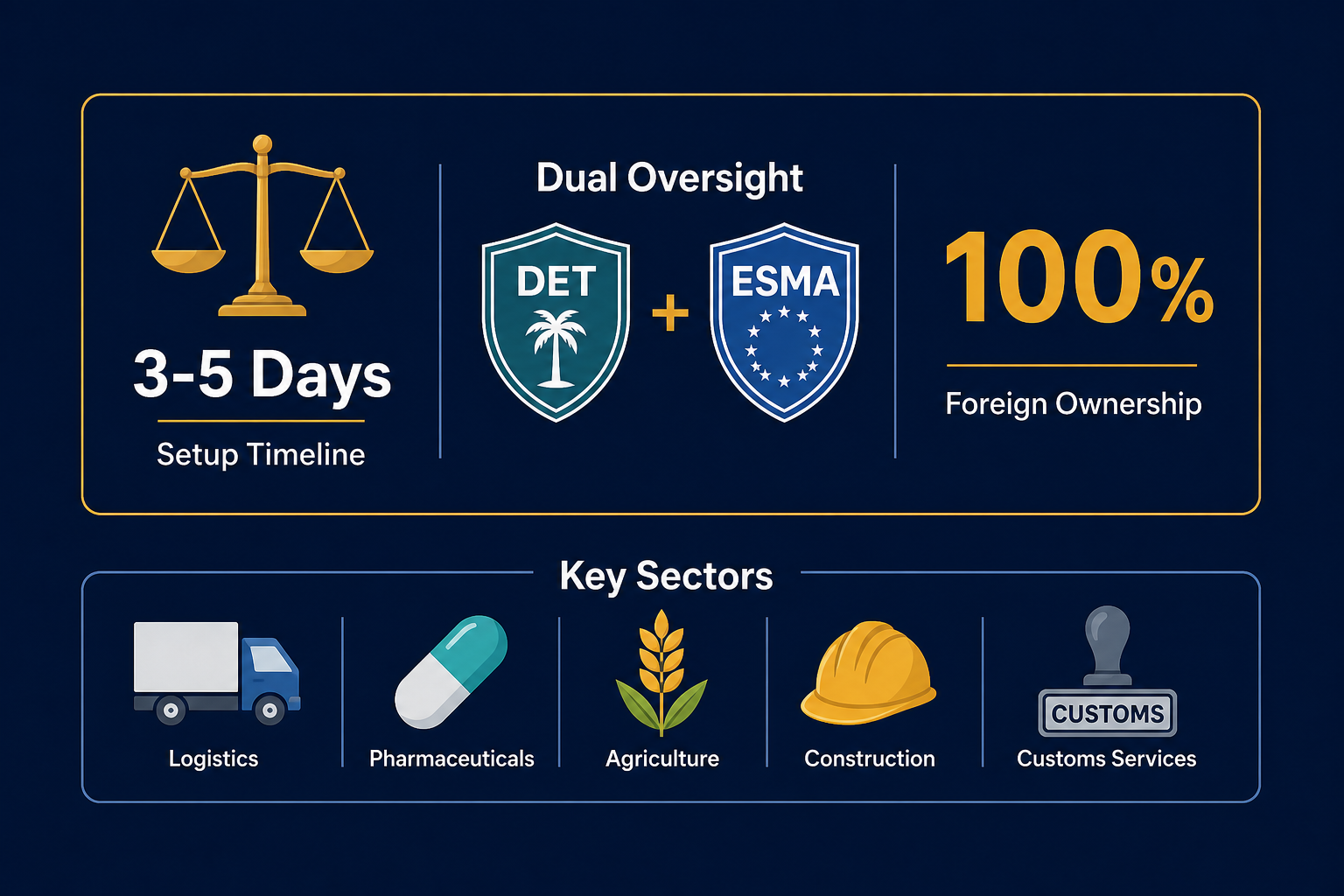
| Regulatory oversight | Dubai Municipality and the Emirates Authority for Standardisation and Metrology (ESMA) |
| Foreign ownership (mainland) | 100% permitted following 2021 reforms – Invest in Dubai |
| Foreign ownership (free zone) | 100% |
| Typical setup timeline at Meydan Free Zone | 3 to 5 working days for license issue |
| Visa allocation | Based on office package selected; flexi-desk packages available at Meydan Free Zone |
What This License Covers
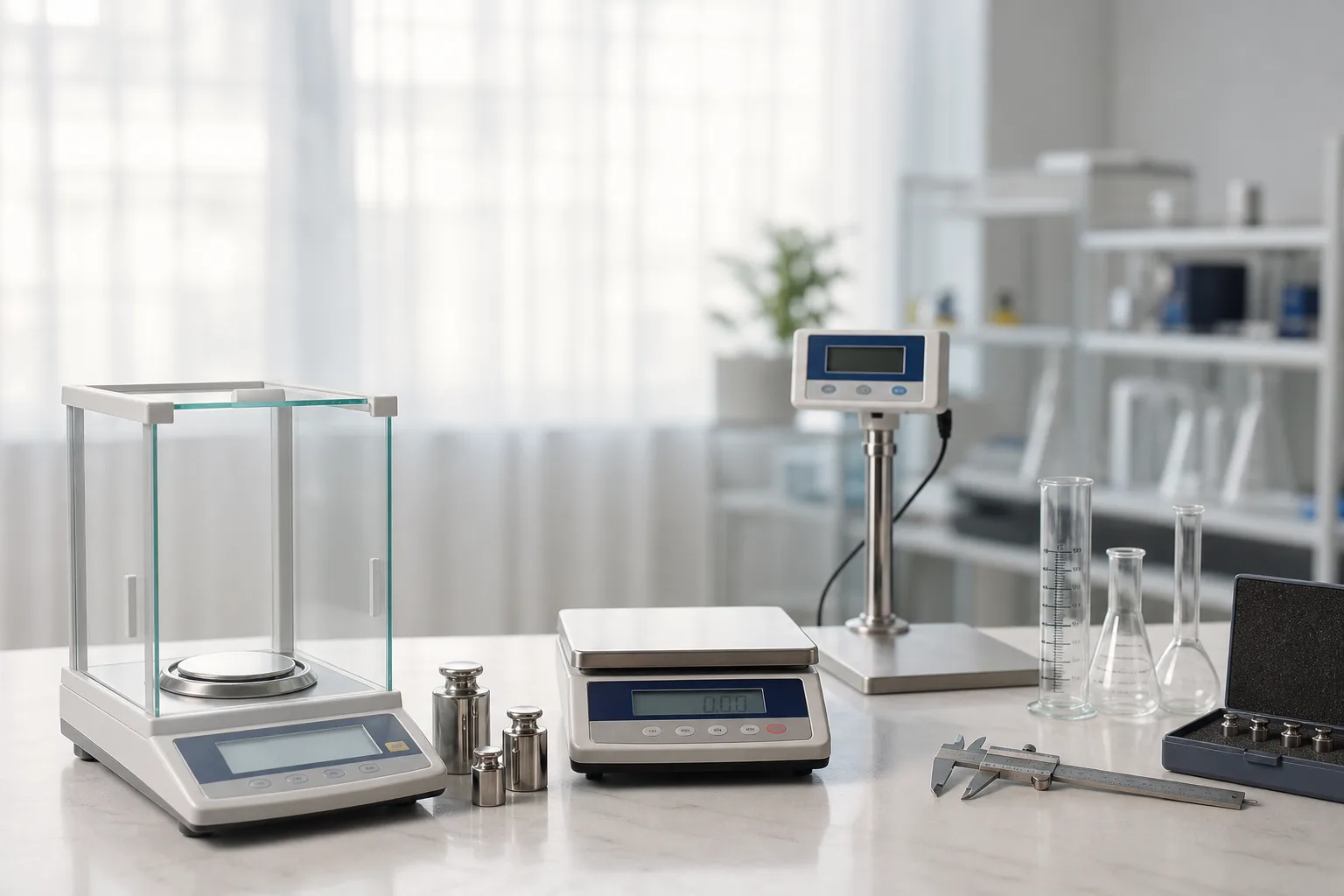
A weighing and measuring laboratory license lets you run a facility that calibrates, tests, and verifies weighing and measuring instruments. That covers a wide range of equipment: scales, balances, flow meters, pressure gauges, thermometers, and other instruments used in commercial and industrial processes.
Your clients will come from across Dubai's industrial base. The sectors that use calibration services most regularly include:
- Logistics and freight, where weighbridges and cargo scales need periodic verification
- Pharmaceuticals and medical device manufacturing, where measurement accuracy is a regulatory duty
- Food production and processing, where weight tolerances affect both compliance and cost
- Construction and civil engineering, where load-bearing and material testing instruments need certification
- Government procurement and customs, where trade measurement accuracy is set by law
Regulatory oversight sits with two bodies. Dubai Municipality handles local inspection and enforcement for commercial weighing instruments used in trade. ESMA sets the national standards that all instruments and calibration labs must meet. If you plan to offer third-party calibration services, you will also need accreditation from the Emirates International Accreditation Centre (EIAC). More on that in the compliance section below.
One boundary worth noting: retail of weighing or measuring instruments is a separate activity code. This license covers the laboratory and calibration function. If you also want to sell instruments, you need to add the relevant trading activity or set up a separate entity for it. Check the full Business Activities List at Meydan Free Zone to confirm which codes apply to your specific scope.
Mainland vs Free Zone: Which Setup Works for You
This is the biggest choice you will make when setting up. The right answer depends on who your clients are, not which option looks cheaper on paper.
| Factor | Mainland (DET) | Free Zone (Meydan Free Zone) |
|---|---|---|
| Client access | Open UAE market, including government tenders | Mainly international clients; mainland access needs a commercial agent or dual-license |
| Foreign ownership | 100% permitted post-2021 reforms | 100% |
| Office requirement | Physical office or lab premises required | Flexi-desk options available; physical lab space can be leased separately |
| Currency restrictions | None | None |
| Setup speed | Typically 2 to 4 weeks | 3 to 5 working days at Meydan Free Zone |
| Government contract access | Direct | Requires dual-license or commercial agent arrangement |
Mainland setup
A mainland license from DET lets you work directly with UAE government bodies and bid on local tenders without any intermediary. For a calibration lab, this matters. A lot of the highest-value contracts, particularly in utilities, customs, and municipal services, sit with government entities. If that is your target market, mainland is the right base.
The trade-off is cost and compliance. You need a physical premises that meets Dubai Municipality's requirements for a laboratory. That means a proper lease, fit-out, and inspection before you can operate. Budget for that from the start.
Free zone setup
Meydan Free Zone gives you 100% ownership, no currency restrictions, and a faster setup process. The license cost is competitive, and you can get started without committing to a long-term physical lease on day one. You can lease lab space separately once your client pipeline is clear.
The practical limit is that free zone companies cannot work directly with mainland UAE clients without a commercial agent or a dual-license arrangement. If your clients are mostly international businesses operating in Dubai, or if you are building a regional calibration business with Dubai as a hub, the free zone route is workable and more cost-efficient to start.
You can also start a business remotely through Meydan Free Zone, which is useful if you are setting up before you relocate.
Free Business Setup Cost Calculator
Calculate NowHow to Set Up a Weighing & Measuring Laboratory in Dubai
- Step 1, book your trade name: Use the DET e-Services portal for a mainland company, or the Meydan Free Zone portal for a free zone one. The name must not duplicate an existing registered business. You can check your company name availability before you apply.
- Step 2, confirm your activity code: Make sure the weighing and measuring laboratory code is approved in your chosen jurisdiction before you go further. If you plan to add related activities, confirm each one at this stage.
- Step 3, get initial approval: Submit your application with the required documents. For Meydan Free Zone, this is a straightforward online process. For mainland, DET reviews the application before issuing initial approval.
- Step 4, prepare your documents: You will need passport copies for all shareholders and directors, a business plan, details of your proposed lab layout or facility, and a No Objection Certificate (NOC) if you are currently employed in the UAE.
- Step 5, meet the physical premises requirement: If you are setting up a mainland lab, Dubai Municipality will inspect your premises before you can operate. The lab must meet the relevant technical and safety standards. For free zone setup, you can lease lab space in a suitable facility separately from your license address.
- Step 6, get your license issued: Once documents are approved and any inspections are complete, your license is issued. At Meydan Free Zone, this typically takes 3 to 5 working days from completed submission.
- Step 7, apply for visas: Your visa quota depends on the office package you select. Meydan Free Zone's mResidency service handles the full visa process, including medical tests and Emirates ID. You can also sponsor family members through a dependent visa once your own residence visa is in place.
Compliance and What You Need in Place Before You Start
This is a regulated activity. The compliance load is real, and you need to plan for it before you open your doors.
EIAC accreditation
If you plan to offer third-party calibration services, meaning you calibrate instruments owned by other businesses, you need accreditation from the Emirates International Accreditation Centre (EIAC). This is separate from your trade license. EIAC assesses your lab against ISO/IEC 17025, the international standard for testing and calibration laboratories. The process involves a document review, a technical assessment of your lab, and an on-site audit. Allow several months for this. You can apply for your trade license and begin setting up your lab while the accreditation process runs in parallel, but you cannot offer third-party calibration commercially until accreditation is granted.
Staff qualifications
You need certified metrologists and qualified technicians. Regulation requires that the people doing calibration work have the relevant technical credentials. When you hire, check that qualifications are recognised under UAE and international standards. This is not a business where you can staff up with generalists and train on the job.
Equipment standards
All reference standards and measuring instruments used in your lab must meet UAE and international metrology standards. ESMA sets these requirements. Your reference standards need to be traceable to national or international measurement standards. Keep calibration certificates for all your reference equipment up to date. Inspectors will check this.
VAT registration
Once your annual turnover crosses the mandatory threshold, you must register with the Federal Tax Authority (FTA). The current mandatory registration threshold is AED 375,000. Voluntary registration is possible from AED 187,500. Calibration services are taxable at the standard rate. Get your VAT compliance set up early. Meydan Free Zone's mAccounting service covers VAT registration support and ongoing compliance if you need it.
Corporate tax
The UAE introduced a federal corporate tax in June 2023. Businesses with taxable income above AED 375,000 are subject to a 9% rate. Free zone entities meeting the qualifying conditions can access a 0% rate on qualifying income. Make sure your setup and accounting are structured correctly from the start. Meydan Free Zone's mAccounting team can handle corporate tax services in Dubai for you.
Ongoing renewals
Your trade license renews annually. EIAC accreditation also requires periodic surveillance audits and renewal. Build both into your annual calendar and budget. Missing a renewal on either can suspend your ability to operate commercially.
Market Opportunity
Dubai's position as a logistics hub, combined with the scale of its pharmaceutical, food, and manufacturing sectors, creates steady demand for calibration services. The UAE's trade volumes run through some of the world's busiest ports and airports. Every weighbridge, fuel dispenser, and cargo scale in that chain needs periodic verification.
Government policy adds to the demand. The UAE takes trade measurement seriously as a matter of consumer protection and commercial integrity. ESMA has been progressively tightening standards, which pushes more businesses to use accredited external labs rather than trying to manage calibration in-house.
The barriers to entry are real: EIAC accreditation takes time, qualified staff are not easy to find, and the equipment investment is significant. That is actually useful once you are established. It keeps the market from being flooded with low-quality operators and supports sustainable pricing for credible labs.
If you are building a regional calibration business, Dubai is a logical hub. The UAE's central position between Europe, Asia, and Africa, combined with its free trade agreements and logistics infrastructure, means you can serve clients across the Gulf and beyond from a single base.
Conclusion
A weighing and measuring laboratory license is a specialist, regulated activity with real barriers to entry and steady demand across Dubai's industrial and logistics base. The compliance load, particularly EIAC accreditation and ESMA standards, means you need to plan carefully before you start. But for operators who are properly qualified and equipped, this is a market with long-term contracts and genuine pricing power.
Meydan Free Zone offers a fast, cost-efficient base for this activity, with 100% ownership, no currency restrictions, and support services that cover everything from visa processing to accounting. A Dubai Trade License from AED 12,500 is available, and the team can confirm your activity code and give you a full cost breakdown before you commit.
Speak to the Meydan Free Zone team to confirm your activity code, get a cost breakdown, and start your application.
Ready to Launch Your Business in Dubai?
Let's Connect