
Table of Contents
Frequently Asked Questions
1. How does UAE residency through company formation work for Indian nationals?
You register a UAE entity, Free Zone or Mainland, and that company becomes the official sponsor on record. The company holds a valid Trade License, opens an Immigration File, and can apply for the Entry Permit. Indian founders are directly sponsored by their own company, giving full control over the residency sequence without dependence on a third-party employer.
2. What is the difference between a Free Zone and Mainland company for UAE residency through company formation?
A Free Zone is often a perfect fit as it allows 100% foreign ownership, packages tailored to consultants and tech entrepreneurs, and mandatory virtual or flexi-desk office arrangements that keep setup costs manageable. A Mainland company is the appropriate structure when founders want to trade directly within the local UAE market, take on government contracts, and operate from any location without restriction.
3. How long does the UAE residency through company formation sequence take for Indian founders?
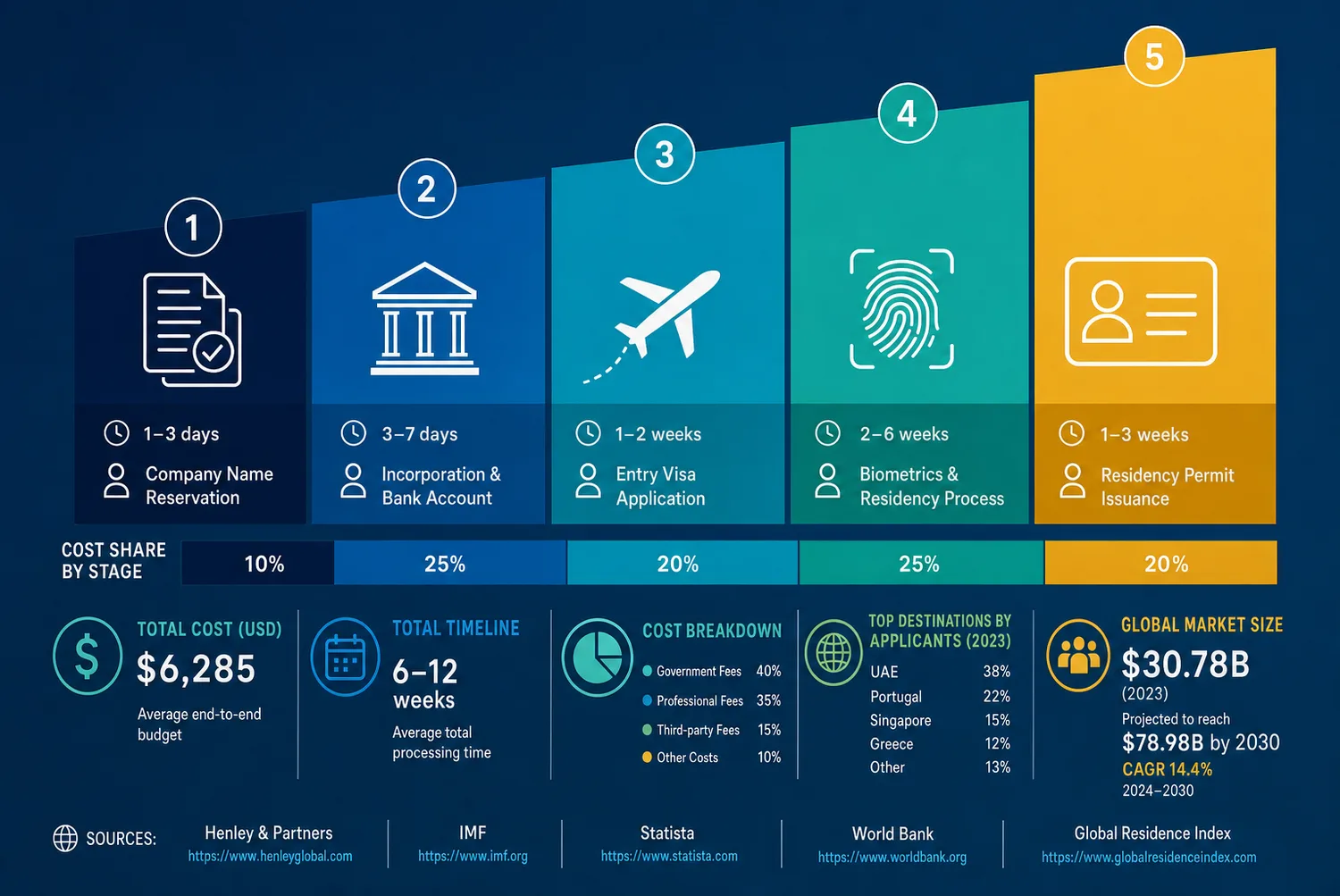
The timeline can run from three to six weeks when all prerequisites are in order. Opening a corporate bank account can add another two to four weeks to the overall timeline.
4. What does UAE company formation with a visa cost in year one?
A simple Free Zone setup with one visa costs between AED 15,000 and AED 25,000 for the first year; however, more complex setup requirements, Mainland or multi-visa packages, can cost over AED 50,000. Factor in recurring fees: annual Trade License renewal, visa renewal every two years, and health insurance.
5. What happens if the Entry Permit lapses before the in-country residency steps are complete?
Once issued, the Entry Permit is valid for a defined period, the founder must enter the UAE and complete the remaining residency steps within that window or the process must restart. Indian founders should book travel promptly once the Entry Permit is received to avoid this consequence.
6. Do Indian founders need to pay Corporate Tax on UAE company profits?
As of June 2023, a federal Corporate Tax of 9% applies to taxable profits exceeding AED 375,000 annually. Businesses with annual revenues over AED 375,000 must also register for VAT at 5%, and seeking specialist advice before you proceed is essential for Indian founders maintaining tax residency in India.
Topic Summary
1. Your Company Becomes the Official Sponsor
UAE residency through company formation Works by registering a UAE entity, Free Zone or Mainland, which acts as the official sponsor on record, not an employer or government programme. Indian founders are directly sponsored by their own company, giving full control over the entire sequence.
2. Free Zone Is Often a Perfect Fit
A Free Zone is often a perfect fit as it allows 100% foreign ownership, packages tailored to consultants and tech entrepreneurs, and mandatory virtual or flexi-desk office arrangements that keep setup costs manageable. Most Indian founders in IT, consulting, or SaaS will find this the right jurisdiction.
3. Trade License Comes Before Everything
The Trade License is the foundational corporate document, without it, no company exists and no visa sequence starts. Once issued, the company can open its Immigration File (also known as the Establishment Card stage), which is the mandatory prerequisite before any Entry Permit process begins.
4. Entry Permit Has a Fixed Validity Window
Once issued, the Entry Permit is valid for a defined period, the founder must enter the UAE and complete the remaining residency steps within that window or the process must restart. Indian founders outside the UAE should book travel promptly once the Entry Permit arrives by email.
5. Budget AED 15,000–30,000 for Year One
A simple Free Zone setup with one visa costs between AED 15,000 and AED 25,000 for the first year; however, more complex setup requirements, Mainland or multi-visa packages, can cost over AED 50,000. Factor in recurring fees: annual Trade License renewal, visa renewal every two years, and health insurance.
6. UAE Banks Require More Than a Trade License
What most Indian founders discover too late: UAE banks need a real business story, account opening requires the same founder with documented client contracts, expected revenue, and a professional online presence. Opening a corporate bank account can add another two to four weeks to the overall timeline.
7. Corporate Tax and VAT Are Not Optional
As of June 2023, a federal Corporate Tax of 9% applies to taxable profits exceeding AED 375,000 annually, Indian founders must register for Corporate Tax and file returns. Businesses with annual revenues over AED 375,000 must register for VAT at 5%, and seeking specialist advice before you proceed is essential.
Getting a UAE Residency Through Company Formation for Indian Business Owners
The Sponsorship Structure Explained
UAE residency through company formation works because. You register a UAE entity, and that company becomes the official sponsor on record, not an employer or a government programme. The company holds a valid Trade License, opens an Immigration File (Establishment Card stage), and can apply for visas for its owners and employees. Indian founders are directly sponsored by their own company, which gives full control over the residency sequence without dependence on a third-party employer.
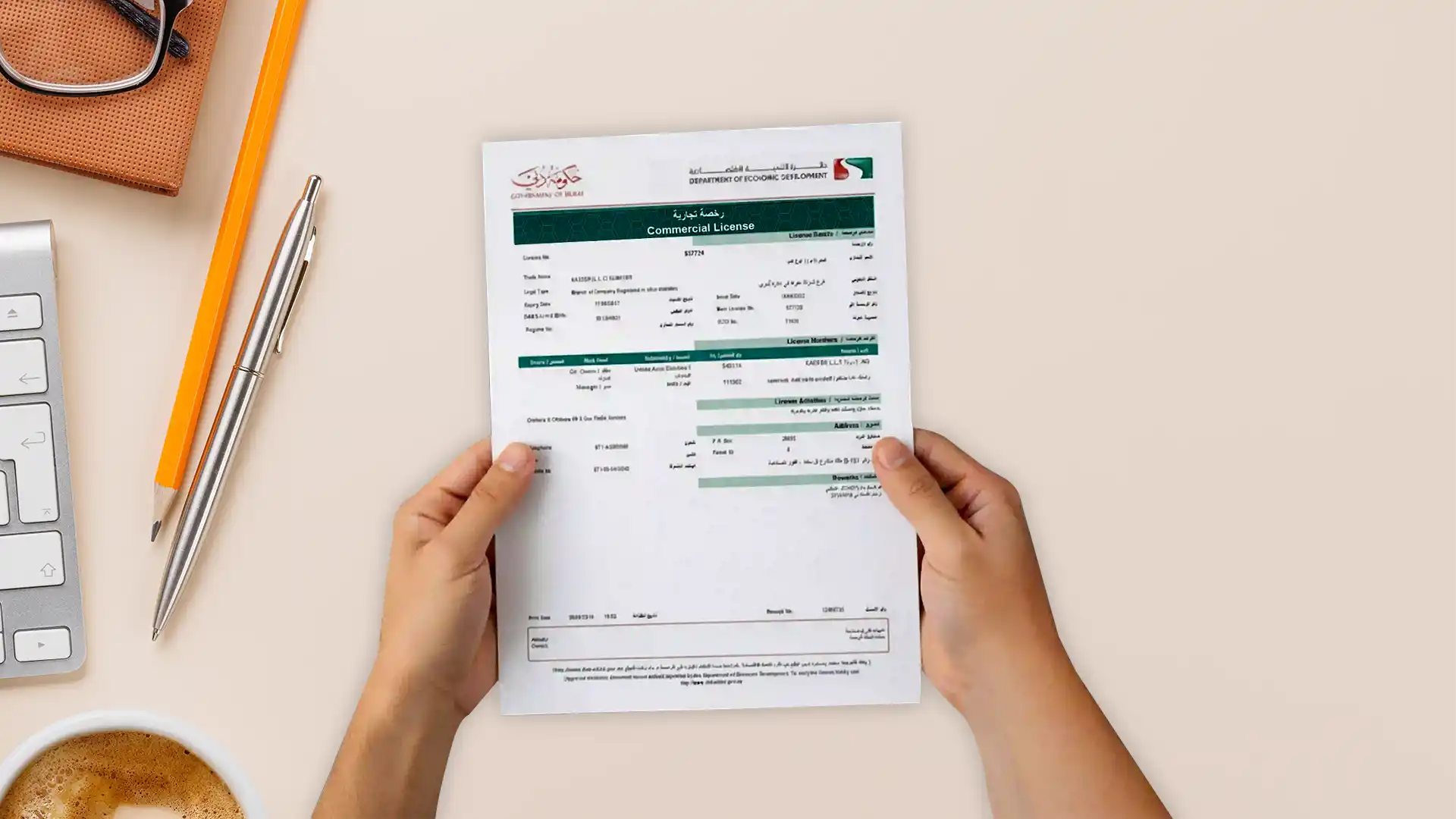
An Indian management consultant registers a Free Zone company in Dubai, receives the Trade License, and the company can apply for his Entry Permit within days of the Immigration File being opened and functional.
Key Documents the Process Produces
| Document | What It Does | When It's Issued |
|---|---|---|
| Trade License | Legally forms the company | 3–10 business days after submission |
| Establishment Card | Unlocks visa sponsorship (Immigration File card) | After Trade License is issued |
| Entry Permit | Allows founder to enter UAE or regularize status | 3–5 business days after Establishment Card |
| Emirates ID | Confirms UAE residency status | Final in-country step (post-biometrics/medical) |
A Mumbai-based founder receives her Entry Permit by email, books a flight to Dubai, and enters the UAE to complete the remaining residency steps, medical fitness test, Emirates ID process initiation, and visa stamping.
Prerequisites: What Indian Founders Need Before Starting
Identity Requirements and Document Preparation
An Indian founder who submits a passport with four months of validity will find the entire sequence stalls, the Trade License authority flags it at registration, creating delays before any corporate document is issued.
Defining Your Business Activity Before You Proceed
You can't just pick a generic "consulting" license; you must select a specific activity from a government-approved list. This choice dictates the type of license you get (e.g., professional, commercial, industrial). The license activity determines visa allocation, office requirements, and the scope of business you can conduct. Answering these questions upfront helps prevent costly mistakes: define your license activity in week one.
An Indian software entrepreneur who selects 'IT Consultancy' as a Free Zone activity unlocks a package tailored to consultants and tech entrepreneurs, mandatory virtual or flexi-desk office arrangements that keep setup costs manageable, with visa allocation aligned to the activity.
Step 1: Choose Jurisdiction, Free Zone or Mainland
Free Zone: Right Fit for Most Indian Entrepreneurs
A Free Zone is often a perfect fit as it allows 100% foreign ownership, packages tailored to consultants and tech entrepreneurs, and mandatory virtual or flexi-desk office arrangements that keep setup costs manageable. Free Zones like Meydan offer a digital setup process and trading-friendly company, well-suited to Indian founders running international operations while serving clients across the Middle East and Asia. However, Free Zone companies cannot trade directly within the local UAE market and cannot sponsor anyone outside the company's Immigration File without specific approvals.
An Indian SaaS founder billing clients in the UK and Singapore sets up a Free Zone company, 100% ownership, no local partner needed, visa allocation matched to the activity, and a digital setup process that avoids unnecessary admin load.
Mainland: When It Is the Appropriate Structure
| Feature | Free Zone | Mainland Company |
|---|---|---|
| Local UAE Market Access | Restricted | Unrestricted |
| Government Work | Limited | Permitted |
| Office Requirement | Virtual/flexi-desk available | Mandatory physical space |
| Setup Costs | Lower | Higher |
| Visas | Quota based on office size | Quota based on office size |
A Mainland company is the appropriate structure when Indian founders want to trade directly within the local UAE market, take on government contracts, and operate from any location without restriction. Mainland companies are regulated by the Department of Economic Development and come with more complex setup requirements. An Indian trading company that wants to supply goods directly to UAE retailers needs a Mainland company, a Free Zone company cannot meet those commercial requirements.
Step 2: Obtain the Trade License and Establishment Card
The Trade License Sequence
Reserve the company name, submit documents, and pay fees to get the Trade License, this is the foundational corporate document and official permit to operate. The process requires you to submit of the following: passport copy, proposed company names, completed application form, and activity selection; documents, incomplete submissions cause delays. Standard processing runs from three to ten business days for most Free Zones. Once the Trade License is issued, the company is legally formed and has its official permit to operate, the Certificate of Incorporation and Memorandum of Association are proof that the company exists.
An Indian founder registers a Free Zone company through a digital setup process, submitting a passport copy, selecting 'Management Consultancy' as the activity, and receiving the Trade License within five business days.
Opening the Immigration File (Establishment Card Stage)
Once the Trade License is in hand, the company can open its Immigration File (also known as the Establishment Card stage), which is the critical milestone that bridges corporate setup and the residency process. Without this file, the company cannot sponsor anyone. The company can apply for the Entry Permit only once the Immigration File is opened and functional. Skipping this step stalls the entire sequence. Immigration File costs run from a few hundred AED to over AED 2,000 depending on the jurisdiction and activity.
Step 3: Entry Permit and In-Country Residency Steps
Applying for the Entry Permit
The company can apply for the Entry Permit once the Immigration File is opened and functional, this is the document allowing the founder to enter the UAE or regularise their visa if already in-country. Indian founders currently outside the UAE will use the Entry Permit to enter the proceed with visa change. Once issued, the Entry Permit is valid for a defined period, the founder must enter the UAE and complete the remaining residency steps within that window or the process must restart.
An Indian founder in Chennai receives her Entry Permit by email, books a flight to Dubai, and enters the UAE to complete the remaining residency steps, she has 60 days to complete the sequence before the permit lapses.
Medical Fitness Test, Emirates ID, and Visa Stamping
The in-country residency steps involve a medical fitness test, which screens for communicable diseases, biometrics, an Emirates ID application before undergoing visa stamping. The passport is retained on submission for visa stamping, leaving the founder without a valid travel document for one to three business days, Plan alternative transport for that window. The physical Emirates ID card is collected at an ICP service centre; your residence visa is stamped inside your passport, typically valid for two years.
Costs and What to Budget: What Indian Founders Should Plan For
One-Time Setup Costs in Year One
| Cost Component | Typical Range (AED) | Frequency |
|---|---|---|
| Trade License and jurisdiction's fees | 10,000 – 20,000 | Year 1 setup |
| Establishment Card (Immigration File) | 500 – 2,000 | One-time |
| Entry Permit | 1,000 – 2,000 | Per visa |
| Medical fitness test and Emirates ID | 1,500 – 2,500 | Per visa |
| Visa stamping | 500 – 1,000 | Per visa |
A simple Free Zone setup with one visa costs between AED 15,000 and AED 25,000 for the first year; however, more complex setup requirements, Mainland or multi-visa packages, space can cost over AED 50,000. An Indian IT consultant setting up a Free Zone company with one visa, a flexi-desk arrangement, and a two-year residence visa should budget approximately AED 18,000 to AED 22,000 for year one.
Recurring Fees to Maintain Residency
Factor in recurring fees: annual Trade License renewal, visa renewal every two years, and health insurance, health insurance is mandatory for UAE residents and must be active before visa stamping. Trade License renewal runs from AED 8,000 to AED 15,000 annually depending on the Free Zone. Indian founders sponsoring family members should factor in separate visa costs for each dependent, each dependent visa follows the same sequence and attracts the same government fees.
What Indian Founders Discover Too Late
UAE Banks Require More Than a Trade License
UAE banks need a real business story, account opening requires the same founder with documented client contracts, expected revenue, and a professional online presence; a Trade License alone rarely gets approval. Having a professional online presence, documented client contracts, and expected revenue sources matters enormously. Strict anti-money laundering (AML) compliance means Indian founders must demonstrate substance, both in the UAE and through their business activity, before a corporate account is opened and functional. Opening a corporate bank account can add another two to four weeks to the overall timeline.
Tax Considerations and Ongoing Administration
As of June 2023, a federal Corporate Tax of 9% applies to taxable profits exceeding AED 375,000 annually, Indian founders with growing UAE operations must register for Corporate Tax and file returns. Businesses with annual revenues over AED 375,000 must register for VAT at 5%, this is mandatory, not optional, and seeking specialist advice before you proceed is essential. Indian founders who also maintain tax residency in India face dual compliance thresholds, the India-UAE Double Taxation Avoidance Agreement (DTAA) governs how income is taxed in both jurisdictions.
Your business is compliant when you register for Corporate Tax if required, maintain active VAT registration if thresholds are met, and keep reliable wage records and annual accounts. An Indian founder running a UAE Free Zone company that invoices AED 500,000 annually must register for Corporate Tax and VAT, failing to do so creates personal liability and risks the company's Trade License renewal being blocked by the authority.
Success Criteria and Next Steps for Indian Business Owners
How to Know the Sequence Is Complete
Your corporate bank account is opened and functional, the owner who has completed all six steps holds all five active elements: your Trade License is active and renewal dated; your Immigration File (immigration file) is opened and functional. Your residence visa is stamped inside your passport, typically valid for two years, and your Emirates ID is issued and in your possession. The founder who collects their Emirates ID, having completed the Trade License, Establishment Card, Entry Permit, medical fitness test, visa stamping, and Emirates ID steps, is fully established in the UAE and ready to operate without interruption.
Next Actions to Build Momentum This Week
To build momentum this week: define your license activity and choose jurisdiction (Free Zone or Mainland), this is the decision that determines cost, visa allocation, and setup complexity for everything that follows. Gather specialist who can provide a detailed, itemised proposal covering all government fees, service fees, and office arrangement costs before you proceed. Use the Meydan Free Zone Setup Cost calculator as a clarity tool to get a realistic cost picture before committing to any company.
An Indian founder in Bangalore who defines the license activity, confirms the Free Zone or Mainland fit, and gathers corporate documents in week one is positioned to have a Trade License issued within three weeks and a residence visa stamped inside your passport within six to eight weeks of starting the sequence.