
Table of Contents
Frequently Asked Questions
What does activity code 8129.93 cover in Dubai
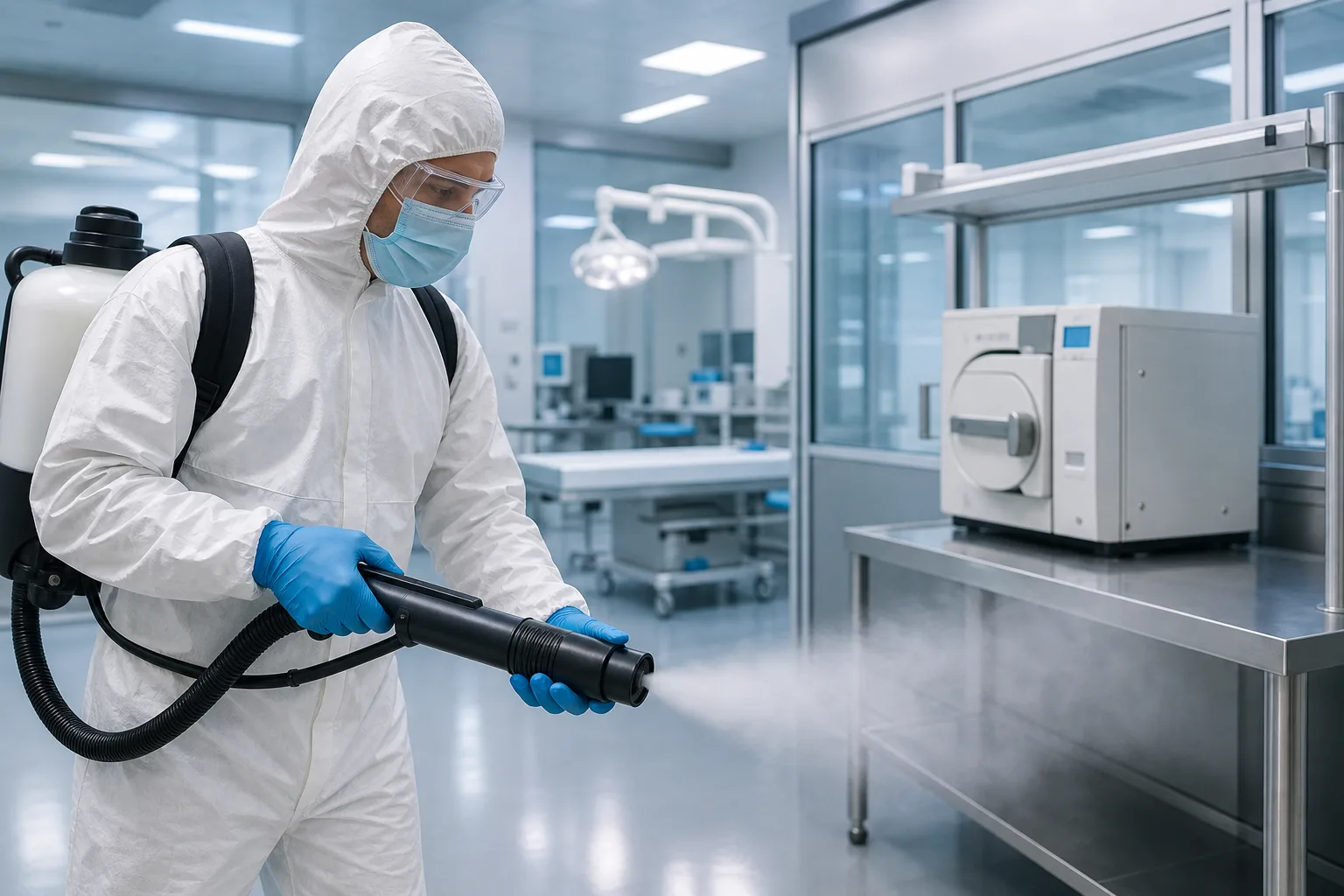
Activity code 8129.93 covers commercial disinfection, sterilization, fumigation, and sanitation services for a wide range of premises and assets. This includes buildings, vehicles, medical facilities, food processing plants, and industrial sites.
The activity is classified under the broader facilities and building services category. It focuses specifically on microbial, viral, and bacterial decontamination using approved chemical agents, UV systems, or fogging equipment — and is distinct from pest control, which carries a separate activity code.
Which authority issues the Disinfection and Sterilization Services licence in Dubai
The primary licence is issued by either the Dubai Department of Economy and Tourism (DED) for mainland operations, or by a free zone authority such as Meydan Free Zone for companies preferring a free zone setup.
However, the licence alone does not authorise full operations. Sector-specific approvals from bodies such as Dubai Municipality and MOHAP must be obtained in parallel before a company can legally commence services.
What additional approvals are required beyond the main licence
Several regulatory bodies have oversight roles depending on the scope of your services. Dubai Municipality approval is required for chemical storage compliance, waste disposal protocols, and premises inspection before operations begin.
MOHAP (Ministry of Health and Prevention) registration is mandatory if services extend to healthcare or pharmaceutical environments, as it governs the use and handling of controlled chemical agents across the UAE.
Additionally, Dubai Health Authority (DHA) vendor registration is a non-negotiable procurement-side requirement before any hospital or clinic will issue a service contract, even though it is not a formal licensing step.
Is 100% foreign ownership permitted for this type of company in Dubai
Yes. 100% foreign ownership is permitted for Disinfection and Sterilization Services businesses on both the Dubai mainland and in free zones such as Meydan Free Zone.
This makes Dubai an accessible market for international entrepreneurs and corporations looking to establish operations without requiring a local Emirati partner or sponsor for this specific activity.
What are the main differences between setting up on the DED mainland versus Meydan Free Zone
DED mainland setup provides direct access to government and private sector contracts across Dubai without restrictions on where you can operate or who you can serve within the UAE market.
Meydan Free Zone offers benefits including 100% foreign ownership, generally lower setup costs, and the option to incorporate remotely. However, free zone companies may face additional steps when bidding for certain government contracts or operating directly on the mainland.
When is VAT registration required for a disinfection services company in Dubai
VAT registration with the Federal Tax Authority (FTA) is required once your company's annual turnover exceeds AED 375,000. The standard VAT rate of 5% applies to most B2B service invoices in this sector.
Given that the target client base is institutional — including hospitals, hotels, warehouses, and government facilities — most active operators will reach this threshold relatively quickly. Full registration details are available via the FTA portal.
What is the typical client base for a licensed disinfection and sterilization business in Dubai
The commercial pipeline for activity 8129.93 is institutional rather than consumer-facing. Target clients include hospitals, hotels, schools, warehouses, food processing plants, and government facilities — all sectors subject to recurring regulatory hygiene requirements in Dubai.
Because contracts are B2B and often driven by compliance obligations, contract values tend to be higher and tenure longer than in consumer-facing service businesses, making it an attractive recurring-revenue model.
What is the size of the UAE facilities management market and why does it matter for this licence
The UAE facilities management market was estimated at USD 6.8 billion in 2024 according to IMARC Group. Disinfection and sterilization services sit within this broader market, benefiting from sustained post-pandemic demand that has become a permanent commercial requirement across healthcare, hospitality, logistics, and food sectors.
This market context means that licensed operators under activity code 8129.93 are entering a large, regulated, and growing sector with institutional demand driven by both private compliance needs and government hygiene mandates.
Start Disinfection & Sterilization Services Business in Dubai
Demand for professional disinfection and sterilization did not fade after the pandemic. It hardened into a standing need across healthcare, hospitality, logistics and food.
Activity code 8129.93 covers that work. It is a different code from pest control, and it comes with its own approval stack: Dubai Municipality for chemicals and premises, MOHAP if you go anywhere near healthcare, and vendor registration with the Dubai Health Authority before a hospital will sign anything. This guide covers what the code allows, who regulates it, and the order to work through.
Key Stats at a Glance

What This License Covers
Code 8129.93 covers commercial disinfection, sterilization, fumigation and sanitation for buildings, vehicles, medical facilities, food premises and industrial sites. It sits under the wider facilities and building services heading.
The work is specifically about killing microbes, viruses and bacteria, using approved chemical agents, UV systems or fogging equipment. That is what separates it from pest control, which is a different activity code dealing with living pests rather than contamination. Get this distinction right before you apply, because the two are easy to confuse and the approvals differ.
Where medical-grade sterilants are involved, MOHAP oversight applies directly rather than as an afterthought.
Who Your Clients Will Be
This is an institutional business, not a consumer one:
- Hospitals and clinics
- Hotels
- Schools
- Warehouses and logistics operators
- Food processing plants
- Government facilities
All of those sectors face recurring hygiene rules in Dubai, which is what generates the contracts. Because the work is B2B and driven by compliance rather than preference, contract values run higher and last longer than in consumer-facing service businesses.
Mainland or Free Zone
Mainland
A license from the Department of Economy and Tourism lets you contract directly with government bodies and private clients with nothing in between. For a business that lives on institutional contracts, that access is a real advantage.
Free zone
A free zone license is quicker, cheaper and can be done remotely, which suits founders not yet based in Dubai or scaling from elsewhere in the region. If you plan to deliver on-site services to mainland clients, confirm the operating scope before you commit, because some delivery models need a mainland branch or a local commercial arrangement.
[blockCTACostCalculator]
Step by Step Setup Guide
The order matters. Leaving external approvals until after the license is the usual cause of delay.
- Step 1, pick your jurisdiction: Mainland through DET for direct access to government and private contracts, or a free zone for lower cost and remote setup.
- Step 2, book your trade name: Through DET eServices or your free zone portal. The name must not clash with an existing registration and should reflect the activity.
- Step 3, apply for initial approval: Submit activity code 8129.93, your proposed structure and shareholder documents, including passport copies and a No Objection Certificate where one applies.
- Step 4, get your external approvals: Apply to Dubai Municipality for premises and chemical handling clearance. If you will service healthcare environments, start MOHAP registration at the same time. These come before final license issue.
- Step 5, sort your premises: Mainland needs a physical office or warehouse lease. Free zones accept a flexi-desk for the administrative side, but your equipment and chemicals still need a suitable facility.
- Step 6, collect your license, bank and VAT: With approvals in place the license is issued. Open a corporate bank account and register for VAT once the threshold applies.
- Step 7, hire under the rules: Staff come in under MOHRE guidelines, and technicians handling chemical agents must hold the relevant safety certificates. That is an operating condition, not a nice to have.
Compliance and What You Need in Place
Dubai Municipality
Approval covers chemical storage, waste disposal protocols and a premises inspection. Any company storing or moving regulated disinfectants has to meet Municipality standards before it starts work.
MOHAP
Registration is compulsory if your services reach healthcare or pharmaceutical environments. MOHAP governs the use and handling of controlled chemical agents across the UAE, so this is the approval that decides whether the clinical market is open to you.
Dubai Health Authority vendor registration
Not a licensing step, but non-negotiable in practice. No hospital or clinic will issue you a service contract without it. Treat it as part of getting to revenue rather than paperwork you deal with later.
VAT
Register with the Federal Tax Authority once annual turnover passes AED 375,000. At 5%, VAT applies to most B2B service invoices in this sector, and an operator billing institutions reaches that threshold quickly.
Staff
Hire under MOHRE rules, and make sure anyone handling chemical agents holds current safety certification.
Market Opportunity
The UAE facilities management market was estimated at USD 6.8 billion in 2024 by IMARC Group, and disinfection sits inside it as a growing segment. What is driving that growth is healthcare infrastructure expanding and enforcement of hygiene rules tightening, neither of which reverses quickly.
The client base is the attractive part. Hospitals, hotels, logistics operators and government facilities all buy this work on contract because their own rules oblige them to, so the revenue recurs without needing to be resold every quarter.
Worth being clear about where the money actually goes when you start. The license is not the constraint. A free zone license runs AED 12,000 to AED 20,000 a year and a mainland one AED 15,000 to AED 30,000, but fogging equipment, UV sterilization units, chemical stock, protective equipment and service vehicles are the real outlay. Plan your working capital around the kit, not the paperwork.
Conclusion
A disinfection and sterilization license in Dubai is a workable business in a sector with durable institutional demand. The regulatory path is clear: DET or a free zone for the license, Dubai Municipality and MOHAP for the operating approvals, MOHRE for your workforce, and Dubai Health Authority registration if you want hospital work.
The market is not speculative. Hospitals, hotels, logistics operators and government facilities all buy these services on contract, and they buy them from operators who can produce the paperwork.
Use the cost calculator to model your setup budget, or speak to the Meydan Free Zone team about moving from outline to operating.
[blockCTAContact]