
Table of Contents
Frequently Asked Questions
What does activity code 7730.72 cover for machinery rental in Dubai
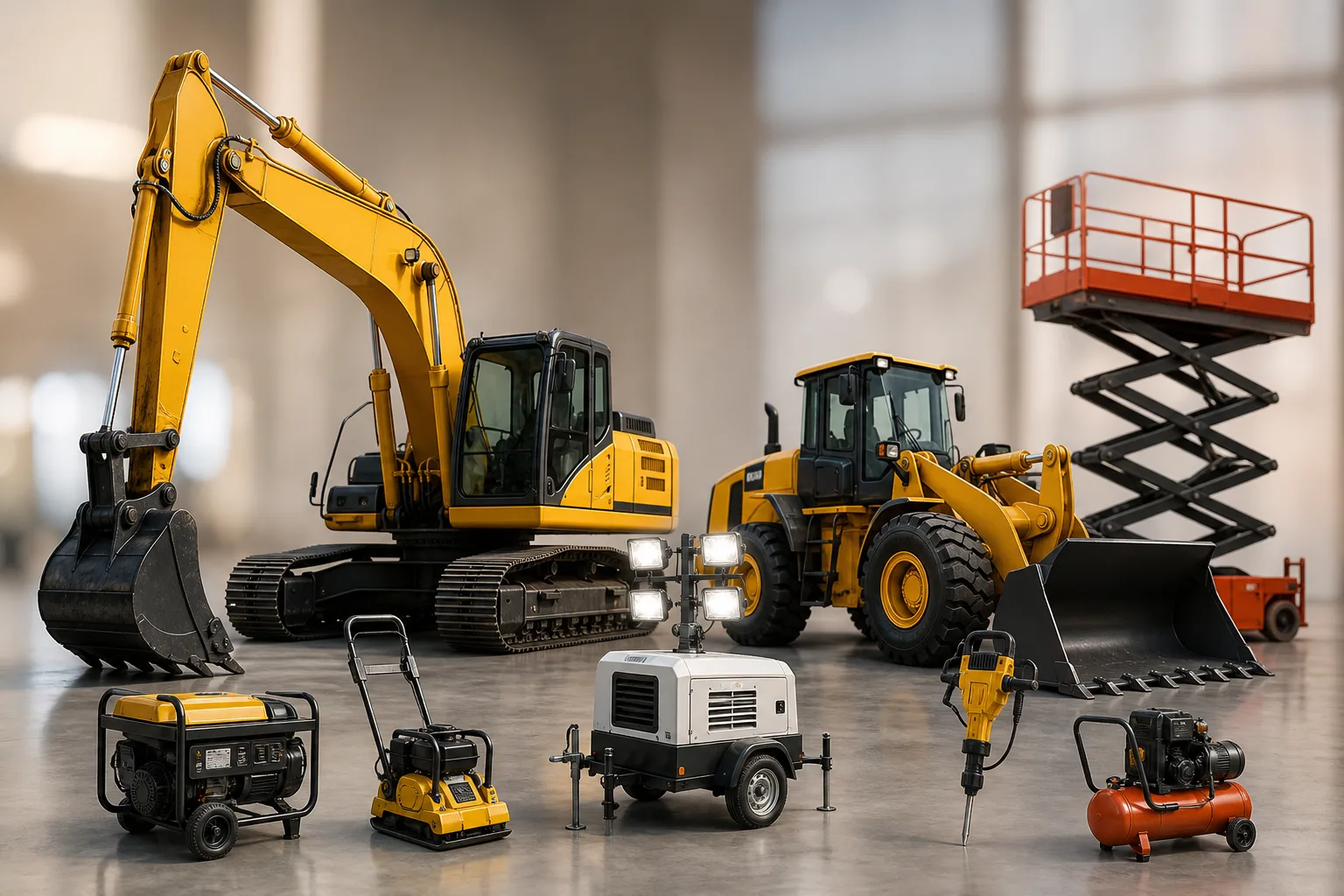
Activity code 7730.72 covers the rental and leasing of both heavy and light machinery and equipment. Heavy machinery includes cranes, excavators, bulldozers, and concrete mixers, while light equipment covers generators, compressors, scaffolding, and hand tools.
The scope is broad enough to serve multiple sectors — including construction, oil and gas, events, municipalities, and industrial facilities — under a single licence. This makes it one of the more commercially flexible activity codes available in Dubai.
It is important to note that equipment sales are not included under this code. If you plan to trade as well as rent, a separate trading licence will be required alongside your rental licence.
Can a foreign national own 100% of a machinery rental business in Dubai
Yes. Under the 2021 UAE Commercial Companies Law reforms, 100% foreign ownership is permitted for machinery and equipment rental businesses in Dubai. This applies to both mainland and free zone structures.
Previously, mainland businesses typically required a local Emirati sponsor holding a majority stake, but those restrictions have been significantly relaxed for most commercial activities, including equipment rental under code 7730.72.
What is the difference between a mainland and free zone licence for equipment rental
A mainland licence, issued through the Dubai Department of Economy and Tourism (DET), allows you to contract directly with government entities, large developers, and private contractors across the UAE. For B2B rental at scale, this is generally the stronger commercial position.
A free zone licence — for example through Meydan Free Zone — tends to offer lower setup costs and faster incorporation. It suits operators focused on logistics corridors, port-adjacent industrial zones, or international fleet management.
The key trade-off with a free zone licence is that direct government contracts may require a mainland entity or a local agent arrangement. Both tracks permit 100% foreign ownership under current UAE law.
Who are the typical customers for a heavy and light equipment rental business in Dubai
The customer base for activity code 7730.72 is predominantly business-to-business (B2B). Core customer segments include construction contractors, oil and gas operators, event companies, municipalities, and industrial facilities.
Because contract values tend to be meaningful and relationships are often repeat-based once established, the B2B nature of this business supports relatively stable revenue once an initial client base is built. Mid-tier contractors in particular are increasingly preferring rental over fleet ownership to manage capital expenditure and reduce balance sheet pressure.
Does supplying operators or drivers with rented machinery require a separate licence
Yes. If you intend to supply operators, drivers, or other personnel alongside the machinery you rent out, this activity falls under manpower or transport licensing — which is a distinct category from the equipment rental licence under code 7730.72.
A pure equipment rental licence covers the hire of the machinery itself. Bundling labour with that hire introduces a separate regulatory requirement, so it is important to clarify your intended service model before applying for your licence.
What are the VAT obligations for a machinery rental business in Dubai
Rental income from machinery and equipment is subject to VAT at the standard rate of 5% in the UAE. Businesses must register for VAT with the Federal Tax Authority once their annual taxable turnover reaches or is expected to reach the mandatory registration threshold of AED 375,000.
Once registered, you will need to charge VAT on rental invoices, file regular VAT returns, and maintain compliant records. Given that B2B contract values in this sector can be substantial, many operators will reach the registration threshold relatively quickly after commencing operations.
What market opportunity exists for new entrants in Dubai's equipment rental sector
Dubai's sustained infrastructure pipeline — covering roads, metro extensions, residential and commercial real estate, and utilities — creates consistent demand for both short-term and long-term equipment hire. This demand is structural rather than cyclical, underpinned by ongoing government spending and Vision 2030-linked development.
While established regional players dominate the largest fleet segments, niche areas remain accessible to new entrants. Specialist lifting, temporary power supply, formwork systems, and modular access equipment are segments where focused operators can compete without directly challenging the largest players.
According to Mordor Intelligence, equipment rental adoption across the GCC is rising as contractors shift toward asset-light operating models — a trend that structurally favours new entrants with the right equipment mix and commercial focus.
Why is the rental model increasingly preferred over equipment ownership by contractors in Dubai
Fleet ownership is capital-intensive, maintenance-heavy, and creates significant balance sheet pressure for construction and industrial contractors. Renting equipment transfers the burden of ownership, depreciation, and maintenance to the rental operator rather than the end user.
This shift toward asset-light operating models is a growing structural trend across the GCC, as mid-tier and larger contractors seek to manage capital expenditure more efficiently. For a rental business operator, this means demand is being driven by a fundamental change in how contractors prefer to work, rather than simply by project volume alone.
Heavy & Light Machinery & Equipment Rental Business Setup in Dubai
Dubai's construction pipeline, infrastructure expansion, and industrial activity make machinery and equipment rental one of the most commercially grounded businesses you can licence here. Activity code 7730.72 covers everything from excavators and cranes to generators and compactors — a broad, practical scope that maps directly onto what the market actually needs.
This guide covers what the licence covers, who the real customers are, where to set up, and the step-by-step process to get operational — with key stats, regulatory context, and cost pointers included.
Key Stats at a Glance
| Metric | Detail | Source |
|---|---|---|
| UAE construction equipment rental market | Projected steady growth through 2028, driven by Expo legacy projects, infrastructure spend, and Vision 2030-linked development | Mordor Intelligence |
| Dubai construction sector GDP contribution | Over AED 50 billion in recent years | Dubai Statistics Center |
| VAT on rental income | 5%; mandatory registration threshold AED 375,000 annual taxable turnover | Federal Tax Authority |
| Foreign ownership | 100% permitted under UAE Commercial Companies Law reforms | Ministry of Economy and Tourism, Establishing companies |
What Activity Code 7730.72 Actually Covers
This activity code covers the rental and leasing of both heavy machinery and light equipment. Heavy machinery includes cranes, excavators, bulldozers, and concrete mixers. Light equipment covers generators, compressors, scaffolding, and hand tools. The scope is wide enough to serve multiple sectors from a single licence.
What it does not cover is the sale of equipment. If you intend to trade as well as rent, a separate trading licence is required. Equally, supplying operators or drivers alongside the machinery falls under manpower or transport licensing — that is a distinct activity.
Customers under this code span construction contractors, oil and gas operators, event companies, municipalities, and industrial facilities. The B2B nature of the business means contract values are meaningful and relationships tend to be repeat-based once established.
Business Activities List
Explore Over 2,500+Market Opportunity and Commercial Reality

Dubai's sustained infrastructure pipeline — roads, metro extensions, residential and commercial real estate, utilities — creates consistent demand for both short-term and long-term equipment hire. This is not a cyclical niche; it is a structural feature of how the emirate builds.
The rental model is increasingly preferred by mid-tier contractors managing capital expenditure. Fleet ownership is capital-intensive, maintenance-heavy, and creates balance sheet pressure. Renting transfers that burden to the operator — which is where your business sits.
The market has established regional players, but niche segments remain accessible to new entrants. Specialist lifting, temporary power supply, formwork systems, and modular access equipment are areas where focused operators can compete without going head-to-head with the largest fleets. According to Mordor Intelligence, equipment rental adoption across the GCC is rising as contractors shift from ownership to asset-light operating models — a structural trend that favours new entrants with the right equipment mix.
Free Business Setup Cost Calculator
Calculate NowLicence Options: Mainland vs Free Zone
A mainland licence issued through the Dubai Department of Economy and Tourism allows direct contracts with government entities, large developers, and private contractors. For B2B rental at scale, this is typically the stronger commercial position. You can find current activity listings and licence categories via DED e-Services.
A free zone licence — for example through Meydan Free Zone — suits operators focused on logistics corridors, port-adjacent industrial zones, or international fleet management. Setup costs are generally lower and incorporation is faster. The trade-off is that direct government contracts may require a mainland entity or a local agent arrangement.
Under the 2021 Companies Law reforms, Ministry of Economy and Tourism, Establishing companies is available on both tracks. Mainland operations require a physical yard or warehouse for equipment storage. Free zone setups may permit a flexi-desk with a third-party yard arrangement, which reduces initial fixed costs.
Meydan Free Zone's mCore and mPlus packages are structured for both asset-light startups and growing operations looking for scalability without excessive overhead.
Essential Services for Entrepreneurs and Startups
Explore mCoreStep-by-Step Licence Setup Process
- Step 1 — Trade name reservation: Reserve your trade name and confirm activity code 7730.72 with DED or your chosen free zone authority.
- Step 2 — Legal structure: Choose between an LLC for mainland or an FZ-LLC for a free zone. Single shareholder structures are permitted on both tracks.
- Step 3 — Documentation: Submit passport copies, Emirates ID if you are already a UAE resident, and a No Objection Certificate if you are currently employed elsewhere.
- Step 4 — Premises approval: Secure a tenancy contract — Ejari-registered for mainland — or a free zone unit agreement. A physical address is mandatory.
- Step 5 — Initial approval and licence issuance: Submit the application, pay licence fees, and collect your trade licence. Timelines vary by authority but free zones typically move faster.
- Step 6 — Corporate bank account: Open a business account. UAE banks will require your trade licence, tenancy contract, and evidence of business activity. Allow time for this step — it is rarely instant.
- Step 7 — VAT registration: If your annual taxable turnover exceeds AED 375,000, register with the Federal Tax Authority. Voluntary registration is available below that threshold.
- Step 8 — Employee registration: Register employees with MOHRE and ensure compliance with the Wages Protection System before processing any payroll.
Ongoing Compliance and Operational Considerations
Annual licence renewal is mandatory. Late renewal triggers fines, and repeated lapses can affect your ability to process visas or open new contracts. Build the renewal date into your operational calendar from day one.
Equipment used in lifting, pressure applications, or other regulated operations must carry valid inspection certificates. This is not optional — it is a contractual and legal requirement that clients, particularly in construction and oil and gas, will verify before accepting delivery.
Rental agreements should clearly define liability, maintenance obligations, and insurance responsibilities. UAE commercial law governs these contracts; a well-drafted standard agreement protects both parties and reduces dispute risk.
VAT invoicing is required on all rental contracts. Maintain clean records from the start — the Federal Tax Authority conducts audits, and disorganised books create unnecessary exposure. Investor and employee visas can be processed through MOHRE or your free zone authority depending on your setup.
Conclusion
Activity code 7730.72 is a commercially sound licence for anyone looking to serve Dubai's construction, industrial, and infrastructure sectors. The setup process is straightforward — the real decisions are mainland versus free zone, fleet financing strategy, and which customer segments to target first. Get the structure right from day one and the operational path is clear.
Speak to a Series M adviser to confirm the right jurisdiction, estimate your setup cost, and get your machinery rental licence in place without unnecessary delays.
References
- Mordor Intelligence (mordorintelligence.com)
- Dubai Statistics Center (dsc.gov.ae)
- Federal Tax Authority (tax.gov.ae)
- Ministry of Economy and Tourism, Establishing companies (u.ae)
- DED e-Services (eservices.dubaided.gov.ae)
- MOHRE (mohre.gov.ae)