Table of Contents
Topic Summary
Understand Exactly What This License Covers
A stall-based retail license permits trading at markets, exhibitions, and pop-up events — not shopfronts, e-commerce, or repair services. Products covered range from white goods and kitchen appliances to smartphones and audio-visual equipment.
Choose Between Mainland and Free Zone Setup
A mainland DET license gives full UAE market access including public souks and government venues, while Meydan Free Zone offers faster setup, lower costs, and 100% foreign ownership. Your target venues should drive this decision.
Take Advantage of 100% Foreign Ownership
Meydan Free Zone allows complete foreign ownership with no requirement for a local partner. This makes it one of the most accessible entry points for international entrepreneurs entering the Dubai retail market.
Know the Costs and Timeline Before You Apply
Licensing through Meydan Free Zone starts from AED 12,500 and can be completed in just a few working days once documents are ready. The low overhead model makes stall retail ideal for testing product lines before committing to a permanent unit.
List Every Activity Separately on Your Application
The stall retail license does not automatically cover online sales, mainland import for resale, or after-sales repair work. If you plan to offer any of these alongside stall trading, each must be listed as a separate activity when you apply.
Track Your VAT Registration Threshold Carefully
VAT registration becomes mandatory once your taxable turnover exceeds AED 375,000. Stall operators scaling quickly across multiple venues should monitor this figure closely to stay compliant.
Use the Stall Model to Test Before Scaling
The low fixed-cost structure of stall retail makes it a practical way to validate product demand across UAE weekend markets and seasonal events. Many operators use this as a stepping stone before investing in a permanent retail unit.
How to Start a Home Appliances & Electronics Business In Dubai
Stall-based retail of household appliances and consumer electronics is a proven, low-overhead entry point into one of the Gulf's most active consumer markets. You do not need a shopfront lease or a warehouse. You need the right license, the right location approvals, and a clear understanding of what the activity code permits.
This guide covers what the activity covers, how to choose the right jurisdiction, and the exact steps to get licensed through Meydan Free Zone.
What This License Covers
This activity covers the retail sale of household appliances and consumer electronics from stalls. That means temporary or semi-permanent trading points at markets, exhibitions, pop-up events, and similar venues. It is not a shopfront license. It is not an e-commerce license. It does not cover wholesale supply or repair services.
The typical product range includes:
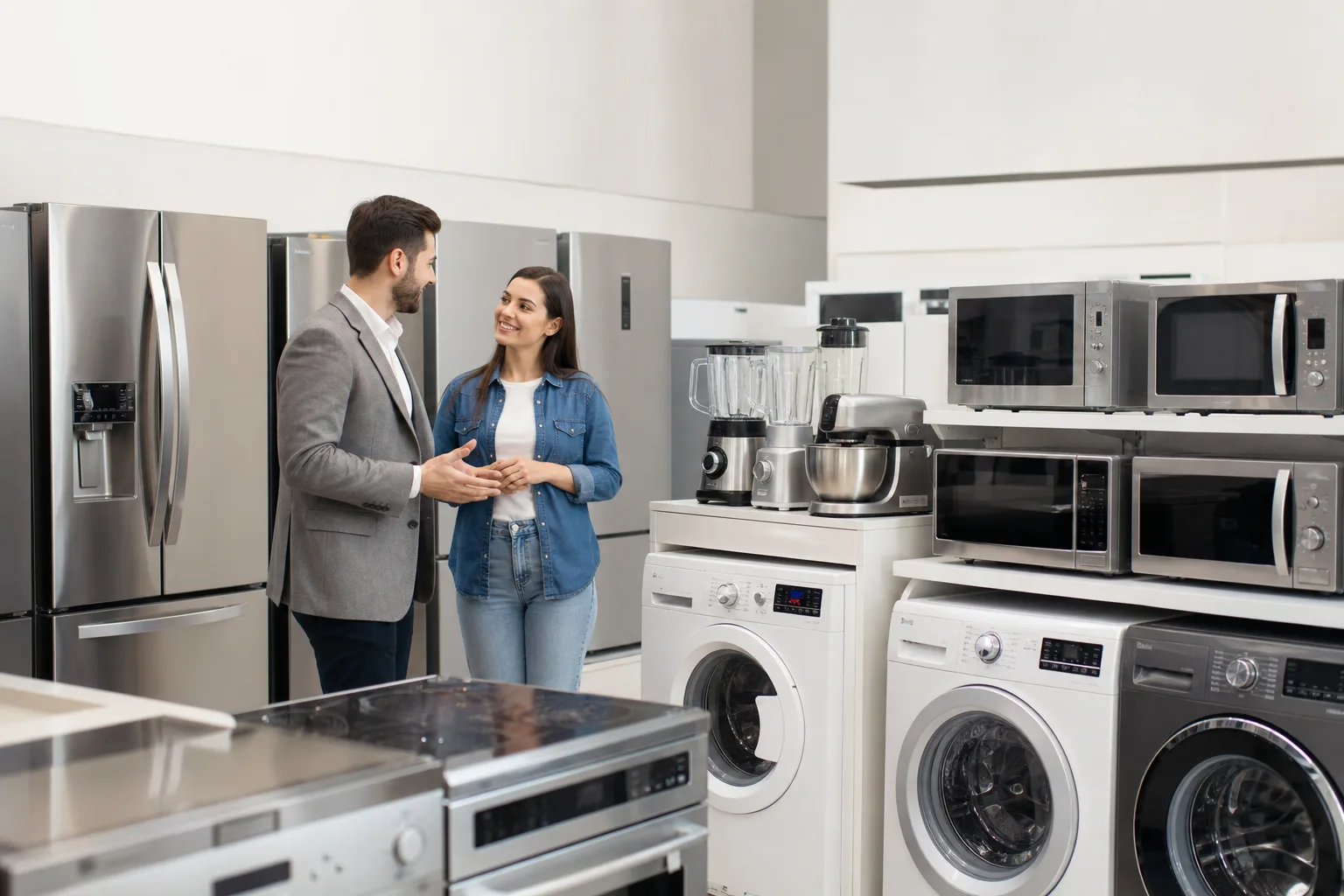
- White goods such as washing machines, refrigerators, and air conditioning units
- Small kitchen appliances including blenders, coffee machines, and microwaves
- Audio-visual equipment such as televisions, speakers, and projectors
- Personal electronics including smartphones, tablets, and wearables
Under Meydan Free Zone, this activity falls within the retail trading category. You can review the full Business Activities List to confirm the exact code and permitted scope before you apply. The license does not automatically extend to online-only retail, import for resale on the mainland, or any after-sales repair work. If you plan to do those things alongside stall trading, you need to list each activity separately when you apply.
Key Stats at a Glance

| Market | UAE consumer electronics and home appliances |
|---|---|
| Market size and growth | The UAE consumer electronics market is growing steadily, driven by rising household incomes, high smartphone penetration, and strong tourist spending. See IMARC Group for current figures. |
| Foreign ownership | 100% – no local partner needed in Meydan Free Zone |
| Setup timeline | Typically a few working days through Meydan Free Zone once documents are in order |
| VAT threshold | AED 375,000 taxable turnover – registration becomes mandatory above this figure |
| License cost | Starting from AED 12,500 – see Dubai Trade License from AED 12,500 |
Stall retail sits within a broader informal and semi-formal retail segment that remains active across the UAE, particularly at weekend markets, trade exhibitions, and seasonal events. The low fixed-cost model makes it attractive for new entrants testing product lines before committing to a permanent retail unit.
Mainland vs Meydan Free Zone: Which Setup Works for You
This is the most important decision you will make before you start. Get it wrong and you either pay for more structure than you need, or you find yourself unable to trade at the venues you want.
A mainland license from the Dubai Department of Economy and Tourism (DET) gives you direct access to the full UAE market. You can operate stalls in Dubai malls, public souks, municipality-run markets, and at events where the organiser needs a mainland-licensed vendor. You can also contract directly with UAE-based retail landlords and event organisers.
Meydan Free Zone gives you 100% foreign ownership, no currency restrictions, a simpler and faster setup process, and a lower cost base. The trade-off is that free zone companies selling directly to consumers on the mainland are technically selling into a different jurisdiction. In practice, many stall operators manage this by working through a mainland distributor or by trading at free zone-sanctioned events and exhibitions.
| Factor | Mainland (DET) | Free Zone (Meydan Free Zone) |
|---|---|---|
| Market access | Full UAE market, including government venues and public souks | Free zone events and export-focused retail; mainland via distributor |
| Foreign ownership | 100% available in most activities | 100% always |
| Setup cost | Higher, office lease often needed | Lower; flexi-desk options available |
| Setup speed | Longer process | Faster; often a few working days |
| Mainland stall trading | Permitted directly | Needs a distributor or dual license |
When a Free Zone License Is Enough
A Meydan Free Zone license works well if you are selling at free zone-sanctioned events, international trade exhibitions, or export-focused retail. It also works if you have a mainland distributor who handles the local sales side and you focus on sourcing, logistics, and brand. Many founders start here, prove the product, and add a mainland license later once volume justifies it. You can also start a business remotely through Meydan Free Zone without needing to be in the UAE during the setup process.
When You Need a Mainland License
If you want to operate a stall directly in a Dubai mall, a public souk, or at any market where the venue operator requires a DET-issued license, you need a mainland setup. The same applies if you are contracting directly with UAE-based event organisers or retail landlords who specify mainland registration in their vendor agreements. Check the venue's requirements before you commit to either path.
Free Business Setup Cost Calculator
Calculate NowStep-by-Step Setup Guide
- Step 1, check your company name: Use the Company Name Check tool to confirm your preferred trade name is available before you start the application.
- Step 2, select your activity code: Confirm the stall-based retail code for household appliances and consumer electronics is listed on your application. Check the approved list before you go further. Adding the wrong code or missing one creates problems at the stall permit stage later.
- Step 3, choose your license package: mCore covers the essentials for a lean setup. If you need extra services such as visa support, accounting, or a business address, look at the broader mPlus options.
- Step 4, submit your documents: You will need a passport copy and a completed application form. A business plan may be needed depending on the package. Meydan Free Zone will confirm exactly what is needed when you start the process.
- Step 5, get your license issued: Once documents are approved, your license is issued. This typically takes a few working days.
- Step 6, apply for visas: The number of visas available depends on your license package. Apply for investor and employee visas once the license is in hand.
- Step 7, open a corporate bank account: Most UAE banks need a physical address on file. A Meydan Free Zone flexi-desk satisfies this for most institutions. Business banking support is available through mCore if you need help navigating the process.
- Step 8, get your stall permits: A trading license is not the same as permission to operate a stall at a specific venue. You need separate approvals from Dubai Municipality or the relevant authority for each location where you plan to trade. Apply for these once your license is issued.
Compliance, Costs, and What to Have in Place Before You Start
Getting licensed is step one. Staying compliant is ongoing. Here is what you need to have in place before you start trading.
VAT registration
VAT registration is mandatory once your taxable turnover reaches AED 375,000. The Federal Tax Authority (FTA) sets the rules. You can register voluntarily below that threshold if it helps your business relationships. Once registered, you charge 5% VAT on sales, file returns on schedule, and keep proper records. VAT registration support is available through mAccounting if you want help with this.
Product standards
Consumer electronics and household appliances sold in the UAE must meet conformity requirements set by the Emirates Authority for Standardisation and Metrology (ESMA). This covers safety, electromagnetic compatibility, and energy labelling depending on the product category. Check ESMA requirements for each product line before you source stock. Selling non-conforming products at a stall exposes you to product recalls and fines.
Stall permits
Each venue has its own approval process. Dubai Municipality oversees most public market and outdoor stall locations. Mall operators have their own vendor registration and fit-out approval processes. Exhibition venues have their own requirements. Do not assume your trading license covers all of this. It does not. Confirm with each venue before you commit to a pitch.
Staff visas
The number of visas tied to your license depends on the package you choose. Plan your headcount before you select a package. If you need to bring family members to the UAE, dependent visa services are available through mResidency.
Banking
UAE banks are thorough in their due diligence for new business accounts. Have your license, visa, Emirates ID, and address documentation ready. A Meydan Free Zone flexi-desk address satisfies the physical address need for most banks. Allow time for this process. It rarely happens on the day you walk in.
Bookkeeping and corporate tax
UAE corporate tax applies to businesses with net profits above AED 375,000. Keep clean records from day one. Bookkeeping services through mAccounting can handle this for you if you do not want to manage it internally. Corporate tax registration is handled separately through the FTA.
Market Opportunity
The UAE has one of the highest rates of consumer electronics ownership in the region. Household incomes are high, product replacement cycles are short, and the population includes a large, spending-active expat community. Seasonal events, trade exhibitions, and weekend markets draw consistent footfall throughout the year.
Stall-based retail works particularly well for mid-range and value electronics, accessories, and small appliances where consumers want to see and handle the product before buying. It also suits operators who want to test new product lines without committing to a long shopfront lease.
The model is capital-efficient. Your main costs are the license, stall fees, stock, and staff. You are not carrying a multi-year retail lease. That makes it easier to adjust your product mix, move between venues, and scale up when you find what works.
According to Mordor Intelligence, the UAE consumer electronics segment continues to grow, supported by strong digital adoption, government investment in smart infrastructure, and a young, tech-oriented population. That growth creates real demand at every price point, including the stall level.
Conclusion
Stall-based retail of household appliances and consumer electronics is a workable, capital-efficient business in the UAE. The market is active, the setup process through Meydan Free Zone is fast, and 100% foreign ownership means you keep full control of your business from day one.
The key decisions are straightforward: confirm your activity code, choose the right jurisdiction for your target venues, get your stall permits in order, and make sure your products meet ESMA standards before you start selling. None of these are difficult, but each one needs to be done in the right order.
Use the Cost Calculator to get a cost estimate for your specific setup, then contact Meydan Free Zone to confirm your activity code and start the application.
Ready to Launch Your Business in Dubai?
Let's Connect