Table of Contents
Frequently Asked Questions
What does activity code 3320.04 permit in Dubai
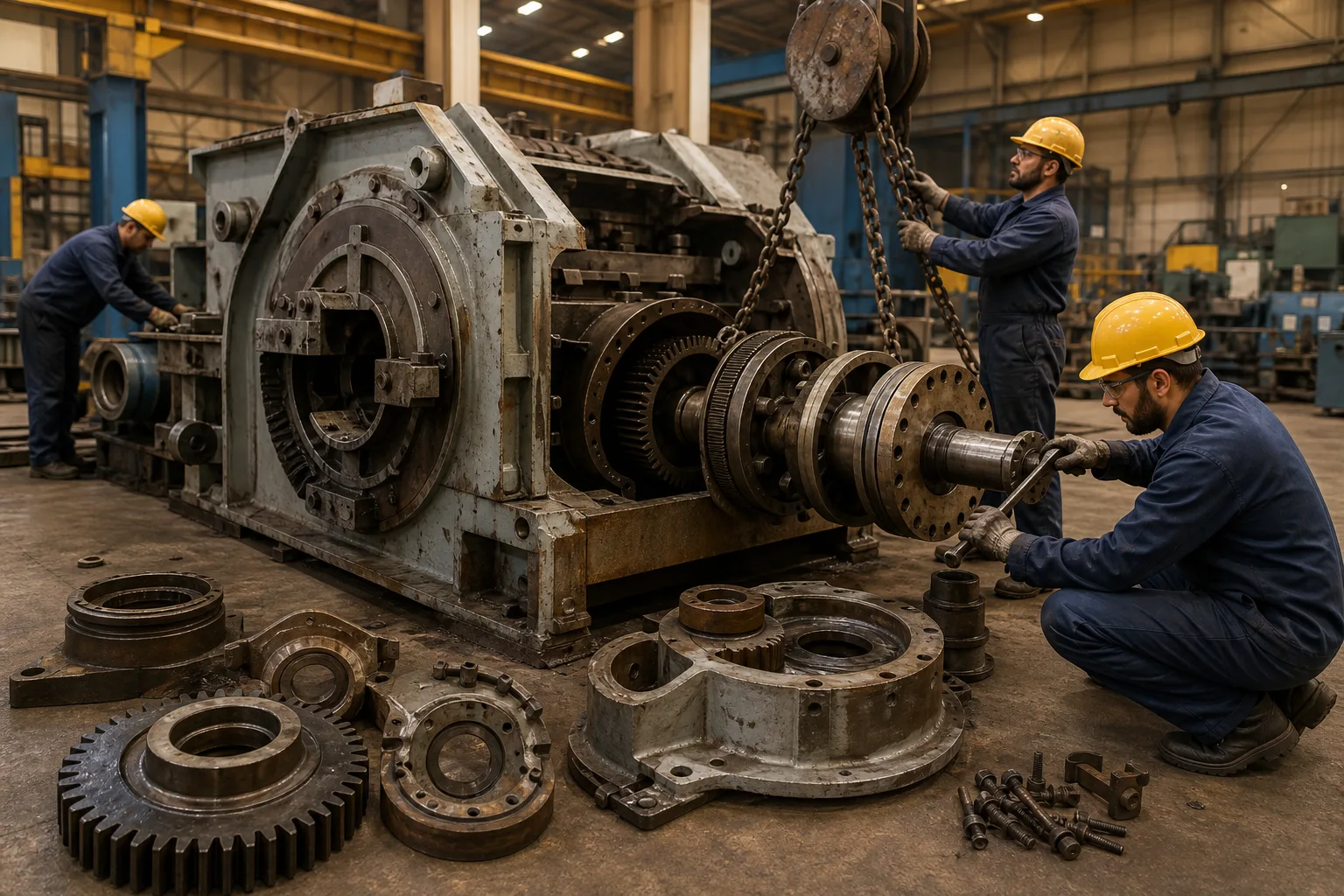
Activity code 3320.04 — Dismantling Large-Scale Machinery and Equipment — permits the systematic breakdown of industrial plant, heavy equipment, and large-scale mechanical assets. This covers on-site disassembly, component separation, safe decommissioning of hazardous systems, and preparation of recovered materials for resale or disposal.
It sits within the broader repair and installation of machinery classification under ISIC division 33. Operators may also offer asset valuation and inventory services as part of a decommissioning contract, making it a versatile activity code for full-service industrial decommissioning businesses.
Who are the typical customers for a machinery dismantling business in Dubai
The core customer base spans several industrial sectors. Primary clients include construction contractors retiring plant at project completion, oil and gas operators decommissioning upstream and downstream equipment, and manufacturing facilities upgrading or replacing production lines.
Government-linked infrastructure bodies managing asset lifecycles also represent a significant and recurring customer segment. Contracts tend to be project-based, ranging from single-machine disassembly to full facility clearances that can span several months.
How does the revenue model work for a machinery dismantling business
Revenue is typically structured across three distinct streams. The first is the service fee charged directly for the dismantling work itself. The second is income from resale of recovered functional components to buyers in the second-hand parts market.
The third stream is the commodity value of scrap materials, priced by weight and grade, covering both ferrous and non-ferrous metals. Operators who build strong buyer networks for recovered parts can substantially improve overall margins compared to businesses relying solely on service fees.
Can a foreign national own 100% of a machinery dismantling company in Dubai
Yes. 100% foreign ownership is available for this activity under UAE free zone regulations, including through Meydan Free Zone. This means international entrepreneurs and investors can establish and fully own a machinery dismantling business without requiring a local Emirati partner or sponsor.
This ownership structure is one of the key advantages of licensing through a free zone, and it applies directly to activity code 3320.04 as confirmed by the UAE Government Portal.
Why is Dubai a strong market for machinery dismantling services
Dubai's construction and industrial pipeline creates continuous demand for professional decommissioning. The UAE construction sector is projected to grow at a compound annual rate through 2028, underpinned by Vision 2031 infrastructure targets, which generates ongoing asset turnover as older equipment reaches end-of-life.
Additionally, the UAE Net Zero 2050 sustainability strategy is shifting procurement preference toward structured dismantling and material recovery over straightforward demolition, increasing demand for compliant, professional operators rather than informal alternatives.
What role does Dubai's logistics infrastructure play in this business
Dubai's logistics network, anchored by DP World's Jebel Ali operations, provides direct export access for recovered components and scrap materials. Key destination markets include South Asia, East Africa, and the wider Middle East, where demand for second-hand industrial parts and scrap metal is strong.
This export connectivity means dismantling operators are not limited to the local resale market. The ability to move recovered materials efficiently to international buyers significantly expands the addressable market and supports stronger pricing for recovered assets.
What is the broader market opportunity driving demand right now
The UAE's ageing industrial asset base is a key demand driver. First-generation facilities installed during the 2000s and 2010s are now reaching replacement cycles, creating a wave of decommissioning requirements across manufacturing, energy, and infrastructure sectors.
Dubai alone hosts hundreds of active industrial and manufacturing facilities generating ongoing decommissioning demand, according to the Dubai Statistics Center. The combination of asset replacement cycles, sustainability-driven procurement, and infrastructure growth makes the current period a particularly strong entry point for new operators.
What makes machinery dismantling a high-barrier, defensible business in Dubai
The activity is described as asset-heavy with real barriers to entry. Operators must navigate a regulated compliance landscape covering hazardous system decommissioning, waste handling, and environmental standards — requirements that filter out informal or undercapitalised competitors.
The need for specialist equipment, trained personnel, and established buyer networks for recovered components and scrap further raises the bar. For operators who invest in building these capabilities and relationships, the combination of strong margins across multiple revenue streams and limited qualified competition creates a defensible market position.
How to Start a Machinery Dismantling Business in Dubai
Machines wear out. When a factory upgrades a production line or a project finishes and the plant comes off site, somebody has to take the old kit apart properly, make the dangerous parts safe, and sort what is left into things worth selling and things worth scrapping. That is a business, and in Dubai it is a busy one.
This guide covers what activity code 3320.04 lets you do, who pays for the work, how the money actually comes in, and how to get licensed through Meydan Free Zone. It is a heavy trade with real barriers to entry, which is good news once you are past them.
Key Stats at a Glance
| Activity code | 3320.04 |
|---|---|
| What it covers | Dismantling large-scale machinery and heavy plant, on site and in stages |
| Where it sits | Repair and installation of machinery, ISIC division 33 |
| Revenue streams | Service fee, resale of recovered parts, and scrap value by weight and grade |
| Construction outlook | UAE construction set to grow at a compound annual rate through 2028 under Vision 2031 – IMARC Group |
| Local demand base | Dubai hosts hundreds of active industrial and manufacturing facilities – Dubai Statistics Center |
| Export routes | Scrap and recovered parts move to South Asia, East Africa and the wider Middle East – DP World |
| Sustainability driver | UAE Net Zero 2050 favours structured dismantling over plain demolition |
| Corporate tax | No corporate tax on qualifying income under the UAE 9% framework |
| Foreign ownership | 100% under UAE free zone rules – Ministry of Economy and Tourism, Establishing companies |
What This License Covers

Activity code 3320.04, dismantling large-scale machinery and equipment, lets you break down industrial plant, heavy machines and large mechanical assets in an orderly way. That means on-site disassembly, separating components, making pressurised or chemically exposed systems safe, and preparing what you recover for resale or for certified disposal. It sits inside the wider repair and installation of machinery group under ISIC division 33.
You can also sell asset valuation and inventory work as part of a decommissioning contract. That is worth knowing, because it turns a labour job into a full service and it gets you into the client's planning before the tender is written.
Who Your Clients Will Be
Your buyers are the people who own ageing plant and have to do something about it.
- Construction contractors retiring machines at the end of a project
- Oil and gas operators decommissioning upstream and downstream kit
- Manufacturing plants upgrading or replacing production lines
- Government-linked infrastructure bodies managing asset lifecycles
Contracts run from a single machine to a full facility clearance that takes months. Money arrives on three tracks: the service fee for the work itself, the resale price of functional parts you recover, and the commodity value of the scrap, priced by weight and grade across ferrous and non-ferrous metals.
That third track is where operators separate themselves. Anyone can charge a day rate. Someone with a real buyer network for recovered parts makes far more from the same job.
Mainland or Free Zone
| Factor | Mainland (DET) | Free Zone (Meydan Free Zone) |
|---|---|---|
| Working on mainland client sites | Covered by the license | Needs a service agreement through a mainland entity or a dual-license structure |
| Foreign ownership | Set by DET rules for the activity | 100% yours |
| Legal structure | Set by DET | FZE for a sole founder, FZC for two or more shareholders |
| Health and safety rules | Apply | Apply |
| Setup route | Apply through DET | Apply online, no need to be in Dubai |
This is the one decision worth slowing down for. Most dismantling work happens on mainland client sites, and a free zone license on its own does not cover that. You will need either a service agreement routed through a mainland entity or a dual-license structure. Let your buyers decide it, not the price, and settle your intended client base before you pick a jurisdiction.
[blockCTACostCalculator]
Step by Step Setup Guide
- Step 1, confirm the activity and your structure: Check that 3320.04 matches what you plan to do. A Free Zone Establishment suits a sole founder, a Free Zone Company covers two or more shareholders.
- Step 2, book your trade name: Submit two or three options. Names must follow UAE conventions, so nothing offensive and no reference to outside governments or religious bodies without approval.
- Step 3, send in your setup documents: Passport copies, the completed application forms, and a business plan summary if one is asked for. The Meydan Free Zone team will confirm what your nationality and structure need.
- Step 4, get your trade license: Once documents are approved the license is issued. Site-specific work may need further permits from the relevant Dubai authority depending on the job.
- Step 5, open a corporate bank account: Banks want a valid license, shareholder documents and a clear description of the activity. Meydan Free Zone can introduce you to partners who know industrial clients.
- Step 6, arrange your visa allocation: Your package sets the number of employment visas. Plan headcount early, because skilled dismantling labour needs specific visa categories and proof of qualification.
Setup can be completed remotely, which matters if you are moving machines or a team into the country before you arrive yourself.
Compliance and What You Need in Place
Where you are allowed to work
A free zone license gives you full ownership and a simple setup, but the work happens on the client's site. Sort the mainland route, whether that is a service agreement or a dual license, before you sign a contract you cannot legally perform.
Health, safety and environment
This is not negotiable in this trade. The work involves heavy lifting, pressurised systems, electrical disconnection and sometimes hazardous materials. You must meet UAE federal rules on occupational health and safety, and local municipalities may want their own approvals depending on the site and the asset.
Staff and MOHRE
Workforce matters sit with the Ministry of Human Resources and Emiratisation. Skilled dismantling technicians fall under particular labour categories, and Emiratisation duties apply once you scale headcount past the relevant level.
Insurance and bonding
Large construction and energy clients will ask for insurance and performance bonding as standard. Build both into your cost model at the start rather than discovering them halfway through a tender.
Market Opportunity
The demand here is structural. First-generation industrial facilities installed across the UAE during the 2000s and 2010s are reaching their replacement cycles, which produces a steady wave of decommissioning work across manufacturing, energy and infrastructure. Dubai alone hosts hundreds of active industrial and manufacturing facilities, according to the Dubai Statistics Center, and UAE construction is set to grow at a compound annual rate through 2028 under Vision 2031 targets. More building means more asset turnover behind it.
Policy is pushing the same way. The UAE Net Zero 2050 strategy is moving procurement preference towards structured dismantling and material recovery rather than plain demolition, which favours compliant operators over informal ones. On the sales side, Dubai's logistics network, anchored by DP World's Jebel Ali operations, gives you direct export access for recovered parts and scrap into South Asia, East Africa and the wider Middle East, where second-hand industrial parts sell well. You are not stuck with whatever the local market will pay.
Conclusion
Machinery dismantling suits people who already know industrial work, own or can hire the right kit, and are willing to take compliance seriously. The demand does not swing with sentiment. It comes from infrastructure turnover, sustainability rules and a growing base of ageing assets across the region.
Meydan Free Zone gives you a direct, low-cost path to a license with full foreign ownership and a setup you can complete without being in the country. Sort your mainland working route, your safety regime and your buyer network for recovered parts, and the rest is execution.
[blockCTAContact]