Table of Contents
Frequently Asked Questions
What services are covered under Dubai activity code 9602.91 for makeup and henna businesses
Activity code 9602.91 — Makeup, Hairdressing and Henna Services — covers a broad range of personal beauty services delivered to individual clients. This includes bridal makeup, event and editorial makeup, hairdressing and styling, and henna application for both traditional and contemporary purposes.
The licence does not extend to clinical or medical aesthetic treatments. Procedures such as injectables, laser treatments, chemical peels, or any service involving breaking the skin fall under separate medical licensing requirements regulated by the Dubai Health Authority (DHA).
Who are the typical customers for a makeup and henna services business in Dubai
The customer base for this type of business in Dubai is genuinely diverse, reflecting the city's multicultural population and status as a global tourism hub. Key segments include:
- UAE residents preparing for weddings and social occasions
- Tourists seeking cultural experiences such as henna application
- Corporate clients booking services for brand events and productions
- Film and media productions requiring on-set beauty work
Each segment carries different pricing expectations and booking patterns, giving operators flexibility in how they structure and diversify their revenue streams.
What business models are available for a makeup and henna services operator in Dubai
Operators have several viable business model options depending on their budget, target market, and preferred way of working. A studio-based operation offers a fixed location with walk-in or appointment-based revenue, while a mobile or on-location model keeps overheads lower and allows practitioners to serve clients at hotels, residences, and event venues.
Beyond direct service delivery, additional revenue streams include event contracts and corporate retainers for more predictable income, as well as product retail and training courses, which can add margin without proportionate increases in operational cost.
What role does henna play in Dubai's beauty market and why is it considered a resilient revenue stream
Henna occupies a distinct position in Dubai's beauty market because it functions simultaneously as a cultural service for Emirati and South Asian communities and as a commercial tourism product. According to Visit Dubai, henna is one of the most requested experiences among inbound visitors.
This dual demand — from both residents with deep cultural ties to the practice and tourists seeking an authentic local experience — makes henna an unusually resilient revenue stream that holds up across different seasons and economic conditions.
What are the key regulatory requirements from the Dubai Health Authority for beauty service businesses
The Dubai Health Authority (DHA) sets professional standards for beauty practitioners operating in Dubai. These requirements cover hygiene standards, premises inspections, and in some cases practitioner certification. Operators planning to run a physical salon or spa will typically need DHA approval for their facility.
Mobile operators are not exempt from compliance obligations — practitioners should still meet applicable professional standards even when working off-site. Attempting to deliver clinical treatments such as injectables or laser procedures under a standard beauty services licence is a compliance risk and is not advisable.
What is the VAT registration threshold for beauty businesses in the UAE
In the UAE, businesses are required to register for VAT once their annual taxable turnover reaches AED 375,000, as set by the Federal Tax Authority. Beauty and henna service businesses should monitor their revenue carefully as they scale, since crossing this threshold triggers mandatory registration and compliance obligations.
Voluntary registration is also available below this threshold, which can be advantageous for businesses that incur significant VAT on their own purchases and wish to reclaim input tax.
How large is the UAE beauty and personal care market and what is driving its growth
According to IMARC Group, the UAE beauty and personal care market is on a sustained growth trajectory, expanding at a compound annual rate above 6% through the mid-2020s. Demand is concentrated in premium and specialist services, with Dubai accounting for a significant share of total spend.
Growth is driven by a high-spending resident population, a thriving events industry, year-round tourism, and a cultural tradition of elaborate personal grooming. Dubai welcomed over 17 million international visitors in 2023, per Visit Dubai, providing a large and consistent base of potential customers for beauty and henna service operators.
What is the difference between a free zone licence and a mainland licence for a makeup and henna business in Dubai
Free zone licences — such as those issued by Meydan Free Zone — permit the holder to operate within the free zone and internationally. However, for operators who wish to run a direct retail salon or serve clients face-to-face on the Dubai mainland, additional approvals or a mainland trade licence structure may be required.
Choosing the right licence structure from the outset is important, as it determines where you can legally operate, who your clients can be, and what premises you can use. Operators planning both studio-based and mobile services should clarify the scope of their licence before commencing operations to avoid compliance issues.
How to Start a Makeup and Henna Services Business in Dubai
Dubai gets married, throws parties, films adverts and welcomes millions of visitors a year, and all of that needs somebody with a brush or a henna cone. It is a city with a long tradition of careful personal grooming and the money to pay for it, which makes this one of the steadier consumer trades to be in.
This guide covers what activity code 9602.91 lets you do, who your customers are, where the line sits between beauty work and medical work, and how to get licensed through Meydan Free Zone. That line is the one thing people get wrong, so it is worth reading twice.
Key Stats at a Glance
What This License Covers

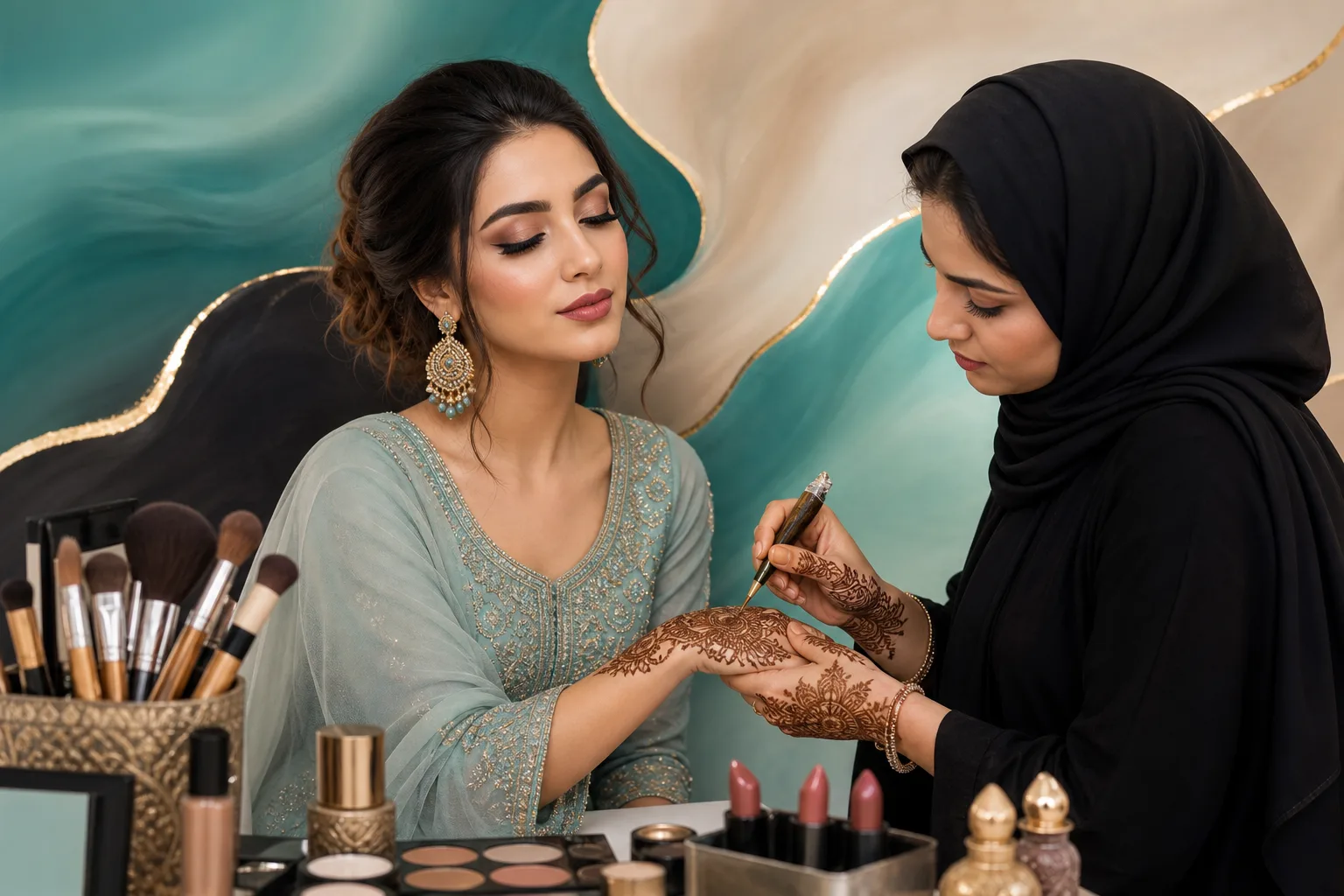
Activity code 9602.91, makeup, hairdressing and henna services, covers personal beauty services delivered to individual clients. In practice that is bridal makeup, event and editorial makeup, hairdressing and styling, and henna application for both traditional and modern purposes.
What it does not cover is anything clinical. Injectables, laser treatments, chemical peels and any procedure that breaks the skin fall under separate medical licensing set by the Dubai Health Authority. If you want to offer both cosmetic and clinical work you will need two license structures, and trying to deliver clinical treatments on a beauty license is a compliance problem waiting to happen.
Who Your Clients Will Be
The customer base here is unusually varied, which is a large part of why the work is steady.
- UAE residents booking for weddings and social occasions
- Tourists after a cultural experience, henna in particular
- Corporate clients booking beauty work for brand events and productions
- Film and media productions needing on-set artists
Each group books differently and pays differently, and that spread is what smooths out the quiet weeks.
How you deliver the work is a separate decision. A studio gives you a fixed address and walk-in or appointment revenue. A mobile or on-location model keeps overheads low and takes you to hotels, homes and venues, which is where most bridal and event work actually happens. Event contracts and corporate retainers give you income you can forecast. Product retail and training courses add margin without adding much cost, and they are the usual next step once the diary is full.
Mainland or Free Zone
Let your clients decide it, not the price. A free zone license permits you to operate within the free zone and internationally, and it is quick, cheap and fully yours. If the plan is a salon on a Dubai high street with walk-in customers, you will need a mainland license or a commercial agreement with a mainland entity. Work out which model you are running before you apply, because sorting it afterwards is slow.
[blockCTACostCalculator]
Step by Step Setup Guide
- Step 1, pick your activity code: Confirm 9602.91 matches the services you intend to offer. If you also plan to sell products or run training, add those activities at the same time.
- Step 2, book your trade name: The name must follow UAE conventions, so nothing offensive, no reference to political or religious bodies, and nothing already registered by somebody else.
- Step 3, send in your documents: A valid passport copy, a passport-size photograph and your application details. Onboarding is fully remote and you do not need to attend in person.
- Step 4, get your license, bank account and visas: Once the license is issued you can open a UAE corporate account and apply for investor or employee visas under your allocation.
Packages are priced for solo artists and small teams, and cost varies with the number of visas and any extra activities. Processing from a complete application to an issued license usually takes days rather than weeks.
Compliance and What You Need in Place
Dubai Health Authority standards
The DHA sets professional standards for beauty practitioners in Dubai, covering hygiene, premises inspection and in some cases practitioner certification. If you run a physical salon or spa you will normally need DHA approval for the facility. Mobile operators are not exempt from the standards themselves, so make sure your artists meet them wherever they are working.
The cosmetic and clinical line
This is the one that catches people out. Anything that breaks the skin is medical, not cosmetic, and it needs separate DHA licensing. Injectables, lasers and chemical peels are not add-ons you can quietly offer alongside makeup. Keep the two apart or license them properly.
VAT and books
Register for VAT with the Federal Tax Authority once taxable turnover passes AED 375,000 a year. Beauty services are standard-rated at 5%. Voluntary registration below the threshold is possible and is worth considering if you carry a lot of VAT on your own purchases and want to reclaim the input tax.
Staff and MOHRE
If you hire artists, the Ministry of Human Resources and Emiratisation governs employment contracts, visa quotas and labour compliance under your license. Get the contracts right from the first hire rather than fixing them later.
Market Opportunity
The demand here comes from three directions at once, and they do not usually go quiet together. Residents drive the wedding and social occasion trade year round. Tourists drive the experiential side, and Dubai welcomed over 17 million international visitors in 2023, with henna among the experiences they most want to pay for. Corporate and production work fills the diary in between. IMARC Group puts the UAE beauty and personal care market on a compound annual growth rate above 6% through the mid-2020s, with demand concentrated in premium and specialist services rather than the cheap end.
Henna deserves a mention on its own. It works as a cultural service for Emirati and South Asian communities and as a tourism product at the same time, which is a rare combination. Visit Dubai lists it among the most requested experiences for inbound visitors. That dual demand means the henna side of the business holds up across seasons and through softer economic periods in a way that discretionary beauty spending often does not.
Conclusion
This is a real commercial opportunity for skilled artists, not just a way to formalise freelance work. Demand runs across resident, tourist and corporate customers, the cultural weight of henna and bridal beauty keeps it from being purely discretionary, and the barrier to entry through a free zone license is low enough for one person to clear.
What matters is getting the structure right at the start: the correct activity code, clarity on where you are allowed to work, and DHA and MOHRE compliance where they apply. Sort those three and you can put your attention where it belongs, which is on the work itself.
[blockCTAContact]