
Table of Contents
Frequently Asked Questions
What is activity code 8020 and what services does it cover in Dubai
Activity code 8020 — Security Systems Service Activities is the official classification for businesses that install, operate, monitor, and maintain electronic security systems in Dubai. It is a well-defined commercial category with consistent B2B demand across multiple industries.
Under this code, your business can legally offer services including CCTV system design and installation, access control infrastructure, intruder alarm systems, fire detection integration, and remote monitoring operations. Systems integration — connecting multiple security technologies into a unified platform — is an increasingly high-margin area within this activity.
Do I need SIRA approval to operate a security systems business in Dubai
Yes. The Security Industry Regulatory Agency (SIRA), which operates under Dubai Police, governs all security-related activities in the emirate. Any company providing security systems services — especially those involving monitoring or guarding elements — must obtain the relevant SIRA approvals in addition to a standard trade licence.
Dubai Police approval is mandatory and involves background checks, documentation of technical competence, and in some cases requirements around staffing qualifications. This process runs parallel to, not after, your commercial setup, so it is important to plan for it early in your business formation timeline.
How fast is the security systems market growing in the UAE and Middle East
The Middle East physical security market is growing at a compound annual growth rate (CAGR) exceeding 8%, according to IMARC Group. This growth is driven by large-scale construction activity, hospitality sector expansion, and government-mandated safety standards across the region.
Dubai and the UAE account for a disproportionately large share of regional spending, given the density of commercial real estate, tourism infrastructure, and logistics hubs. The UAE is ranked among the top three markets for security technology adoption in the entire MENA region, making it one of the most commercially attractive environments for this business activity.
What are the main revenue streams for a security systems business in Dubai
Revenue in this sector typically flows from three distinct streams: one-off installation contracts, annual maintenance agreements, and monthly monitoring subscriptions. The combination of project-based and recurring income is one of the key reasons this business model is commercially attractive.
The recurring revenue element is particularly valuable — a modest installed base of clients on maintenance or monitoring contracts generates consistent cash flow without requiring continuous business development effort. This predictability makes the model appealing from both an operational and investment standpoint.
Who are the typical customers for a security systems services business in Dubai
The customer base for activity code 8020 businesses is almost entirely B2B. Key verticals include real estate developers, hospitality groups, retail chains, logistics operators, and government facilities — all of which require ongoing security infrastructure and periodic upgrades.
Many clients engage on long-term maintenance and monitoring contracts, creating predictable recurring revenue. There is also a significant subcontracting opportunity, as large construction firms and facilities management companies routinely outsource security systems work to specialist providers. Building a subcontracting pipeline alongside a direct client base is a practical early-stage strategy in Dubai's market.
Should I set up my security systems business in a Dubai free zone or on the mainland
The choice between a free zone and mainland setup depends on your ownership preferences, client base, and operational needs. A Meydan Free Zone licence offers 100% foreign ownership, no restrictions on currency repatriation, and a straightforward incorporation process — making it an attractive option for international entrepreneurs.
However, because security systems businesses must also obtain SIRA approval and Dubai Police clearance, it is important to confirm that your chosen jurisdiction and licence structure is compatible with those regulatory requirements. Both free zone and mainland entities can pursue SIRA approval, but the specific conditions may vary, so early legal guidance is advisable.
What is the VAT registration threshold for a security systems business in Dubai
In the UAE, businesses are required to register for VAT once their annual taxable turnover reaches AED 375,000, as set by the Federal Tax Authority. For a growing security systems business with installation contracts and recurring maintenance income, this threshold can be reached relatively quickly.
It is advisable to set up proper accounting systems from the outset and monitor turnover carefully. Voluntary VAT registration is also available below the mandatory threshold, which can be beneficial if you are working with VAT-registered B2B clients who need to reclaim input tax.
How competitive is the security systems sector in Dubai and how can a new business position itself
Dubai is home to over 3,000 registered security-related businesses according to the Dubai Statistics Center, indicating a well-established but active market. Competition exists, but demand is sustained by continuous construction activity, Expo legacy infrastructure, and smart city initiatives that keep generating new project opportunities.
New entrants can position effectively by specialising in systems integration — connecting disparate security technologies into unified platforms — where margins are stronger and expertise is more differentiated. Starting as a reliable subcontractor to larger construction and facilities management firms is also a proven way to build a track record, cash flow, and direct client relationships simultaneously.
How to Start a Security Systems Services Business in Dubai
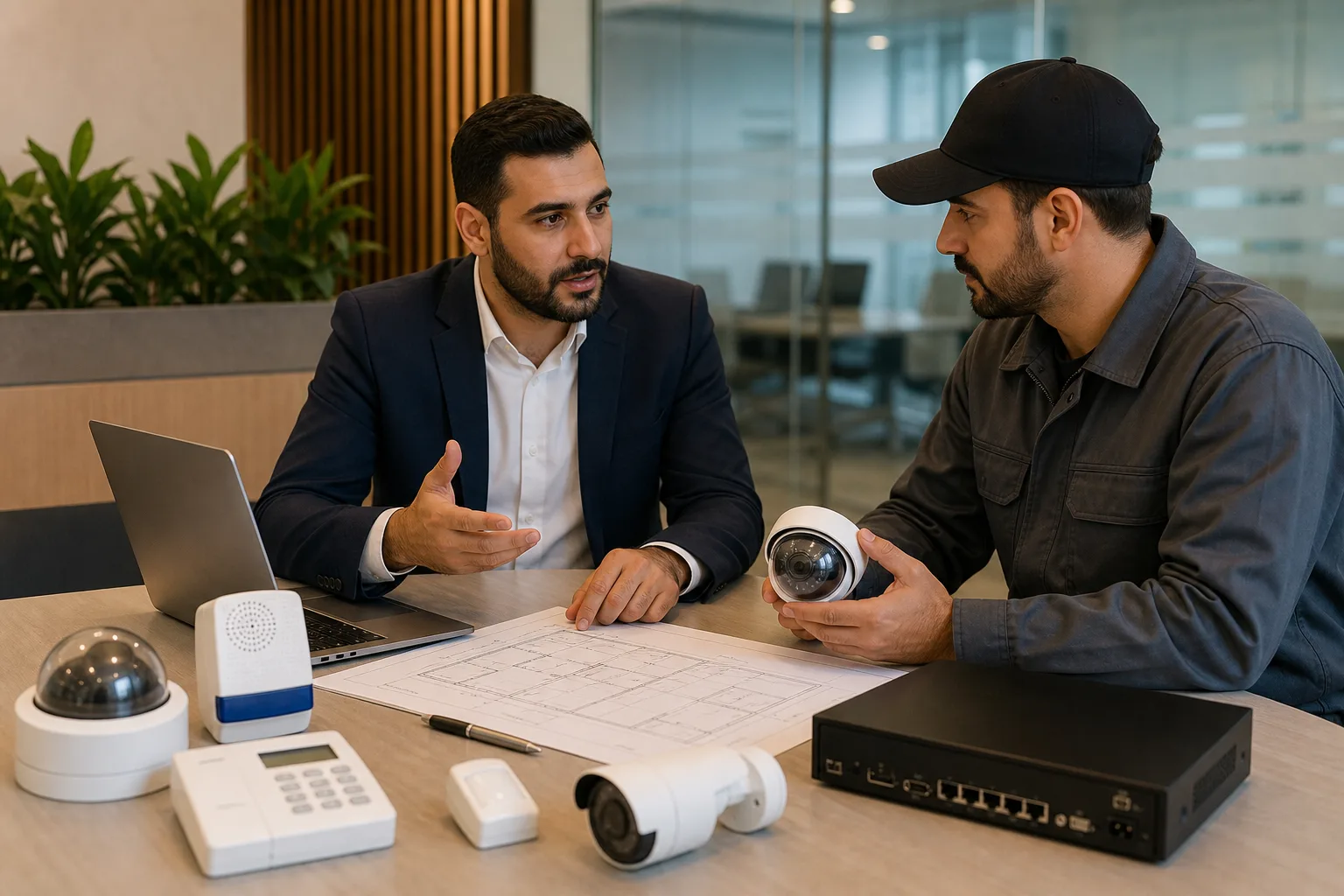
Cameras, card readers and alarm panels are only useful if somebody watches them, services them and fixes them when they fail. That ongoing work is a separate business from selling the hardware, and in Dubai it has its own activity code and its own approvals.
This guide covers what code 8020 lets you do, who pays for it, how to set up your license through Meydan Free Zone, and the Dubai Police and SIRA side that runs alongside. Start the approvals early. They do not wait until your company exists.
Key Stats at a Glance
What This License Covers

Activity code 8020, Security Systems Service Activities, covers installing, operating, monitoring and maintaining electronic security systems.
The active parts of that in commercial terms are CCTV design and installation, access control infrastructure, intruder alarm systems, fire detection integration and remote monitoring. Systems integration, meaning tying several security technologies into one platform that actually talks to itself, is increasingly where the margin sits. It is harder to do and fewer firms do it well.
Who Your Clients Will Be
The customer base is almost entirely business-to-business, and most of these buyers need the same work again next year.
- Real estate developers
- Hospitality groups
- Retail chains
- Logistics operators
- Government facilities
Money arrives in three streams. One-off installation contracts pay upfront. Annual maintenance agreements pay on a cycle. Monthly monitoring subscriptions pay every month whether anything happens or not. That third stream is what makes this model attractive, because a modest installed base of clients gives you steady cash without constant selling.
There is also a real subcontracting opening. Large construction firms and facilities management companies routinely hand security systems work to specialists rather than staffing it in-house. Working as a reliable subcontractor while you build a direct client list is a sensible way to start here, because it gives you a track record, cash flow and client relationships at the same time.
Mainland or Free Zone
A Meydan Free Zone license gives you full ownership, no currency restrictions and a simple company shape. For B2B work with developers, hotels and retailers, that structure does the job well. If your plan depends on direct government contracts or a physical presence across several Emirates, a mainland license from the Department of Economy and Tourism is worth weighing alongside it. Let your clients decide it, not the price.
[blockCTACostCalculator]
Step by Step Setup Guide
- Step 1, confirm your activity and trade name: Pick activity code 8020 and check your preferred name is free. It must follow UAE naming conventions, so no offensive terms and no references to external governments.
- Step 2, send in your setup documents: A valid passport copy, a recent photograph and your UAE visa status. A business plan may be asked for depending on how wide your scope is. This can all be done remotely.
- Step 3, take your Meydan Free Zone trade license: Once your documents are reviewed and approved, the license is issued with the security systems activity listed on it. That is your legal authority to trade.
- Step 4, open a corporate bank account: UAE banks want a valid trade license, an Emirates ID or visa in process, and often a business plan for a new company. Allow 4 to 8 weeks for the account to go live. Some founders run a multi-currency account in the meantime.
- Step 5, apply for Dubai Police and SIRA approvals: After the license, apply to the security regulators. This step decides what services you can legally provide and to whom.
Meydan Free Zone also offers flexi-desk arrangements with visa allocations tied to your license, which suits a lean operation. The setup can be completed remotely, which helps if you are still finalising your move.
Compliance and What You Need in Place
SIRA
The Security Industry Regulatory Agency operates under Dubai Police and governs security activities in the emirate. Any company providing security systems services, and monitoring or guarding work in particular, needs the relevant SIRA approvals on top of a standard trade license.
Dubai Police approval
This is not a formality. It involves background checks, documents proving technical competence, and in some cases rules about how your staff are qualified. Plan for it early, because it runs parallel to your commercial setup rather than following it. Treating it as a step for later is the most common way founders in this sector lose a quarter.
VAT
Register once annual taxable turnover passes AED 375,000. Security system installation and maintenance are standard-rated at 5%, so build that into your quoting from the first proposal rather than absorbing it later.
Getting the sequence right
The order matters more here than in most activities. Your trade license comes first, then your bank account, then your security approvals. Each one depends on the last, and skipping ahead simply means waiting. Map the whole sequence before you start so you are not paying rent on a company that cannot legally take a contract yet.
Market Opportunity
Dubai's urban expansion, its infrastructure projects and its government-mandated safety standards have made security systems one of the UAE's steadiest service sectors. Smart city rollouts and Expo legacy infrastructure keep generating new work.
IMARC Group puts the Middle East security systems market on a compound annual growth rate above 8%, driven by large-scale construction, hospitality expansion and government safety mandates. The UAE, and Dubai in particular, takes a disproportionate share of that regional spend given the density of commercial real estate, tourism infrastructure and logistics hubs. The UAE ranks among the top three MENA markets for security technology adoption.
Competition is real. Dubai Statistics Center records over 3,000 registered security-related businesses in the emirate. But demand keeps pace, and new entrants can carve out room by specialising in systems integration where margins are better and fewer firms have the skills. The Invest in Dubai portal carries current guidance on sector rules if you want to check the detail.
Conclusion
Security systems services in Dubai sit where regulation and commercial growth meet. The demand is structural, driven by construction volumes, smart city mandates and the expansion of hospitality and logistics. The licensing route through Meydan Free Zone is simple.
The sector-specific approvals from Dubai Police and SIRA are the part that needs planning, not the part that needs worrying about. Get the sequencing right from the start and you are in a market with strong recurring revenue and a deep, varied B2B customer base.
[blockCTAContact]