Table of Contents
Frequently Asked Questions
What is activity code 4773.61 and what products does it cover
Activity code 4773.61 refers to Agricultural Equipment & Accessories Trading, a formally defined business activity in Dubai's licensing framework. It covers a broad range of machinery and supporting products used in commercial farming operations.
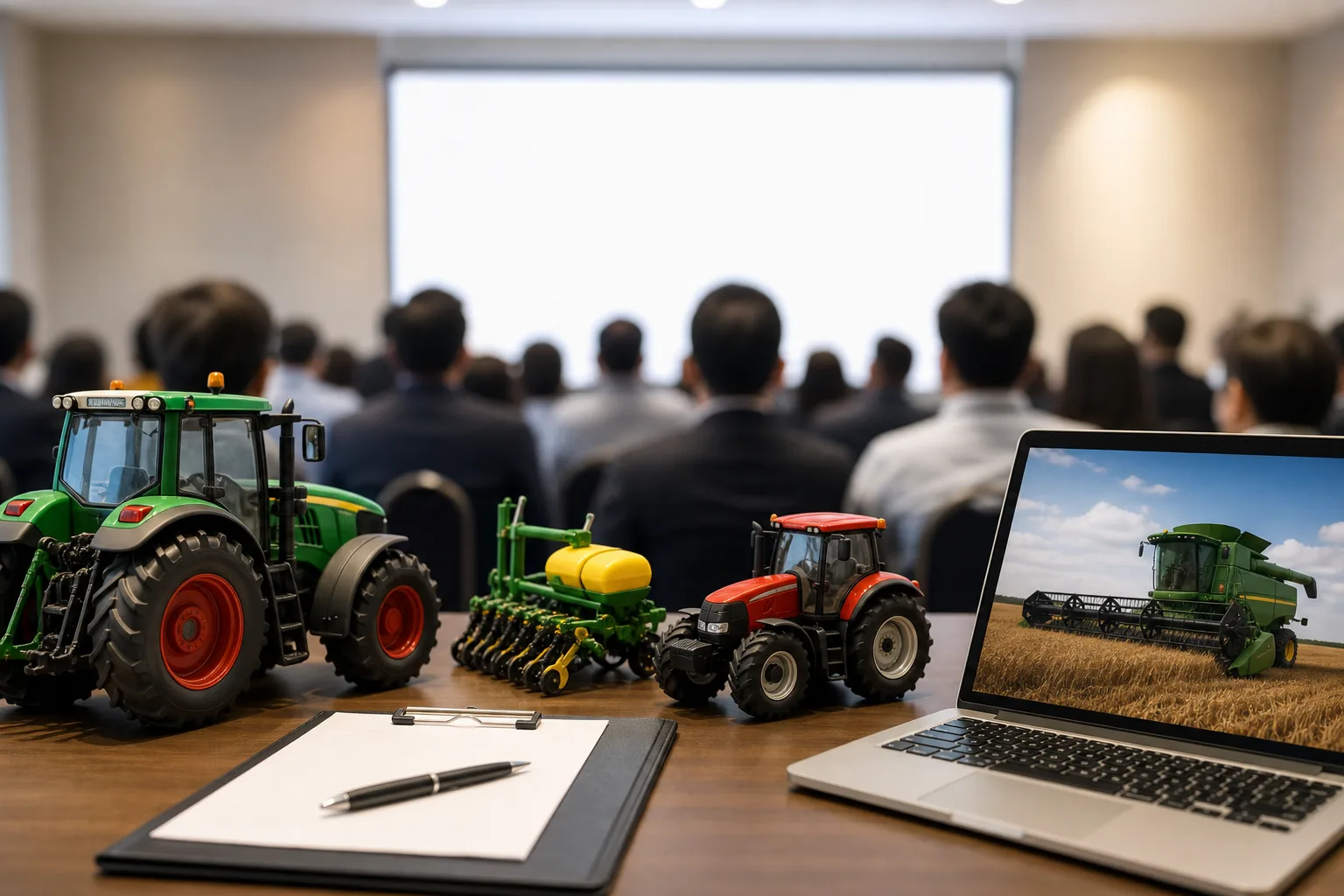
Specific products under this code include tractors, combine harvesters, soil preparation machinery, seeding and planting equipment, irrigation systems, and crop protection machinery. The code also extends to accessories and spare parts that support these assets in the field.
This scope makes it suitable for businesses supplying both large capital equipment and the recurring consumable and replacement parts market, which often provides more predictable revenue alongside major equipment sales.
Why is Dubai considered a strategic base for agricultural equipment trading
Dubai occupies a central position in a regional agri-equipment supply chain that serves markets stretching from East Africa to South Asia. Its role as a re-export and distribution hub allows traders to reach MENA, Sub-Saharan Africa, and South Asian agricultural markets faster and more cost-effectively than from most other jurisdictions.
A key infrastructure advantage is Jebel Ali port, operated by DP World, which is the largest port in the Middle East. It handles over 14 million TEUs annually and connects Dubai to more than 140 ports worldwide, enabling shorter lead times and lower freight costs for equipment traders.
UAE re-exports account for a significant share of total national trade, reflecting the country's established role as a distribution base for capital equipment destined for regional end markets.
Who are the typical customers for an agricultural equipment trading business based in Dubai
The customer base for this activity is predominantly business-to-business (B2B). There is no meaningful retail or end-consumer complexity in this trading model, which keeps commercial structures straightforward and transaction sizes large.
Typical buyers include agri-businesses operating large-scale farms across the GCC and Africa, government agricultural projects procuring equipment through formal tender processes, regional distributors sourcing inventory for onward sale, and contractors supplying turnkey farming infrastructure.
Transactions are generally bulk, contract-based, or tender-driven, meaning the business model relies on institutional relationships and procurement cycles rather than high-frequency retail sales.
What is driving demand for agricultural equipment across the Middle East and Africa region
The primary demand driver is regional food security policy. GCC governments have committed substantial capital to mechanised farming, irrigation infrastructure, and agricultural modernisation programmes, particularly since 2020. That policy spend translates directly into procurement demand for the product categories covered by activity code 4773.61.
Research from IMARC Group identifies the Middle East and Africa agricultural equipment market as being on a sustained growth trajectory, underpinned by government-backed food security initiatives and expanding commercial farming operations. Mordor Intelligence similarly identifies the region as one of the faster-growing segments globally for agri-machinery trade.
Expanding commercial farming operations across Sub-Saharan Africa and South Asia add further structural demand beyond government procurement, broadening the addressable market for Dubai-based traders.
Should an agricultural equipment trading business set up in a Dubai free zone or on the mainland
The choice between free zone and mainland depends primarily on where the business intends to sell. For a business focused on re-export and regional distribution rather than direct UAE domestic sales, a free zone structure is typically the more efficient option.
A Meydan Free Zone licence, for example, provides 100% foreign ownership, zero corporate tax on qualifying income, and full repatriation of profits. The trade-off is that direct sales into the UAE domestic market require either a local distributor arrangement or a separate mainland entity.
For most agricultural equipment traders whose end customers are in the GCC, Africa, or South Asia, the restriction on direct UAE domestic sales is rarely a practical constraint. Businesses expecting significant UAE-based revenue should factor the cost and structure of a mainland entity or distributor arrangement into their planning.
Are there any special permits or certifications required to trade agricultural equipment in Dubai
For the trading function itself, no sector-specific permit, product registration, or technical certification is required under activity code 4773.61. A standard trading licence covers the activity in full.
This distinguishes agricultural equipment from more heavily regulated categories such as chemicals or food products, which carry additional regulatory layers including product registration and import approvals from sector-specific authorities.
Import and export compliance sits with Dubai Customs and the Ports, Customs and Free Zone Corporation (PCFC). Agricultural machinery is not classified as a restricted or controlled category, so standard import procedures and documentation requirements apply without the need for special ministerial approvals.
What role does Jebel Ali port play for agricultural equipment traders in Dubai
Jebel Ali, operated by DP World, is the largest port in the Middle East and a critical piece of infrastructure for any trader using Dubai as a distribution hub. It handles over 14 million TEUs annually and maintains connections to more than 140 ports worldwide.
For agricultural equipment traders, this translates into practical commercial advantages: shorter lead times, lower freight costs, and reliable onward distribution to end markets across East Africa, South Asia, and the broader MENA region. The port's scale and efficiency are central to why Dubai can serve as a cost-competitive re-export base for bulky capital equipment.
The port's infrastructure also supports high-volume shipments, which aligns well with the bulk and contract-based nature of B2B agricultural equipment transactions.
What types of government programmes are generating procurement demand for agricultural machinery in the GCC
GCC governments have committed billions of dollars to agricultural modernisation programmes since 2020, driven by food security strategies that aim to reduce dependence on imported food commodities. These programmes span mechanised farming, large-scale irrigation infrastructure, and the development of commercial agricultural zones.
Procurement under these programmes typically flows through formal government tender processes, making institutional buyers one of the most significant customer segments for Dubai-based agricultural equipment traders. Winning or supplying into these tenders often requires established relationships with regional distributors or direct government procurement contacts.
Beyond the GCC, expanding commercial farming operations across Sub-Saharan Africa — many supported by development finance and bilateral agricultural agreements — create additional demand corridors that Dubai traders are well-positioned to serve given the city's logistics connectivity to African ports.
How to Start an Agricultural Equipment Trading Business in Dubai
Dubai sits in the middle of a farm equipment supply chain running from East Africa to South Asia, and the demand is picking up.
Part of that is policy. Gulf governments have put serious money into mechanised farming, irrigation and agricultural modernisation as part of food security plans. That spending turns straight into orders for tractors, irrigation kit and harvesting machinery.
This guide covers activity code 4773.61, Agricultural Equipment and Accessories Trading. You will learn what you can sell, who buys it, what the rules ask, and how to set up with Meydan Free Zone.
Key Stats at a Glance
| What to know | The detail |
|---|---|
| Market growth | The Middle East and Africa agri-equipment market keeps growing year on year, pushed by food security policy. Figures from IMARC Group. |
| Regional standing | Mordor Intelligence puts the region among the faster growing parts of the world for farm machinery trade. |
| Port reach | Jebel Ali handles over 14 million TEUs a year and connects Dubai to more than 140 ports worldwide. Source: DP World. |
| Re-export role | Re-exports make up a big share of total UAE trade, which is what makes it a natural base for moving capital equipment. |
| Government spending | Gulf governments have committed billions to agricultural modernisation programmes since 2020. |
What You Can Sell

Activity code 4773.61 has a clear product scope.
Big machinery. Tractors, combine harvesters, soil preparation machinery, seeding and planting equipment.
Systems. Irrigation setups and crop protection machinery.
The follow-on business. Accessories and spare parts that keep all of the above running in the field.
That last group matters more than it looks. Big equipment sales are lumpy and occasional. Parts and consumables come round again and again, which smooths out your income between the large orders.
Who Buys From You
This is a business to business trade with no real retail side, which keeps things simple and the deal sizes large.
Agri-businesses. Large scale farms across the Gulf and Africa.
Government projects. Agricultural programmes buying through formal tender processes.
Regional distributors. Buying stock to sell on in their own markets.
Contractors. Firms delivering complete farming infrastructure.
Deals here are bulk, contract based or tender driven. That means the business runs on institutional relationships and buying cycles rather than lots of small sales.
Why Dubai Works for This
The port. Jebel Ali is the largest port in the Middle East. For a trader shifting bulky machinery, that means shorter lead times, lower freight costs and reliable onward delivery to end markets.
The reach. From here you can serve MENA, Sub-Saharan Africa and South Asia faster and more cheaply than from almost anywhere else.
The demand. Gulf food security programmes drive government tenders, and commercial farming is expanding across Sub-Saharan Africa and South Asia on top of that. Much of the African growth is backed by development finance and bilateral agreements, which makes it steadier than ordinary market demand.
[blockCTACostCalculator]
What the Rules Ask of You
Good news first: no sector permit, product registration or technical certification is needed for the trading itself. A standard trading license covers it. That sets this apart from categories like chemicals or food, which carry extra approval layers.
Free zone or mainland. A Meydan Free Zone license gives you 100% foreign ownership, no corporate tax on qualifying income, and full repatriation of profits. The trade-off is that selling directly into the UAE domestic market needs a local distributor or a separate mainland company. If your buyers are in the Gulf, Africa or South Asia, that limit rarely bites.
Customs. Import and export sits with Dubai Customs and the Ports, Customs and Free Zone Corporation. Farm machinery is not a restricted category, so standard procedures apply and the duty rates and paperwork are well settled for this product type.
VAT. Register with the Federal Tax Authority once taxable turnover passes AED 375,000 a year. Exports are usually zero rated, which matters if most of your business is re-export.
How to Set Up with Meydan Free Zone, Step by Step
Most people can complete this remotely.
- Step 1, activity and name: Select code 4773.61 and check your preferred company name is available and follows UAE naming rules.
- Step 2, get your papers ready: Passport copies for all shareholders and directors, a short business plan summary, and the application form. No audited accounts or proof of past trading needed at this stage.
- Step 3, pick your package: A flexi-desk suits a trading operation that does not need a warehouse on site. If you plan to hold stock in Dubai, look at a bigger office or warehouse arrangement.
- Step 4, get your license: Usually three to five working days from submitting complete documents.
- Step 5, open your bank account: Banking runs on its own clock, two to four weeks. Having your license, shareholder documents and a clear business profile ready speeds it up a lot.
- Step 6, apply for your visa: Meydan Free Zone handles visas for shareholders and staff. An investor visa gives you UAE residency and is processed alongside or right after your license.
mResidency handles the visa side for you and your team. mAccounting keeps your books and VAT filings straight. mCore, mAssist and mPlus cover the wider support once you are trading.
Conclusion
Farm equipment trading out of Dubai is simple to structure and commercially sound. The activity is clearly defined under 4773.61, the logistics are excellent, and the demand is driven by government policy rather than short-term market mood.
There are no unusual regulatory hurdles, no sector permits and no ownership limits under a free zone structure.
If you are selling into Gulf, African or South Asian farm markets, Dubai gives you a mix of reach, customs efficiency and business infrastructure that is hard to match anywhere else in the region.
Talk to the Meydan Free Zone team to confirm your activity scope, get a cost estimate, and go from decision to license in days.
[blockCTAContact]
References
- IMARC Group
- Mordor Intelligence
- DP World
- Ports, Customs and Free Zone Corporation (PCFC)
- Federal Tax Authority