Table of Contents
Frequently Asked Questions
What is activity code 4773.62 and what does it permit in Dubai
Activity code 4773.62 covers Agricultural Equipment & Machinery Spare Parts Trading. It permits the wholesale and retail trading of components used in agricultural machinery and equipment, but does not extend to the manufacture of those parts.
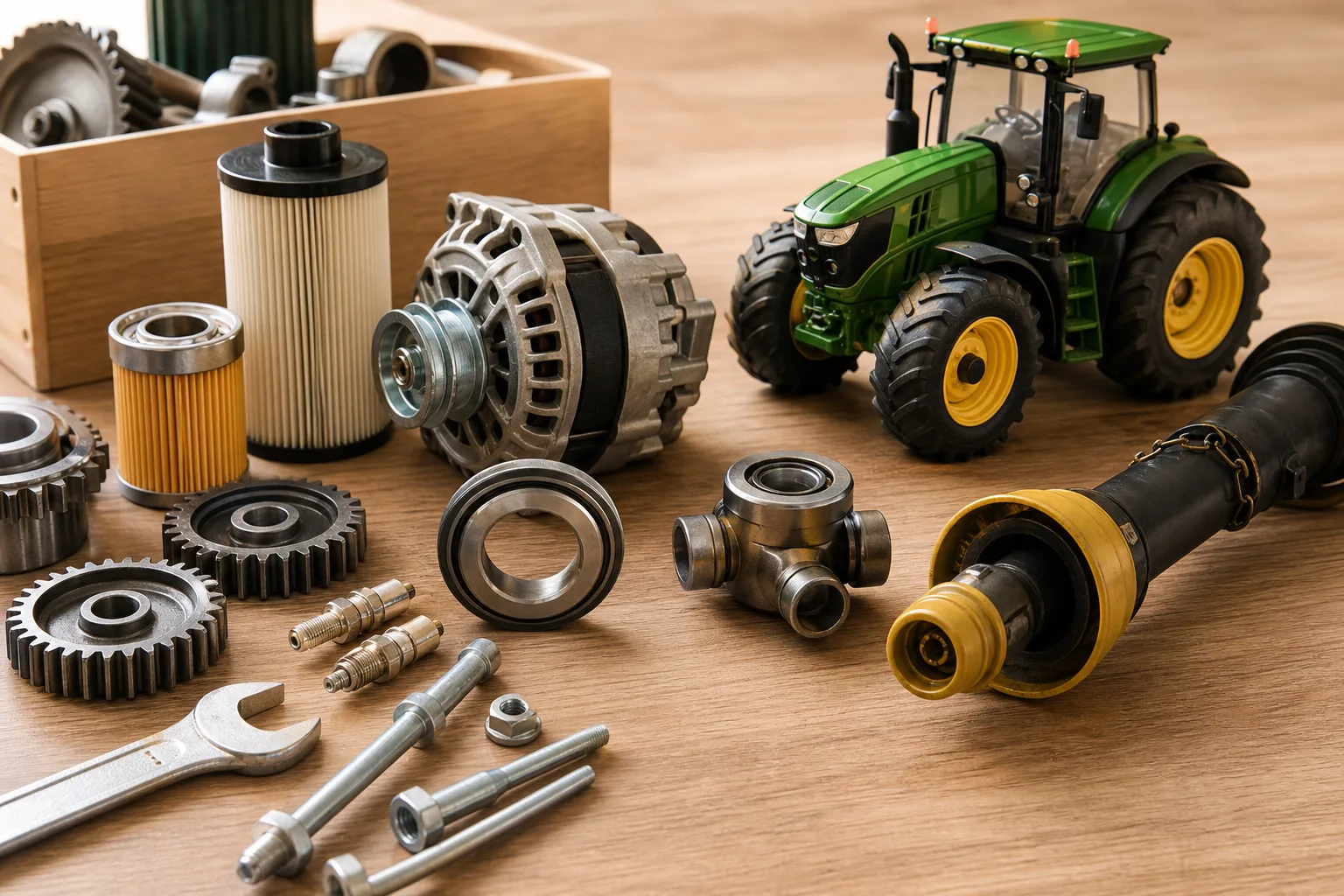
Permitted products include tractor parts, irrigation system components, harvesting machinery spares, soil preparation equipment parts, and related mechanical and hydraulic components. Most operators under this code work business-to-business, supplying agri-equipment dealers, farm operators, maintenance contractors, and government agricultural bodies.
Why is Dubai a practical base for agricultural spare parts trading
Dubai sits at the centre of a regional agricultural supply chain serving the GCC, Africa, and South Asia. Its position as a re-export hub means agricultural machinery and spare parts can flow through Dubai's port infrastructure to buyers across East Africa, South Asia, and the wider MENA region with minimal friction.
Key advantages include no import duties on goods in transit, streamlined customs clearance, and direct access to DP World's logistics network via Jebel Ali Port, which handles over 14 million TEUs annually. For a trader sourcing from China, India, or Europe and supplying multiple markets, that infrastructure is a material competitive advantage.
How do you obtain a trading licence for activity code 4773.62 through Meydan Free Zone
Meydan Free Zone issues trading licences covering activity code 4773.62. The process follows a defined sequence: name reservation, activity selection, document submission, and licence issuance.
Required documents typically include a passport copy for each shareholder and director, a completed application form, and a basic business plan if required for your chosen package. 100% foreign ownership is permitted with no requirement for a local sponsor or Emirati shareholder, making it a straightforward structure for international founders.
Additional related activities can be added to the same licence where eligible, allowing operators to broaden their trading scope without needing a separate licence.
What ownership structure applies to a Meydan Free Zone trading company
Meydan Free Zone allows 100% foreign ownership of trading companies. There is no requirement to bring in a local sponsor or Emirati shareholder, which distinguishes the free zone model from mainland UAE company structures.
This makes the free zone route particularly practical for international founders who want full control over their business without sharing equity for compliance purposes. Shareholders and directors simply need to provide passport copies as part of the standard document submission.
What is driving demand for agricultural spare parts across the Middle East and Africa
Regional food security programmes — particularly across GCC states — are accelerating investment in mechanised farming, irrigation infrastructure, and precision agriculture equipment. All of these generate sustained demand for replacement parts and consumables over the lifetime of the machinery.
According to IMARC Group, the Middle East agricultural machinery market is projected to grow steadily through 2030 as governments push domestic food production targets. Sub-Saharan Africa and South Asia represent additional high-growth corridors served by Dubai-based re-exporters.
Where do Dubai-based agricultural spare parts traders typically source their products
Sourcing for this activity tends to run through established supplier networks in China, India, Turkey, and Europe. These markets supply a broad range of OEM and aftermarket components for tractors, irrigation systems, harvesting machinery, and soil preparation equipment.
The free zone structure in Dubai enables competitive landed costs because goods in transit are not subject to import duties. Fast turnaround on customs documentation through Jebel Ali further supports high-volume sourcing and re-export operations.
What is the UAE VAT registration threshold relevant to this type of trading business
The UAE VAT registration threshold is AED 375,000 in taxable turnover, as set by the Federal Tax Authority. Businesses that exceed this threshold are required to register for VAT and comply with filing and invoicing obligations.
Traders operating through a free zone should confirm the VAT treatment applicable to their specific transaction types, particularly where goods are re-exported rather than sold into the UAE domestic market, as different rules may apply to zero-rated supplies.
Who are the typical customers for an agricultural spare parts trading business based in Dubai
The typical customer base spans agri-equipment dealers, farm operators, maintenance contractors, and government agricultural bodies procuring spares for fleet maintenance. Most transactions in this segment are business-to-business rather than retail.
Export-facing traders also supply regional distributors who service end markets in sub-Saharan Africa and South Asia. Re-export corridors into MENA and East Africa are the primary revenue routes for Dubai-based operators, with the free zone structure supporting competitive pricing and efficient documentation for cross-border shipments.
How to Start an Agricultural Spare Parts Trading Business in Dubai
Farm machinery breaks, and somebody has to supply the parts. Dubai sits in the middle of a farm supply chain that reaches the GCC, Africa and South Asia, which makes it a practical base for that trade. Parts arrive from factories abroad, get consolidated, and go back out to buyers across the region.
This guide covers what activity code 4773.62 lets you sell, who buys from you, and how to get set up through Meydan Free Zone. The trade itself is simple. Most of the work sits in sourcing well and keeping your paperwork clean.
Key Stats at a Glance
| Activity code | 4773.62, Agricultural Equipment & Machinery Spare Parts Trading |
|---|---|
| What it covers | Wholesale and retail trade in components used in agricultural machinery and equipment |
| What it does not cover | Making the parts. This is a trading license only. |
| Typical products | Tractor parts, irrigation system components, harvesting machinery spares, soil preparation equipment parts, mechanical and hydraulic components |
| Port capacity | Jebel Ali handles over 14 million TEUs a year – DP World |
| Market outlook | Middle East agricultural machinery market set to grow steadily through 2030 – IMARC Group |
| Re-export standing | UAE ranks among the top global re-export economies, with agri-related goods a key traded category – Invest in Dubai |
| VAT threshold | AED 375,000 taxable turnover – Federal Tax Authority |
| Foreign ownership | 100% in Meydan Free Zone, with no local sponsor needed |
What This License Covers

Activity code 4773.62 is Agricultural Equipment and Machinery Spare Parts Trading. It lets you buy and sell components used in farm machinery, wholesale or retail. It does not let you make those components. You source them and you resell them.
The product range covers tractor parts, irrigation system components, harvesting machinery spares, soil preparation equipment parts, and the mechanical and hydraulic pieces that sit inside all of them.
Most sourcing runs through supplier networks in China, India, Turkey and Europe. Alongside new components, some traders also move into used spare parts trading in Dubai, refurbishing salvaged parts that give buyers a cheaper option and keep older machines running longer.
Who Your Clients Will Be
This is a business-to-business trade. Very little of it is retail.
Your buyers fall into these groups:
- Agri-equipment dealers who need stock to support the machines they sell
- Farm operators buying spares for their own fleet
- Maintenance contractors who keep other people's machines running
- Government agricultural bodies buying spares for fleet maintenance
- Regional distributors serving end markets in sub-Saharan Africa and South Asia
Re-export routes into MENA and East Africa are where most of the money sits for Dubai operators. A free zone base keeps landed costs competitive and turns customs paperwork around quickly.
Mainland or Free Zone
| Factor | Mainland (DET) | Free Zone (Meydan Free Zone) |
|---|---|---|
| Who you sell to | Open UAE market | Mainly import, wholesale and re-export |
| Foreign ownership | Set by DET rules for the activity | 100% yours, no local sponsor |
| Duty on goods in transit | Duty applies once goods enter the mainland market | Generally no duty while goods are held for re-export |
| Product standards | ESMA conformity rules apply | Destination-country standards apply to re-export stock |
| Setup route | Apply through DET | Apply online, often licensed within a few working days |
If your buyers are mostly abroad, a free zone license fits the way you work. If you want to sell into the local UAE market directly, a mainland license from the Department of Economy and Tourism makes more sense. Let your buyers decide it, not the price.
[blockCTACostCalculator]
Step by Step Setup Guide
- Step 1, book your trade name: Submit the name you want for approval. It has to follow UAE naming rules, so no offensive terms and no references to political or religious bodies.
- Step 2, pick your activity code: Confirm 4773.62 as your main activity. Extra related activities can go on the same license where they are eligible, so add them now rather than later.
- Step 3, send your documents: You need a passport copy for each shareholder and director, a completed application form, and a basic business plan if your chosen package asks for one.
- Step 4, choose your package and visa allocation: Visa quotas are tied to your office package. Flexi-desk and virtual office packages carry different numbers, so work out your headcount before you pick one.
- Step 5, get the license and open a bank account: Once your documents are approved and fees are paid, the license is issued, often within a few working days for simple applications. Banks then want the license, shareholder documents, proof of address and evidence of real trading activity.
Compliance and What You Need in Place
Customs and logistics
The Ports, Customs and Free Zone Corporation runs import and export clearance, and goods moving through Jebel Ali use DP World's handling network. Free zone companies bringing goods in for re-export are generally free of customs duty on them, as long as those goods do not enter the UAE mainland market.
VAT
Once your taxable turnover passes AED 375,000 a year, you must register with the Federal Tax Authority. Most business-to-business parts traders get there quickly. Build returns, record-keeping and invoicing into your accounts from day one rather than patching it later.
Product standards
Parts sold into the UAE market must meet Emirates Authority for Standardisation and Metrology conformity rules. Parts held in a free zone warehouse for re-export follow the standards of the country they are going to instead.
Banking
Opening a corporate account needs a valid trade license, shareholder documents, proof of address and evidence of business activity. Some banks look harder at traders with cross-border supply chains. Allow time for it, and approach more than one bank at the same time.
Visas and residency
Founders licensed through Meydan Free Zone can apply for investor residency. Employee visas depend on your office package, and a bigger space commitment means a bigger quota. Residency gets you an Emirates ID, local banking and the right to sponsor dependants.
Staff
MOHRE rules apply from your first hire. That means proper contracts, WPS payroll registration, and Emiratisation duties once your headcount reaches the relevant level.
Market Opportunity
Food security programmes across the GCC are pushing money into mechanised farming, irrigation infrastructure and precision agriculture equipment. Every machine bought today needs parts for years afterwards, and that is the demand sitting under this trade.
IMARC Group expects the Middle East agricultural machinery market to keep growing through 2030 as governments chase domestic food production targets. Sub-Saharan Africa and South Asia add two more growth corridors, and both are served by Dubai re-exporters. Jebel Ali handles over 14 million TEUs a year, so shifting volume is not the constraint.
Conclusion
Spare parts trading out of a Dubai free zone is a clean structure for anyone selling into regional farm supply chains. Setup is quick, the company is fully yours, and Jebel Ali gives you a real edge over sellers working from less connected places.
The demand behind it is steady rather than fashionable: food security spending, more machines in the field, and growing re-export volumes into Africa and South Asia. Get your sourcing right, register for VAT on time, and the rest is routine trading.
[blockCTAContact]
References
- IMARC Group
- Invest in Dubai
- DP World
- Federal Tax Authority
- Ports, Customs and Free Zone Corporation
- Ministry of Human Resources and Emiratisation (MOHRE)