
Table of Contents
Frequently Asked Questions
What is Activity Code 7120.74 and what does it authorise a business to do
Activity Code 7120.74 refers to the Roofs & Scaffolding Support Systems Examination licence issued by the Dubai Department of Economy and Tourism (DED). It falls under ISIC Division 71 — Architectural & Engineering Activities and Technical Testing/Analysis.
The licence authorises a business to conduct physical, on-site inspection and structural assessment of roofing systems, scaffolding frameworks, and temporary support structures on active construction sites. This is a hands-on activity, not a consultancy role — it involves evaluating load-bearing capacity, material integrity, fixing systems, and compliance with design specifications.
The typical output is a formal inspection report or certification that contractors and developers are required to hold as part of regulatory compliance.
Who are the primary clients for a Roofs and Scaffolding Support Systems Examination business in Dubai
The primary clients for this activity are businesses operating within Dubai's active construction sector. These include:
- Main contractors managing large-scale building projects
- Property developers overseeing residential and commercial developments
- Fit-out firms working on interior and structural modifications
- Facilities management companies responsible for ongoing building maintenance and compliance
Demand is sustained by Dubai's significant project pipeline, including Expo City legacy developments, the Dubai Urban Master Plan 2040, and continued high-rise residential and commercial growth across the emirate.
Which regulatory bodies govern this licence and the inspections carried out under it
The licence itself is issued and regulated by the Dubai Department of Economy and Tourism (DED). For technical and engineering-classified activities, Dubai Municipality approval is also required as part of the setup process.
On an operational level, inspections must align with UAE construction safety standards and Dubai Municipality building codes. Where scaffolding safety intersects with worker protection on mainland sites, operators will also interface with the Ministry of Human Resources and Emiratisation (MOHRE), which monitors site safety compliance obligations.
What are the steps to set up a Roofs and Scaffolding Support Systems Examination licence in Dubai
The setup process involves six key steps. First, choose your jurisdiction — mainland (DED) is generally preferred as it allows direct site-contract access across Dubai without geographic restrictions. Second, select a legal structure; an LLC is standard for mainland, while Free Zone entities offer 100% foreign ownership but may limit government-contract eligibility.
Third, reserve a trade name and submit initial approval via DED e-Services, ensuring the activity name matches the approved list precisely. Fourth, prepare documentation including passport copies, NOC if employed, an Ejari-registered tenancy contract, and professional qualification certificates — engineering credentials are typically required.
Fifth, obtain external approvals from Dubai Municipality, which adds time to the overall timeline. Finally, pay licence fees and collect the trade licence once all approvals are cleared.
What are the typical costs and timelines for obtaining this licence
For a mainland DED licence, fees typically range from AED 10,000 to AED 20,000, depending on activity classifications, external approval requirements, and the office space arrangement selected.
Free Zone packages can reduce upfront costs, but this comes with a potential trade-off: Free Zone entities may be restricted from direct government-linked contract eligibility, which is an important consideration for businesses targeting public-sector clients in this field.
The timeline from initial approval to licence issuance varies based on how quickly external approvals — particularly from Dubai Municipality — are processed. Factoring in this step is essential when planning your launch schedule.
Should I set up on the mainland or in a Free Zone for this activity
The choice between mainland and Free Zone depends on your target client base and commercial priorities. A mainland DED licence is generally the preferred option for this activity because it permits direct site-contract access across Dubai without restrictions on client geography, making it more suitable for businesses working with government entities or large developers.
Free Zone entities offer advantages such as 100% foreign ownership and lower initial setup costs. However, they may limit eligibility for certain government-linked contracts — a significant consideration given that much of Dubai's construction pipeline involves public or semi-public projects.
It is advisable to weigh this trade-off carefully before committing to a jurisdiction, ideally with guidance from a business setup specialist familiar with this activity category.
What qualifications or documentation are required for technical staff under this licence
Because Activity 7120.74 is classified as a technical and engineering activity, professional qualification certificates for technical staff are typically required as part of the licence application. Engineering credentials are specifically noted as a standard requirement for this category.
In addition to staff qualifications, the documentation package includes passport copies of all shareholders, a No Objection Certificate (NOC) if any shareholder is currently employed, and an Ejari-registered tenancy contract for the business premises.
Given that Dubai Municipality approval is required for engineering-classified activities, ensuring your technical team holds recognised and verifiable credentials is important for a smooth approvals process.
Does VAT apply to Roofs and Scaffolding Support Systems Examination services in the UAE
Yes. Standard 5% VAT applies to services provided under this activity, in line with UAE federal tax regulations administered by the Federal Tax Authority.
Businesses operating under this licence should ensure they are registered for VAT if their taxable turnover meets or is expected to meet the mandatory registration threshold, and that inspection reports, certifications, and related services are correctly invoiced with VAT applied where required.
Roofs & Scaffolding Support Systems Examination License in Dubai
Scaffolding holds people up. When it fails, people fall. That is why UAE law makes contractors certify that their scaffolding and roof support systems are sound, and why somebody independent has to climb up and check. Activity code 7120.74 is the license for that work.
This guide covers what the license allows, who pays you, how mainland and free zone compare, and the steps to get set up. The demand side is unusually reliable, because the inspection is not a choice the client makes.
Key Stats at a Glance
| Activity code | 7120.74 |
|---|---|
| Activity name | Roofs & Scaffolding Support Systems Examination |
| Sits under | Technical Testing and Analysis, ISIC 7120 |
| Who licenses it | Dubai Department of Economy and Tourism |
| Legal forms allowed | LLC, sole establishment, free zone entity |
| Extra approval | Dubai Municipality clearance for technical and engineering activities |
| Mainland license fees | Typically AED 10,000 to AED 20,000 |
| Setup time | Two to four weeks for simple applications, longer where outside approvals apply |
| UAE construction market | USD 81.5 billion in 2024 – IMARC Group |
| VAT | 5% applies; register above AED 375,000 turnover – Federal Tax Authority |

What This License Covers
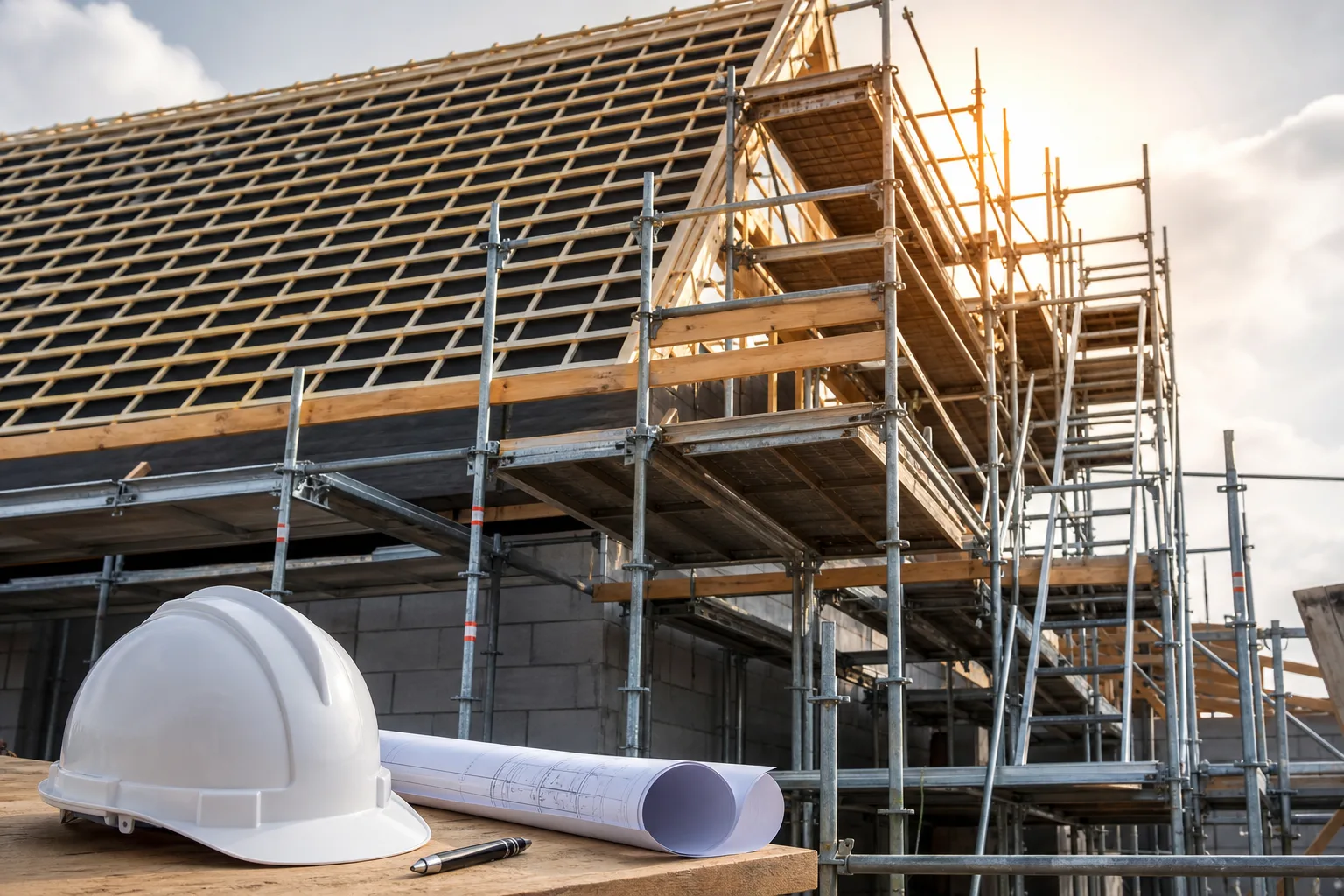
Code 7120.74 sits in ISIC Division 71, under technical testing and analysis. It lets you carry out physical inspection and structural assessment of roofing systems, scaffolding frameworks and temporary support structures on live construction sites.
This is not advisory work. Your people go on site and assess load-bearing capacity, material integrity, fixing systems and whether what has been built matches the design. The output is a formal inspection report or certificate, and the contractor has to hold it.
That last point is what makes the activity commercially unusual. The client is not deciding whether the inspection is worth the money. They are legally bound to certify structural safety before and during the build, so the sales conversation starts from a much better place than in most service businesses.
Who Your Clients Will Be
Main contractors running large building projects, property developers, fit-out firms working on interior and structural changes, and facilities management companies handling ongoing building upkeep.
Demand holds up because Dubai keeps building. Expo City legacy developments, the Dubai Urban Master Plan 2040 and a steady flow of high-rise residential and commercial work all feed the same pipeline.
The revenue shape is good too. Inspection contracts attach to project phases, so a single main contractor or developer relationship produces work again and again across the life of a build. A firm that gets in with a handful of the right clients can hold a stable pipeline without chasing new logos every quarter.
Mainland or Free Zone
| Factor | Mainland (DET) | Free Zone (Meydan Free Zone) |
|---|---|---|
| Site contracts across Dubai | Direct access, no limits on where clients sit | Better suited to a coordination or advisory model |
| Government-linked contracts | Full eligibility | May be restricted |
| Foreign ownership | Set by DET rules for the activity | 100% yours |
| Office | Physical tenancy registered on Ejari | Flexi-desk accepted |
| Starting cost | Typically AED 10,000 to AED 20,000 | Lower entry point |
Mainland is usually the better fit for this activity. A license from the Department of Economy and Tourism gives you direct site-contract access across Dubai with no limits on where your clients are based, which matters when your work happens on their site rather than in your office.
Meydan Free Zone gives you full ownership and a lower starting cost, and it is worth a look if your model is coordination-led rather than boots-on-site. The trade-off to weigh is government-linked contract eligibility, which can be restricted from a free zone. Given how much of Dubai's construction pipeline is public or semi-public, think that through before you decide.
[blockCTACostCalculator]
Step-by-Step Setup Guide
- Step 1, pick your jurisdiction: Mainland through DET or a free zone. Mainland is usually preferred here for direct site-contract access across Dubai.
- Step 2, choose your legal form: An LLC is the standard mainland structure. A free zone entity gives you full foreign ownership and lower starting costs.
- Step 3, book your trade name and apply for initial approval: Use the DET e-Services portal. The activity name must match the approved activity list word for word.
- Step 4, prepare your documents: Passport copies for every shareholder, an NOC if you are currently employed, an Ejari-registered tenancy contract, and professional qualification certificates for your technical staff. Engineering credentials are standard for this category.
- Step 5, get Dubai Municipality approval: Technical and engineering activities need it. Build the wait into your timeline rather than treating it as a formality at the end.
- Step 6, pay the fees and collect your trade license: Once the approvals clear, the license is issued.
Simple applications run two to four weeks. Where Dubai Municipality approval is involved, allow longer.
Compliance and What You Need in Place
Standards you inspect against
Your inspections must line up with UAE construction safety standards and Dubai Municipality building codes. That is what your certificate is worth, so know the codes cold.
Site safety and MOHRE
Where scaffolding safety meets worker protection on mainland sites, you will run into site safety compliance monitored by the Ministry of Human Resources and Emiratisation. Expect that overlap on every job.
Insurance
Take out professional indemnity cover before the first contract is signed. If a structure you certified fails, you sit in the chain of responsibility. This is the single biggest risk in the activity and the one clients will ask about.
Renewal
Renew the license every year without fail. A lapsed license stops you operating legally and can knock you off live contracts, which in a sector built on certified standing is a serious commercial problem.
Staff
Emiratisation quotas under Nafis apply to mainland entities once headcount reaches 50 or more. Smaller operations carry a lighter load, but check current thresholds with MOHRE and plan for them as you grow.
VAT
Register with the Federal Tax Authority once taxable turnover passes AED 375,000. VAT applies at 5% on every invoice you issue to UAE clients.
Market Opportunity
The UAE construction market was worth USD 81.5 billion in 2024, and growth is expected to hold through 2030 on the back of infrastructure spending and property demand.
What makes this activity attractive is not the size of that number but the nature of the spend. Scaffolding and roof inspection is not discretionary. Contractors are legally bound to certify structural safety, so the budget does not get cut when a project tightens.
Winning the work comes down to credibility and speed. Certified engineers, recognised accreditations such as NEBOSH or CIOB, documented inspection methods and fast report turnaround are what separate firms here.
A contractor under programme pressure will pay more for a certificate that arrives on time. Invest in Dubai also lists sector incentives relevant to technical services businesses.
Conclusion
The Roofs and Scaffolding Support Systems Examination license is a technically specific activity with steady demand right through Dubai's construction cycle.
Because the certification is a legal duty rather than a nice-to-have, this service category holds up when budgets tighten. That is rare and it is worth a lot.
Setup is simple with the right jurisdiction, qualified people in place and a clear read on the Dubai Municipality approval step. Speak to the Meydan Free Zone team to confirm the right structure for your inspection business.
[blockCTAContact]
Compliance
THIRD-PARTY APPROVAL
This activity requires pre-approval from the EIAC (Emirates International Accreditation Centre) before a business license can be issued by Meydan Free Zone.
ANTI-MONEY LAUNDERING COMPLIANCE
This business activity is exempt from AML compliance requirements.