
Table of Contents
Frequently Asked Questions
What does UAE Activity Code 8299.10 actually cover for loyalty programme businesses
Activity Code 8299.10 covers the operational administration of loyalty schemes, including points issuance, redemption tracking, partner reconciliation, and member data management. It represents the managed-service or BPO layer that runs a programme on behalf of a client organisation, rather than building the underlying software.
This is a B2B activity. Typical clients include UAE-based banks, e-commerce platforms, supermarket chains, and hotel groups that have loyalty infrastructure in place but need a third party to administer it. Common commercial arrangements include retainer-based managed services, per-transaction fees, or hybrid SLA contracts.
It is important to note that building loyalty software falls under a different activity classification. If your business is processing points, managing member accounts, and reconciling partner transactions operationally, 8299.10 is the correct code.
Should I set up a mainland or free zone licence for an administration of loyalty programmes business in the UAE
The right jurisdiction depends on your target clients and ownership preferences. A mainland licence issued through the Dubai Department of Economy and Tourism (DED) is the better choice if you plan to contract directly with UAE government entities or if your clients require a mainland trade address for contract compliance. Mainland also provides unrestricted access to the local market without a distributor or agent arrangement.
A free zone setup — such as Meydan Free Zone — suits founders targeting private-sector clients, operating with a lean structure, or running operations remotely. Free zones permit 100% foreign ownership with no local sponsor requirement and typically have competitive annual fees with visa allocation available from licence issuance.
The Invest in Dubai portal provides jurisdiction comparison tools to help you map out the options before committing to either structure.
What are the steps to obtain a licence for administering loyalty programmes in the UAE
The process is broadly consistent across mainland and free zone jurisdictions. You begin with trade name reservation — checking availability and reserving your chosen name via the DED or your chosen free zone authority. Avoid names implying financial services regulation, as these trigger Central Bank scrutiny before approval.
Next comes activity approval, where you confirm that Activity Code 8299.10 is listed under your chosen jurisdiction. Some free zones classify this activity under Business Support Services or Management Consultancy, so verifying the exact classification before submitting avoids delays.
Subsequent steps involve selecting your legal structure, preparing incorporation documents, and completing the formal licence application with the relevant authority. Each stage has minor procedural differences depending on whether you choose mainland or free zone.
Can a foreign national own 100% of a loyalty programme administration business in the UAE
Yes. 100% foreign ownership is permitted in UAE free zones for business support service activities, including the administration of loyalty programmes. There is no requirement for a local sponsor or Emirati partner when operating within a free zone structure.
On the mainland, ownership rules have been significantly liberalised in recent years, and many business support and management service activities now also permit full foreign ownership. However, the specific rules can vary by activity classification, so it is worth confirming the current position for Activity Code 8299.10 with the DED before proceeding with a mainland application.
What is the VAT position for a loyalty programme administration business operating in the UAE
The UAE applies VAT at 5% to most B2B service contracts, as confirmed by the Federal Tax Authority. For a loyalty programme administration business, this means that managed-service retainers, per-transaction fee arrangements, and SLA-based contracts with UAE-based clients will generally be subject to the standard 5% VAT rate.
Businesses must register for VAT once they meet the mandatory registration threshold and should factor VAT compliance — including invoicing, filing, and record-keeping obligations — into their operational setup from the outset. Cross-border service arrangements may have different VAT treatment depending on the location of the client and the nature of the supply.
What is Meydan Free Zone and why is it relevant for this type of business
Meydan Free Zone is highlighted as a practical option for service businesses setting up loyalty programme administration activities in the UAE. It offers single-activity trade licences with no paid-up capital requirement for most service categories, making it accessible for founders launching with a lean structure.
The free zone has a straightforward activity approval process for business support services, competitive annual fees, and visa allocation available from the point of licence issuance. These features make it well suited to operators who are targeting private-sector clients or running operations with a small team or remotely.
What types of clients does an administration of loyalty programmes business typically serve in the UAE
The business model for Activity Code 8299.10 is purely B2B. Clients are typically organisations that already have loyalty infrastructure in place but require a specialist third party to run it operationally on their behalf.
Common client types in the UAE include banks, e-commerce platforms, supermarket chains, and hotel groups. These organisations benefit from outsourcing the operational layer — points processing, member account management, partner reconciliation — to a dedicated administrator rather than managing it in-house.
The UAE's retail, hospitality, and financial sectors are identified as the primary industries driving demand for this type of managed service, supported by accelerating digital retail and fintech adoption across the region.
How does the UAE loyalty programme market look as a business opportunity
The UAE loyalty programme market is projected to grow steadily as digital retail and fintech adoption accelerates, according to IMARC Group. This creates ongoing demand for the operational infrastructure — administered under Activity Code 8299.10 — that keeps points schemes, redemption platforms, and partner networks functioning.
The broader business environment is supportive: there are over 3.5 million active businesses registered across UAE mainland and free zones, representing a large pool of potential clients across retail, hospitality, and financial services. The combination of a growing loyalty market, a permissive foreign ownership framework, and accessible free zone licensing structures makes the UAE a viable base for regional loyalty programme administration operations.
Setting Up an Administration of Loyalty Programmes Business in Dubai
The UAE's retail, hospitality, and financial sectors run on loyalty. The companies managing those programmes behind the scenes are quietly building durable, recurring-revenue businesses. Airlines, banks, and hotel groups all need someone to run the infrastructure. That someone can be you.
This guide covers what the activity code covers, how to choose the right jurisdiction, and what you need in place before you start.
| Activity | Administration of Loyalty Programmes |
|---|---|
| Jurisdiction options | Mainland (DET) or Meydan Free Zone |
| Foreign ownership | 100% permitted – mainland and free zone |
| Legal structure | LLC (mainland) or FZ-LLC (free zone) |
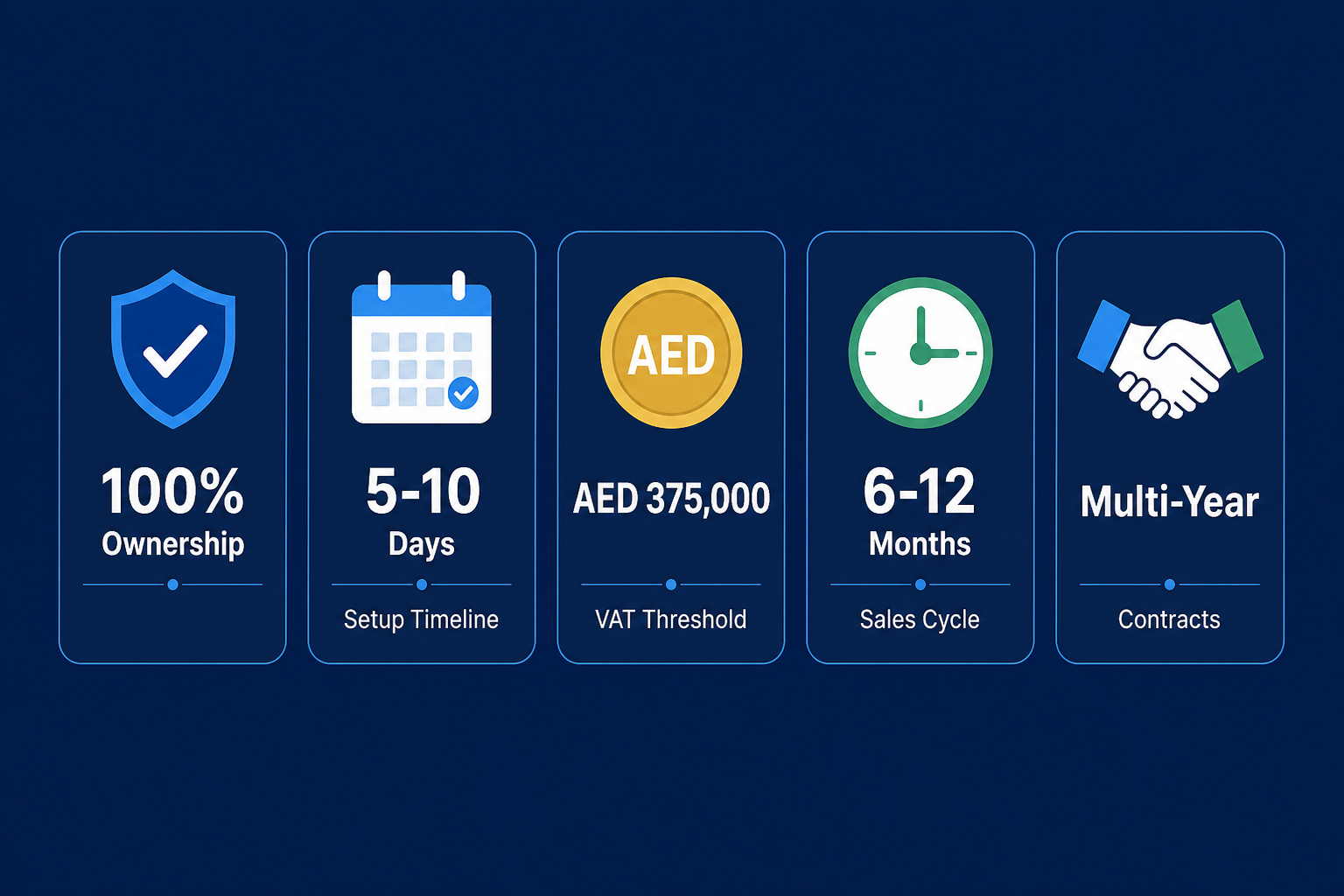
| VAT registration threshold | AED 375,000 annual turnover – Federal Tax Authority |
| Typical setup timeline | 5 to 10 working days for a free zone license |
What This License Covers
An administration of loyalty programmes license covers the operational running of a loyalty scheme on behalf of a client. That includes points administration, member data management, reward fulfilment coordination, and partner network management. You are the engine behind the programme, not the brand on the front of it.
The Meydan Free Zone business activities list confirms this activity as an approved code. Before you apply anywhere, check that the exact code you need is approved in your chosen jurisdiction. Do not assume.
There are clear boundaries to what this activity covers. It does not extend to financial services. If your programme involves stored value cards, cashback paid from a regulated float, or insurance-linked rewards, those elements need separate approvals and possibly a different license category altogether. The same applies if you are managing a programme that functions like a payment instrument.
There is also a meaningful difference between administering a programme and running a marketing agency that promotes one. Regulators treat them differently. A marketing agency license covers campaign creation, media buying, and promotions. An administration license covers the ongoing operational infrastructure: the database, the points engine, the fulfilment coordination. If you plan to do both, you may need both activity codes on your license.
Who Your Clients Will Be
The primary buyers of loyalty programme administration services in the UAE are airlines, banks, hotel groups, large retailers, and telecoms operators. These are organisations with large, active member bases and no appetite to run the backend themselves.
A growing secondary market sits with mid-market retail chains and e-commerce platforms. They are building first-party data assets as third-party cookies disappear and digital advertising costs rise. A well-run loyalty programme gives them direct access to customer behaviour data. They know this, and they are spending on it.
The procurement reality is worth understanding before you start. Nobody here buys on a phone call. Large clients run formal RFP processes. They want references, data security certifications, and evidence that you can handle their member volumes. Sales cycles run long, often six to twelve months for a first contract. Once you are in, though, contracts are multi-year and renewal rates are high. The stickiness of the relationship works in your favour.
The UAE market context supports this. Card penetration is high, tourist volumes are significant, and the resident population actively engages with loyalty schemes across categories. According to data tracked by Statista, consumer participation in loyalty programmes across the Middle East has grown steadily alongside the region's retail and fintech expansion. That growth creates real demand for professional administration services.
Mainland vs Free Zone: Which Setup Works for You
This is the biggest choice you will make when setting up. Let your clients decide it, not the price.
| Factor | Mainland (DET) | Free Zone (Meydan Free Zone) |
|---|---|---|
| Client access | Open UAE market, including government and semi-government entities | Mainly private sector and international clients |
| Foreign ownership | 100% permitted for most activities | 100% permitted |
| Office requirement | Physical office required | Flexi-desk options available |
| Setup speed | Typically longer due to additional approvals | 5 to 10 working days |
| Best suited to | Operators targeting UAE government or large semi-government clients | Internationally-focused operators and those starting lean |
A mainland license from the Dubai Department of Economy and Tourism (DET) lets you work directly with UAE government bodies and semi-government entities. If your target clients include government-linked airlines, state banks, or public sector loyalty schemes, mainland is the right structure. You will need a physical office and the setup process takes longer.
Meydan Free Zone gives you 100% foreign ownership, a faster setup process, and flexi-desk options that keep your fixed costs low in the early months. It suits operators who are targeting private sector clients, regional or international brands, or who want to start a business remotely before committing to a full office footprint.
On VAT, the threshold is AED 375,000 in annual turnover. Once you cross it, you must register with the Federal Tax Authority. For a loyalty administration business, your taxable supplies are your management fees and service charges. Reward fulfilment costs passed through to clients may be treated differently depending on your contract structure. Check this with a qualified tax adviser before you start.
Free Business Setup Cost Calculator
Calculate NowStep-by-Step Setup Guide
- Step 1, book your trade name: Use the DET e-Services portal for a mainland company, or the Meydan Free Zone portal for a free zone one. Your name cannot imply financial services or regulated activity unless you hold the relevant approvals. Use the company name check tool to confirm availability before you go further.
- Step 2, confirm your activity code: Make sure the administration of loyalty programmes code is approved in your chosen jurisdiction. If you also plan to offer marketing or data analytics services, confirm whether those need separate codes on the same license.
- Step 3, choose your legal structure: An FZ-LLC for a free zone setup, or an LLC for mainland. Both allow 100% foreign ownership for this activity type.
- Step 4, submit your setup documents: Passport copies, proof of address, and a completed application form. Meydan Free Zone handles this digitally. Mainland applications go through the DET e-Services portal.
- Step 5, get your license issued: Free zone licenses typically take 5 to 10 working days. Mainland timelines vary depending on whether any third-party approvals are needed for your specific activity scope.
- Step 6, open a corporate bank account: Banks in the UAE want to see your license, your business plan, and a clear explanation of your revenue model. Loyalty administration businesses are not high-risk from a banking perspective, but you still need to explain the flow of funds clearly. Business banking support through mCore can help you navigate this step.
- Step 7, register for VAT once you hit the threshold: File with the Federal Tax Authority at AED 375,000 in annual taxable turnover. Voluntary registration is available from AED 187,500 if it suits your input tax position.
The most common cause of delays is activity code ambiguity. If your service sits across loyalty administration and financial services, or across administration and marketing, expect additional questions from the licensing authority. Sort the scope before you apply, not after.
Compliance and Market Opportunity
Data protection
Member databases are the core asset in any loyalty programme. The UAE Personal Data Protection Law applies to how you collect, store, process, and share that data. Know your duties before you onboard a client. You will be handling personal data on behalf of your clients, which makes you a data processor under the law. Your contracts need to reflect that clearly, and your systems need to be built accordingly.
Digital communications
If you use digital platforms to communicate with programme members, whether that is push notifications, email, or SMS, the Telecommunications and Digital Government Regulatory Authority (TDRA) oversees this. Commercial electronic messages sent to UAE numbers and addresses must comply with the relevant regulations. Make sure your platform and your client's consent framework are both in order before you start sending.
Financial compliance
If your programme touches stored value, cashback paid from a float, or anything that functions like a payment instrument, check with the Central Bank of the UAE on whether extra approvals apply. The line between a loyalty points balance and a stored value product is not always obvious. If you are unsure, get a formal opinion before you launch the product. Breaking the rules here carries real consequences, including the risk of having to restructure the programme after clients are already live on it.
Corporate tax
The UAE corporate tax rate of 9% applies to taxable income above AED 375,000. Free zone entities can access a 0% rate on qualifying income, subject to the substance and activity conditions set by the Ministry of Finance. Corporate tax services in Dubai through mAccounting can help you stay on the right side of this from day one.
Market opportunity
The UAE loyalty and rewards sector is growing. Tourism recovery has brought more international card holders into the market. Fintech expansion has pushed banks to compete harder on rewards. Retail consolidation means larger groups are looking for professional administration partners rather than building in-house. Research tracked by Mordor Intelligence points to consistent growth in loyalty programme spending across the Middle East and Africa region, with the UAE sitting at the centre of that activity.
The barriers to entry in this sector work in your favour once you are past them. Clients do not switch loyalty administrators easily. The data migration risk, the member communication complexity, and the partner network dependencies all make switching painful. If you deliver reliably and keep the data infrastructure clean, you build a business that clients stay in for years.
If you are building toward scale, Meydan Plus covers the operational support services that let you focus on client delivery rather than administration overhead.
Conclusion
Administering loyalty programmes in the UAE is a real business with long contracts, repeat revenue, and a client base that is actively spending on this infrastructure. The setup choices you make on jurisdiction, activity scope, and data compliance will shape everything that follows.
Get the activity code right. Choose your jurisdiction based on where your first clients sit. Build your data handling framework before you go live, not after. And make sure your contract structure reflects your role as a data processor, not just a service provider.
Speak to the Meydan Free Zone team to confirm your activity code and get a clear cost breakdown before you commit to a structure.
Ready to Launch Your Business in Dubai?
Let's Connect