Table of Contents
Topic Summary
Understand What Activity Code 4721.04 Covers
This license permits retail sale of fish, seafood, and seafood products through specialised stores, including traditional fishmongers, premium specialty shops, and multi-format outlets. It does not cover on-premises baking, wholesale trading, or selling seafood as part of a general multi-product store.
Know the Market Size Before You Launch
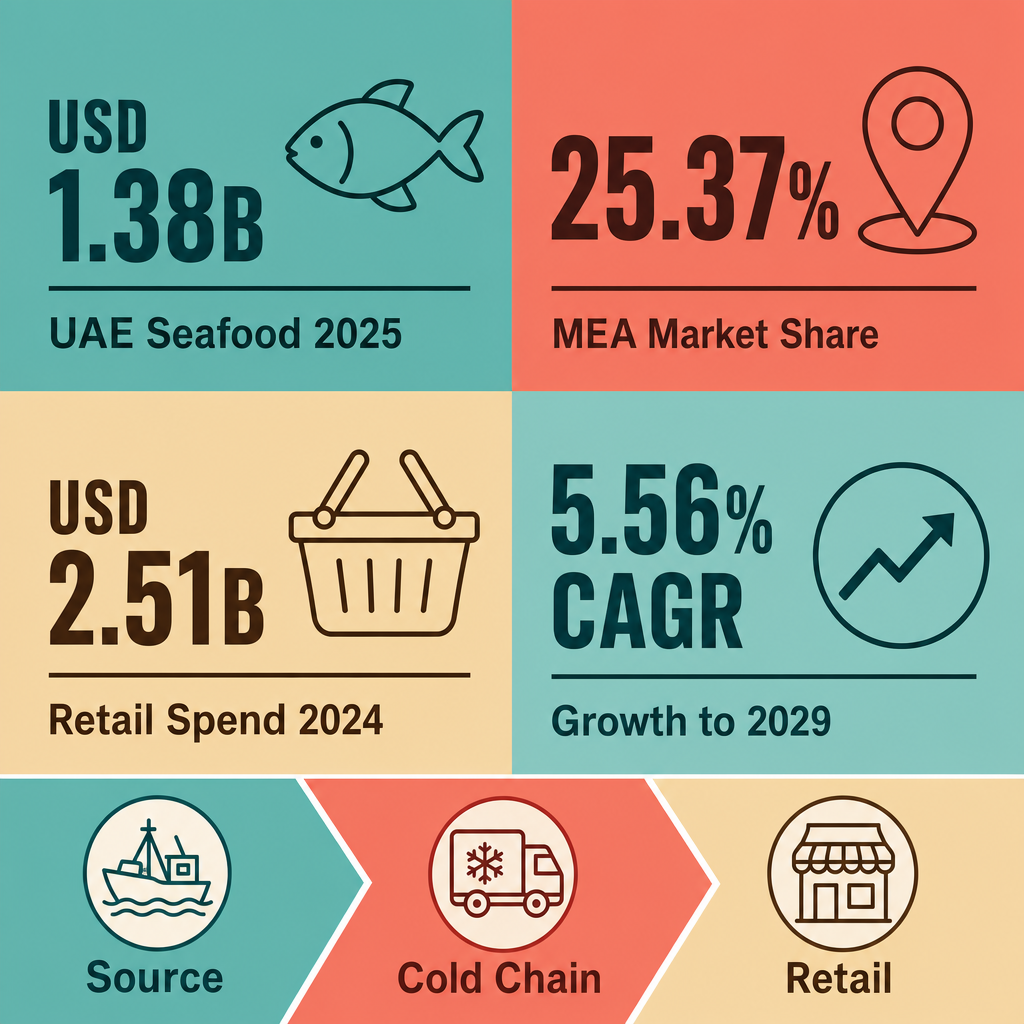
UAE fish and seafood retail was valued at USD 2.51 billion in 2024 and is growing at a 5.56% CAGR through 2029. The UAE also captures 25.37% of total Middle East seafood revenue, making it the dominant regional market.
Identify Which Customer Segment You Will Serve
Your target audience falls into three groups: walk-in household and restaurant buyers at commercial markets, premium consumers seeking internationally sourced fish and shellfish, or convenience-focused shoppers wanting fresh, frozen, and processed options under one roof. Choosing your segment early shapes your sourcing, location, and store format.
Decide Between Mainland and Free Zone Setup
A mainland DET license suits retailers opening a direct store under standard commercial rules, while Meydan Free Zone offers 100% foreign ownership, zero corporate tax on qualifying income, and a fully digital licensing process. Neither route requires third-party pre-approval for this activity, keeping timelines straightforward.
Follow the Four Core Setup Steps
The process runs from reserving a trade name with activity code 4721.04 listed, through preparing shareholder documents and a business plan, obtaining initial approval, and finally securing cold-chain retail premises. Reliable refrigeration infrastructure is non-negotiable for any fish and seafood retail format.
Factor In the UAE's Re-Export Opportunity
Around 70% of seafood imported into the UAE is re-exported to other regional markets, meaning a well-positioned retailer can serve both a strong domestic customer base and a role in wider Gulf distribution. This dual-market dynamic is worth building into your sourcing and inventory strategy from the start.
Track the Fastest-Growing Product Categories
Fish accounts for 64.02% of the regional product mix, making it the dominant category, while shrimp is currently the fastest-growing seafood type in the market. Aligning your product range with these trends can strengthen both your opening offer and long-term sales performance.
How to Start a Retail Sale of Fish and Seafood Business in Dubai
A traditional fishmonger working a stall in a UAE commercial market, a premium seafood specialist sourcing salmon and lobster from around the world, a multi-format retailer stocking fresh, frozen, and processed seafood side by side: all three sell directly to the customer through a store dedicated to fish and seafood, rather than as one department inside a general supermarket.
This guide covers what activity code 4721.04 lets you do, who your clients will be, and how you set the business up in Dubai.
Key Stats at a Glance
What This License Covers
Activity code 4721.04 licenses you to operate retail sale of fish, other seafood, and seafood products in specialised stores, whether that means operating a traditional fishmonger in a UAE commercial market, running a premium seafood specialty with international sourcing, or managing a multi-format seafood retail combining fresh, frozen, and processed offerings.
The scope excludes manufacturing of bakery products, meaning baking on premises, retail sale of food in non-specialised stores where multiple product lines are sold under one roof, and wholesale trading to other businesses.
If you retail fish, seafood, or seafood products directly to customers through a specialised store, this is the code you need.
Who Your Clients Will Be
Your customer base splits into three groups. Traditional fishmonger and fresh seafood retailers work commercial markets such as Deira Fish Market and Waterfront Market with daily-catch sourcing and a walk-in household and restaurant customer base.
Premium and international seafood specialty retailers source salmon, tuna, prawns, and lobster internationally, with specialty preparation services for premium consumer and restaurant catchments.
Multi-format and processed seafood retailers combine fresh, frozen, and processed seafood, including canned fish, smoked salmon, and ready-to-eat formats, for customers wanting range and convenience.
Fish leads the regional product mix at 64.02% share, with shrimp the fastest-growing seafood type, per Mordor Intelligence, and around 70% of imported seafood is re-exported from the UAE, showing a retailer here can build both a strong domestic customer base and a role in wider regional seafood distribution.
Mainland or Free Zone
Mainland registration through DET suits a retailer running a store directly under standard commercial rules. Meydan Free Zone offers 100% foreign ownership, zero corporate tax on qualifying income, and a fully digital licensing process, and no third-party pre-approval is needed for this activity, which keeps your setup timeline simple.
[blockCTACostCalculator]
Step-by-Step Setup Guide
- Step 1, book your trade name: Check availability through DET or your chosen free zone authority, confirming activity code 4721.04 is listed for your application.
- Step 2, prepare your setup documents: Passport copies of shareholders and directors, your intended retail focus, traditional fishmonger, premium specialty, or multi-format, and a business plan summary.
- Step 3, get your initial approval and license: Meydan Free Zone's fully digital process moves quickly once your documents are complete.
- Step 4, secure your cold-chain retail premises: Fish and seafood retail depends on reliable refrigeration and, for some formats, live-storage capability, so plan your store fit-out around this from the outset.
- Step 5, build your supplier relationships: Line up agreements with local fishmongers, importers, or processors depending on your chosen product range.
- Step 6, register with MOHRE if you employ staff: This sets your visa quota and puts your team under Wage Protection System compliance from the outset.
Compliance and What You Need in Place
Third-party approval
No third-party approval is needed for this activity, which keeps your setup timeline focused on cold-chain readiness and supplier relationships rather than extra regulatory sign-off.
Anti-money laundering compliance
This activity is exempt from anti-money laundering compliance duties, keeping your ongoing regulatory load lighter than higher-risk trading categories.
Cold-chain and freshness standards
Fish and seafood need to stay within strict temperature standards from sourcing through to sale, so build tested refrigeration and handling protocols into your store rather than discovering a gap after stock spoils.
A single break in the cold chain, even a short one during delivery or display, can ruin stock and damage your name with customers who expect fish this fresh to actually be fresh, so treat refrigeration as a daily discipline rather than a box to check once at setup.
Sourcing documentation
Keep clear records of where each batch of fish or seafood comes from, whether that is a local market, a licensed importer, or a processor, since customers and inspectors alike expect a retailer in this category to show a clean chain of custody from catch to counter.
Ongoing renewals
Renew your license every year, keep your supplier agreements current, and keep your MOHRE registrations up to date if you employ staff.
Market Opportunity
The UAE seafood market reached around USD 1.38 billion in 2025, with the UAE capturing 25.37% of total Middle East seafood revenue, per Mordor Intelligence, while UAE fish and seafood retail was worth USD 2.51 billion in 2024 and is growing at a 5.56% CAGR through 2029, per Statista. Fish leads the regional product mix at 64.02% share, with shrimp the fastest-growing seafood type, giving a retailer a broad and growing base of product categories to build a business around.
Around 70% of imported seafood entering the UAE is re-exported to neighbouring markets, underlining the UAE's role as a regional seafood distribution hub alongside its own strong domestic retail demand.
A retailer who combines a credible cold-chain operation with either traditional fishmonger expertise or premium international sourcing is well placed to build the kind of loyal, repeat custom that keeps this activity workable year after year.
Restaurants and hotels across Dubai also lean heavily on dedicated seafood retailers rather than general food wholesalers when they need daily-fresh product for their menus, giving a well-run store a second customer base beyond individual households.
Building relationships with a handful of reliable restaurant accounts alongside your walk-in retail trade can smooth out demand across the week and give your business a more predictable base of orders to plan stock around.
Conclusion
A Retail Sale of Fish and Seafood license under activity code 4721.04 is a workable business anchored in a large and growing UAE seafood market. Meydan Free Zone's foreign ownership, tax position, and digital setup process give a retailer a practical route to serve customers across traditional, premium, and multi-format seafood retail.
[blockCTAContact]