
Table of Contents
Topic Summary
Choose the Right Jurisdiction From the Start
Meydan Free Zone allows 100% foreign ownership and supports re-export trade, making it a strong base for wholesale electronics traders. However, if you plan to bid on UAE government tenders, a mainland license may give you a competitive edge.
Understand Exactly What the License Covers
A wholesale electronic and telecommunications equipment license permits buying and selling in volume, covering components, network hardware, cables, and spare parts. It does not cover retail sales, manufacturing, or operating telecoms carrier services.
Factor in TDRA Product Approvals Early
The Telecommunications and Digital Government Regulatory Authority requires type approval for certain devices that transmit or receive radio signals before they can be imported or sold in the UAE. This is a product-level check, separate from your business license, so verify each product category before your first shipment.
Use the UAE as a Re-Export Hub
Free zone rules allow you to import goods, store them, and ship them onward to buyers across Africa, South Asia, and the Gulf without selling into the UAE domestic market. This entrepôt model is one of the primary reasons electronics wholesalers choose a UAE free zone base.
Know Your B2B Customer Base in Advance
Your buyers will be telecoms operators, network integrators, government project contractors, and regional distributors — all purchasing in volume through formal procurement processes. Understanding this shapes everything from your pricing structure to the certifications and documentation you need to have ready.
Plan for Vendor Approval Timelines With Large Buyers
Mobile operators and government-linked infrastructure projects run rigorous vendor qualification processes that take time to complete. Getting on an approved vendor list early pays off, as the resulting contracts tend to be long-term and repeat in nature.
Budget Realistically Before You Launch
A Dubai trade license through Meydan Free Zone starts from AED 12,500, and the setup timeline is typically a few working days once documents are in order. Factor in additional costs for TDRA product approvals and any certifications required by your target customer segments.
How to Start a Wholesale of Electronic and Telecommunications Equipment business in Dubai
The UAE sits at the centre of a global electronics and telecoms supply chain. Wholesale traders who set up here can reach markets across the Gulf, Africa, and South Asia from a single base. The infrastructure is there. The trade corridors are established. The tax environment works in your favour.
This guide covers what the license covers, who your customers will be, how to choose the right jurisdiction, and the exact steps to get trading through Meydan Free Zone.
Key Stats at a Glance
| License type | Wholesale trading license, electronic and telecommunications equipment and parts |
|---|---|
| Foreign ownership | 100% permitted at Meydan Free Zone |
| UAE electronics and telecoms market | The UAE telecoms equipment market is on a steady growth trajectory, driven by 5G rollout, infrastructure expansion, and regional re-export demand. See IMARC Group and Mordor Intelligence for current figures. |
| Regulatory body for telecoms goods | Telecommunications and Digital Government Regulatory Authority (TDRA) |
| Setup timeline at Meydan Free Zone | Typically a few working days once documents are in order |
| Starting cost | Dubai Trade License from AED 12,500 |
What This License Covers

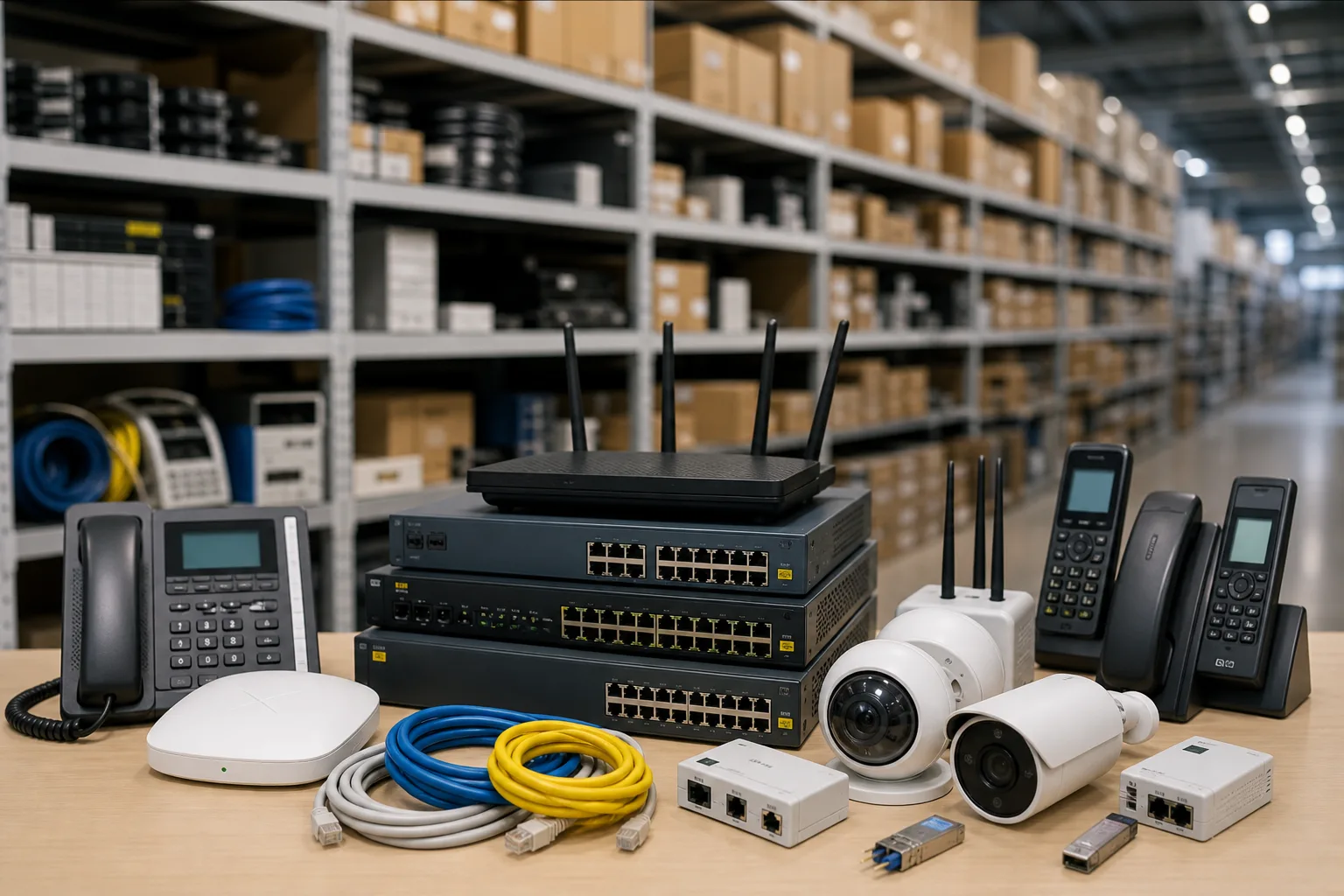
A wholesale electronic and telecommunications equipment and parts license lets you buy and sell in volume. The permitted scope covers electronic components, telecoms hardware, network equipment, cables, connectors, switching gear, and spare parts across the full range of consumer and industrial electronics.
You are trading, not manufacturing. The license does not cover retail sales direct to end consumers, the production of equipment, or the operation of telecoms carrier or spectrum services. Those activities need separate approvals and are outside the scope of a wholesale trading license.
TDRA oversight
The Telecommunications and Digital Government Regulatory Authority oversees the telecoms sector in the UAE. In practice, this means certain devices, particularly those that transmit or receive radio signals, need TDRA type approval before you can import or sell them here. This is a product-level approval, not a business license. You check whether each product category you plan to trade needs it before your first shipment arrives. More on this in the compliance section.
Re-export and entrepôt trade
Free zone rules permit re-export. You can bring goods into the UAE, store them, and ship them on to buyers in other markets. This is one of the core reasons traders choose a free zone base. You are not selling into the UAE domestic market in this model. You are using the UAE as a logistics and distribution hub, which is exactly what the free zone structure is built for.
Check the full Meydan Free Zone business activities list to confirm the specific activity codes that match your product range before you proceed.
Who Your Customers Will Be
This is a B2B trade. Your buyers are organisations, not individuals, and they buy in volume. Understanding who they are shapes how you structure your business from day one.
Telecoms operators and network integrators
Mobile operators, internet service providers, and network integrators buy hardware in large quantities. They run formal procurement processes. Getting on their approved vendor list takes time, but the contracts that follow are long and repeat.
Government and semi-government projects
Infrastructure projects across the Gulf use significant volumes of telecoms and electronics equipment. These buyers run tenders. They want suppliers with proper documentation, product certifications, and a track record. A free zone company can participate, though government tenders in the UAE often favour mainland-licensed suppliers. Factor this into your jurisdiction decision.
Regional distributors and re-export traders
A large share of goods that pass through the UAE are heading to Africa, South Asia, and the Levant. Traders in those markets buy from UAE-based wholesalers because of the logistics infrastructure, the availability of stock, and the reliability of documentation. This is a strong market for a free zone operation.
Electronics retailers and repair workshops
Smaller buyers, including retail chains and independent repair shops, source parts and components wholesale. Order sizes are smaller, but margins can be better and the relationship is more direct.
Mainland vs Meydan Free Zone
This is the biggest choice you will make when setting up. Let your customers decide it, not the cost.
| Factor | Mainland (DET) | Free Zone (Meydan Free Zone) |
|---|---|---|
| Ownership | 100% foreign ownership now permitted for most activities | 100% foreign ownership |
| UAE market access | Direct – sell to any UAE business or government body | Requires a local distributor or dual-license arrangement for mainland sales |
| Government tenders | Eligible to bid directly | Generally requires a mainland entity or local agent |
| Re-export trade | Permitted but more complex customs handling | Straightforward under free zone rules |
| Corporate tax | Standard UAE corporate tax applies | No corporate tax on qualifying income |
| Setup cost and speed | Higher cost, more steps | Lower cost, faster to set up |
| Office requirement | Physical office required | Flexi-desk options available |
If your business is built around re-export and international supply, the free zone is the workable default. You keep costs down, you own 100% of the company, and you operate in a structure designed for cross-border trade.
If you are selling primarily to UAE-based businesses or want to bid on government infrastructure contracts directly, a mainland license from the Dubai Department of Economy and Tourism gives you that access. Some traders run both, using a free zone entity for international trade and a mainland entity for local sales.
Free Business Setup Cost Calculator
Calculate NowStep-by-Step Setup Guide
- Step 1, book your trade name: Use the Meydan Free Zone portal to check availability and book your preferred name. Keep it clear and relevant to your trade. Use the company name check tool to confirm availability before you commit.
- Step 2, confirm your activity code: Make sure the code covers your full product range, including any specialist categories such as radio transmission equipment or network switching hardware. If you plan to add product lines later, confirm those codes are permitted under the same license now, not after setup.
- Step 3, choose your company structure: A Free Zone Establishment (FZE) suits a sole shareholder. A Free Zone Company (FZCO) works for two or more shareholders. Both give you 100% foreign ownership and the same trading rights.
- Step 4, pick your workspace package: If you are holding stock in the UAE, you need warehouse space. If you are trading on a paper basis or using third-party logistics, a flexi-desk is enough. Be honest about your operational needs here. The workspace type affects your visa allocation and your cost base.
- Step 5, submit documents and pay fees: You will need passport copies, a business plan or activity description, and proof of address. Meydan Free Zone's team will guide you through the exact document list. Fees cover the license, registration, and your chosen workspace.
- Step 6, open a corporate bank account: You need a UAE business account to trade. Business banking support for free zone companies is available through mCore if you want help navigating the bank application process.
- Step 7, register for VAT if required: Once your taxable turnover reaches the Federal Tax Authority threshold, VAT registration is mandatory. Exports are generally zero-rated, but you still need to be registered and filing correctly. Check the current threshold with the Federal Tax Authority.
If you are not based in the UAE, you can complete most of this process remotely. Meydan Free Zone supports remote business setup for founders who cannot travel to Dubai at the start.
Compliance and What You Need in Place
Wholesale electronics and telecoms equipment is not a heavily regulated trade in terms of daily operations, but there are specific rules you need to follow from the start.
TDRA type approval
The TDRA requires type approval for certain telecoms devices before they can be imported or sold in the UAE. This applies mainly to products that use radio frequencies, including Wi-Fi equipment, Bluetooth devices, mobile handsets, and similar hardware. Check each product category against the TDRA approved list before placing purchase orders. Importing unapproved equipment creates customs problems and potential fines. This is a product-level check, not a one-time business registration step. You do it for each new product line.
VAT obligations
VAT applies to UAE sales. Once your taxable turnover crosses the registration threshold, you must register with the Federal Tax Authority and file returns. Exports to markets outside the UAE are generally zero-rated, which matters a lot if re-export is your main model. You still need to keep proper records and file on time. Breaking the rules here carries financial penalties. Meydan Free Zone's VAT registration support services can help you get this set up correctly from the start.
Customs documentation
Every shipment in and out needs proper paperwork. The standard set for import and re-export includes a commercial invoice, packing list, certificate of origin, and bill of lading or airway bill. For re-exports, you also need to show the goods were not substantially transformed in the UAE, which is straightforward for wholesale trading. Keep documentation clean and consistent. Customs authorities in destination markets will check it.
Corporate tax
The UAE introduced corporate tax on business profits above AED 375,000. Free zone companies with qualifying income can benefit from a 0% rate, but the rules around what counts as qualifying income are specific. Get proper advice before assuming your income qualifies. Meydan Free Zone's corporate tax services in Dubai cover this in detail.
License renewal and accounts
Your Meydan Free Zone license renews annually. Audited accounts are required under free zone rules. Keep your bookkeeping current throughout the year rather than scrambling at renewal time. Meydan Free Zone's bookkeeping services in Dubai are available if you want that handled externally.
Market Opportunity
The UAE's telecoms sector is expanding. 5G infrastructure rollout across the Emirates is driving demand for new network hardware. Smart city projects, data centre construction, and the growth of connected industrial systems all need equipment. Wholesale traders who are well-positioned and properly documented are in a good place to supply into these projects, either directly or through integrators.
Beyond the UAE, the re-export opportunity is significant. Dubai handles a large share of electronics trade flowing into sub-Saharan Africa, South Asia, and parts of the Middle East. Buyers in those markets use UAE-based wholesalers because of the logistics infrastructure at Jebel Ali and Dubai International Airport, the availability of financing, and the reliability of documentation. Setting up a free zone wholesale operation here puts you inside that supply chain.
The Invest in Dubai portal provides current sector data and market entry guidance for traders considering this space.
Conclusion
Wholesale electronics and telecoms equipment is a high-volume, relationship-driven trade. The UAE gives you the infrastructure, the tax environment, and the geographic position to run it at scale. Meydan Free Zone gives you a fast, cost-effective way to get licensed, with 100% ownership and the flexibility to trade internationally from day one.
The key steps are simple: confirm your activity code covers your full product range, choose the right workspace for how you actually work, get your TDRA product approvals in order before your first shipment, and keep your VAT and customs documentation clean from the start.
Speak to the Meydan Free Zone team to confirm your activity code, get a cost breakdown, and start the setup process.
Ready to Launch Your Business in Dubai?
Let's Connect