Table of Contents
Topic Summary
Understand What Activity Code 5510.97 Covers
This license lets you operate dormitory, capsule, or private-room hostels aimed at backpackers, digital nomads, and boutique lifestyle travellers. It does not cover hotels, guesthouses, standalone co-working spaces, or student housing run by educational institutions.
Know Your Three Core Customer Groups
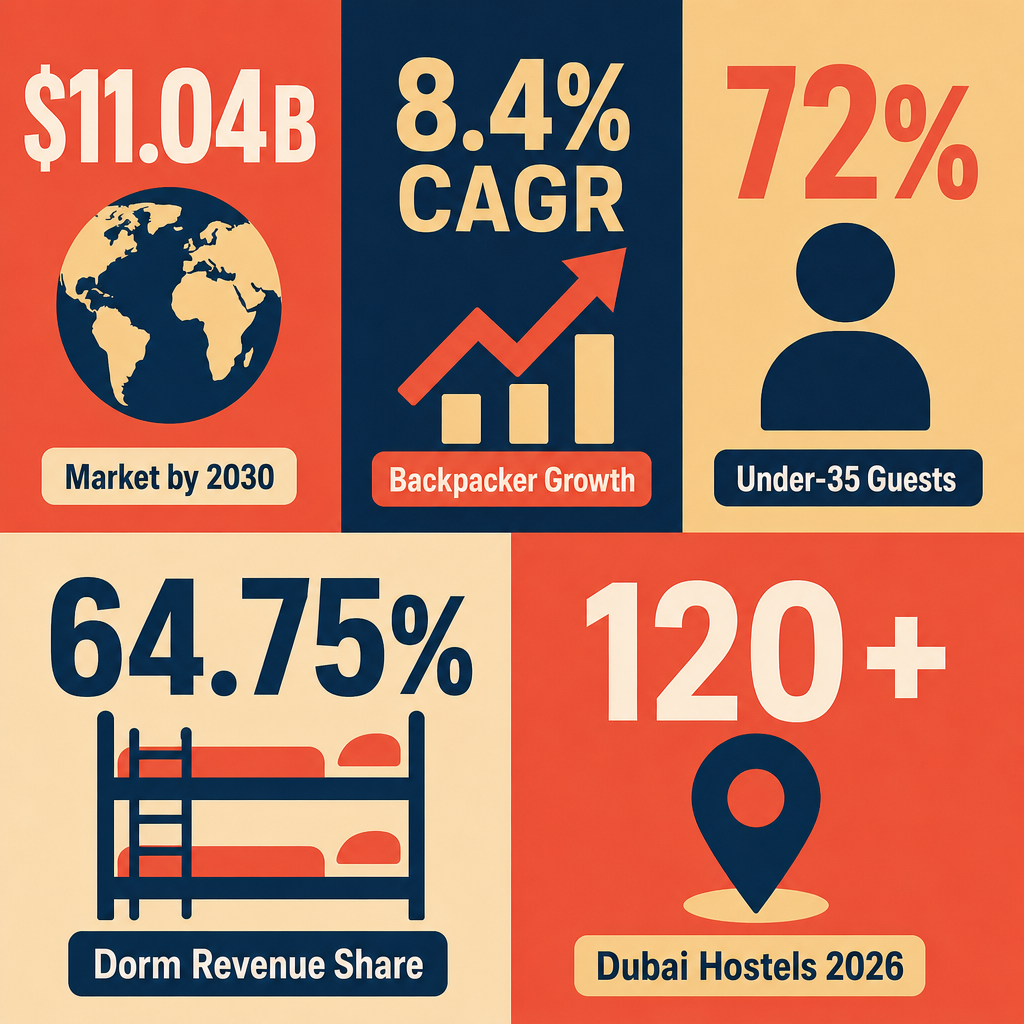
Your guests will typically fall into budget backpackers, digital nomads seeking co-working amenities, or design-conscious travellers wanting a curated social experience. Over 72% of hostel guests globally are under 35, making this a young, mobile, and growing market.
Choose Between Mainland and Free Zone Setup
Mainland registration through DET follows standard commercial rules, while Meydan Free Zone offers 100% foreign ownership, zero corporate tax on qualifying income, and a fully digital licensing process. Both routes require tourism authority pre-approval before your license is issued.
Secure Tourism Authority Pre-Approval First
Because this activity requires sign-off from the tourism authority before Meydan Free Zone can issue your license, applying for pre-approval is the step that sets your entire timeline. Build this into your planning from day one to avoid delays.
Prepare the Right Documents from the Start
You will need passport copies for all shareholders and directors, a clear description of your intended hostel format, and a business plan summary. Having these ready before you begin speeds up both the pre-approval and licensing stages significantly.
Tap Into a Market With Strong Growth Projections
The global hostel market is forecast to reach USD 11.04 billion by 2030, with the backpacker sub-segment alone projected to hit USD 9.6 billion by 2033. Dubai already lists over 120 hostels with more than 4,500 reviews, confirming real local demand.
How to Start a Youth Hostels Business in Dubai with Meydan Free Zone
A backpacker sharing a dormitory room with five other travellers, a digital nomad renting a bed by the week while working from a co-working corner downstairs, a design-led boutique hostel built around a social lounge rather than a private minibar: all three give budget-conscious and independent travellers a real alternative to a full-price hotel room.
This guide covers what activity code 5510.97 lets you do, who your clients will be, and how you set the business up in Dubai.
Key Stats at a Glance
| Activity code | 5510.97 |
|---|---|
| Global hostel market (2030) | USD 11.04 billion at a 6.5% CAGR, per Grand View Research |
| Backpacker hostel sub-segment | USD 4.3 billion in 2024, projected to reach USD 9.6 billion by 2033 at 8.4% CAGR, per DataHorizzon Research |
| Dubai hostels listed (2026) | Over 120 hostels with 4,500-plus reviews, per Hostelworld |
| Third-party approval | Tourism authority pre-approval needed before license issuance |
What This License Covers
Activity code 5510.97 licenses you to operate a youth hostel, whether that means a traditional budget hostel with dormitory rooms, a digital nomad or co-living hostel with co-working facilities, or a boutique or lifestyle hostel with curated social spaces.
The scope covers short-stay shared accommodation offering dormitory, capsule, or private rooms alongside communal social spaces, whether aimed at backpackers and students, remote workers on flexible or subscription terms, or guests seeking a design-led, socially curated stay.
It excludes hotels, guesthouses, permanent residential accommodation, standalone co-working spaces without accommodation, and student accommodation managed directly by educational institutions.
If you operate short-stay shared or dormitory-style accommodation for budget-conscious and independent travellers, this is the code you need.
Who Your Clients Will Be
Your customer base splits into three groups: traditional budget hostel guests, backpackers and budget-conscious visitors booking dormitory or private rooms and using communal social spaces, digital nomad and co-living guests wanting lifestyle-oriented properties with co-working facilities and flexible or subscription access, and boutique and lifestyle hostel guests seeking a design-led, socially curated stay at a mid-range price point.
Over 72% of hostel guests globally are under 35, per Market Growth Reports, and dormitory rooms alone make up 64.75% of global hostel revenue, while Dubai already listed over 120 hostels with more than 4,500 reviews by 2026, per Hostelworld, giving a hostel operator a young, mobile customer base and a market that is already proving itself in the city.
Mainland or Free Zone
| Factor | Mainland (DET) | Free Zone (Meydan Free Zone) |
|---|---|---|
| Direct hostel operations | Direct, standard route | Workable via approved accommodation structuring |
| Foreign ownership | 100% | 100% |
| Corporate tax | Standard rate applies | 0% on qualifying income |
| Setup process | Standard commercial registration | Fully digital licensing |
Mainland registration through DET suits an operator running a hostel directly under standard commercial rules. Meydan Free Zone offers 100% foreign ownership, zero corporate tax on qualifying income, and a fully digital licensing process, though this activity needs tourism authority pre-approval before your license is issued, which is worth building into your setup timeline from the start.
[blockCTACostCalculator]
Step-by-Step Setup Guide
- Step 1, book your trade name: Check availability through DET or your chosen free zone authority, confirming activity code 5510.97 is listed for your application.
- Step 2, get your tourism authority pre-approval: Apply to DET before you submit your license application, since this activity needs sign-off before Meydan Free Zone can issue your license.
- Step 3, prepare your setup documents: Passport copies of shareholders and directors, your intended hostel format, traditional budget, digital nomad, or boutique, and a business plan summary.
- Step 4, get your initial approval and license: Once your tourism authority pre-approval is in place, Meydan Free Zone's digital process moves quickly through the remaining steps.
- Step 5, fit out your property: Dormitory rooms, private rooms, and communal social or co-working spaces suited to your chosen format are central to this activity.
- Step 6, register with MOHRE if you employ staff: This sets your visa quota and puts your team under Wage Protection System compliance from the outset.
Compliance and What You Need in Place
Third-party approval
This activity needs pre-approval from DET before your Meydan Free Zone license can be issued, so build that step into your timeline before you start work on the rest of your setup.
Anti-money laundering compliance
This activity is not classed as a Designated Non-Financial Business or Profession under UAE anti-money laundering rules, so you do not carry AML registration or reporting duties specific to this license, though standard guest identity verification under UAE hospitality rules still applies.
Guest registration and Tourism Dirham
You need to register every guest and collect the Tourism Dirham fee in line with DET's tourism regulatory framework, the same rule that applies across all licensed short-stay accommodation in Dubai.
Ongoing renewals
Renew your license every year, keep your DET approval current, and keep your MOHRE registrations up to date if you employ staff.
Safety and social space standards
Guests choose a hostel over a hotel partly for the social experience, so keep communal areas clean, well maintained, and genuinely welcoming, alongside the basic fire safety and security standards every short-stay accommodation needs to meet.
Market Opportunity
The global hostel market is projected to reach USD 11.04 billion by 2030 at a 6.5% CAGR, per Grand View Research, with the backpacker hostel sub-segment alone growing from USD 4.3 billion in 2024 to a projected USD 9.6 billion by 2033 at an 8.4% CAGR, per DataHorizzon Research.
Dormitory rooms make up 64.75% of global hostel revenue, and over 72% of hostel guests worldwide are under 35, showing a young, price-sensitive traveller base that keeps choosing hostels over traditional hotels.
Dubai's own hostel market is already well established, with over 120 hostels and more than 4,500 reviews listed on Hostelworld by 2026, and concepts such as Nas House, hosting 46 guests across six villas, and Next'House, backed by a USD 10 million investment, show real capital moving into the sector.
An operator who builds a clear format, whether traditional budget, digital nomad, or boutique, is well placed to capture a share of a market with both strong global growth and proven local demand.
Conclusion
A Youth Hostels license under activity code 5510.97 is a workable business anchored in a fast-growing global market and an already proven Dubai customer base. Meydan Free Zone's foreign ownership, tax position, and digital setup process give an operator a practical route to serve backpackers, digital nomads, and lifestyle travellers across Dubai.
[blockCTAContact]
Compliance
THIRD-PARTY APPROVAL
This activity requires pre-approval from the TD (Tourism Department) before a business license can be issued by Meydan Free Zone.
ANTI-MONEY LAUNDERING COMPLIANCE
This business activity is exempt from AML compliance requirements.