
Table of Contents
Frequently Asked Questions
What is the Sleeping Cabins Rental licence in Dubai and what does it cover
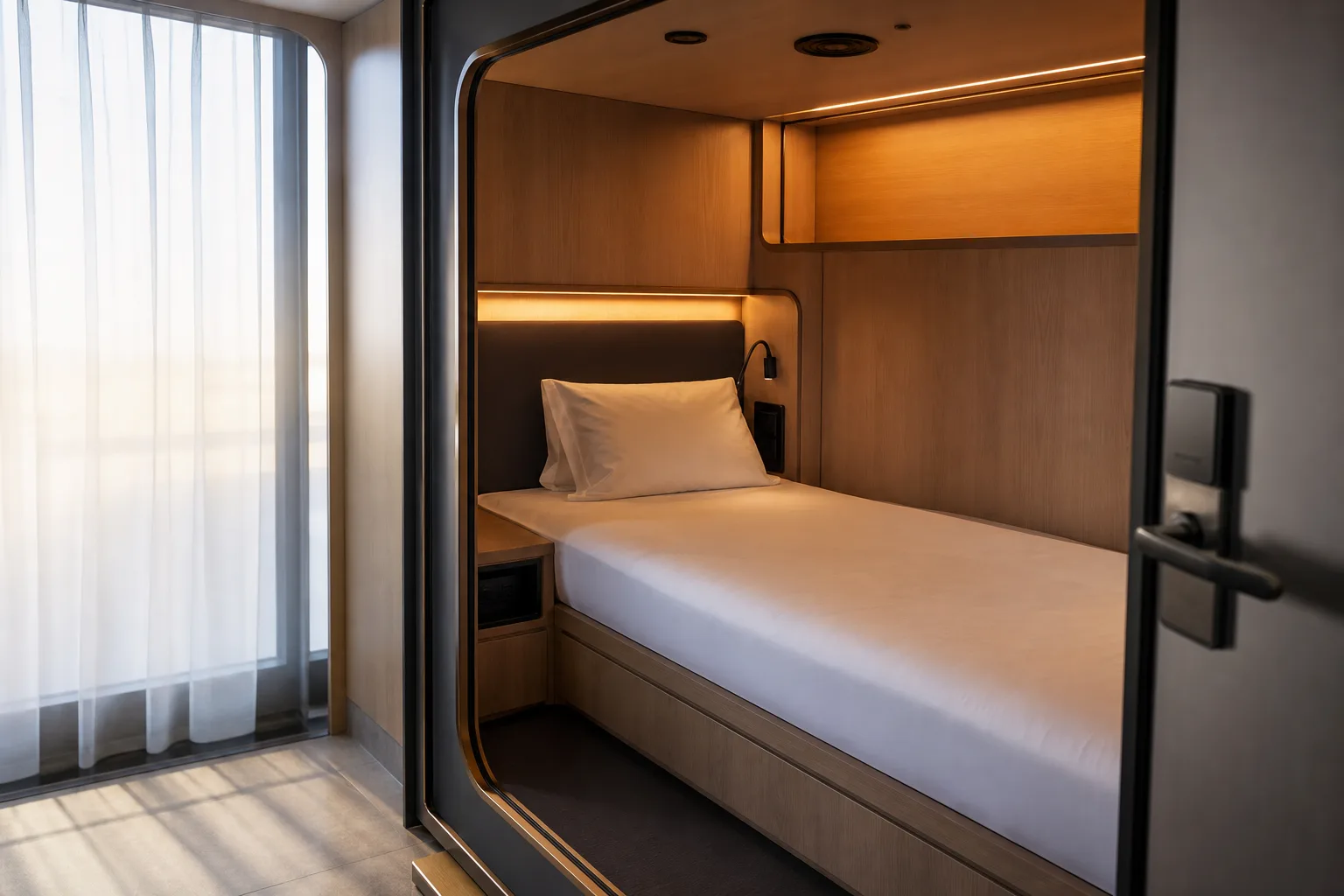
The Sleeping Cabins Rental licence operates under activity code 7730.90 and sits within the rental and leasing of other machinery and equipment classification as applied to modular or pod-style sleeping units. It authorises the short-term rental of standalone sleeping cabins, transit pods, airport-style rest units, and compact accommodation structures designed for temporary occupancy.
This licence is distinct from hotel or holiday home licensing — there is no requirement to operate a full hospitality stack, including food and beverage or concierge infrastructure. Revenue is typically generated on a per-hour, per-night, or subscription basis, making it a capital-efficient entry into Dubai's accommodation market.
Which authority regulates the Sleeping Cabins Rental licence in Dubai
The primary licensing authority depends on where you choose to operate. For mainland operations, the licence is issued by the Dubai Department of Economy and Tourism (DED), whose e-services portal is accessible at eservices.dubaided.gov.ae. For free zone operations, the relevant free zone authority issues the licence instead.
If cabins are positioned and marketed as guest accommodation, the Dubai Department of Economy and Tourism may require additional registration beyond the standard trade licence, so operators should clarify this requirement early in the setup process.
Can foreign nationals own 100% of a Sleeping Cabins Rental business in Dubai
Yes. Under amendments to the UAE Commercial Companies Law, foreign nationals are permitted to hold up to 100% ownership of a business operating under this activity code. This applies to both mainland DED-licensed entities and free zone companies.
This ownership flexibility makes the model particularly attractive to international investors and operators seeking direct exposure to Dubai's 17+ million annual international overnight visitors without requiring a local Emirati partner.
What external approvals are needed beyond the trade licence itself
Operators should anticipate several external approvals in addition to the core trade licence. A Civil Defence NOC is required for any built or semi-permanent cabin structure installed on a physical site, and Dubai Municipality approval is needed for zoning and land-use compliance where cabins are installed on physical premises.
These two approvals are the primary gates that extend setup timelines and are not discretionary — they must be factored into project planning from the outset. Additionally, VAT registration with the Federal Tax Authority becomes mandatory once annual turnover exceeds AED 375,000, and MOHRE compliance applies if staff are hired on the mainland.
Does VAT apply to sleeping cabin rental income in Dubai
Yes. A 5% VAT rate applies to rental income generated from sleeping cabin operations in Dubai. VAT registration becomes mandatory once annual turnover crosses the threshold of AED 375,000.
Registration and ongoing compliance are managed through the Federal Tax Authority portal. Operators should build VAT obligations into their financial modelling from the outset, particularly given the per-hour and per-night revenue structures common in this segment.
What is the market opportunity for sleeping cabin rentals in Dubai
Dubai welcomed over 17 million international overnight visitors in 2023, and the emirate's tourism infrastructure continues to attract sustained investment. Invest in Dubai identifies hospitality as a priority sector within the broader economic diversification agenda.
Globally, the pod and cabin accommodation segment is valued at over USD 1.2 billion and is growing, driven by demand for affordable, flexible short-stay options. Within Dubai specifically, budget and transit accommodation remains underserved in high-footfall zones including airports, major exhibition centres such as Dubai World Trade Centre, and industrial accommodation corridors — representing a direct commercial opportunity for licence holders.
Who are the typical target customers for a sleeping cabin rental operation in Dubai
The activity code 7730.90 model is designed to serve a broad range of short-stay customers. Primary target segments include transit travellers, budget-conscious tourists, event attendees, and workers requiring short-term temporary accommodation.
High-footfall locations such as airports, exhibition centres, and industrial accommodation corridors are identified as particularly underserved, making them strong candidate sites for cabin deployment. The scalability of the model is driven by adding cabin units rather than expanding built infrastructure, which keeps capital requirements lean.
What are the staffing and employment compliance requirements for this licence
If an operator hires staff on the Dubai mainland, compliance with Ministry of Human Resources and Emiratisation (MOHRE) regulations is required. This includes properly structured employment contracts and adherence to applicable Emiratisation quotas depending on company size and sector classification.
Free zone operators are subject to the employment rules of their specific free zone authority, which may differ from mainland MOHRE requirements. Operators should confirm the applicable staffing obligations with their chosen licensing authority during the setup process to avoid compliance gaps.
Sleeping Cabins Rental License in Dubai
Dubai's hospitality market has a growing gap between full hotels and short-term apartments, and sleeping cabin rentals sit squarely in that gap. Transit pods at airports, capsule units near business districts, and micro-cabin co-living formats are all gaining ground here, and each one needs the right commercial structure behind it.
This guide covers what the sleeping cabins rental license covers, how to get one, and whether a mainland or free zone setup makes more sense for your operation.
Key Stats at a Glance
| Activity | Sleeping Cabins Rental |
|---|---|
| Issuing authority (mainland) | Dubai Department of Economy and Tourism (DET) |
| Foreign ownership | 100% permitted – Foreign Ownership rules apply on both mainland and free zone |
| Typical setup timeline | 5 to 10 working days for free zone; 2 to 4 weeks for mainland with premises approval |
| Hospitality oversight | Dubai Tourism and Commerce Marketing (DTCM) for guest-facing units |
| VAT registration threshold | AED 375,000 annual revenue – Federal Tax Authority (FTA) |
| Market context | Dubai welcomed over 17 million international visitors in 2023 – Visit Dubai, Department of Economy and Tourism |
What This License Covers

A sleeping cabins rental license lets you rent out enclosed, self-contained sleeping units on a short-stay basis. That covers a range of formats: airport transit pods, capsule-style units in malls or transport hubs, micro-cabin co-living spaces, and short-stay booths designed for business travellers or transit passengers.
The license covers the commercial rental of the units themselves. It does not automatically cover food and beverage service, spa facilities, or long-term residential tenancy. If you want to add any of those, each one needs its own approval or a separate activity added to your license.
What falls under this activity
- Renting individual sleeping pods or cabins for periods of a few hours to a few nights
- Operating capsule-format accommodation in transit or commercial locations
- Managing micro-cabin units within a co-living or serviced accommodation complex
- Franchising or managing cabin units on behalf of a property owner
What needs separate approval
- Food and beverage service within the cabin facility
- Long-term residential tenancy arrangements
- Hotel-classified accommodation requiring a DTCM hotel license
- Any cabin located inside an airport, which needs an NOC from the relevant transport or airport authority
DTCM oversight applies if your cabins are guest-facing and operate as a hospitality unit. In practice, most sleeping cabin operations will need to register with DTCM in addition to holding a DET trade license. Check the Visit Dubai portal for current DTCM classification rules before you finalise your activity scope.
Mainland vs Free Zone: Which Setup Works for You
This is the biggest choice you will make when setting up. The right answer depends on one thing above all: do you physically operate the cabin units yourself, or are you managing, franchising, or consulting on units that others own?
| Factor | Mainland (DET) | Free Zone (Meydan Free Zone) |
|---|---|---|
| Client access | Direct access to UAE consumers and government contracts | Mainly international clients and B2B operators |
| Physical premises | Required – lease agreement needed for license | Flexi-desk options available; no physical cabin site needed for the license itself |
| Foreign ownership | 100% permitted under current UAE commercial law | 100% foreign ownership as standard |
| DTCM registration | Required for guest-facing hospitality units | Required if you operate physical cabin units in Dubai |
| Setup cost | Higher – physical office and premises costs apply | Lower – Dubai Trade License from AED 12,500 |
| Best for | Operators running a fixed cabin site in Dubai | Managers, franchisors, and operators targeting tourists or corporate clients without a fixed site |
Mainland via DET gives you direct access to UAE consumers and the ability to work directly with government entities and UAE-based property developers. You will need a physical premises agreement, and DTCM registration is almost certain to apply. This is the right route if you are opening a cabin facility at a fixed location inside Dubai.
Meydan Free Zone suits operators who are managing or franchising cabin units, building a booking platform, or setting up a holding structure before committing to a physical site. Overhead is lower, setup is faster, and you keep 100% ownership. If you later want to operate physical units directly in the UAE market, you can add a mainland branch or restructure at that point.
VAT applies whatever your jurisdiction once annual revenue crosses AED 375,000. You must register with the Federal Tax Authority (FTA) before you hit that threshold, not after.
Free Business Setup Cost Calculator
Calculate NowStep-by-Step Setup Guide
- Step 1, book your trade name: Use the DET e-Services portal for a mainland company, or the Meydan Free Zone portal for a free zone setup. Check your company name availability before you start the application.
- Step 2, confirm your activity code: Make sure the sleeping cabins rental activity is approved in your chosen jurisdiction before you go further. The code and permitted scope can differ between mainland and free zone.
- Step 3, submit your setup documents: These typically include passport copies, a business plan summary, and your chosen legal structure. Meydan Free Zone processes this quickly and can guide you through the paperwork.
- Step 4, get premises approval or an NOC: If your cabins are inside an airport, mall, or transport hub, you need a no-objection certificate from the relevant authority before your license is issued. This step takes the most time, so start it early.
- Step 5, get your trade license: Once initial approval is granted and premises documents are in order, your trade license is issued. For free zone companies, this can happen within days.
- Step 6, register with DTCM if applicable: Any guest-facing hospitality unit in Dubai needs DTCM registration. Do this immediately after your trade license is issued, not as an afterthought.
- Step 7, open a corporate bank account: You need this before you can take revenue. Free zone companies sometimes find this step slower than the license itself. Business banking support through mCore can help you move faster here.
- Step 8, register with FTA if needed: If you expect to cross AED 375,000 in annual revenue, register for VAT before you start trading.
Compliance and What You Need in Place
A sleeping cabin operation has more compliance layers than a standard retail or consulting business. Each layer is manageable, but you need to plan for all of them before you open.
Civil Defence approval
Enclosed sleeping units are a fire safety priority. Dubai Civil Defence needs to approve the layout, fire suppression systems, emergency exits, and ventilation of any cabin facility before it opens to guests. This is not optional and is not fast. Build it into your pre-opening timeline.
Health and hygiene standards
Shared or sequential sleeping facilities are subject to health and hygiene inspections by the Dubai Health Authority (DHA) or the relevant municipality. Standards cover linen handling, cleaning protocols, air quality, and pest control. Check the Dubai Health Authority guidelines for hospitality and accommodation facilities to confirm what applies to your specific format.
DTCM classification
If you are operating a guest-facing unit, DTCM will classify it and set minimum standards for the guest experience. Annual renewal of that classification is required. Missing a renewal puts your whole operation at risk.
Employment rules
If you hire staff to manage the units, Ministry of Human Resources and Emiratisation (MOHRE) rules apply. That covers employment contracts, end-of-service entitlements, and Emiratisation targets if you scale beyond a certain headcount. Check the MOHRE portal for current thresholds and duties before you hire.
Annual license renewal
Your trade license needs annual renewal. DTCM classification renewal runs on its own cycle. Keep both calendars in view. A lapsed license means you cannot legally operate, and reinstatement takes time you will not want to lose mid-season.
Market Opportunity
Dubai International Airport is one of the busiest airports in the world by passenger volume. Long layovers, delayed connections, and early-morning arrivals create real, recurring demand for short-stay sleeping options that a hotel room is too expensive and too far away to solve. Transit pods and airport-adjacent capsule units address that gap directly.
The broader trend is also moving in the right direction. Capsule hotels and micro-cabin formats have been mainstream in Japan and South Korea for years. They are now expanding across Europe and Southeast Asia. The Gulf is the next logical market, driven by the same pressures: high hotel costs, a large transit population, and a growing appetite for budget-conscious business travel.
Corporate and event-driven demand adds another layer. During GITEX, the Dubai Shopping Festival, and the legacy events from the Expo site, hotel room rates spike sharply. Sleeping cabin units priced below the hotel floor attract a specific segment of business traveller who needs rest, not a full hotel stay.
According to IMARC Group, the UAE hospitality sector continues to grow steadily, supported by government investment in tourism infrastructure and rising visitor numbers. Statista data confirms that Dubai remains one of the top ten most visited cities globally, with visitor volumes recovering strongly post-2020 and continuing to climb. That trajectory supports long-term demand for alternative accommodation formats, including sleeping cabins.
The barriers to entry are real: Civil Defence approval, DTCM registration, premises agreements in premium locations, and the capital needed to fit out a cabin facility properly. But those same barriers protect you once you are operating. A well-run cabin facility in the right location has pricing power and repeat custom that a standard short-term rental does not.
Conclusion
A sleeping cabins rental license is a workable entry point into Dubai's hospitality market. The compliance load is higher than a standard commercial license, but it is not unmanageable if you plan ahead. The key is matching your setup structure to how and where you plan to operate. If you own or lease a physical cabin site, a mainland license through DET is the right base. If you are managing, franchising, or building a platform first, Meydan Free Zone gives you a faster, lower-cost starting point with full foreign ownership.
Either way, confirm your activity code and jurisdiction before you sign any premises agreement or commit capital to fit-out. The sequence matters here more than in most business types.
Speak to the Meydan Free Zone team to confirm the right activity code and get a cost estimate before you commit to a jurisdiction. You can also use the business cost calculator to get an initial figure in minutes.
Ready to Launch Your Business in Dubai?
Let's Connect