
Table of Contents
Frequently Asked Questions
What is activity code 5610.07 and what does it cover
Activity code 5610.07 is the commercial license code for mobile food cart operations in Dubai. It covers the sale of food and beverages from a cart that moves between locations, rather than from a fixed premises.
Permitted formats under this code include push carts, trolleys, trailer-mounted units, kiosk-style carts at markets or events, and motorised vending vehicles in approved zones. The defining feature is mobility — a single license can cover multiple trading locations, provided each site has the correct approvals.
This code sits within the broader food and beverage industry but is distinct from fixed restaurant or café operations, which require a different license code and a permanent premises.
What licenses and permits are required to run a mobile food cart in Dubai
Running a mobile food cart legally in Dubai requires several approvals, not just a trade license. You will need all of the following before you begin trading:
- A commercial trade license from DET or Meydan Free Zone
- A food safety permit from Dubai Municipality
- A cart inspection certificate from Dubai Municipality
- An RTA permit if you operate on public roads or pavements
- Event or venue approval for malls, private sites, or festival grounds
Dubai Municipality sets the food safety standards and must physically inspect your cart before you trade. The RTA controls access to public spaces separately. For events, confirm whether the organiser coordinates venue permits before committing to a pitch fee.
Should I set up on the mainland or in a free zone for a mobile food cart business
The right choice depends primarily on where you plan to trade, not on cost alone. Mainland (DET) licensing is best suited to operators who want to trade on public streets, Dubai Municipality-managed parks, and general public sites across Dubai.
Free zone licensing (such as Meydan Free Zone) suits operators focused on private events, hotel grounds, contracted venues, or designated zones. Both options allow 100% foreign ownership.
A key practical difference is the office requirement. Mainland setup requires a registered address, while free zone operators can often use flexi-desk options, which can reduce overhead costs for cart-only businesses.
How much does it cost to start a mobile food cart business in Dubai
Costs vary depending on your license type and the number of permits required. Budget across three main categories:
- Trade license fee: from AED 12,500 at Meydan Free Zone
- Dubai Municipality food permit: varies by cart size and inspection outcome
- RTA public space permit: site-specific and applied per location
These figures represent starting points. Your total setup cost will depend on how many locations you plan to operate from, the size and type of your cart, and whether you require additional venue-specific approvals.
How long does it take to set up a mobile food cart business in Dubai
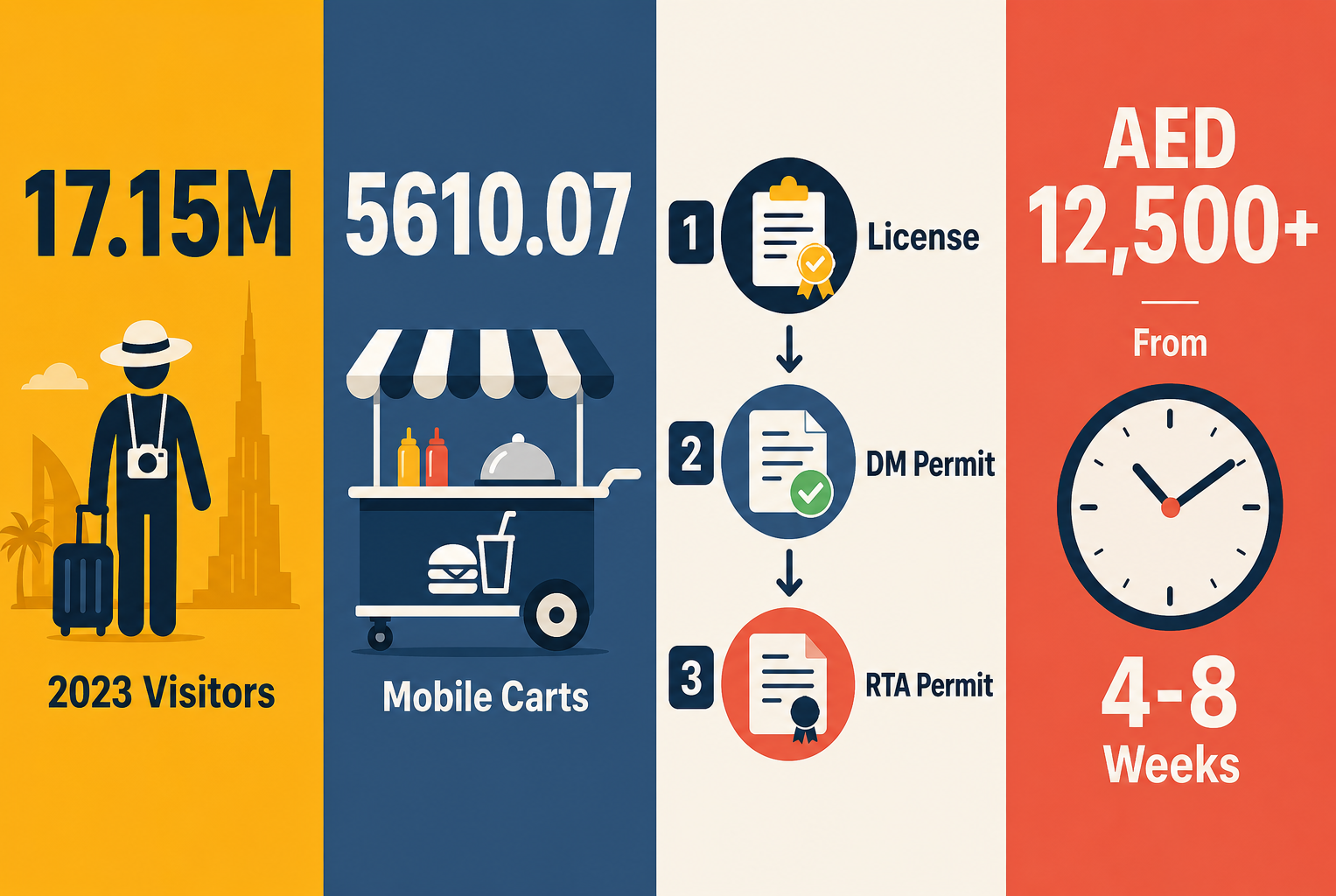
The typical setup timeline runs from 4 to 8 weeks from the point of application to your first day of trading. This covers the trade license application, Dubai Municipality food safety registration, cart inspection, and RTA permit processing.
Timelines can vary depending on how quickly your cart passes the physical inspection and whether you need additional site-specific approvals. Preparing your documentation in advance and booking your cart inspection early can help avoid delays.
What are the steps to apply for a mobile food cart license in Dubai
The setup process follows six key steps:
- Step 1 – Choose your structure: Decide between mainland and free zone based on your intended trading locations.
- Step 2 – Book your trade name: Check company name availability before submitting any application.
- Step 3 – Apply for your trade license: Submit through DET or Meydan Free Zone using activity code 5610.07.
- Step 4 – Register with Dubai Municipality: Apply for your food safety permit and book the cart inspection.
- Step 5 – Get your RTA permit: Apply per location if you plan to use public roads or pavements.
- Step 6 – Secure venue approvals: Confirm site-specific permissions before trading at any private or event location.
Completing these steps in order reduces the risk of delays, particularly around the Municipality inspection, which must be passed before you can legally begin selling.
Can a foreigner own 100% of a mobile food cart business in Dubai
Yes. 100% foreign ownership is permitted for mobile food cart businesses in Dubai under both mainland and free zone structures. This applies to activity code 5610.07.
For free zone setup, full foreign ownership has long been standard. On the mainland, UAE reforms now allow 100% foreign ownership across a wide range of commercial activities, including food and beverage operations of this type. You do not need a local Emirati partner or sponsor to operate a mobile food cart business.
Who are the key regulators overseeing mobile food cart operations in Dubai
Two main regulators oversee mobile food cart businesses in Dubai, each controlling a different aspect of your operation:
- Dubai Municipality is responsible for food safety. It issues the food safety permit and conducts the physical cart inspection that must be passed before trading begins.
- RTA (Roads and Transport Authority) controls access to public roads and pavements. Any operator selling on a public road or walkway must hold a valid RTA permit for that specific location.
For event-based trading, the event organiser or venue manager typically coordinates site-specific approvals, though you remain responsible for confirming these are in place before you trade. The trade license itself is issued by DET (for mainland) or the relevant free zone authority.
Start a Mobile Food Cart Business in Dubai
Dubai's street food scene is growing fast. Mobile food carts offer a low-cost entry into one of the UAE's most active consumer markets. Tourists, residents, and event-goers all spend regularly on quick, affordable food. The demand is real and consistent.
This guide covers the license, approvals, and practical steps to get a mobile food cart running legally in Dubai under activity code 5610.07.
Key Stats at a Glance
| Activity code | 5610.07 – Mobile Food Carts |
|---|---|
| License type | Commercial |
| Foreign ownership | 100% in free zones – Invest in Dubai |
| Dubai tourism visitors (2023) | 17.15 million – Visit Dubai |
| Key regulator | Dubai Municipality (food safety) and RTA (public roads) |
| Typical setup timeline | 4 to 8 weeks from application to first trade |
What the Activity Covers
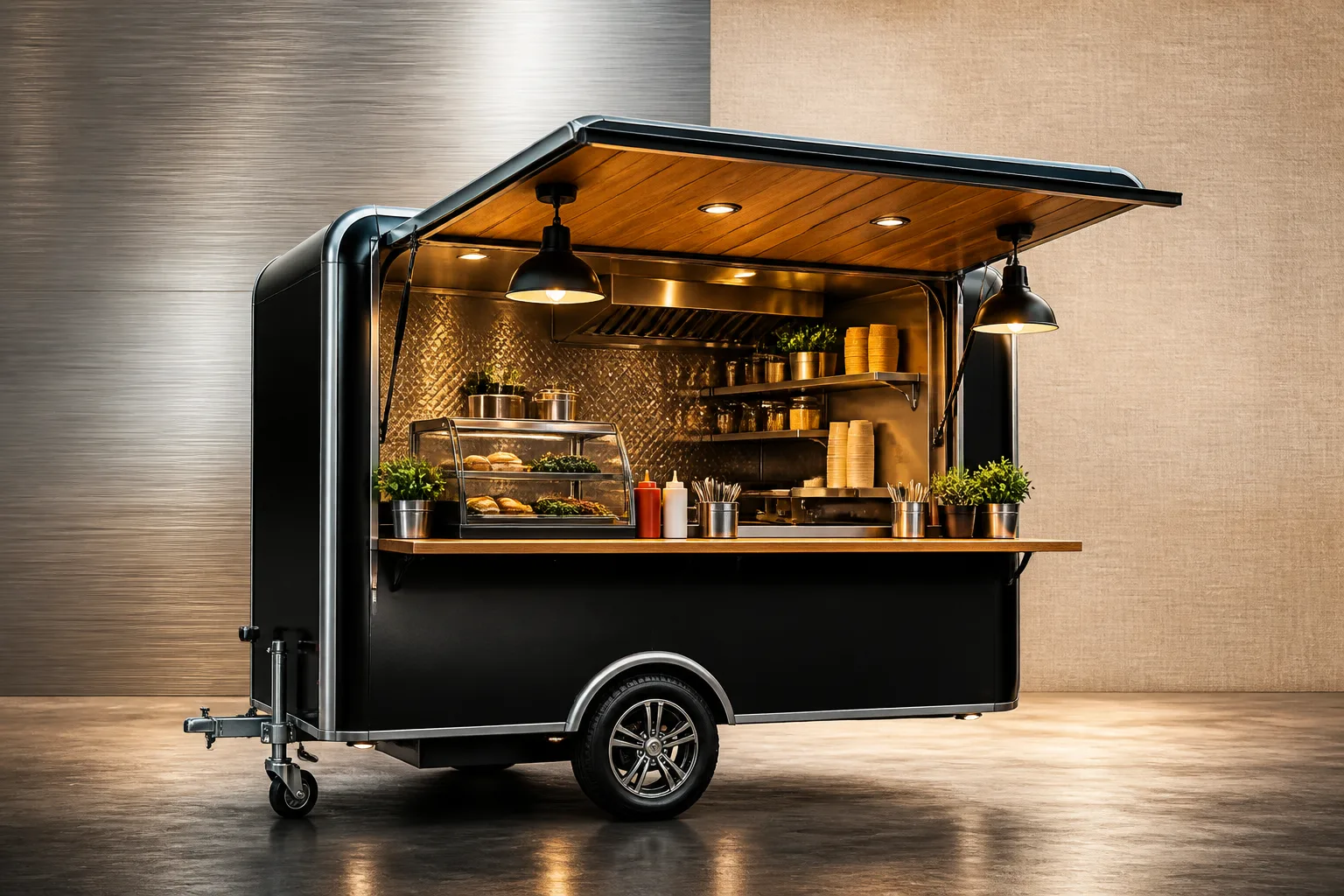
Activity code 5610.07 covers the sale of food and beverages from a mobile cart. It is a commercial license code. It sits within the broader food and beverage industry but is distinct from fixed restaurant or café operations.
Permitted formats under this activity include:
- Push carts and trolleys selling hot or cold food
- Trailer-mounted units towed to a site
- Kiosk-style carts at markets, parks, or events
- Motorised vending vehicles in approved zones
The key distinction is mobility. A fixed F&B outlet needs a different code and a permanent premises. A mobile cart operates from changing locations under a single license, provided each site has the correct approvals.
Key takeaway: Code 5610.07 gives you flexibility to trade across multiple locations. A fixed outlet license does not.
Licenses and Approvals You Need
Running a mobile food cart in Dubai legally requires more than one approval. The trade license is the starting point. Several other permits run alongside it.
- A commercial trade license from DET or Meydan Free Zone
- A food safety permit from Dubai Municipality
- A cart inspection certificate from Dubai Municipality
- An RTA permit if you operate on public roads or pavements
- Event or venue approval for malls, private sites, or festival grounds
Dubai Municipality sets the food safety standards. Your cart must pass a physical inspection before you trade. The RTA controls access to public spaces. You need their permit before you park and sell on any public road or walkway.
For events, the organiser usually coordinates venue permits. Confirm this before you commit to a pitch fee.
Mainland vs Free Zone Setup
| Factor | Mainland (DET) | Free Zone (Meydan Free Zone) |
|---|---|---|
| Trading locations | All public sites across Dubai | Private venues, events, and designated zones |
| Foreign ownership | 100% permitted | 100% permitted |
| Best suited for | Street trading and public markets | Event catering and private site operators |
| Office requirement | Registered address needed | Flexi-desk options available |
Mainland works best if you plan to trade on public streets or in Dubai Municipality-managed parks. A free zone license suits operators focused on private events, hotel grounds, or contracted venues. Choose based on where your customers are, not on cost alone.
Free Business Setup Cost Calculator
Calculate NowCosts and Setup Steps
Costs vary by license type and the number of permits you need. Expect to budget across 3 main categories:
- Trade license fee: from AED 12,500 at Meydan Free Zone
- Dubai Municipality food permit: varies by cart size and inspection outcome
- RTA public space permit: site-specific, applied per location
The setup process follows these steps:
- Step 1, choose your structure: Decide between mainland and free zone based on your trading locations.
- Step 2, book your trade name: Check your company name availability before you apply.
- Step 3, apply for your trade license: Submit through DET or Meydan Free Zone with your activity code 5610.07.
- Step 4, register with Dubai Municipality: Apply for your food safety permit and book the cart inspection.
- Step 5, get your RTA permit: Apply per location if you plan to use public roads or pavements.
- Step 6, secure venue approvals: Confirm site-specific permissions before you trade at any private venue or event.
Most founders complete this in 4 to 8 weeks. Municipality inspections are the most common source of delay. Have your cart ready and compliant before you book the inspection date.
You can also start a business remotely if you are setting up from outside the UAE. Meydan Free Zone supports remote applications.
Key takeaway: The trade license is quick. The Municipality permit takes longer. Start both in parallel, not in sequence.
Market Opportunity in Dubai
Dubai recorded 17.15 million international visitors in 2023. That footfall drives consistent demand for fast, affordable food across the city.
The strongest locations for mobile food carts include:
- Beach walks such as JBR and Kite Beach
- Public parks and community spaces
- Outdoor markets and weekend souks
- Festival and expo grounds
- Residential community events
Consumer appetite for diverse street food is growing. Cuisines with low ingredient cost and fast preparation, such as Asian street food, wraps, and fresh juices, perform well. Price point matters. Most cart customers spend between AED 20 and AED 60 per visit.
The outdoor event calendar runs year-round, with peak activity from October to April. Operators who secure regular event slots can build a predictable revenue base alongside street trading.
Key takeaway: Dubai's event season and tourism volume give mobile cart operators a genuine and repeatable customer base.
Conclusion
A mobile food cart business in Dubai is commercially workable with the right permits in place. The setup process is more simple than most founders expect. The key is getting the Municipality permit and RTA approvals sorted early, not as an afterthought.
Meydan Free Zone offers a Dubai Trade License from AED 12,500, with support for activity code 5610.07 and the full setup process. Speak to an advisor to confirm the right license structure for your food cart concept.
Ready to Launch Your Business in Dubai?
Let's Connect