
Table of Contents
Frequently Asked Questions
What is activity code 7120.93 and what does it cover in Dubai
Activity code 7120.93 refers to Foundation & Piling Testing Services in Dubai's business classification system. It sits within ISIC Division 71 — Architectural and Engineering Activities; Technical Testing and Analysis.
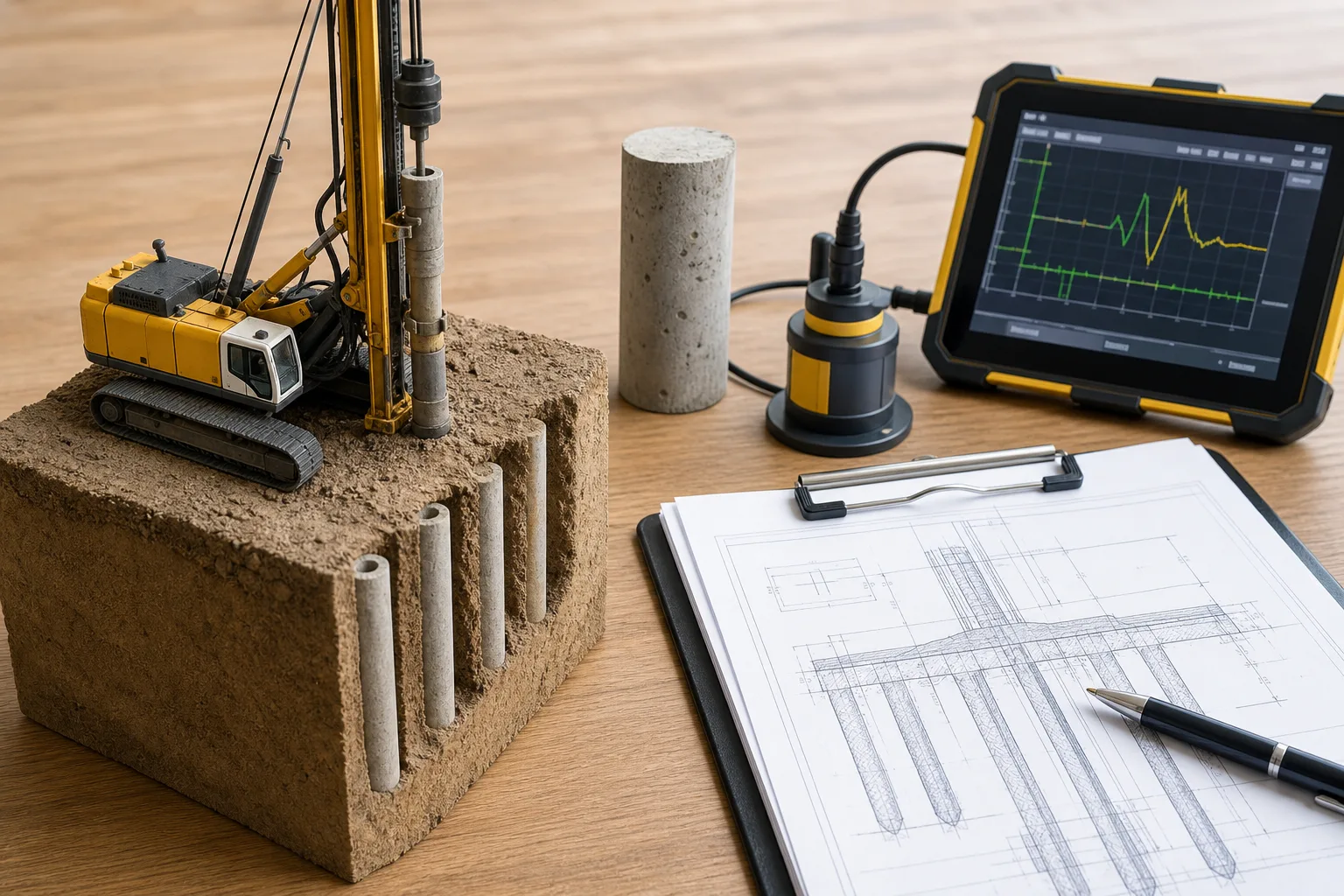
The scope includes static and dynamic load testing on piles and foundations, pile integrity testing using low-strain and high-strain methods, soil bearing capacity verification, settlement monitoring, and the production of regulatory compliance reports and certifications.
Unlike general geotechnical consultancy, this is a hands-on, equipment-intensive discipline. Clients are typically main contractors, property developers, and government infrastructure bodies who are contractually or regulatorily required to commission these tests.
Who regulates Foundation and Piling Testing Services licences in Dubai
The primary licensing authority for this activity on the mainland is the Dubai Department of Economy and Tourism (DET), formerly known as the DED. They issue the commercial or professional licence under activity code 7120.93.
In addition to the DET, Dubai Municipality is involved in technical approvals, particularly where certified testing reports are submitted as part of building permit or construction compliance processes.
Operators working on government or semi-government infrastructure projects may also need to satisfy the requirements of the relevant project authority, such as the Roads and Transport Authority (RTA) or other municipal bodies.
Can a foreign national own 100% of a Foundation and Piling Testing company in Dubai
Yes. Following the 2021 amendments to the UAE Commercial Companies Law, foreign nationals are permitted to own 100% of companies engaged in most business activities on the mainland, including technical testing and engineering services.
This means there is no longer a mandatory requirement to have a UAE national partner holding a 51% stake for this type of activity. However, it is advisable to confirm the specific ownership rules with the DET at the time of application, as certain regulated professional activities may still carry conditions.
Free zone structures have always permitted 100% foreign ownership, but free zone entities face restrictions when conducting on-site project work on the mainland without an additional mainland presence or a local service agent arrangement.
What is the recommended legal structure for setting up this business in Dubai
A Limited Liability Company (LLC) is the most common and practical legal structure for operators setting up a Foundation & Piling Testing Services business on the Dubai mainland. It offers liability protection for shareholders and is well recognised by government procurement bodies.
The LLC structure is particularly important for companies intending to bid on government and semi-government contracts, as these clients typically require a mainland-registered entity with a valid DET licence and relevant technical approvals.
Free zone company structures are an alternative, but operators should be aware that conducting on-site testing work across the UAE mainland without a mainland entity or branch can create compliance complications. Most serious operators in this sector opt for a mainland LLC from the outset.
Why is demand for foundation and piling testing considered structural rather than cyclical in the UAE
Foundation and piling testing is mandatory on most large-scale construction and civil engineering projects across the UAE, particularly those involving government or semi-government clients. This means the demand is driven by regulatory and contractual obligation rather than discretionary client spending.
Every new piling contract triggers a corresponding testing requirement. As long as construction activity continues — and Dubai's pipeline includes the Dubai 2040 Urban Master Plan, metro expansions, and ongoing road infrastructure upgrades — the demand for certified testing services remains consistent and project-linked.
The UAE construction sector was valued at over USD 130 billion in active projects in 2024, according to IMARC Group. This scale of activity, combined with mandatory testing requirements, creates a commercially stable environment for licensed operators in this niche.
What are the key steps to obtain a Foundation and Piling Testing Services licence in Dubai
The setup process follows a defined sequence. The first step is to determine jurisdiction — mainland (DET) is generally preferred for operators intending to work on government and municipal contracts, as free zone entities face on-site work restrictions without a mainland presence.
The next steps involve reserving a trade name through the DET portal and selecting a legal structure (typically an LLC), followed by submitting an initial approval application to the DET with the relevant documentation.
Subsequent steps include securing a physical office address (a tenancy contract registered with Ejari is required for mainland licences), obtaining any additional technical approvals from Dubai Municipality, and completing the final licence issuance. Engaging a business setup consultant familiar with technical and professional licence categories can help avoid delays in the approval chain.
What is the competitive landscape like for foundation and piling testing in Dubai
At the specialist end of the market, the competitive landscape is relatively thin. Most established players are large multinationals or well-entrenched regional engineering firms with long-standing relationships with tier-one contractors and government bodies.
This creates a clear commercial opening for mid-sized operators who can deploy certified equipment and qualified engineers. Subcontract work from tier-one contractors represents a particularly accessible entry point, as large contractors frequently outsource specialist testing rather than maintaining in-house capability.
The key differentiators in this market are equipment certification, the qualifications of the engineering team, turnaround time on test reports, and the ability to meet the documentation standards required by Dubai Municipality and project-specific technical specifications.
Does a free zone company need a separate mainland licence to offer foundation and piling testing services on construction sites in Dubai
In most cases, yes. Free zone entities are generally restricted from conducting on-site commercial activities on the UAE mainland without an additional mainland presence. For a service like foundation and piling testing — which is inherently site-based — this is a significant practical limitation.
Operators registered in a free zone who wish to work directly on mainland construction projects typically need to either establish a mainland branch of their free zone company or set up a separate mainland LLC. Some free zones offer dual-licence arrangements, but these should be verified carefully against the specific requirements of the DET and the relevant project authorities.
For operators whose primary market is government and semi-government infrastructure projects, setting up directly on the mainland from the outset is generally the more efficient and commercially straightforward approach.
Foundation & Piling Testing Services License in Dubai
Dubai's construction pipeline runs into hundreds of billions of dirhams, and every structure in it rests on foundations that must be tested, certified, and signed off before a single floor goes up. That creates steady, specialist demand for geotechnical testing firms, and it does not slow down when the market softens, because the testing is mandatory, not discretionary.
This guide covers what the foundation and piling testing license covers, who needs it, how to get it in Dubai, and why Meydan Free Zone is a practical base for this activity.
What This License Covers
A foundation and piling testing license lets your company carry out geotechnical testing and reporting on construction sites in Dubai. The work sits at the technical end of the construction supply chain, and it is required by law before any structure can progress past the foundation stage.
The core activities under this license include:
- Static and dynamic load testing on piles
- Pile integrity testing using low-strain and high-strain methods
- Pile driving analysis and monitoring
- Soil investigation and geotechnical reporting
- Foundation performance assessment and certification
Who oversees this
Dubai Municipality sets the technical standards for geotechnical testing on site. The Dubai Department of Economy and Tourism (DET) issues the commercial license. If you work on mainland sites, you also need to be registered in Dubai Municipality's contractor classification system. Both bodies have a say in how you operate.
Who your clients are
Your clients are main contractors, developers, and government infrastructure bodies. They need your reports before they can get building permits approved. That means you are not selling a discretionary service. You are a required step in the approvals process, which gives you a stable position in the supply chain once you are established.
Why entry is not easy
The barriers here are real. You need calibrated testing rigs, licensed civil or geotechnical engineers on your company register, third-party accreditation for your methods, and professional indemnity cover. Nobody will hire an uncertified testing firm, and no authority will accept a report from one. That last part works in your favour once you are properly set up, because it keeps out undercapitalised competitors.
Key Stats at a Glance

| Activity | Foundation & Piling Testing Services |
|---|---|
| License category | Professional / Technical Services |
| Foreign ownership | 100% via free zone; 100% on mainland for most activities – Invest in Dubai |
| Regulatory bodies | Dubai Department of Economy and Tourism (DET); Dubai Municipality |
| UAE construction market | The UAE construction sector continues to expand, with large-scale infrastructure and real estate projects driving sustained demand for specialist testing services – IMARC Group |
| Typical setup timeline | 5 to 10 working days for a free zone license; mainland timelines vary by approvals |
| VAT registration threshold | AED 375,000 annual taxable turnover – Federal Tax Authority |
Mainland vs Free Zone: Which Setup Works for You
This is the biggest choice you will make when setting up. Let your target clients decide it, not the price.
| Factor | Mainland (DET) | Free Zone (Meydan Free Zone) |
|---|---|---|
| Client access | Direct work with UAE government bodies and public infrastructure projects | Mainly private-sector and internationally contracted engagements |
| Government contracts | Eligible to bid directly | Requires a mainland partner or subcontracting arrangement |
| Office requirement | Physical office required | Flexi-desk options available |
| Setup speed | Longer, due to municipal registration and DET approvals | Faster, typically 5 to 10 working days |
| Setup cost | Generally higher | Lower starting point; Dubai Trade License from AED 12,500 |
| Foreign ownership | 100% permitted for most professional activities | 100% permitted |
Mainland setup
A mainland license from DET lets you work directly with UAE government bodies and bid on public infrastructure contracts. If your target clients include Roads and Transport Authority projects, Dubai Municipality-contracted works, or other government-linked infrastructure programmes, you need a mainland setup. There is no way around this.
Free zone setup
A Meydan Free Zone license works well if your business model focuses on consultancy, reporting, and testing engagements contracted through private developers or international clients. You can still work on UAE sites by subcontracting or partnering with a mainland-licensed entity. Many firms start here to keep costs low and move to a dual structure as the client base grows.
The practical middle ground
A free zone setup does not lock you out of the UAE market. It just means you need a local partner arrangement for site-based work on government projects. For a firm that is starting out, or one that mainly produces reports and analysis rather than running on-site rigs, the free zone route is simpler and faster to get operational.
Free Business Setup Cost Calculator
Calculate NowStep-by-Step Setup Guide
- Step 1, book your trade name: Use the DET e-Services portal for a mainland company, or the Meydan Free Zone portal for a free zone one. You can check your company name availability before you start the application.
- Step 2, confirm the correct activity code: Verify the code is approved in your chosen jurisdiction before you submit anything. The activity code determines what you are legally allowed to do, so get this right first.
- Step 3, prepare your supporting documents: You will need engineer qualifications (civil or geotechnical, with proof of relevant credentials), an equipment list with calibration records, and professional indemnity insurance. Have these ready before you submit.
- Step 4, submit your application and pay fees: Submit through the relevant portal. For Meydan Free Zone, the process is online and straightforward. For mainland, expect additional steps through DET and possibly Dubai Municipality.
- Step 5, collect your license: Once approved, you get your trade license. For a free zone company, this can happen within 5 to 10 working days in most cases.
- Step 6, register with Dubai Municipality: If you plan to carry out on-site testing on mainland projects, you need to register in Dubai Municipality's contractor classification system. This is a separate process from the trade license and takes additional time.
- Step 7, open a corporate bank account: A UAE business bank account is essential before you start trading. Meydan Free Zone's business banking support can help you navigate this process.
Compliance and What You Need in Place
Getting the license is step one. Staying compliant and keeping clients is the ongoing work. Here is what you need to have in place before you start and maintain throughout.
Qualified personnel
You need licensed civil or geotechnical engineers on your company register. Clients and authorities will ask for proof of qualifications before they accept your reports. Engineers must hold credentials recognised in the UAE, and in some cases you will need to get those credentials attested. Do not assume overseas qualifications transfer automatically.
Equipment calibration
Your testing rigs and instruments must be calibrated regularly and certified by an accredited third party. Dubai Municipality and most main contractors will ask for current calibration certificates before they allow your equipment on site. Keep a calibration schedule and do not let certificates lapse.
Professional indemnity insurance
Clients and authorities will ask for this. A foundation failure traced back to a testing error is a significant liability. Professional indemnity cover protects you and is often a contractual requirement before you can be appointed. Get adequate cover before you pitch for work, not after you win it.
VAT registration
Once your annual taxable turnover crosses AED 375,000, you must register with the Federal Tax Authority. If you are working with large contractors or developers, you may hit this threshold quickly. Register on time. Breaking the rules on VAT compliance carries financial penalties. Meydan Free Zone's mAccounting service can help with VAT registration support if you need it.
Annual license renewal
Your trade license must be renewed every year. If you are registered with Dubai Municipality as a contractor, that registration also needs to be kept current. Missing a renewal puts your ability to operate at risk and can void contracts mid-project.
Dubai Municipality compliance for site work
If your engineers are going on site to carry out testing, you are subject to Dubai Municipality's technical oversight. Reports must follow the municipality's prescribed formats, and your methods must meet the relevant UAE standards. Get familiar with these requirements before you take on your first project, not during it.
Market Opportunity
Dubai's construction output is one of the largest in the region, and it shows no sign of slowing. Major infrastructure programmes, residential mega-projects, and commercial developments all require geotechnical testing at the foundation stage. That demand is structural, not cyclical, because testing is mandated by the approvals process.
According to IMARC Group, the UAE construction and engineering testing sector continues to grow alongside the country's broader infrastructure expansion. For a specialist firm with the right credentials, the pipeline of work is real and consistent.
The barriers to entry, which feel like obstacles when you are setting up, become your competitive advantage once you are established. A firm with calibrated equipment, accredited engineers, and a clean track record of accepted reports is hard to displace. Main contractors and developers prefer to stay with testing firms they trust, because switching mid-project creates delays and paperwork.
If you want to explore the full range of Meydan Free Zone business activities available under professional and technical services, the list covers over 2,500 approved activities across sectors.
Conclusion
Foundation and piling testing is a specialist, regulated activity with steady demand tied directly to Dubai's construction output. The license is achievable, but the compliance requirements around qualified staff, calibrated equipment, and municipal registration are non-negotiable. Get those in place before you start, not as an afterthought.
The choice between mainland and free zone comes down to your client base. Government infrastructure work needs a mainland setup. Private-sector and internationally contracted testing can run efficiently from a free zone. Many firms use both structures as they grow.
Speak to Meydan Free Zone to confirm the right activity code for your scope of work and get a clear cost estimate before you commit.
Ready to Launch Your Business in Dubai?
Let's Connect