
Table of Contents
Frequently Asked Questions
What is activity code 7730.11 and what does it cover in Dubai
Activity code 7730.11 — Renting of Animals covers the commercial leasing of animals to third parties for a defined period and purpose. This includes livestock herds, racehorses, camels, and other animals rented out for farming, film production, heritage tourism, or competitive racing.
Typical clients operating under this code include equestrian clubs, racing operators, farms, film productions, heritage event organisers, and agri-tourism operators. The activity is a recognised commercial classification under Dubai's trade licensing framework.
Who are the typical clients for an animal rental business in Dubai
Demand for animal rental services in Dubai comes from a diverse range of sectors. Key client types include equestrian clubs, racing operators, farms, film and media productions, heritage event organisers, and agri-tourism operators.
The revenue model can span short-term rental contracts, seasonal leasing, event-based hire, and longer-term herd management agreements — each carrying different contractual and compliance requirements depending on the client and use case.
What are the steps to set up an animal rental business under activity code 7730.11 in Dubai
The setup process follows the standard Dubai trade licence sequence with additional sector-specific approvals. First, choose your jurisdiction — mainland (DED) or a free zone such as Meydan Free Zone. Then register your trade name and select activity code 7730.11 through Dubai DED e-Services for mainland, or via your chosen free zone authority.
After obtaining initial approval, secure sector-specific permits from the Ministry of Climate Change and Environment for animal welfare compliance and cross-emirate movement. For racehorse rental, coordinate with the UAE General Authority of Sports and Dubai Sports Council for event or competition-linked activities.
Submit supporting documents including a tenancy contract (Ejari for mainland), Memorandum of Association, passport copies, and a No Objection Certificate where applicable. If annual turnover is expected to exceed AED 375,000, VAT registration through the Federal Tax Authority is mandatory.
Should an animal rental business in Dubai be set up on the mainland or in a free zone
Mainland licensing through DED allows direct contracts with UAE government entities, racing authorities, and agricultural operators without requiring a local distributor or agent — an advantage if your client base includes public sector farms or government-affiliated racing clubs.
Meydan Free Zone offers 100% foreign ownership, fast incorporation timelines, and a location directly adjacent to Meydan Racecourse, making it a structurally strong choice for operators focused on racehorse rental and equestrian event services. For most foreign founders entering this niche, Meydan Free Zone warrants serious consideration before defaulting to mainland.
What animal welfare regulations apply to animal rental operators in Dubai
Animal welfare and transport in the UAE are governed by federal law. The Ministry of Climate Change and Environment sets the standards for animal handling, housing conditions, and cross-emirate movement. Operators must demonstrate that rented animals are maintained to prescribed welfare standards throughout the rental period.
These requirements apply regardless of the type of animal involved — whether leasing a herd of goats for an agri-tourism site or a thoroughbred racehorse for a racing syndicate. Compliance is not optional and forms part of the licensing and ongoing operational obligations.
What are the requirements for importing or moving horses in the UAE
The import or movement of horses within the UAE requires valid health certificates and adherence to UAE veterinary import protocols. These rules are designed to protect animal health and biosecurity across the emirates.
Current import rules and procedures are accessible via the Ministry of Economy and Tourism, Establishing companies. Operators should verify requirements with the Ministry of Climate Change and Environment before arranging any cross-emirate movement or international import of horses.
Which regulatory bodies oversee racehorse rental and equestrian activities in Dubai
Dubai's equestrian and racing sector is overseen by several bodies. The Dubai Sports Council and the UAE General Authority of Sports both support and regulate sporting activities involving animals, including competitive racing. Operators involved in event or competition-linked rental activities must coordinate with these authorities.
Racehorse rental operators must also align with Dubai Racing Club and Emirates Racing Authority requirements for any animals entering competitive or event environments. This is a structured, well-governed industry with clear regulatory pathways rather than a grey area.
Does an animal rental business in Dubai need to register for VAT
VAT registration is mandatory for any business whose annual turnover is expected to exceed AED 375,000. This threshold applies to animal rental businesses operating under activity code 7730.11 in the same way it applies to other commercial activities in Dubai.
Registration is completed through the Federal Tax Authority. Operators should factor VAT obligations into their pricing structures and contractual agreements from the outset, particularly for longer-term herd management or seasonal leasing arrangements where cumulative revenue can cross the threshold quickly.
Start a Renting of Animals (E.G. Herds, Race Horses) Business in Dubai
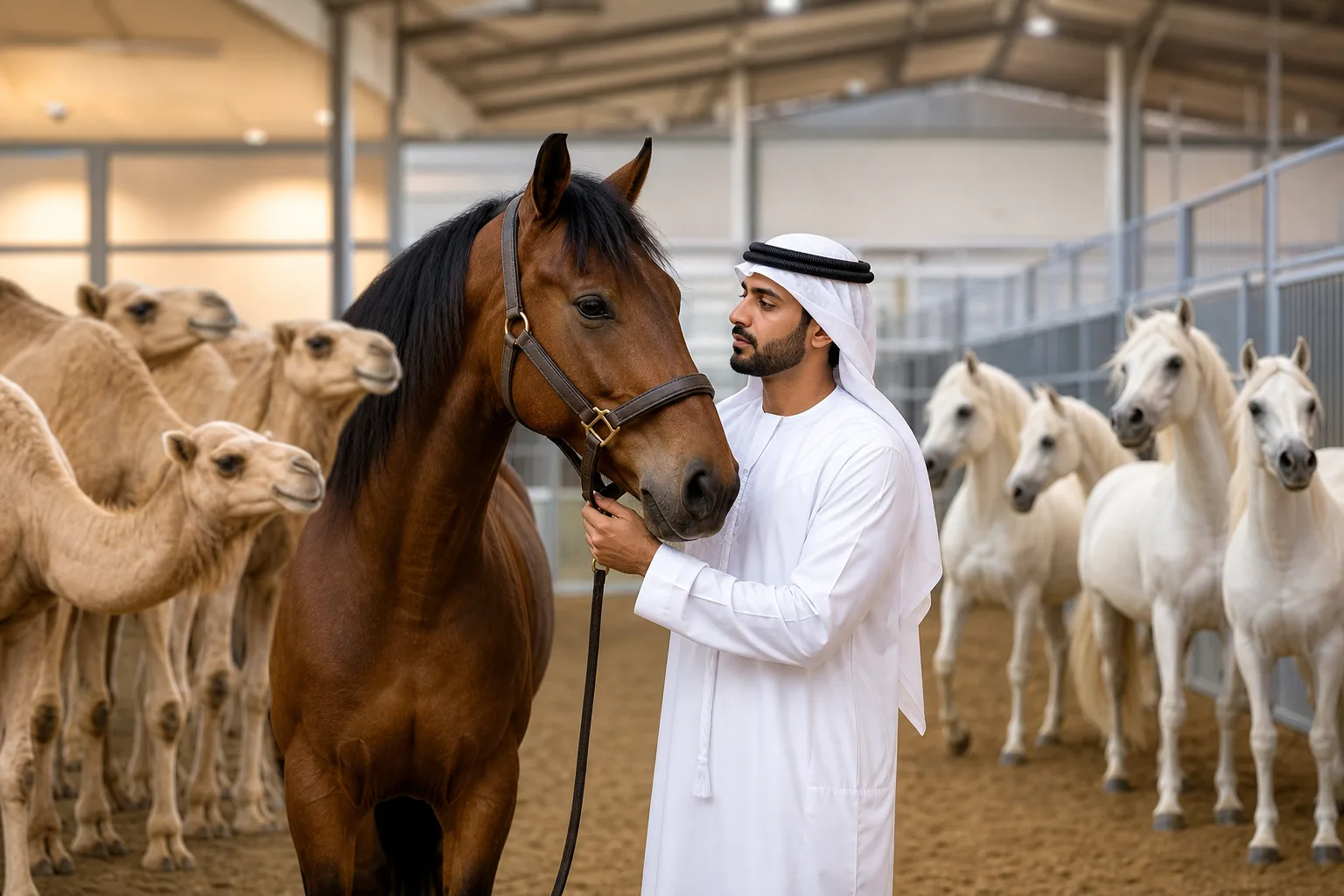
A film production needs camels for three days. An agri-tourism site needs a herd for the season. A racing syndicate wants a thoroughbred on lease rather than on its balance sheet. In Dubai all three are commercial transactions with a license behind them.
This guide covers what activity code 7730.11 lets you do, the animal welfare approvals that sit on top of the trade license, and how jurisdiction choice plays out for equestrian operators in particular.
Key Stats at a Glance
| Activity code | 7730.11 |
|---|---|
| Activity name | Renting of Animals |
| What it covers | Commercial leasing of livestock herds, racehorses, camels and other animals for a defined period and purpose |
| Welfare regulator | Ministry of Climate Change and Environment, for handling, housing and cross-emirate movement |
| Sports oversight | Dubai Sports Council and the UAE General Authority of Sports |
| Racing bodies | Dubai Racing Club and Emirates Racing Authority, for animals entering licensed competition |
| Horse movement | Valid health certificates and UAE veterinary import protocols apply |
| VAT | 5% on most rental transactions, registration at AED 375,000 – Federal Tax Authority |
| Equestrian market | Among the most active in the Middle East, with Dubai hosting international racing events |

What This License Covers
Activity code 7730.11 covers the commercial leasing of animals to third parties for a defined period and purpose.
That includes livestock herds, racehorses, camels and other animals rented out for farming, film production, heritage tourism or competitive racing.
The revenue model runs in four shapes: short-term rental contracts, seasonal leasing, event-based hire, and longer-term herd management agreements.
Each carries different contractual and compliance duties depending on the client and the use, so do not write one template and assume it stretches across all four.
This is a recognised commercial category under Dubai's trade licensing framework, and the equestrian and racing sector around it is structured and well governed rather than a grey area.
That is worth knowing before you assume a niche activity means a light-touch regulator.
Who Your Clients Will Be
Demand comes from sectors that rarely overlap:
- Equestrian clubs and racing operators
- Farms and agricultural businesses
- Film and media productions
- Heritage event organisers
- Agri-tourism operators
Racing and equestrian clients are the highest value and the most demanding on paperwork, because any animal entering licensed competition brings racing authority conditions with it.
Film and heritage event work is more episodic but pays well for short deployments.
Agri-tourism and farming demand is steadier, particularly across the northern emirates and the peri-urban farming zones around Dubai, and it suits herd management agreements rather than day rates.
Mainland or Free Zone
| Factor | Mainland (DET) | Free Zone (Meydan Free Zone) |
|---|---|---|
| Who you can sign with | UAE government entities, racing authorities and agricultural operators, directly | Private and international clients |
| Local agent | Not needed for these contracts | May be needed for some mainland work |
| Foreign ownership | Set by DET rules for the activity | 100% yours |
| Location | Anywhere in the emirate | Directly adjacent to Meydan Racecourse |
| Setup speed | Standard DET process | Faster |
Mainland lets you sign directly with UAE government entities, racing authorities and agricultural operators without a local distributor or agent, which matters if public sector farms or government-affiliated racing clubs are in your client mix.
Meydan Free Zone gives full foreign ownership, fast setup and a location next to Meydan Racecourse, which is a structural advantage for racehorse rental and equestrian event work rather than a marketing line.
Let your clients decide it, not the price.
[blockCTACostCalculator]
Step by Step Setup Guide
- Step 1, pick your jurisdiction: Mainland through DET, or Meydan Free Zone. For equestrian-focused operators the free zone is worth weighing seriously before defaulting to mainland.
- Step 2, book your trade name and select the activity: Activity code 7730.11, through the DET portal or your free zone authority.
- Step 3, get initial approval: Then move straight on to the sector permits rather than treating them as an afterthought.
- Step 4, secure welfare and movement permits: From the Ministry of Climate Change and Environment, covering animal welfare compliance and cross-emirate movement authorisation.
- Step 5, coordinate with the sports bodies: For racehorse rental specifically, engage the UAE General Authority of Sports and Dubai Sports Council on any event or competition-linked work.
- Step 6, submit your supporting documents: Tenancy contract with Ejari for mainland, Memorandum of Association, passport copies, and an NOC where one applies.
- Step 7, take the license and register for VAT: With the Federal Tax Authority if annual turnover is expected to pass AED 375,000.
Compliance and What You Need in Place
Animal welfare
Welfare and transport are governed by federal law, and the Ministry of Climate Change and Environment sets the standards for handling, housing conditions and cross-emirate movement.
You have to show that rented animals are kept to those standards throughout the rental period, and that applies equally to a herd of goats on an agri-tourism site and a thoroughbred with a racing syndicate.
Moving horses
Import or movement of horses needs valid health certificates and adherence to UAE veterinary import protocols.
Check the current position with the Ministry before you arrange any movement, because biosecurity rules are not the place for assumptions.
Racing standards
Any animal entering licensed competition brings Dubai Racing Club and Emirates Racing Authority conditions with it, over and above your trade license.
Insurance
Commercial liability cover for rented animals is not optional in practice.
Standard UAE business policies will normally need specialist riders for livestock and high-value horses, so confirm the terms with a UAE-licensed insurer before you sign a rental contract, not after an incident.
Staff
Stable hands, handlers and veterinary staff must be registered with MOHRE on valid work permits and proper employment contracts. Informal arrangements in this sector carry real risk and are not worth taking on.
Market Opportunity
Dubai's equestrian culture, agricultural base and events industry create demand that is genuinely commercial rather than novelty.
The UAE equestrian market is among the most active in the Middle East, and Dubai hosts international racing events that draw global participation, which pulls in syndicates, owners and support businesses around them.
The global animal rental and leasing segment sits within the broader equipment and asset rental industry, tracked by IMARC Group, and the underlying economics are similar: an asset that earns repeatedly beats an asset sold once, as long as you can keep it in condition between hires.
Agricultural and agri-tourism demand supports the herd side, particularly across the northern emirates and the farming zones around Dubai.
That segment is less glamorous than racing but the contracts run longer, which is a useful counterweight to the seasonality of event and film work.
Conclusion
Renting animals in Dubai is a legally structured activity with an established client base and a clear regulatory path.
The business model works. What decides whether it runs smoothly is getting both halves of the compliance right: the trade license, and the sector approvals from the welfare and sports authorities.
Jurisdiction carries real weight here.
A free zone base next to a major racing venue is a structural fit for equestrian operators, while mainland remains the better route if your contracts lean towards government entities and agricultural operators across the wider UAE.
[blockCTAContact]
References
- Dubai Sports Council
- UAE General Authority of Sports
- Ministry of Climate Change and Environment
- Dubai Department of Economy and Tourism
- Federal Tax Authority
- Ministry of Economy and Tourism, Establishing companies
- Ministry of Human Resources and Emiratisation (MOHRE)
- IMARC Group