
Table of Contents
Frequently Asked Questions
What is activity code 8292.96 and what does it cover in Dubai
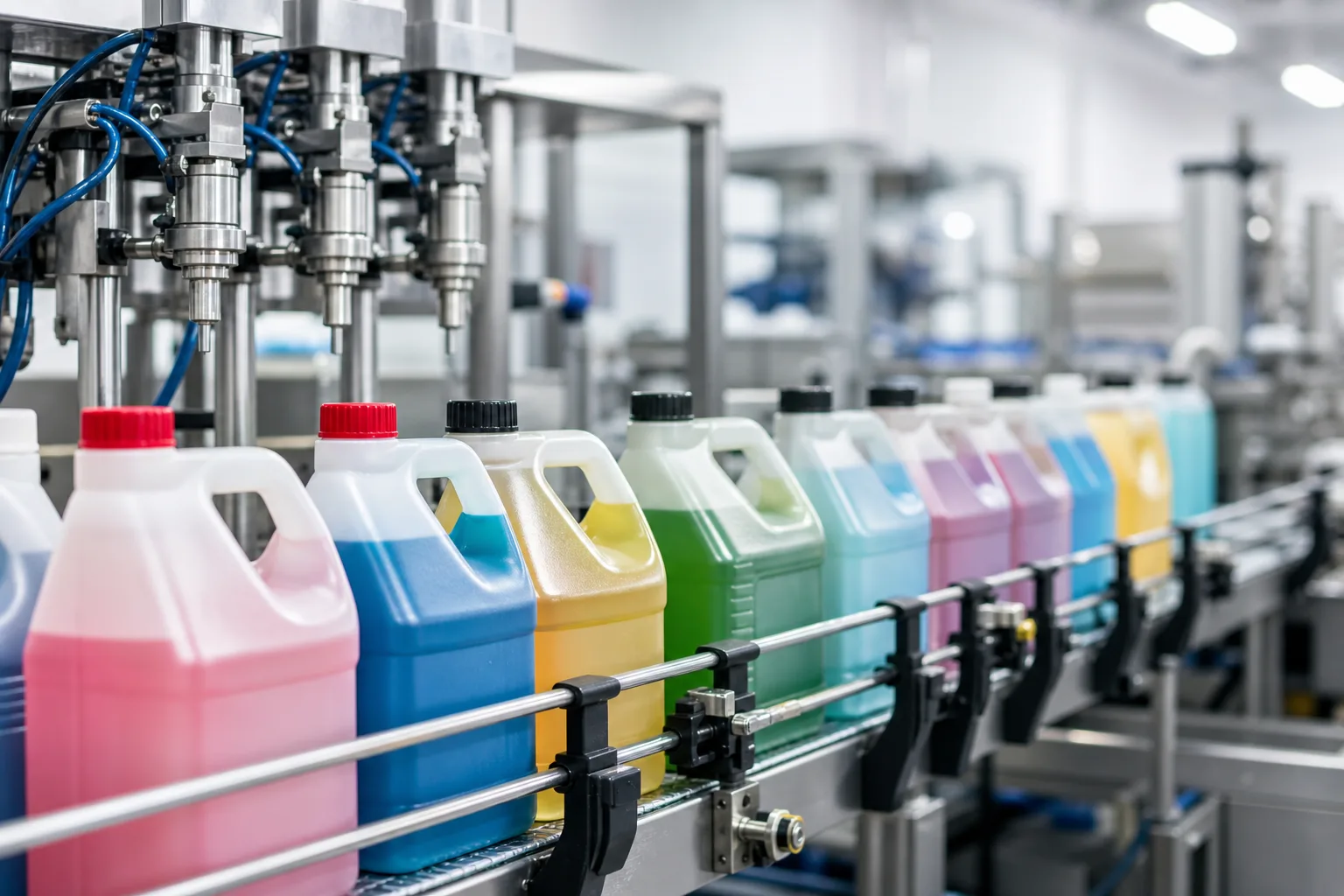
Activity code 8292.96 is the official classification for Vehicle Liquids Bottling in Dubai. It covers the bottling, filling, and packaging of vehicle-related liquids, including engine oil, coolant, brake fluid, power steering fluid, and windscreen wash.
Importantly, this activity relates to the filling, sealing, labelling, and distribution of finished units — not the manufacture of the base chemical compounds themselves. Operators source the liquid compounds from suppliers and package them for end distribution.
What type of licence is required to operate a vehicle liquids bottling business in Dubai
A vehicle liquids bottling business in Dubai requires either an Industrial or Commercial Trade Licence, depending on the scale and nature of operations. The licence can be issued through either the mainland Dubai DED or a free zone authority such as Meydan Free Zone.
Industrial activities that involve handling chemicals may also require a no-objection certificate (NOC) from Dubai Industrial City or a relevant industrial authority before the licence is finalised.
What are the differences between a mainland DED licence and a free zone licence for this activity
A mainland DED licence provides direct access to the UAE domestic market, government contracts, and unrestricted local trading. It is processed through the Dubai DED e-Services portal and requires trade name reservation, activity approval, an Ejari-registered tenancy contract, and initial DED approval.
A free zone licence — for example through Meydan Free Zone — offers 100% foreign ownership, no personal income tax, and full profit repatriation. It suits operators focused on regional export and B2B supply chains. However, direct retail sales into the UAE mainland from a free zone require either a local distributor or a separate mainland entity.
What regulatory and compliance requirements apply to vehicle liquids bottling in Dubai
Vehicle liquids are classified as hazardous or controlled substances in the UAE. Storage, labelling, and handling must comply with UAE Civil Defence fire and safety codes. Facilities must have appropriate containment, ventilation, and emergency protocols in place, and these will be inspected before a licence is issued.
Dubai Municipality oversees product safety standards and may require product registration for certain chemical formulations sold within the emirate. Compliance with these requirements is non-negotiable for operators in this sector.
How does VAT apply to a vehicle liquids bottling business in Dubai
The UAE applies a VAT rate of 5% on applicable goods and services, administered by the Federal Tax Authority (FTA). VAT registration becomes mandatory once a business's taxable turnover exceeds AED 375,000 annually.
Operators should factor VAT obligations into their financial planning from the outset, particularly if they are supplying both domestic and export markets, as different rules may apply to zero-rated exports versus local sales.
What import and customs requirements apply when bringing base liquids into Dubai
The import of base liquids — such as oils, glycols, and chemical concentrates — falls under the jurisdiction of the Ports, Customs and Free Zone Corporation (PCFC). Operators must ensure correct tariff classifications and have the required customs documentation in order at the point of entry.
Given the hazardous nature of many of these substances, additional documentation related to safety data sheets and chemical declarations may also be required. Working with an experienced customs agent is advisable to avoid delays at ports such as Jebel Ali.
Why is Dubai considered a commercially strong base for vehicle liquids bottling
Dubai benefits from one of the highest vehicle ownership rates in the world, generating consistent domestic demand from workshops, fleet operators, and retail channels. The active automotive aftermarket creates recurring demand for engine oils, coolants, brake fluids, and related products.
Beyond domestic demand, Dubai's logistics infrastructure — particularly DP World and Jebel Ali Port — positions operators for efficient distribution across the GCC and wider regional markets. The UAE's role as a regional automotive and logistics hub makes it a strategically sound location for this type of operation.
What premises requirements must a vehicle liquids bottling facility meet in Dubai
Because vehicle liquids are classified as hazardous goods, premises must meet hazardous goods storage standards. This includes appropriate containment infrastructure, adequate ventilation systems, and documented emergency protocols.
These requirements are enforced by UAE Civil Defence and will be subject to inspection before a licence is granted. Operators should engage with relevant industrial authorities early in the setup process — particularly if applying for a mainland licence — to ensure their chosen facility meets all applicable standards before committing to a tenancy agreement.
Setup Vehicle Liquids Bottling Business in Dubai
Every workshop, fleet yard and accessory shop in the UAE sells engine oil, coolant and brake fluid by the bottle. Somebody has to fill, seal and label those bottles, and it is not usually the company that made the chemical.
That packaging step is what activity code 8292.96 licenses. This guide covers what the code includes, what it leaves out, how mainland and free zone setup compare, the steps to get licensed, and the safety approvals that gate the whole thing.
Key Stats at a Glance
| Activity code | 8292.96 |
|---|---|
| Activity name | Vehicle Liquids Bottling |
| Category | Industrial packaging and automotive chemicals |
| License type | Industrial or commercial trade license, depending on scale |
| Where you can set up | Dubai mainland through DET, or Meydan Free Zone |
| Product category | Hazardous or controlled substances |
| Premises approval | UAE Civil Defence inspection before the license is issued |
| Imports | Through the Ports, Customs and Free Zone Corporation, with tariff codes and safety data sheets |
| VAT | 5%, registration a must above AED 375,000 turnover – Federal Tax Authority |
| Logistics | Jebel Ali and DP World for GCC distribution |
What This License Covers

Code 8292.96 covers bottling, filling and packaging vehicle liquids. In practice that means engine oil, coolant, brake fluid, power steering fluid and windscreen wash.
What you actually do
You source the liquid compound from a supplier, then fill, seal, label and distribute finished units. The value you add is packaging, presentation and distribution, not chemistry.
What sits outside the code
Manufacturing the base chemical compounds themselves. This is a packaging activity within industrial and automotive chemicals, and blending or producing the base product is a different thing entirely. Be clear on which side of that line your operation sits before you apply, because it changes the license and the approvals.
That narrower scope is an advantage. You can launch on a light industrial unit and a filling line rather than a chemical plant.
Who Your Clients Will Be
Workshops and service centres
The bread and butter. They get through oil and coolant continuously and they buy in cases, not drums.
Fleet operators
Taxi companies, logistics firms, rental fleets and delivery operations. Larger volumes, tighter pricing, and contracts worth having because the consumption is predictable.
Retail and accessory channels
Shelf-ready bottles with proper labelling, sold through auto parts shops and forecourts. Presentation matters most here, since the buyer is choosing between bottles.
Regional distributors
Buyers across the GCC and wider region, reached through Jebel Ali. This is where an export-focused operation makes its margin.
Where the money comes from
Private label work for other brands, your own label, or both. Private label gives you volume without marketing spend. Your own brand takes longer and holds more value.
Mainland or Free Zone
| Factor | Mainland (DET) | Free Zone (Meydan Free Zone) |
|---|---|---|
| Who you sell to | Open UAE market and government contracts | Export and regional B2B supply |
| Foreign ownership | Set by DET rules for the activity | 100% yours |
| Profits | Standard UAE rules apply | Full repatriation, no personal income tax |
| Local retail sales | No limits | Needs a distributor or a mainland entity |
| Premises | Ejari-registered unit meeting hazardous goods standards | Light industrial license options, same safety standards |
When mainland is the answer
A mainland license from the Dubai Department of Economy and Tourism (DET) gives direct access to the UAE market, government contracts and unrestricted local trading. If your plan is to supply UAE workshops and retailers yourself, that is the route.
When a free zone is the answer
A Meydan Free Zone license suits an export and regional supply model. Full foreign ownership, full profit repatriation, quicker setup, and Jebel Ali on your doorstep for outbound freight. Selling retail into the mainland from a free zone needs a local distributor or a separate mainland company, so build that into the plan rather than discovering it later.
Either way the premises have to meet hazardous goods standards. That is not a jurisdiction question, it is a safety one.
Let your customers decide it, not the price.
[blockCTACostCalculator]
Step by Step Setup Guide
- Step 1, pick mainland or free zone: Export-led operations generally point to a free zone. UAE market supply points to mainland through DET.
- Step 2, book your trade name and confirm the code: Check that 8292.96 is approved under your chosen authority before you go further.
- Step 3, find compliant premises: A light industrial unit or approved warehouse meeting hazardous goods storage standards. Civil Defence approval of the facility comes before the license is issued, so do not sign a tenancy on a unit that cannot pass.
- Step 4, apply for initial approval: Passport copies for all shareholders, a business plan summary and the signed tenancy contract.
- Step 5, get the sector approvals: You may need a no-objection certificate from the relevant industrial authority, product safety clearance from Dubai Municipality, and Civil Defence sign-off for handling and storing hazardous materials.
- Step 6, pay the fees, collect the license and register for VAT: Register with the Federal Tax Authority once the turnover threshold applies to you.
- Step 7, open a bank account and set up payroll: Register staff with the Ministry of Human Resources and Emiratisation and get WPS payroll running before you start operations.
Compliance and What You Need in Place
Civil Defence and the premises
Vehicle liquids count as hazardous or controlled substances. Storage, labelling and handling must meet UAE Civil Defence fire and safety codes, which means proper containment, ventilation and written emergency procedures. The facility gets inspected before licensing. This is the single biggest gate on your timeline, so start it early.
Product safety and registration
Dubai Municipality oversees product safety standards and may want certain chemical formulations registered before they are sold in the emirate. Check which of your lines that applies to before you print labels.
Labelling
Get this right at design stage. Hazard information, handling guidance and accurate contents all belong on the bottle, and reprinting a run is expensive.
Imports and customs
Base liquids such as oils, glycols and concentrates come in through the Ports, Customs and Free Zone Corporation. You need the correct tariff codes and complete documentation at the point of entry, including safety data sheets and chemical declarations. A good customs agent earns their fee here, because holds at Jebel Ali cost more than they charge.
VAT
Register once taxable turnover passes AED 375,000. Export sales and local sales can be treated differently, so if you supply both, get the treatment right from the first invoice.
Staff
Mainland operators answer to MOHRE for all hires, with Emiratisation targets to factor into headcount planning, plus WPS payroll from the first employee.
Market Opportunity
The domestic case is simple. The UAE has one of the highest vehicle ownership rates in the world, and an active automotive aftermarket behind it. Every one of those vehicles needs oil changes, coolant top-ups and brake fluid, on a schedule, forever. Demand is recurring rather than cyclical.
The export case rests on location. Dubai's logistics infrastructure, through Jebel Ali and DP World, puts GCC and wider regional markets within easy reach of a filling line here. Bottled liquids are heavy and low value per unit, so proximity to the customer matters, and Dubai is close to a lot of customers.
Put those together and you get a business with a steady local floor and a regional ceiling. That combination is what makes the packaging step worth licensing rather than importing finished bottles.
Conclusion
Vehicle liquids bottling under 8292.96 is a grounded operation with real demand on both sides, local and regional.
Three things decide whether it goes smoothly. The jurisdiction you pick, premises that satisfy hazardous goods rules, and customs and VAT handled properly from day one.
Get the facility approved first and the rest of the model is simple to scale.
[blockCTAContact]
References
- Federal Tax Authority
- DP World
- Dubai Department of Economy and Tourism
- Ports, Customs and Free Zone Corporation
- Ministry of Human Resources and Emiratisation