
Table of Contents
Frequently Asked Questions
What does activity code 8020.01 cover in Dubai
Activity code 8020.01 covers the remote and on-site monitoring of burglar alarms, fire alarms, and integrated electronic security systems, including ongoing maintenance contracts. It falls under ISIC Division 80: Security and Investigation Activities.
It is a distinct classification — separate from CCTV installation or manned guarding — focused specifically on alarm monitoring, response coordination, and system upkeep. If your business involves remotely monitoring alarm systems or coordinating emergency responses to triggered alarms, this is the correct activity code.
Who needs a Monitoring of Electronic Security Alarm Systems licence in Dubai
Any business that remotely or on-site monitors burglar alarms, fire detection systems, or integrated electronic security systems in Dubai requires this licence under activity code 8020.01.
The target customer base is broad and includes commercial property owners, residential developers, logistics operators, hospitality groups, and government facilities. Each of these segments typically requires continuous monitoring coverage and periodic maintenance, making the business model well-suited to recurring contract revenue.
What are the steps to set up an electronic security alarm monitoring business in Dubai
The setup process follows a clear sequence. First, choose your jurisdiction — either Mainland via the DED or a free zone such as Meydan Free Zone. Then reserve your trade name and select activity 8020.01 through the DED e-services portal or your chosen free zone's application system.
Next, prepare your documentation, including passport copies, a NOC if applicable, a business plan, and a tenancy agreement (Ejari for mainland). Security-related activities on the mainland typically require approval from Dubai Police or the Security Industry Regulatory Agency (SIRA) before the trade licence is issued, so factor this into your timeline.
Once approvals are received, your licence is issued. You should also register for VAT with the Federal Tax Authority if annual turnover exceeds AED 375,000, and register with MOHRE if hiring staff on the mainland.
What is the difference between setting up on the mainland versus a free zone for this licence
Both mainland (DED) and free zone options permit 100% foreign ownership following the UAE's 2021 reforms. However, there are meaningful practical differences between the two routes.
Mainland setup provides direct access to UAE government contracts and large local corporates, but requires a physical office with an Ejari tenancy agreement, involves higher initial costs, and has variable timelines due to external approvals from bodies such as SIRA or Dubai Police.
Free zone setup — for example through Meydan Free Zone — typically completes in 3 to 7 working days, allows flexi-desk or virtual office options, and carries lower upfront capital requirements. It is well-suited to operators building a regional monitoring hub or entering the market with leaner overheads, though accessing government contracts may require a local agent or branch.
Does an electronic security monitoring business in Dubai need approval from SIRA or Dubai Police
Yes. Security-related activities on the mainland typically require approval from Dubai Police or the Security Industry Regulatory Agency (SIRA) before a trade licence is issued by the DED.
This external approval step can affect your overall setup timeline, so it is important to factor it in from the outset. Free zone operators should verify the specific regulatory requirements applicable to their chosen jurisdiction and business model.
What is the VAT obligation for electronic security monitoring businesses in Dubai
VAT-registered businesses in the security services sector must comply with Federal Tax Authority (FTA) guidelines at the standard rate of 5%.
Registration for VAT is required if your annual turnover exceeds AED 375,000. Businesses approaching or exceeding this threshold should register with the FTA promptly to remain compliant. For detailed guidance, refer directly to the Federal Tax Authority.
What is the commercial opportunity for electronic security alarm monitoring in Dubai and the UAE
The UAE security services market is projected to grow steadily through 2028, driven by infrastructure investment and smart city development, according to Mordor Intelligence. Dubai accounts for the largest share of UAE commercial and residential construction activity, creating sustained demand for professional alarm monitoring services.
The business model is particularly attractive because it combines recurring contract revenue from ongoing monitoring and maintenance agreements with one-off installation fees. Target segments — including logistics operators, hospitality groups, and government facilities — typically require continuous coverage, supporting long-term client relationships and predictable cash flow.
Where can businesses verify activity eligibility and sector classification for this licence in Dubai
For sector classification and activity eligibility in Dubai, businesses should refer to the official Invest in Dubai portal, which provides authoritative guidance on licensed activities under the DED framework.
For free zone applications, the relevant free zone authority — such as Meydan Free Zone — manages its own application system and can confirm activity eligibility directly. Consulting a business setup specialist familiar with security sector licensing in Dubai can also help ensure the correct classification is applied from the outset.
Monitoring of Electronic Security Alarm Systems License in Dubai
Dubai's security sector is tightly regulated. Operating an alarm monitoring business without the right license will cost you contracts, fines, and damage to your name. This is not a sector where you can figure out compliance after you launch.
This guide covers what the Monitoring of Electronic Security Alarm Systems license covers, who issues it, how to set up, and whether a mainland or free zone structure suits your business model.
| Activity | Monitoring of Electronic Security Alarm Systems |
|---|---|
| Regulatory oversight | Dubai Police – Security Industry Regulatory Agency (SIRA) and Dubai Department of Economy and Tourism (DET) |
| Jurisdiction options | Mainland (DET) or Free Zone (e.g. Meydan Free Zone) |
| Foreign ownership | 100% permitted – Invest in Dubai |
| Dubai Police permit | Required in addition to commercial license, whatever jurisdiction you choose |
| Clients served | Residential, commercial, industrial, government |
What This License Covers
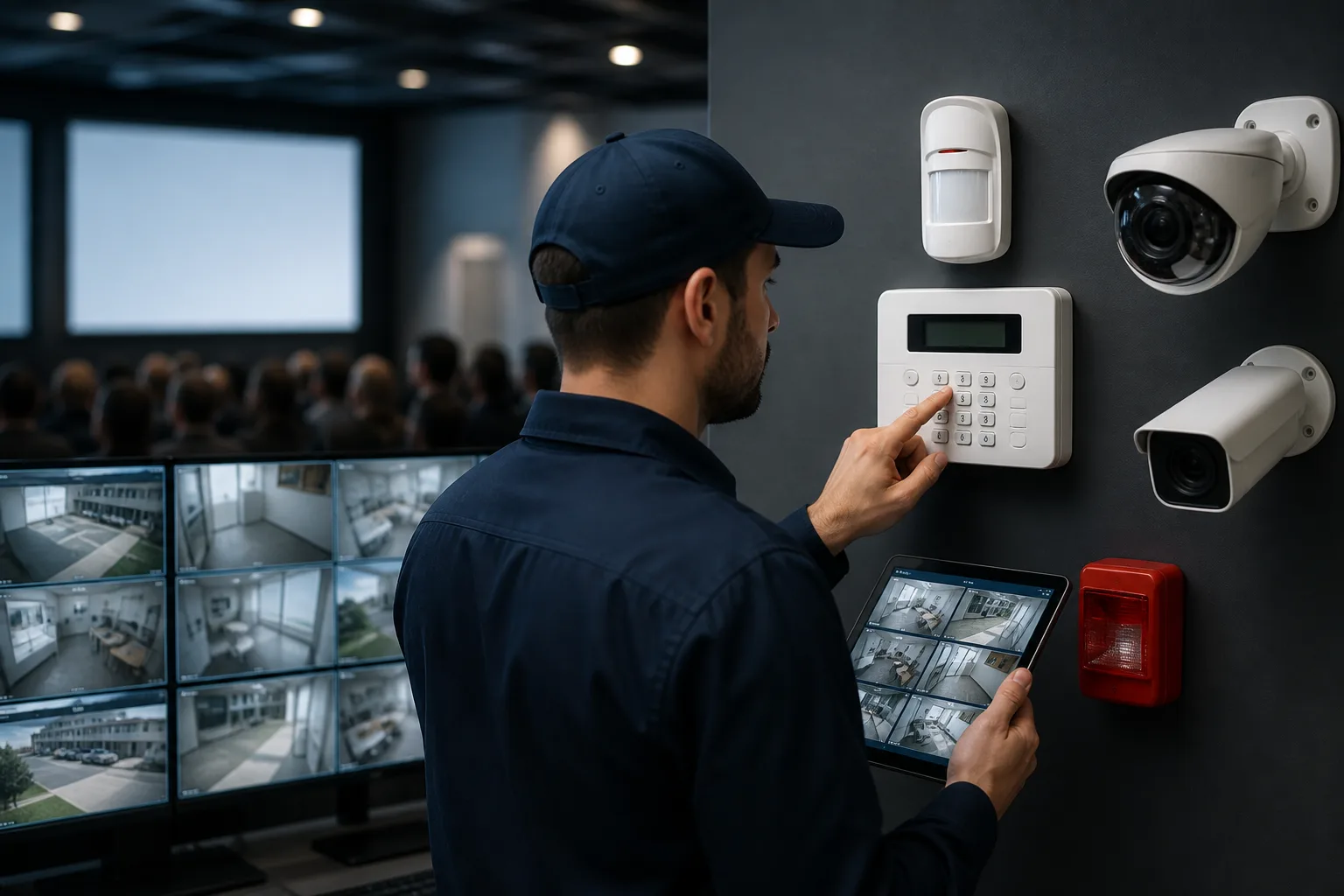
This license covers the remote monitoring of electronic security systems. That means watching over burglar alarms, fire alarms, CCTV feeds, and access control systems from a dedicated monitoring centre, and responding when something triggers an alert.
It does not cover installation or maintenance of those systems. Those are separate activities with their own codes. If you plan to install and monitor, you need both codes approved. Confirm this before you apply, not after.
The clients you will serve cut across every sector in Dubai:
- Residential developments and gated communities
- Commercial offices, retail, and hospitality
- Industrial and logistics facilities
- Government buildings and public infrastructure
Regulatory oversight sits with two bodies. Dubai Police, through its Security Industry Regulatory Agency (SIRA), controls who can operate in the security space. DET issues the commercial license for mainland operators. Both approvals are needed before you can trade.
This dual-approval structure is what makes the sector hard to enter quickly. It also means that once you are in, you are dealing with clients who take your credentials seriously. Government and large commercial clients will check both your DET license and your SIRA permit before they sign anything.
Mainland vs Free Zone: Which Structure Works

This is the biggest structural choice you will make. Get it wrong and you will either overpay for overhead you do not need, or cut yourself off from the clients you are trying to reach.
| Factor | Mainland (DET) | Free Zone (Meydan Free Zone) |
|---|---|---|
| Client access | Open UAE market, including government contracts | Mainly international clients and private sector |
| Office requirement | Physical office or approved premises required | Flexi-desk options available |
| Foreign ownership | 100% permitted | 100% permitted |
| Dubai Police permit | Required | Required |
| Visa quota | Linked to office space | Linked to license package |
| Setup cost | Generally higher | Lower entry point |
A mainland license from DET lets you work directly with UAE government bodies and bid on public tenders. If your target clients are government agencies, large real estate developers, or public infrastructure operators, mainland is the right call. The overhead is higher, but the contract access justifies it.
A free zone setup through Meydan Free Zone suits operators who are building a leaner model, serving private sector clients, or running an international monitoring operation with a UAE base. Costs are lower, and you can get started faster. You can also start a business remotely through Meydan Free Zone without needing to be in Dubai for every step of the process.
One thing does not change whatever jurisdiction you choose. You still need the Dubai Police SIRA permit. There is no shortcut around this. Factor the SIRA approval timeline into your planning from day one.
Free Business Setup Cost Calculator
Calculate NowHow to Set Up: Step-by-Step
The process has more steps than a standard commercial license because of the security sector approvals involved. Here is the full sequence.
- Step 1, book your trade name: Use the DET e-Services portal for a mainland company, or the Meydan Free Zone portal for a free zone setup. Use the Company Name Check tool to confirm availability before you commit.
- Step 2, confirm your activity code: Make sure the monitoring activity code is approved in your chosen jurisdiction. If you also plan to install or maintain systems, confirm those codes separately. Do not assume they are bundled.
- Step 3, get initial approval: Submit your application to DET or Meydan Free Zone. This gives you initial approval to proceed. You cannot apply for the SIRA permit without this.
- Step 4, apply for the Dubai Police SIRA permit: This is the security business permit that allows you to operate in the monitoring sector. You will need to submit company documents, details of your monitoring centre setup, and information on key personnel. SIRA will assess whether your operation meets the technical and security standards required.
- Step 5, set up your premises: For mainland, you need a physical office or approved monitoring centre. For free zone, a flexi-desk arrangement may be enough depending on your package. Confirm this with Meydan Free Zone before you sign anything.
- Step 6, submit tenancy or workspace agreement: This goes back to DET or your free zone authority to finalise the license.
- Step 7, apply for visas: Investor and employee visas come after the license is issued. Staff working in the monitoring centre will also need security clearance, which is a separate process.
- Step 8, open a corporate bank account: You need your license and SIRA permit in hand before most banks will open an account. Business banking support through mCore can help you navigate this step and avoid the common delays that slow new operators down.
Typical timelines vary. The commercial license can be issued in a few days through Meydan Free Zone. The SIRA permit takes longer. Budget four to eight weeks for the full process, and more if your monitoring centre setup needs inspection before approval. Delays almost always come from incomplete documentation at the SIRA stage, so get that paperwork right the first time.
Compliance and Ongoing Duties
Getting licensed is the start, not the finish. The compliance load in this sector is real and ongoing.
Dubai Police permit renewal
Your SIRA permit is not a one-time approval. It needs annual renewal. Dubai Police can audit your operation as part of that process. Keep your monitoring centre records, incident logs, and staff clearance documents current and accessible. Do not let renewal deadlines slip.
Staff background checks and security clearance
Everyone who works in your monitoring centre needs to pass a background check and hold valid security clearance. This applies to new hires as well as existing staff. If someone's clearance lapses, they cannot legally work in the centre until it is renewed. Build this into your HR process from the start.
Data handling and cybersecurity
Alarm monitoring businesses handle live video feeds, access logs, and sensitive client data. The UAE has clear rules on how that data must be stored, processed, and protected. The Telecommunications and Digital Government Regulatory Authority (TDRA) sets the framework for digital and cybersecurity compliance. You need to know what applies to your operation and build it into your systems before you go live, not as an afterthought.
Breaking the rules
Work without the right license or permit and you risk fines, permit cancellation, and cancelled contracts. In a sector where clients are government bodies and large commercial operators, a compliance failure does not just cost you one contract. It removes you from tender lists entirely. The damage to your name in this market is hard to recover from.
If you need help with VAT registration or corporate tax compliance as your business grows, mAccounting covers both through Meydan Free Zone's in-house accounting services.
Market Opportunity in Dubai
Dubai's security monitoring market is growing. The city's expansion in smart buildings, integrated facilities management, and large-scale infrastructure projects is driving sustained demand for professional monitoring services. This is not a short-term trend.
Government infrastructure projects, including new residential districts, transport hubs, and commercial developments, all need long-term monitoring contracts. These are not one-off jobs. They run for years, and they renew if you perform. Getting onto the approved vendor lists for these projects is the real commercial prize.
According to Mordor Intelligence, the broader security services market in the Middle East and Africa is on a sustained growth trajectory, with smart security and remote monitoring among the fastest-growing segments. Dubai sits at the centre of that demand.
The barriers to entry in this sector work in your favour once you are through them. The dual-approval requirement, the SIRA permit, the staff clearance process, and the monitoring centre standards all filter out operators who are not serious. Clients know this. When you are licensed and cleared, you are already a credible option. What separates operators who win tenders from those who do not comes down to response times, monitoring centre reliability, and the ability to demonstrate a clean compliance record. Price matters, but it is rarely the deciding factor for serious clients.
If you want to review the full range of security-related activities available, the Meydan Free Zone business activities list covers over 2,500 activities, including the monitoring and security codes relevant to this sector.
Conclusion
The Monitoring of Electronic Security Alarm Systems license is a regulated, specialist activity with real commercial upside in Dubai. The dual-approval process, the SIRA permit, and the ongoing compliance duties are not obstacles. They are the reason this market rewards operators who do it properly.
Get the structure right from the start. Choose your jurisdiction based on your target clients, not on setup cost alone. Get your SIRA permit documentation in order before you submit. And make sure your monitoring centre and staff clearances meet the standards before you go live.
Speak to Meydan Free Zone to confirm the right activity code and jurisdiction for your alarm monitoring business before you start. Getting this right at the beginning saves you significant time and cost further down the line.
Ready to Launch Your Business in Dubai?
Let's ConnectReferences
- Invest in Dubai
- Telecommunications and Digital Government Regulatory Authority (TDRA)
- Mordor Intelligence
- Dubai Department of Economy and Tourism (DET) e-Services