Table of Contents
Frequently Asked Questions
What activity code covers veterinary laboratory services in Dubai
Activity code 7500.95 is the designated classification for veterinary laboratory services in Dubai. It covers diagnostic, pathological, and analytical laboratory work for animals, including companion animals, livestock, and exotic species.
Services under this code include blood panels, haematology, microbiological and virological testing, histopathology, cytology, parasitology screening, and food-safety testing for animal-origin products.
Which regulatory authorities oversee veterinary laboratories in Dubai
Primary oversight is shared between the Dubai Municipality's Veterinary Services Department and the Ministry of Climate Change and Environment (MOCCAE), which governs federal veterinary practice standards, import health certificates, and animal disease surveillance.
Where laboratory outputs relate to food safety — such as testing animal-origin products entering the food chain — the Dubai Health Authority (DHA) may also hold intersecting jurisdiction. Founders are advised to clarify scope early to avoid duplicate approval cycles.
Employment compliance, including Emiratisation obligations, falls under MOHRE.
What are the facility requirements for obtaining a veterinary laboratory licence in Dubai
Facility standards are inspected by the relevant authorities before a licence is issued. Assessors evaluate minimum space requirements, biosafety cabinet specifications, clinical waste disposal protocols, and cold-chain storage arrangements.
There is no shortcut around the pre-licence facility audit — all standards must be met before operations can legally begin. Founders should factor this inspection stage into their setup timeline and capital planning.
What staff qualifications are required to operate a veterinary laboratory in Dubai
Staff qualifications are non-negotiable under Dubai's regulatory framework. Licensed veterinarians and certified laboratory technicians must be on the payroll before operations commence.
Employers must also comply with Emiratisation obligations governed by MOHRE. Ensuring the correct staff are hired and credentialled before the licence audit is a critical step in the setup process.
How long does it typically take to set up a veterinary laboratory in Dubai
The typical setup timeline runs from 6 to 12 weeks, measured from trade name reservation through to receipt of the operational permit. This range accounts for the sequential nature of the approval process across multiple authorities.
Attempting to run approvals in parallel without understanding the dependencies between steps is cited as the most common cause of delay. A structured, sequential approach to the licensing process is strongly recommended.
Should a veterinary laboratory in Dubai be set up on the mainland or in a free zone
A mainland licence via the Dubai Department of Economy and Tourism (DED) allows broader geographic client access across the emirate, which is often advantageous for a laboratory serving private clinics, government departments, and food processors.
A free zone entity may suit certain operational models, but founders must verify that activity code 7500.95 is approved within their chosen free zone before proceeding. Jurisdiction choice should be confirmed at the earliest stage of planning.
Who are the typical clients of a veterinary laboratory in Dubai
Veterinary laboratories in Dubai serve a broad mix of public and private sector clients. Core customer groups include private veterinary clinics, government animal health departments, livestock importers, and food processing firms.
The UAE's sustained growth in pet ownership — with an estimated companion animal population of over 1.5 million — and significant livestock import volumes create a stable, recurring client base. Food safety testing for animal-origin products adds further demand from the food industry.
What is the VAT registration threshold for a veterinary laboratory business in Dubai
VAT registration becomes mandatory once annual turnover exceeds AED 375,000. Veterinary laboratory operators should monitor revenue against this threshold and register with the Federal Tax Authority before it is breached.
Given the range of institutional clients — including government departments and food processors — many laboratories may reach this threshold relatively quickly after launch, making early VAT planning an important part of financial setup.
Veterinary Laboratory Setup in Dubai
There are more than 1.5 million pets in the UAE, a busy livestock import trade, and food safety rules that keep tightening. All three send samples to a laboratory. Somebody has to run the blood panels, read the slides and sign the report.
That work sits under activity code 7500.95. It is a real business with real barriers: a facility that passes inspection, qualified staff on the payroll, and approvals from more than one authority. This guide covers what the code allows, who your clients are, how the setup runs step by step, and what it costs to get to the first test.
Key Stats at a Glance
| Activity code | 7500.95, Veterinary Laboratory |
|---|---|
| What it covers | Diagnostic, pathological and analytical laboratory work for pets, livestock and exotic species |
| Main regulators | Dubai Municipality Veterinary Services and the Ministry of Climate Change and Environment – MOCCAE |
| Core federal law | UAE Federal Law No. 18 of 2009 on Animal Welfare |
| Pre-license step | Facility audit by Dubai Municipality before the operational permit is issued |
| Setup time | 6 to 12 weeks from trade name to operational permit |
| Starting capital outlay | From AED 300,000 for lab kit, biosafety build and fit-out |
| UAE pet population | Over 1.5 million companion animals |
| Market outlook | GCC animal health sector on a steady climb through 2028 – IMARC Group |
| VAT threshold | AED 375,000 taxable turnover a year – Federal Tax Authority |
What This License Covers

Code 7500.95 covers diagnostic, pathological and analytical laboratory work for animals. Pets, livestock and exotic species all fall inside it.
In practice the service list looks like this:
- Blood panels and haematology
- Microbiological and virological testing
- Histopathology and cytology
- Parasitology screening
- Food-safety testing on animal-origin products
That last line matters commercially. Testing meat, dairy and other animal products bound for the food chain pulls in a different customer base from clinical work, and it tends to come in volume.
Who Your Clients Will Be
Four groups send you samples:
- Private veterinary clinics with no laboratory of their own
- Government animal health departments
- Livestock importers who need clearance testing
- Food processing firms checking animal-origin products
The money comes three ways. Fee per test for one-off work. Retainer contracts with clinics that send you a steady flow. Government tenders for food safety and import testing, which carry both volume and reliable payment. Private clinic work alone rarely fills a laboratory. The institutional contracts are what make the numbers work.
Mainland or Free Zone
| Factor | Mainland (DET) | Free Zone (Meydan Free Zone) |
|---|---|---|
| Who you sell to | Clinics, government departments and processors right across the emirate | Depends on the model, check the code is approved first |
| Municipality NOC | Needed | Needed for any lab handling samples |
| Facility audit | Needed | Needed |
| Government tenders | Open to you | Harder to reach |
| Setup cost | Higher, driven by premises | Lower base cost |
Most laboratories go mainland, because a mainland license from the Department of Economy and Tourism gives you the widest client access across Dubai and puts government tenders within reach. A free zone entity can suit some models, but confirm that code 7500.95 is approved in your chosen zone before you plan anything around it. Settle this at the start. Changing jurisdiction later means starting the approvals again.
[blockCTACostCalculator]
Step by Step Setup Guide
- Step 1, pick your jurisdiction: Mainland through DET, or a free zone if the activity code is approved there. Decide this before anything else, because everything after it depends on the answer.
- Step 2, book your trade name: Confirm at the same time that code 7500.95 is approved for the jurisdiction you picked.
- Step 3, get initial approval and the Municipality NOC: Initial approval comes from DET or the free zone. The No Objection Certificate from Dubai Municipality Veterinary Services is a hard dependency, and the trade license cannot be finalised without it.
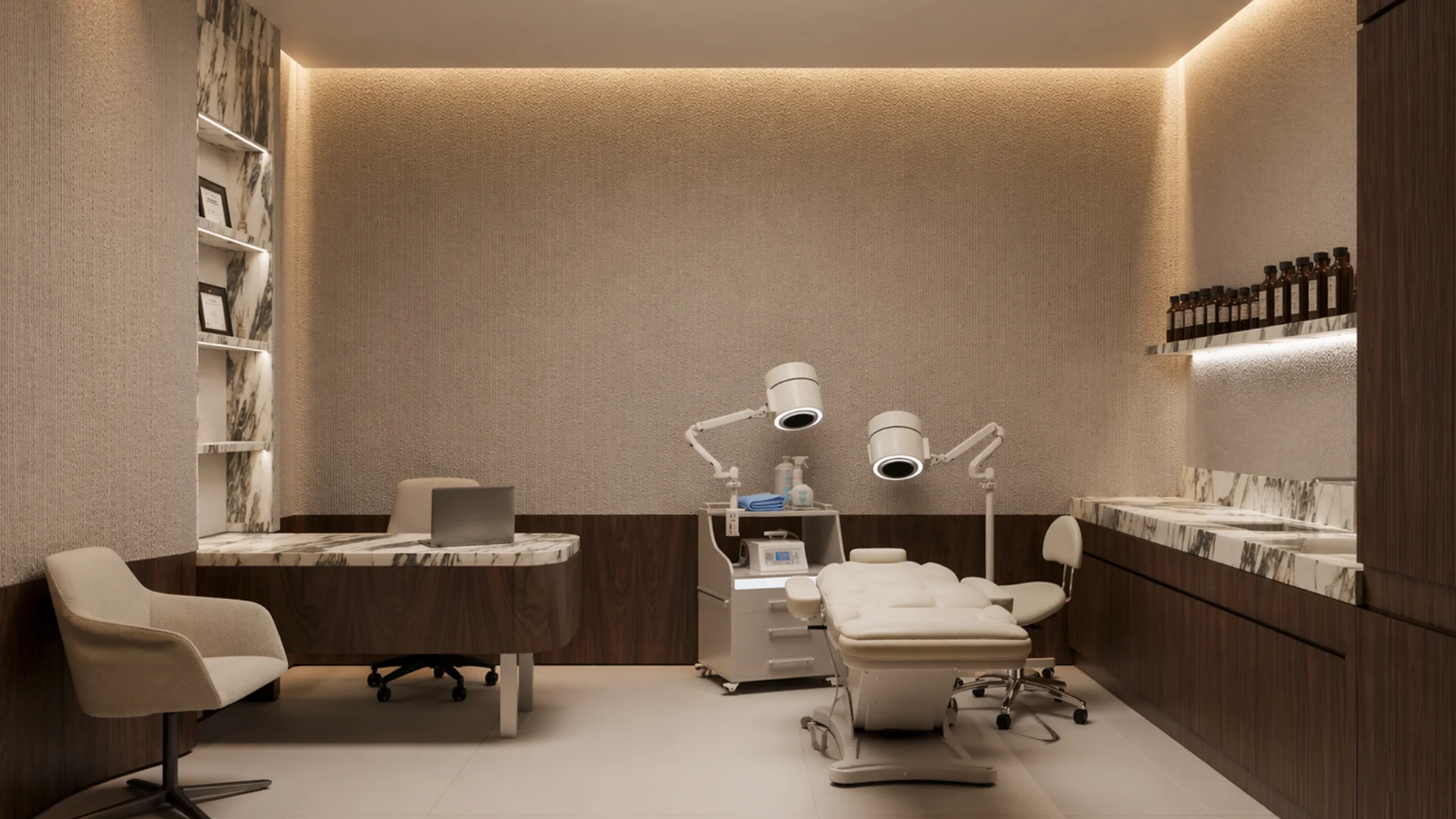
- Step 4, lease and fit out a compliant facility: Lab-grade fit-out, proper ventilation and biosafety standards all have to be in place before you ask for an inspection. Budget the fit-out time before this step, not after.
- Step 5, request the facility inspection: Dubai Municipality audits the site and issues the veterinary laboratory operational permit once it is satisfied.
- Step 6, register your staff: Vets need valid UAE professional licenses through the relevant body. Certified laboratory technicians must be on the payroll too.
- Step 7, collect your trade license: Then open the company bank account and register for VAT if turnover is heading past AED 375,000 a year.
Allow 6 to 12 weeks from trade name to operational permit. Delays almost always trace back to fit-out running late or paperwork missing at the inspection.
Compliance and What You Need in Place
Facility standards
Inspectors look at floor space, biosafety cabinet specification, clinical waste disposal and cold-chain storage. Every standard has to be met before you open. There is no way around the audit, so build to the standard the first time rather than fixing it after a failed visit.
Staff credentials
Licensed vets and certified technicians must be on the payroll before you start work, not lined up to join later. Get their papers registered early, because credential checks add weeks if anything is missing.
Overlapping jurisdiction
MOCCAE sets federal veterinary practice standards, import health certificates and disease surveillance. Where your output touches human food safety, the Dubai Health Authority may also have a say. Clarify your scope early or you will run the same approval twice.
Annual duties
License renewal, facility re-inspection and individual staff license renewals all come round every year. Miss one and the laboratory can be suspended, so put them in a calendar on day one.
Staff quotas
Nafis quotas apply once your headcount reaches the relevant level. Build that into the staffing plan from the start. Retrofitting it into a team you have already hired is far more disruptive.
Market Opportunity
The UAE has over 1.5 million companion animals, and pet owners here spend on care. Every one of those animals is a potential sample. On top of that sits a livestock import trade that needs clearance testing and a food industry facing tighter safety rules each year.
The GCC animal health sector is on a steady climb through 2028, helped by rising incomes, urbanisation and those tightening food safety standards. Invest in Dubai offers sector support and can open doors to the government departments you will deal with, which is useful the first time you work through a multi-authority approval.
Conclusion
A veterinary laboratory is a heavier setup than most Dubai licenses. You need capital from the start, a facility built to standard, and qualified people hired before you can open the doors.
What you get in return is a business with repeat revenue and real barriers to entry. Clinics do not switch laboratories often, and government contracts run for years.
Three things decide how this goes: your jurisdiction choice, a facility that passes the audit first time, and staff credentials registered before the inspector arrives.
[blockCTAContact]
Compliance
THIRD-PARTY APPROVAL
This activity requires pre-approval from the EIAC (Emirates International Accreditation Centre) / DP (Dubai Police) before a business license can be issued by Meydan Free Zone.
ANTI-MONEY LAUNDERING COMPLIANCE
This business activity is exempt from AML compliance requirements.