
Table of Contents
Frequently Asked Questions
What does a certificate of incumbency show?
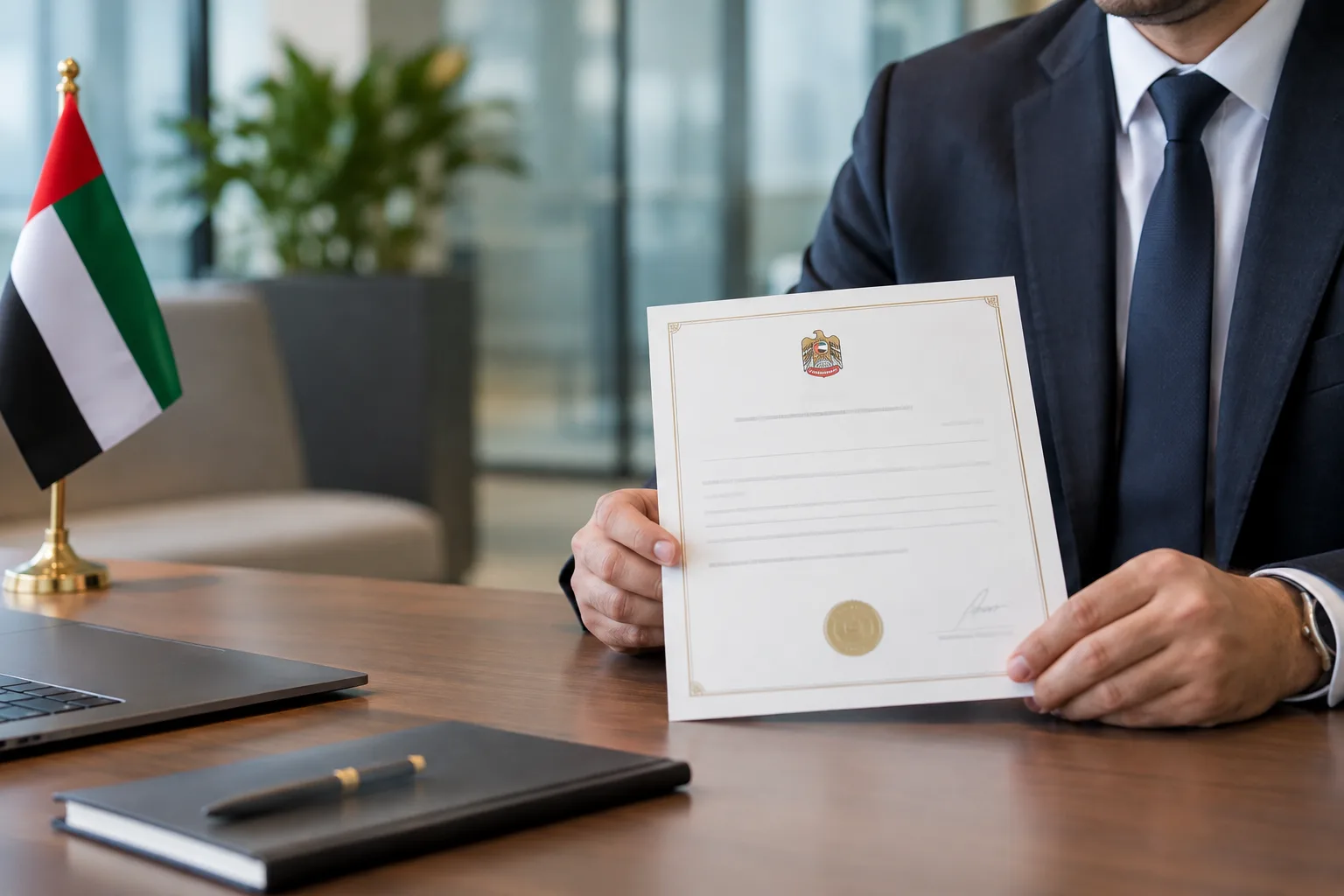
A certificate of incumbency is an official document confirming a company’s directors, shareholders and authorised signatories. Banks, foreign partners and overseas authorities use it to verify who controls a business. Request one from your free zone authority or registered agent before opening accounts or signing international contracts.
What fees should you expect for a certificate of incumbency?
Costs vary by issuer, but most UAE free zones and registered agents charge between a few hundred and a couple of thousand dirhams. Fees depend on your jurisdiction, how urgently you need it and whether attestation or translation is required. Check your free zone’s current fee schedule or ask your registered agent for a written quote first.
How quickly can a certificate of incumbency be issued?
It typically takes one to five working days, depending on the issuing authority. Complete documents and express service speed things up, while attestation, legalisation or missing paperwork add time. If you need it for a bank deadline or overseas filing, apply early and confirm the processing time with the issuer.
Which documents are needed to apply for a certificate of incumbency?
You need an active, registered UAE company with an up-to-date license and ownership records. Applicants usually submit a request form, passport copies of directors and shareholders, the trade license and incorporation documents. Make sure your company details are current with the issuing authority before applying, since outdated records often cause delays or rejections.
How does a certificate of incumbency help with banks and foreign partners?
The certificate proves who runs your company, speeds up bank account opening and builds trust with foreign partners. It also supports cross-border contracts, licensing and compliance checks. It’s most useful when dealing with international banks or investors, so request a few certified copies upfront to avoid repeating the process.
When does a UAE company need a certificate of incumbency?
You need one whenever a bank, investor or foreign authority asks for proof of who controls your company. The modest fee can prevent delays in account opening, deals and compliance filings. If you only operate domestically and nobody requests it, you may not need one, but confirm with your counterparty first.
Topic Summary
What Is a Certificate of Incumbency in the UAE and Why Does It Matter?
A certificate of incumbency in the UAE is an official document issued by a company's registrar or free zone authority. It confirms the company exists and is in good standing. It lists current directors, managers, shareholders and authorised signatories. Banks, regulators and overseas partners use it to verify who can legally act for the company.
Who Issues a Certificate of Incumbency in the UAE?
Who Issues a Certificate of Incumbency in the UAE?
How to Get a Certificate of Incumbency UAE Founders Can Rely On
To get a certificate of incumbency in the UAE, confirm your records are current, gather documents, submit a request, pay the fee and collect the certificate. Attest it if you need it abroad. Timelines and fees vary by authority, so verify them before you apply.
When Do Banks and Regulators Ask for a Certificate of Incumbency?
Banks, regulators and foreign counterparties ask for a certificate of incumbency in the UAE when they need to verify who controls a company. Common triggers include bank accounts, cross-border contracts, loans, foreign registrations and due diligence for investment deals.
How to Attest and Use Your Certificate of Incumbency Abroad
To use a certificate of incumbency from the UAE abroad, you usually need attestation. The typical chain includes notarisation where required, Ministry of Foreign Affairs (MOFA) attestation, and sometimes embassy legalisation. Requirements depend on the destination country, so confirm them with the receiving party first.
Common Mistakes When Requesting a Certificate of Incumbency
The most common mistakes are applying with outdated records, ordering the wrong document, ignoring the recipient's format and age rules, skipping attestation and missing spelling errors. Each causes delay, so verify requirements with the receiving party first.
Conclusion
A certificate of incumbency in the UAE proves who runs your company and who can sign for it. Keep records current, confirm the recipient's requirements, request enough originals and attest the document for use abroad. Contact Meydan Free Zone to confirm the current process for your company and get help preparing your request.
Certificate of Incumbency in the UAE: What It Is and How to Get One
The UAE applies 5% VAT and a 9% corporate tax rate (Federal Tax Authority (FTA), UAE, 2026). Banks and foreign partners often want proof of who runs a company before they deal with it. A certificate of incumbency in the UAE provides that proof. This guide shows founders what it is, who issues it, how to apply, and how to use it abroad.
What Is a Certificate of Incumbency in the UAE and Why Does It Matter?
A certificate of incumbency in the UAE is an official document issued by a company's registrar or free zone authority. It confirms the company exists and is in good standing. It lists current directors, managers, shareholders and authorised signatories. Banks, regulators and overseas partners use it to verify who can legally act for the company.
What the Certificate Confirms
- Company name, activity code and registration number
- Current directors, managers and shareholders
- Authorised signatories and their powers
- Date of issue, because the data is only accurate on that day
Picture a founder opening an overseas supplier account. The supplier asks who can sign contracts. The certificate answers that in one page.
Certificate of Incumbency vs Other Company Documents
A trade license shows what a company may do. The certificate shows who may act for it. A certificate of good standing confirms status but doesn't always list people. The certificate also complements your shareholders agreement and Memorandum of Association. It doesn't replace them. See our guide to a shareholders agreement in the UAE.
Certificate of Incumbency vs Related Company Documents
| Feature | Certificate of Incumbency | Trade License |
|---|---|---|
| Main purpose | Proves who controls and can act for the company | Proves the company may operate and what it may do |
| Shows current directors and signatories | Yes, as the core content | Often limited or not listed in full |
| Shows permitted activity code | May reference it, but doesn't define scope | Yes, lists the approved activity code |
| Typical use | Bank onboarding, foreign contracts, due diligence | Daily trading, visas, local registrations |
| Validity expectations | Recipients often want a recent issue date | Valid until its renewal date |
Who Issues a Certificate of Incumbency in the UAE?

The issuing body depends on where the company is registered. Free zone companies request it from their free zone authority. Mainland companies deal with the relevant licensing department. In Dubai, mainland records sit with DET (Dubai Economy and Tourism). Always confirm the current format and process with your registry.
Free Zone vs Mainland Issuance
A Meydan Free Zone company requests the certificate through its free zone account, not a government counter. Document names and formats can vary between registries. Check before you apply, and treat anything you can't verify in the published process as unconfirmed. Invest in Dubai is a useful starting point for Dubai registry information.
Who Can Request It
- An authorised signatory, director or owner
- A PRO (government liaison officer) with a power of attorney
- A manager delegating through a signed authorisation letter
Expect identity checks before release.
How to Get a Certificate of Incumbency UAE Founders Can Rely On
To get a certificate of incumbency in the UAE, confirm your records are current, gather documents, submit a request, pay the fee and collect the certificate. Attest it if you need it abroad. Timelines and fees vary by authority, so verify them before you apply.
Step 1: Check That Company Records Are Up to Date
- Match directors, shareholders and signatories to current filings.
- Register recent changes first, or the certificate shows outdated details.
- Make sure the trade license is active.
Step 2: Prepare the Required Documents
- Valid trade license and registration documents
- Emirates ID or passport of the applicant
- Authorisation letter if a representative applies
- The receiving party's required wording
A founder opening a foreign bank account should ask the bank for its exact format first.
Step 3: Submit the Request and Pay the Fee
- Submit through your registry's portal or service channel.
- Confirm the fee and processing time with the registry. We haven't quoted figures because they differ by authority.
- Request two or three originals if several parties need one.
- Keep the receipt and reference number.
Step 4: Review, Collect and Store the Certificate
- Check names, spellings and roles against passports.
- Request corrections before you leave the registry.
- Keep a certified scan for quick sharing.
A one-letter error in a director's name can make a foreign bank reject the document. Some firms also need a company stamp in Dubai alongside it.
When Do Banks and Regulators Ask for a Certificate of Incumbency?
Banks, regulators and foreign counterparties ask for a certificate of incumbency in the UAE when they need to verify who controls a company. Common triggers include bank accounts, cross-border contracts, loans, foreign registrations and due diligence for investment deals.
Banking and Financing Requests
- Account opening and know-your-customer checks
- Loan and trade finance applications
- Document lists set by each bank, under Central Bank of the UAE regulation
The certificate doesn't guarantee account approval. A lender might ask for one dated within the last three months to confirm current signatories.
Contracts, Tenders and Foreign Registrations
- Overseas subsidiary and branch registrations
- Tender and procurement submissions
- Investor due diligence and share transfers
A Dubai trading firm registering a branch abroad will usually face a request for proof of directors.
Tax and Compliance Situations
The certificate may support VAT or corporate tax reviews where authorities ask for ownership proof. It isn't a tax residency certificate. Verify requirements with the Federal Tax Authority before filing.
How to Attest and Use Your Certificate of Incumbency Abroad
To use a certificate of incumbency from the UAE abroad, you usually need attestation. The typical chain includes notarisation where required, Ministry of Foreign Affairs (MOFA) attestation, and sometimes embassy legalisation. Requirements depend on the destination country, so confirm them with the receiving party first.
The Typical Attestation Chain
- Issue by the registry
- Notarisation, if required
- MOFA attestation
- Embassy legalisation, where the destination needs it
A founder writing to a European partner should confirm whether an apostille-style step or embassy legalisation applies. Our guide to documents attestation in Dubai explains each stage.
Validity and Translation Tips
Many recipients accept only recent certificates, often within 3 to 6 months, so confirm with them. A certificate issued four months ago will fail if the recipient wants one under three months old. Ask whether Arabic and English versions or a certified translation are needed. Keep digital and physical copies.
Common Mistakes When Requesting a Certificate of Incumbency
The most common mistakes are applying with outdated records, ordering the wrong document, ignoring the recipient's format and age rules, skipping attestation and missing spelling errors. Each causes delay, so verify requirements with the receiving party first.
Avoiding Delays and Rejections
- Update records before applying.
- Ask the recipient for format and validity rules.
- Proofread every name and role.
- Order enough originals.
One company had to reorder after a bank rejected a certificate that omitted a newly appointed signatory.
Working With Meydan Free Zone Support
Meydan Free Zone clients can raise registry requests through their account support. mAssist offers guided administrative help where applicable. A new company can ask which documents to prepare before requesting the certificate. Check Meydan Free Zone's latest published services and fees before you proceed.
Conclusion
A certificate of incumbency in the UAE proves who runs your company and who can sign for it. Keep records current, confirm the recipient's requirements, request enough originals and attest the document for use abroad. Contact Meydan Free Zone to confirm the current process for your company and get help preparing your request.