
Table of Contents
Frequently Asked Questions
Can a free zone company open a multi-currency account in the UAE?
Yes, free zone companies can apply for accounts that hold foreign currencies. Each bank decides on approval based on the company's trade profile, ownership and source of funds, not on the license label. Meydan Free Zone supports the application through mCore, but the bank makes the final decision.
Which currencies can a UAE business account usually hold?
Banks commonly support AED, USD and EUR, and some add others such as GBP. The available currencies and account structures differ by bank. Some banks offer one linked account with several balances, while others run separate foreign currency accounts.
Do banks require a UAE residency visa to open a business account?
Requirements vary by bank. Some ask for a UAE residency visa and Emirates ID for signatories, while others consider non-resident shareholders with a clear trade profile. Meydan Free Zone offers residency visas, Emirates ID and medical insurance through mResidency if a bank asks for them.
Does a multi-currency account reduce foreign exchange costs?
It can, because you hold foreign receipts and pay suppliers in the same currency, avoiding repeated conversions. Savings depend on the bank's exchange spreads, transfer charges and account fees, which each bank sets. Compare the full tariff, not only the monthly fee.
Why do UAE banks reject business account applications?
Common causes are vague activity descriptions, unclear source of funds, high-risk counterparties and inconsistent details across documents. A mismatch between license activity and expected account use also raises concerns. Submitting one complete file with a clear trade profile reduces these risks.
What documents do banks ask for when opening a foreign currency business account?
Banks typically request the Business License, Certificate of Formation, Share Register, and Memorandum and Articles of Association. They also ask for shareholder and director passports, proof of address and evidence of the trading model, such as contracts or invoices. Meydan Free Zone issues the company documents digitally after registration.
Do I need a multi-currency account to keep VAT and Corporate Tax records?
No, it is not required, but it helps match invoices to balances in the same currency. The Federal Tax Authority sets the record-keeping rules, and a tax invoice issued in a foreign currency must still show the VAT amount in AED. Keep your conversion records so the figures reconcile.
Topic Summary
What a Multi-Currency Business Account Means
A multi-currency business account is a single UAE bank account, usually with one IBAN, that holds, receives and pays funds in several currencies such as AED, USD and EUR. It lets a company settle with overseas clients and suppliers without converting every payment through the dirham first.
How Multi-Currency Business Accounts Are Regulated
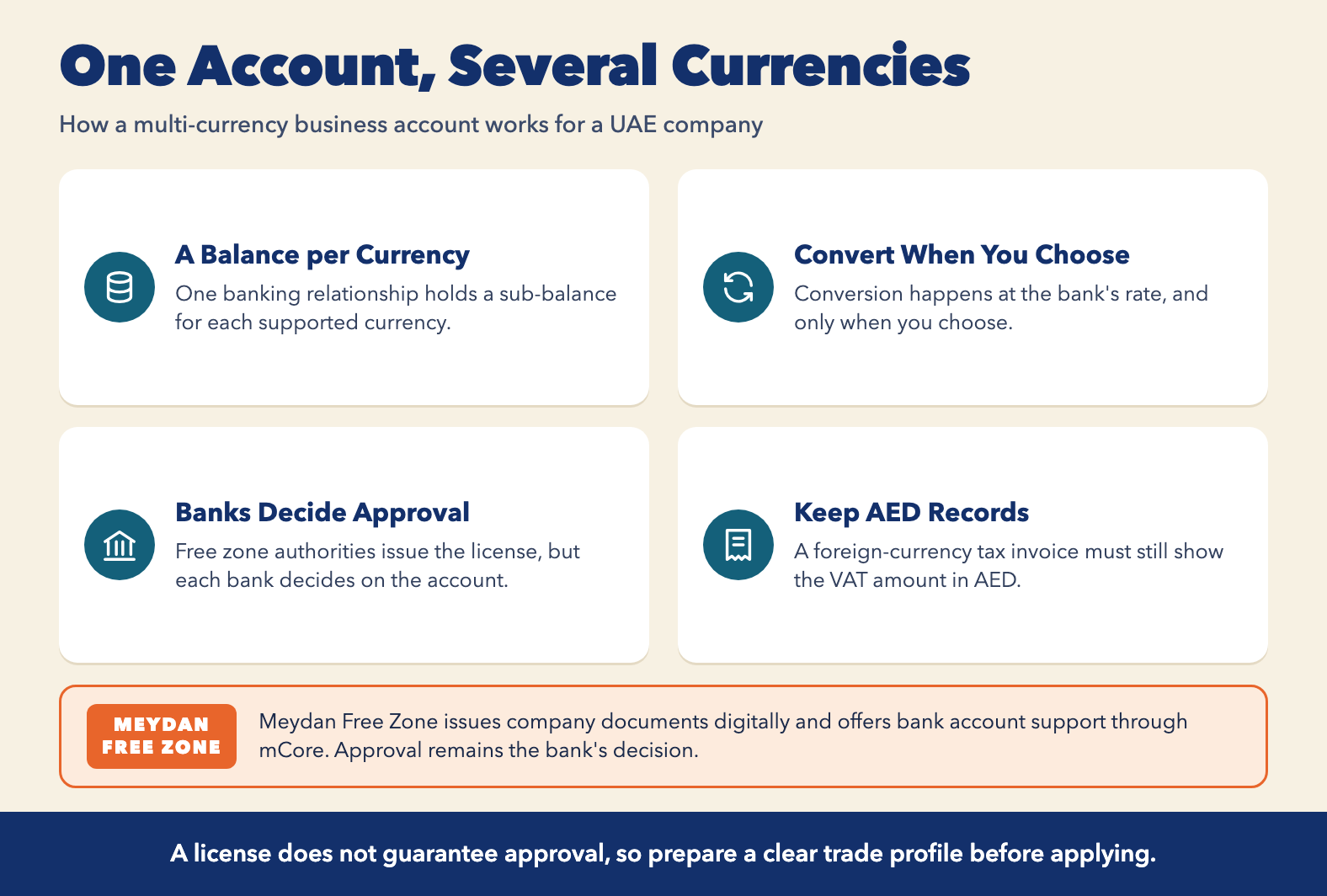
Banks in the UAE are licensed and supervised by the Central Bank of the UAE, which sets the compliance rules for account opening, including customer due diligence. Free zone authorities issue the business license, but they do not decide whether a bank approves an account.
Requirements to Open a Multi-Currency Business Account
Banks typically ask for the trade license, incorporation documents, shareholder and director passports, proof of address, an activity description, and supporting trade documents. Some request a UAE residency visa and Emirates ID for signatories. Requirements vary by bank and company profile.
Benefits of a Multi-Currency Business Account for UAE Companies
The main benefits are fewer forced conversions, clearer pricing for overseas clients, simpler supplier payments and easier reconciliation. A company holds funds in the currency it earns and converts when rates suit it. Results depend on the bank's rates, fees and supported currencies.
Costs, Risks, and Compliance Mechanics to Plan For
Costs usually include account fees, minimum balance requirements, transfer charges and foreign exchange spreads. Each is set by the bank and changes, so treat figures as indicative until the bank confirms them. Compliance risks include incomplete documents, unexplained transactions and a mismatch between license activity and account use.
How Meydan Free Zone Companies Approach Business Banking
Meydan Free Zone offers business bank account support through mCore, part of Meydan Plus (mPlus). The support helps a company present a complete file, but the bank makes the approval decision.
Conclusion
A multi-currency business account suits companies that earn and pay in more than one currency. Approval depends on a clear trade profile, complete documents and a license that matches real activity, not on the account type requested. A Meydan Free Zone company receives its Business License, Certificate of Formation, Share Register and Memorandum and Articles of Association digitally, which gives the bank file a consistent starting point. Map your invoice currencies and counterparties, then compare bank terms before you apply.
Multi-Currency Business Bank Account in the UAE: Requirements and Benefits
If your company invoices overseas clients or pays foreign suppliers, every forced conversion into dirhams can add cost and make reconciliation harder. Many founders assume a multi-currency business account is a premium product for large traders, but approval depends on your trade profile, not the license label. This guide explains what the account is, which requirements banks apply and the benefits for a trading company. It also covers the costs and compliance points to plan for.
What a Multi-Currency Business Account Means
A multi-currency business account is a single UAE bank account, usually with one IBAN, that holds, receives and pays funds in several currencies such as AED, USD and EUR. It lets a company settle with overseas clients and suppliers without converting every payment through the dirham first.
How Multi-Currency Accounts Work
You hold one banking relationship with a sub-balance per currency. Incoming payments are credited in the currency sent, if the bank supports it. Conversion happens at the bank's rate, and only when you choose.
Say a Dubai trading company invoices a client in USD and pays a supplier in EUR. Each leg runs from its own balance, so the company converts only when it wants to.
Multi-Currency Account vs Standard Current Account
A standard account holds AED, and foreign receipts convert on arrival. Some banks run separate foreign currency accounts rather than one linked account, and product names differ by bank. A consultancy that only bills in AED may not need foreign balances at all.
How Multi-Currency Business Accounts Are Regulated
Banks in the UAE are licensed and supervised by the Central Bank of the UAE, which sets the compliance rules for account opening, including customer due diligence. Free zone authorities issue the business license, but they do not decide whether a bank approves an account.
Role of the Central Bank and the Banks
Each bank applies its own risk appetite within federal rules. Banks verify the source of funds and the ultimate beneficial owners. Two banks can assess the same free zone company differently, depending on sector and counterparties.
Where the Free Zone Authority Fits
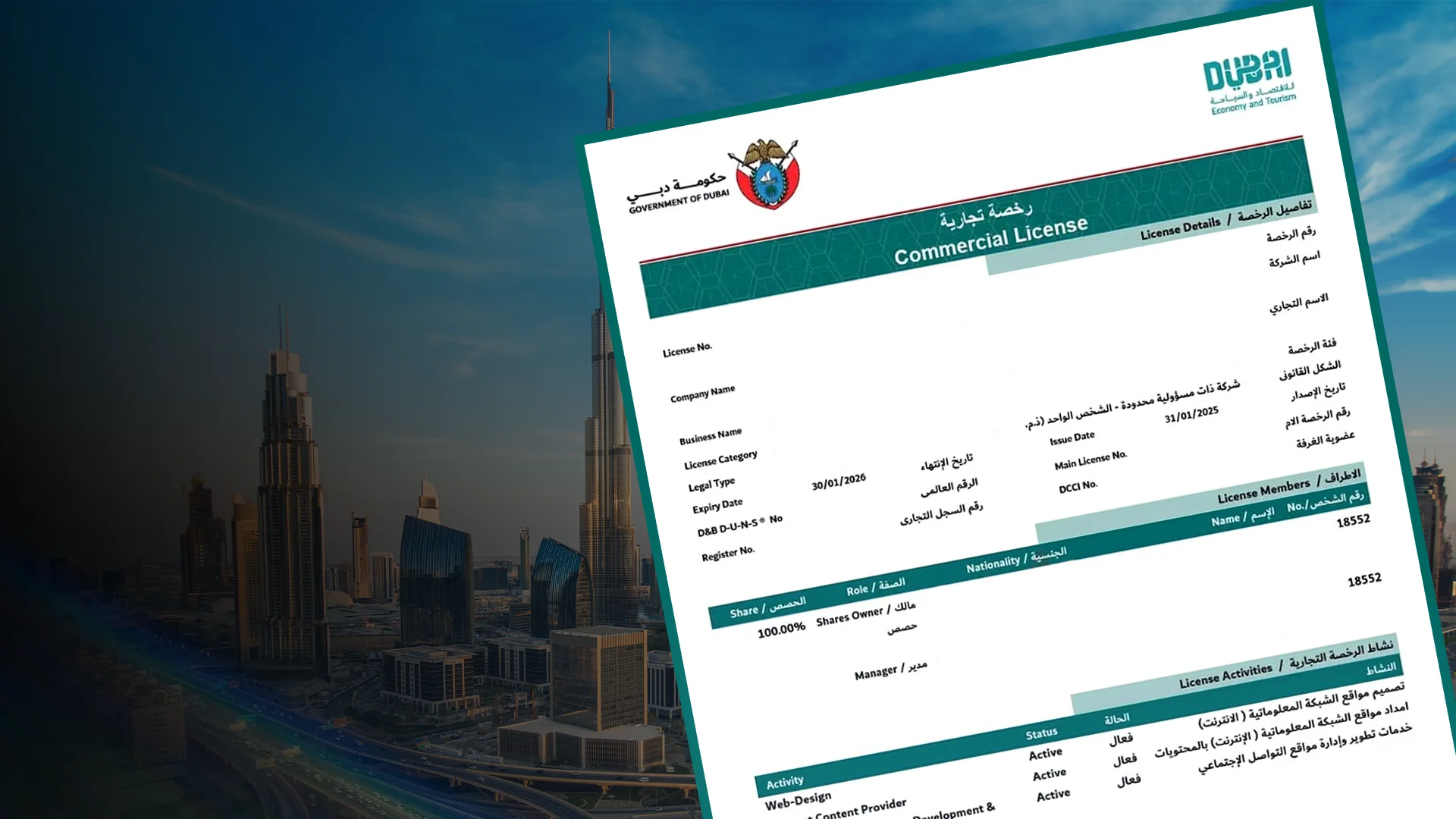
After registration, Meydan Free Zone issues the Business License, Certificate of Formation, Share Register, and Memorandum and Articles of Association digitally. These documents form the base of your bank file. A UK founder holding all four still needs the bank to accept the trade profile. A license does not guarantee approval.
Requirements to Open a Multi-Currency Business Account
Banks typically ask for the trade license, incorporation documents, shareholder and director passports, proof of address, an activity description, and supporting trade documents. Some request a UAE residency visa and Emirates ID for signatories. Requirements vary by bank and company profile.
Documents Banks Usually Request
- Business License, Certificate of Formation, Share Register, Memorandum and Articles of Association
- Passports, proof of address, and Emirates ID where held
- Contracts, invoices or supplier details that evidence your trading model
- A trade profile listing client countries and invoice currencies
Standard Account vs Multi-Currency Account
| Feature | Standard AED Account | Multi-Currency Account |
|---|---|---|
| Currencies held | AED only | AED plus sub-balances such as USD and EUR, subject to the bank |
| Handling of foreign receipts | Converted to AED on arrival | Credited in the currency sent, if supported |
| Supplier payments abroad | AED converted at payment time | Paid directly from the matching balance |
| Reconciliation | One AED ledger, with conversion entries for foreign invoices | Invoices match balances in the same currency |
| Best suited for | Consultancies billing only in AED | Importers, exporters and service firms with overseas clients |
Why Applications Get Rejected
- Vague activity descriptions.
- Unclear source of funds or high-risk counterparties.
- Inconsistent details across documents.
An application stalls when a founder's passport spelling differs from the Share Register. Read more on business bank account rejection in the UAE.
Checklist Before You Apply
- Confirm the license activity matches your trade.
- Prepare shareholder and director documents.
- Document expected currencies, volumes and counterparties.
- Compare account terms across banks.
- Submit one complete file.
Benefits of a Multi-Currency Business Account for UAE Companies
The main benefits are fewer forced conversions, clearer pricing for overseas clients, simpler supplier payments and easier reconciliation. A company holds funds in the currency it earns and converts when rates suit it. Results depend on the bank's rates, fees and supported currencies.
Lower Conversion Exposure
An exporter paid in USD and paying freight in USD keeps both legs in one currency. That avoids a double conversion. Spreads vary by bank, so compare them before you commit.
Cleaner Invoicing and Reconciliation
You match invoices to balances in the same currency, which supports bookkeeping and VAT returns. A tax invoice issued in a foreign currency must still show the VAT amount in AED, so keep your conversion records. The Federal Tax Authority (FTA) sets those rules.
Costs, Risks, and Compliance Mechanics to Plan For
Costs usually include account fees, minimum balance requirements, transfer charges and foreign exchange spreads. Each is set by the bank and changes, so treat figures as indicative until the bank confirms them. Compliance risks include incomplete documents, unexplained transactions and a mismatch between license activity and account use.
Fees and Exchange Spreads
No official fixed schedule applies across banks. Spreads can cost more than the headline fee, so a low monthly charge can mislead you. Ask each bank for its full tariff and compare the spread, not just the monthly fee.
Ongoing Compliance Obligations
- Banks run periodic reviews and may request updated documents.
- Keep records for VAT and Corporate Tax.
- Account activity should match your license activity.
How Meydan Free Zone Companies Approach Business Banking
Meydan Free Zone offers business bank account support through mCore, part of Meydan Plus (mPlus). The support helps a company present a complete file, but the bank makes the approval decision.
What mCore Provides
mCore covers business bank account support, company stamps, business cards and e-commerce setup. The digital documents issued after registration feed your bank file. No approval is implied.
Matching License Activities to Account Needs
Choose the right activities on one license, so the bank sees a coherent trade profile. A trading company that adds the correct import and export activities before opening the account presents a clearer case. Read how to structure your free zone company for smooth bank opening. The Cost Calculator helps you estimate your setup and renewal costs.
Free Business Setup Cost Calculator
Calculate NowConclusion
A multi-currency business account suits companies that earn and pay in more than one currency. Approval depends on a clear trade profile, complete documents and a license that matches real activity, not on the account type requested. A Meydan Free Zone company receives its Business License, Certificate of Formation, Share Register and Memorandum and Articles of Association digitally, which gives the bank file a consistent starting point. Map your invoice currencies and counterparties, then compare bank terms before you apply.
Ready to Launch Your Business in Dubai?
Let's Connect