Table of Contents
How to Start Wholesale Agricultural Products Trading Business?
Wholesale agricultural trading is intermediary work. You buy commodities from producers in volume, handle the sourcing, price negotiation, quality control, logistics and storage, then sell on to retailers, processors and other businesses at a markup.
Four activity codes cover it, and one of them behaves very differently from the other three. This guide covers what each permits, the exclusion they share, and which one lets you trade without waiting on a second approval.
Key Stats at a Glance
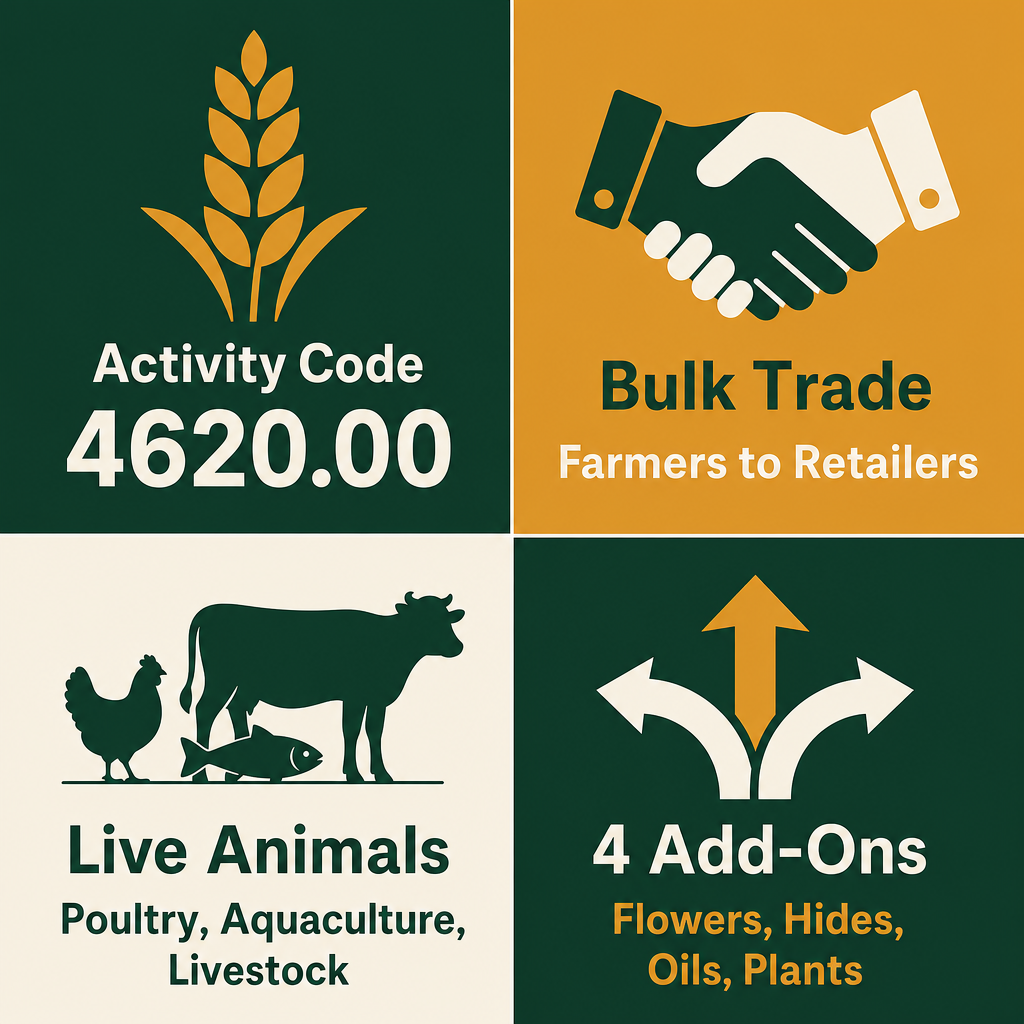
What These Licenses Cover
Agricultural raw materials and live animals, 4620.00
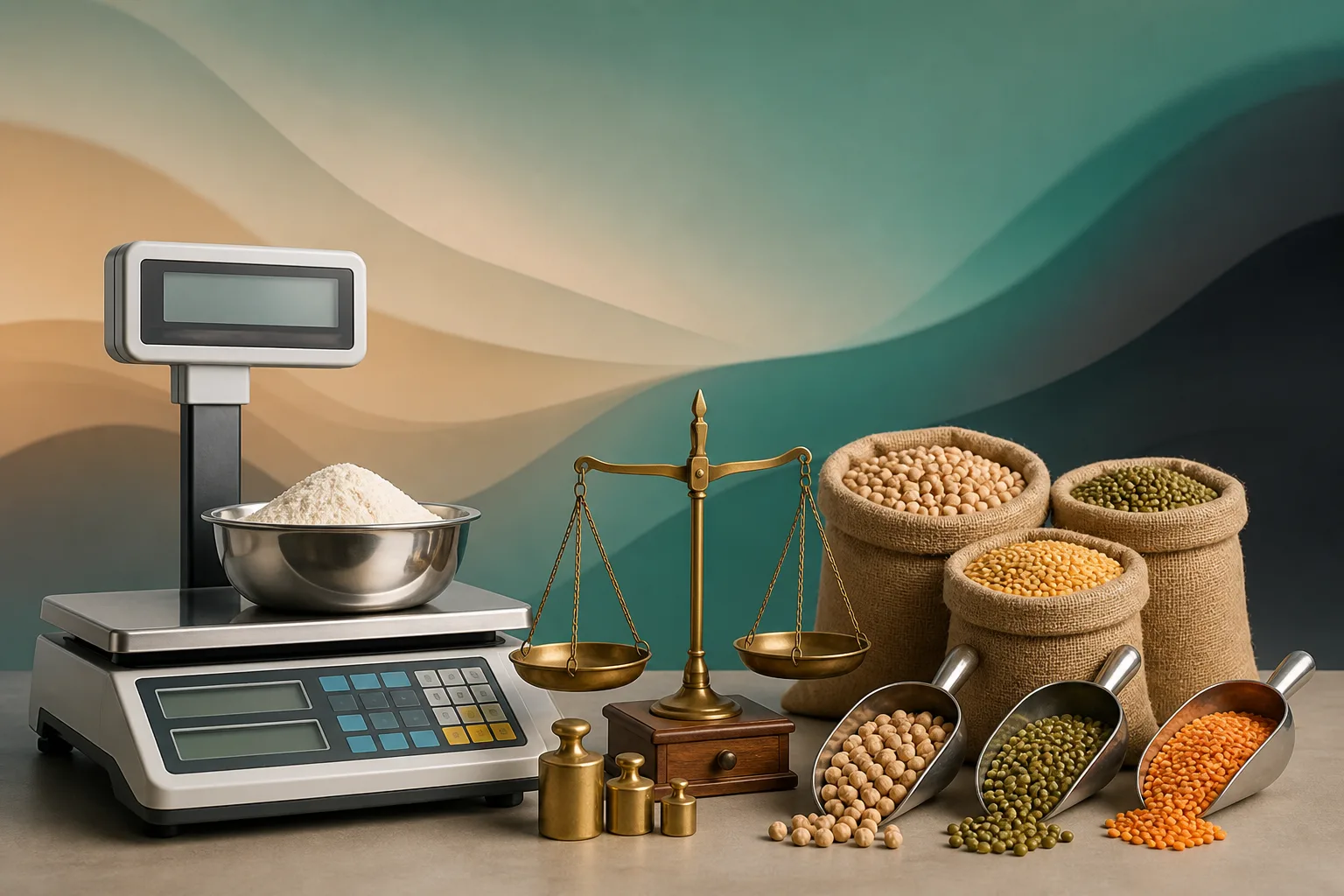
Trading and distributing unprocessed agricultural materials and live animals at scale. Raw materials include grains such as wheat, rice and corn, oilseeds, fibres, sugar, coffee, cocoa, spices and other plant products, sourced from farmers, cooperatives and producers. Live animals covers livestock, poultry and aquaculture species supplied to retailers, processors and businesses in meat production, dairy processing or animal husbandry.
Animal feed materials, 4620.07
Trading agricultural products not intended for human consumption: crop residues, milling by-products, food processing waste and similar materials. You source from farms, food processing plants and grain mills, then sell in bulk to feed manufacturers and livestock producers.
Agricultural crops selling, 4620.90
Selling locally produced agricultural crops, wholesale or retail, from stores, farms or local markets. This is the code for a business built around domestic production rather than imports.
Machinery, equipment and supplies, 4653.00
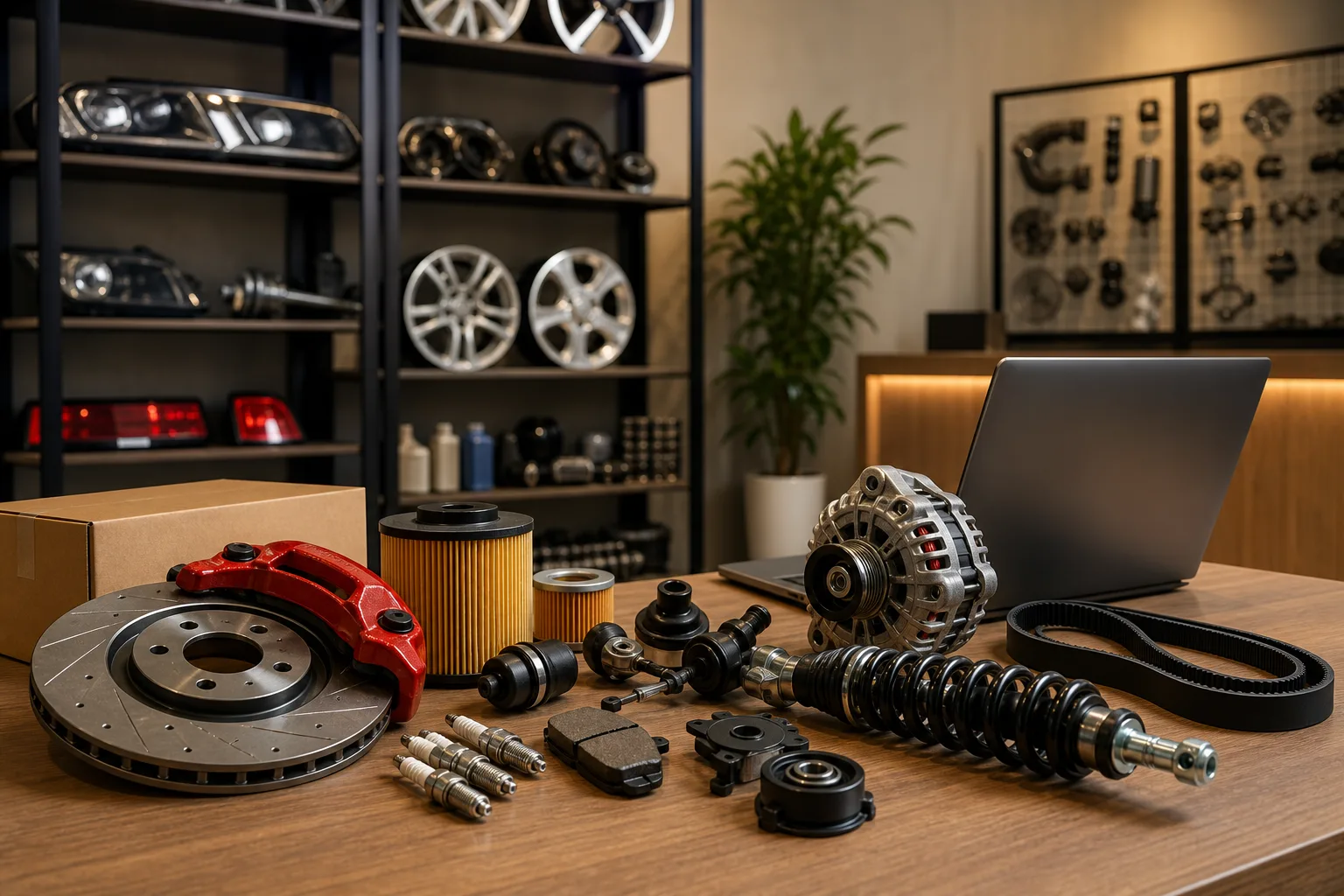
Supplying agricultural and forestry machinery to farmers and agricultural businesses: ploughs, manure spreaders, seeders, harvesters, threshers, milking machines, poultry and bee-keeping machines, and tractors. It also covers lawn mowers of any type, petrol, electric or battery.
Who Your Clients Will Be
Retailers, distributors, processors and other businesses buying in bulk.
The three commodity codes sell into food and agriculture supply chains, while the machinery code sells to the farms themselves, which is a different relationship built on service and spare parts rather than price per tonne.
The 4620 licenses come with a wide set of permitted wholesale lines you can add without a new activity: oleaginous fruits, flowers and plants, live animals, hides and skins, processed leather, agricultural materials such as fertilisers, pesticides, machinery and supplies, and waste and residues used for animal feed.
That breadth lets you widen the client base without widening your licensing.
Retail is available alongside wholesale too, across agricultural tools, pesticides, equipment and accessories, machinery spare parts, and tractors and machinery.
A trader supplying farms wholesale and selling tools and spares retail is serving the same customer twice.
Mainland or Free Zone
The approvals matter more than the jurisdiction here, because they attach to the activity rather than to where you register.
Whichever route you take, the three 4620 codes need Dubai Municipality and Ministry sign-off and 4653.00 does not.
Meydan Free Zone gives full ownership of the company and a setup you can complete remotely, which suits an import and re-export model.
A mainland license through the Department of Economy and Tourism suits selling openly into the local market.
Let your buyers decide it, not the price.
[blockCTACostCalculator]
Step by Step Setup Guide
- Step 1, pick your code by product, not by ambition: Commodities and live animals point to 4620.00, feed materials to 4620.07, local crops to 4620.90, and machinery to 4653.00.
- Step 2, note which approvals follow: If you choose any 4620 code, plan for two post-license approvals. If machinery is your business, 4653.00 needs none.
- Step 3, add the wholesale lines you want now: Flowers and plants, hides and skins, leather, fertilisers and feed by-products all sit inside the 4620 licenses. Put them on the application rather than amending later.
- Step 4, consider retail alongside wholesale: Tools, pesticides, spare parts and tractors are available as retail activities and serve the same farm clients.
- Step 5, book your trade name: Use the free company name check to confirm availability.
- Step 6, collect your license: Fawri is the faster route if timing matters, and the cost calculator will give you a figure first.
- Step 7, secure the post-license approvals before you trade: For the 4620 codes, both Dubai Municipality and the Ministry have to sign off after your license is issued.
Compliance and What You Need in Place
Two approvals, after the license
For 4620.00, 4620.07 and 4620.90 you need approval from Dubai Municipality's Agriculture, Irrigation, Waste and Environment Department and from the Ministry of Climate Change and Environment.
Both come after the business license and confirm you meet the rules governing trade in agricultural raw materials and live animals.
Machinery is the exception
Wholesale of agricultural machinery, equipment and supplies under 4653.00 needs no third-party approval at all. Once your license is issued you can begin trading.
If speed to market is your priority and machinery fits your plan, that is the shortest path in this sector.
Textile fibres are out
None of the 4620 licenses permit wholesale of textile fibres, and that covers cotton, wool, silk, synthetic fibres and anything else used in textiles.
It is an easy line to cross if you trade fibres alongside other crops, so check before you take an order.
Live animals bring welfare duties
Trading live animals is not the same as trading grain.
Transport, holding and handling all attract standards, and the Municipality and Ministry approvals exist partly to confirm you meet them. Build that into your operating plan rather than your paperwork.
Anti-money laundering
Agricultural products trading in the UAE is exempt from AML regulations, which target illicit financial activity rather than commodity trade.
Market Opportunity
Dubai works well for this trade because of where it sits. A strategic location, growing demand and government initiatives to expand internationally give a wholesale trader access to both import and re-export flows rather than a single domestic market.
The UAE focus on food security is the structural driver. Investment in agricultural infrastructure creates openings for traders, because a country importing most of its food needs intermediaries who can source reliably and store properly.
That is a durable position rather than a cyclical one.
The rest is execution.
A diverse consumer base, a well-developed logistics network and a business environment that supports foreign investment mean the constraint on a new trader is supplier relationships and working capital, not market access.
Specialising in a product category and adding value-added services is how smaller traders hold margin against larger ones.
Conclusion
Wholesale agricultural trading in Dubai is supported by the UAE food security agenda, the emirate's trade position and a logistics network built for moving goods.
Four codes cover the sector, and the licenses come with a wide set of permitted wholesale lines you can grow into.
Three things decide how smoothly this goes: the right code for your actual product, the two post-license approvals secured before you trade under any 4620 code, and a clear line around textile fibres.
Sort those and the rest is routine.
[blockCTAContact]
References
- Meydan Free Zone business activities list
- Dubai trade license from AED 12,500
- Fawri instant license
- Meydan Plus