
Table of Contents
Frequently Asked Questions
1. What does activity code 7420.94 cover for 3D laser scanning in Dubai
Activity code 7420.94 — Models Production by Three Dimensional Laser Scanning — falls under ISIC Division 74 (Other Professional, Scientific and Technical Activities). It covers the capture of physical objects, structures, or environments using LiDAR or structured-light scanning technology to produce accurate 3D models, point clouds, or digital twins.
Typical outputs include deliverables for BIM integration, as-built documentation, quality control, and reverse engineering. This classification is distinct from general surveying or photography — it is a specialised technical service with data and IP deliverables, which affects both how authorities classify the activity and how contracts are priced.
2. Who are the main clients for 3D laser scanning services in Dubai
The client base spans multiple sectors. On the government side, RTA infrastructure projects and heritage documentation mandates from the Dubai Culture and Arts Authority represent recurring contract opportunities for specialist operators.
Private sector demand comes from MEP contractors, fit-out firms, real estate developers, oil and gas companies, and architecture practices that require point-cloud deliverables for clash detection, renovation planning, and spatial documentation. Film production and manufacturing are additional verticals. Demand is increasingly standard practice on mid-to-large projects rather than a niche requirement.
3. How much does a 3D laser scanning professional licence cost in Dubai
A typical mainland professional licence issued through the DED costs approximately AED 10,000–15,000 per annum. This figure covers the licence fee itself; additional costs such as office space (Ejari), visa fees, and trade name reservation are separate line items.
Free zone structures such as Meydan Free Zone can offer lower overall setup costs and are particularly suited to businesses focused on remote delivery and international clients rather than UAE government contracts. It is worth comparing total first-year costs across both jurisdictions before committing.
4. What is the VAT registration threshold for a 3D laser scanning business in the UAE
Businesses operating in the UAE must register for VAT once annual turnover reaches AED 375,000. Below this threshold, registration is optional but may still be commercially beneficial if your clients are VAT-registered businesses that can reclaim input tax.
Because 3D scanning contracts — particularly those involving government or large developer clients — can be high in value, many operators will cross this threshold relatively quickly. It is advisable to factor VAT compliance costs into your financial projections from the outset.
5. What is the import duty on 3D laser scanning equipment brought into mainland Dubai
Equipment imported into the UAE mainland is subject to the standard 5% UAE customs tariff. LiDAR scanners, structured-light systems, and associated hardware all fall under this rate unless a specific exemption applies.
Businesses operating from a free zone may benefit from duty deferral or exemption on equipment held within the zone, which can improve cash flow during the capital-intensive setup phase. If equipment will be taken outside the free zone for on-site scanning work, customs procedures apply and should be planned for in advance.
6. Should a 3D laser scanning business set up on the mainland or in a free zone in Dubai
The right jurisdiction depends on your client model. Mainland (DED) licensing provides the broadest access to UAE government contracts and private sector clients across the emirate, making it the stronger choice if you intend to bid on RTA, Dubai Culture, or developer projects directly.
A free zone structure — such as Meydan Free Zone — suits operators whose revenue is primarily from international or GCC clients, remote data delivery, or who want to minimise setup costs while retaining full foreign ownership. The key decision point is whether local government contract eligibility is commercially essential to your model.
7. What is the competitive landscape for specialist 3D laser scanning firms in Dubai
Competition at the specialist end of the market remains relatively thin. Most existing players in the UAE are generalist survey firms that offer 3D scanning as a secondary or add-on service rather than a core capability.
A dedicated operation with the right equipment, technical credentials, and focused positioning can command premium pricing and differentiate clearly from generalist competitors. The global 3D scanning market is projected to exceed USD 7 billion by 2028 (Mordor Intelligence), and Dubai's infrastructure pipeline — including Expo City legacy projects and the Dubai Urban Master Plan 2040 — supports sustained local demand.
8. What are the key steps to obtain a 3D laser scanning licence in Dubai
The process involves six main steps. First, choose your jurisdiction — mainland DED or a free zone — based on your client model. Second, reserve your trade name and confirm that activity code 7420.94 is approved under your chosen authority before proceeding further.
Next, prepare incorporation documents including passport copies, visa status confirmation, and a proposed business address or flexi-desk arrangement. Submit your application via DED e-Services (mainland) or your free zone portal. Once initial approval is granted, finalise your tenancy contract — Ejari for mainland — or your free zone office agreement to complete the setup.
Topic Summary
Understand What Activity Code 7420.94 Covers
This code governs the capture of physical environments using LiDAR or structured-light scanning to produce point clouds, 3D models, or digital twins. It is classified as a specialised professional service, not general surveying, which affects both licensing and contract pricing.
Dubai's Infrastructure Pipeline Drives Steady Demand
Projects tied to the Dubai Urban Master Plan 2040, Expo City, and RTA infrastructure create recurring government-side contracts for spatial data capture. Heritage documentation mandates from the Dubai Culture and Arts Authority add another reliable revenue stream.
Private Sector Clients Are Rapidly Expanding
MEP contractors, fit-out firms, and real estate developers increasingly require point-cloud deliverables for clash detection and renovation planning. This is becoming standard practice on mid-to-large projects, not a niche demand.
Export Potential Makes Free Zone Setup Attractive
Scan data and 3D models can be delivered remotely to clients across the GCC, Africa, and South Asia from a Dubai base. Firms without heavy reliance on local government contracts may find a free zone structure like Meydan more cost-effective and flexible.
Specialist Operators Can Command Premium Positioning
Most UAE competitors are generalist survey firms offering 3D scanning as a secondary service rather than a core specialisation. A dedicated operation with strong technical credentials and proper equipment can differentiate and price at a premium.
Mainland vs Free Zone: The Decision That Matters Most
Choosing DED mainland licensing gives the broadest UAE client access, while free zones offer lower costs and full foreign ownership for internationally focused models. Confirming that activity code 7420.94 is approved under your chosen jurisdiction before proceeding is essential.
Know Your Key Costs Before Committing Capital
A mainland professional licence typically runs AED 10,000–15,000 per year, with standard 5% UAE customs tariff applying to imported scanning equipment. VAT registration becomes mandatory once annual turnover exceeds AED 375,000.
3D Laser Scanning Model Production License in Dubai
Dubai's infrastructure boom, heritage documentation mandates, and engineering growth have created real demand for 3D laser scanning model production. The UAE licensing framework is well set up to support it.
This guide covers what the activity involves, who the market is, how to set up under activity code 7420.94, and what it costs. That way you can make a grounded decision before you commit capital.
What This Activity Actually Covers
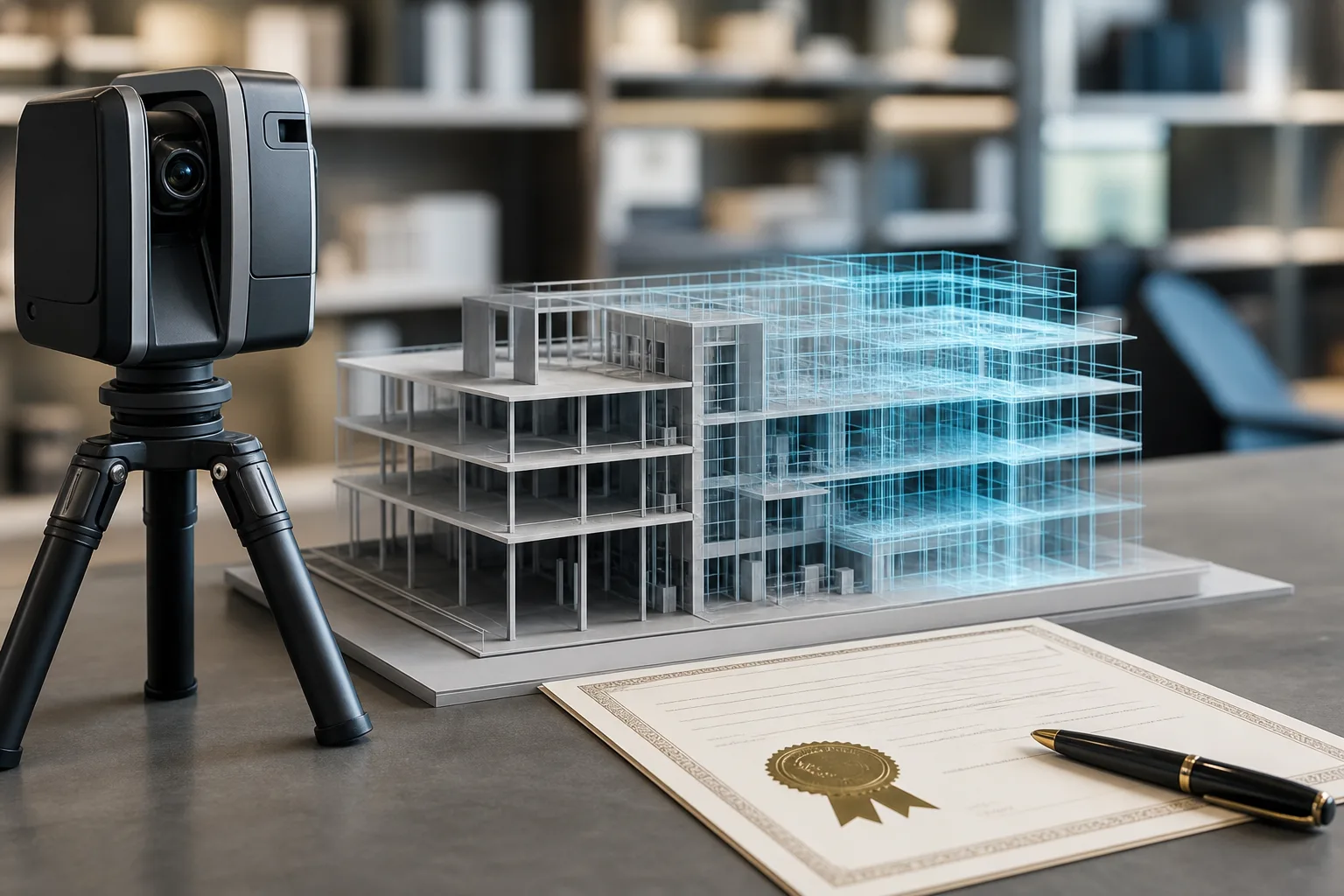
Activity code 7420.94 — Models Production by Three Dimensional Laser Scanning — sits under ISIC Division 74 (Other Professional, Scientific and Technical Activities). The core service is simple to state. You capture physical objects, structures, or environments using LiDAR or structured-light scanning. You then produce accurate 3D models, point clouds, or digital twins.
Clients span many sectors:
- Construction and engineering
- Oil and gas
- Heritage preservation
- Architecture
- Manufacturing
- Film production
Output is typically used for BIM integration, quality control, as-built documentation, or reverse engineering.
This is different from general surveying or photography. It is a specialised technical service with IP and data deliverables. That distinction matters in two places: when you classify the activity with your chosen authority, and when you price contracts.
Key Stats at a Glance
Market Opportunity and Commercial Reality in Dubai

Dubai's urban development pipeline sustains steady demand for spatial data capture. This includes Expo City legacy projects and the Dubai Urban Master Plan 2040. RTA infrastructure projects and heritage documentation mandates from the Dubai Culture and Arts Authority create recurring government-side contracts. Specialist operators can target these directly.
On the private side, demand is broadening. MEP contractors, fit-out firms, and real estate developers increasingly need point-cloud deliverables for clash detection and renovation planning. This is not a niche trend. It is becoming standard practice on mid-to-large projects.
There is also a real export opportunity. Scan data and 3D models can be delivered remotely to clients across the GCC, Africa, and South Asia from a Dubai base. This makes a free zone structure attractive for firms that do not depend on local government contracts.
Competition at the specialist end stays thin. Most players in the UAE are generalist survey firms that offer 3D scanning as a secondary service. A dedicated operation with the right equipment and technical credentials can position at a premium. For wider market context and the investment landscape, Invest in Dubai provides sector data on professional and technical services.
Licence Setup: Step-by-Step
The process is simple. The decisions that matter are jurisdiction and structure. Everything else is administrative.
| Step | Action | Notes |
|---|---|---|
| 1 | Choose your jurisdiction | Mainland (DED) for broadest UAE client access; Meydan Free Zone for lower cost and international client models with full foreign ownership |
| 2 | Reserve your trade name | Confirm activity code 7420.94 is approved under your chosen jurisdiction before proceeding |
| 3 | Prepare incorporation documents | Passport copies, visa status confirmation, and a proposed business address or flexi-desk arrangement |
| 4 | Submit your licence application | Via DED e-Services for mainland, or through your free zone portal |
| 5 | Obtain initial approval | Then finalise your tenancy contract (Ejari for mainland) or free zone office agreement |
| 6 | Pay licence fees and receive your trade licence | Typical mainland professional licence cost runs AED 10,000–15,000 a year, depending on activity count and office type |
| 7 | Open a corporate bank account | Register with the Federal Tax Authority if annual turnover is expected to pass AED 375,000 |
| 8 | Import or locally source scanning equipment | Free zone operators benefit from duty-free import under PCFC framework; mainland operators pay standard 5% customs tariff |
No sector-specific professional certification is required by UAE law for this activity at present. But client contracts on government projects may require ISO 17123 or equivalent standards compliance. Factor this into your operational readiness planning.
Free Business Setup Cost Calculator
Calculate NowMainland vs Free Zone: The Practical Trade-Off
Mainland registration is required for direct government contracts. It gives you the broadest UAE client base. But a physical office is mandatory and costs are higher.
A free zone structure offers a lower-cost entry, 100% ownership, and works well for B2B and export-focused operations. Meydan Free Zone is a practical option for this activity type. One caveat: if you need to pursue onshore government work from a free zone base, you will need a local agent or a registered branch. That adds a layer of cost and administration.
| Factor | Mainland (DED) | Free Zone (e.g. Meydan) |
|---|---|---|
| Government contracts | Direct access | Requires local agent or registered branch |
| Foreign ownership | 100% permitted | 100% permitted |
| Physical office | Mandatory | Flexi-desk available |
| Setup cost | Higher | Lower |
| Equipment import duty | Standard 5% customs tariff | Duty-free under PCFC framework |
| Best suited for | UAE government and broad private sector | B2B and export-focused operations |
Licence renewal
Annual licence renewal is mandatory. Non-renewal triggers fines and possible blacklisting from government tender portals. That is a real risk for any operator targeting public-sector contracts.
VAT
VAT registration is required once you cross the AED 375,000 annual turnover threshold. The Federal Tax Authority governs this. Standard 5% VAT applies to B2B services in the UAE.
Staffing
If you hire staff, several duties apply from day one: MOHRE registration, WPS payroll compliance, and UAE labour contracts. These are not optional. Non-compliance carries fines and can affect your ability to process visa applications.
| Obligation | Detail |
|---|---|
| MOHRE registration | Required from day one of hiring |
| WPS payroll compliance | Required from day one of hiring |
| UAE labour contracts | Required from day one of hiring |
Insurance
Professional indemnity insurance is advisable, especially for engineering and construction clients where scan data informs high-value decisions. It is not legally required, but sophisticated buyers will expect it.
Smart city opportunities
Digital Dubai's smart city initiatives may open grant or partnership opportunities for firms delivering spatial data services. This is worth monitoring if your operation scales into digital twin or urban data work.
Conclusion
A 3D laser scanning model production licence in Dubai is a simple professional licence to obtain. The commercial returns depend heavily on three things: your jurisdiction choice, your equipment investment, and whether your client pipeline is government, private sector, or export-facing. Each demands a different setup structure.
Get the structure right at the outset. Changing jurisdiction later is possible, but it adds cost and disruption. If you are ready to set up, or want to compare jurisdiction costs before committing, use the cost calculator. Or speak directly with a setup adviser who understands the technical activity classifications.
Ready to Launch Your Business in Dubai?
Let's Connect